- Company Articles
- Industry articles
- Industry standards
- Aluminum Side Guards: A Must-Have for Lean Tube Workbench Safety Compliance

Aluminum Side Guards: A Must-Have for Lean Tube Workbench Safety Compliance
Related Product
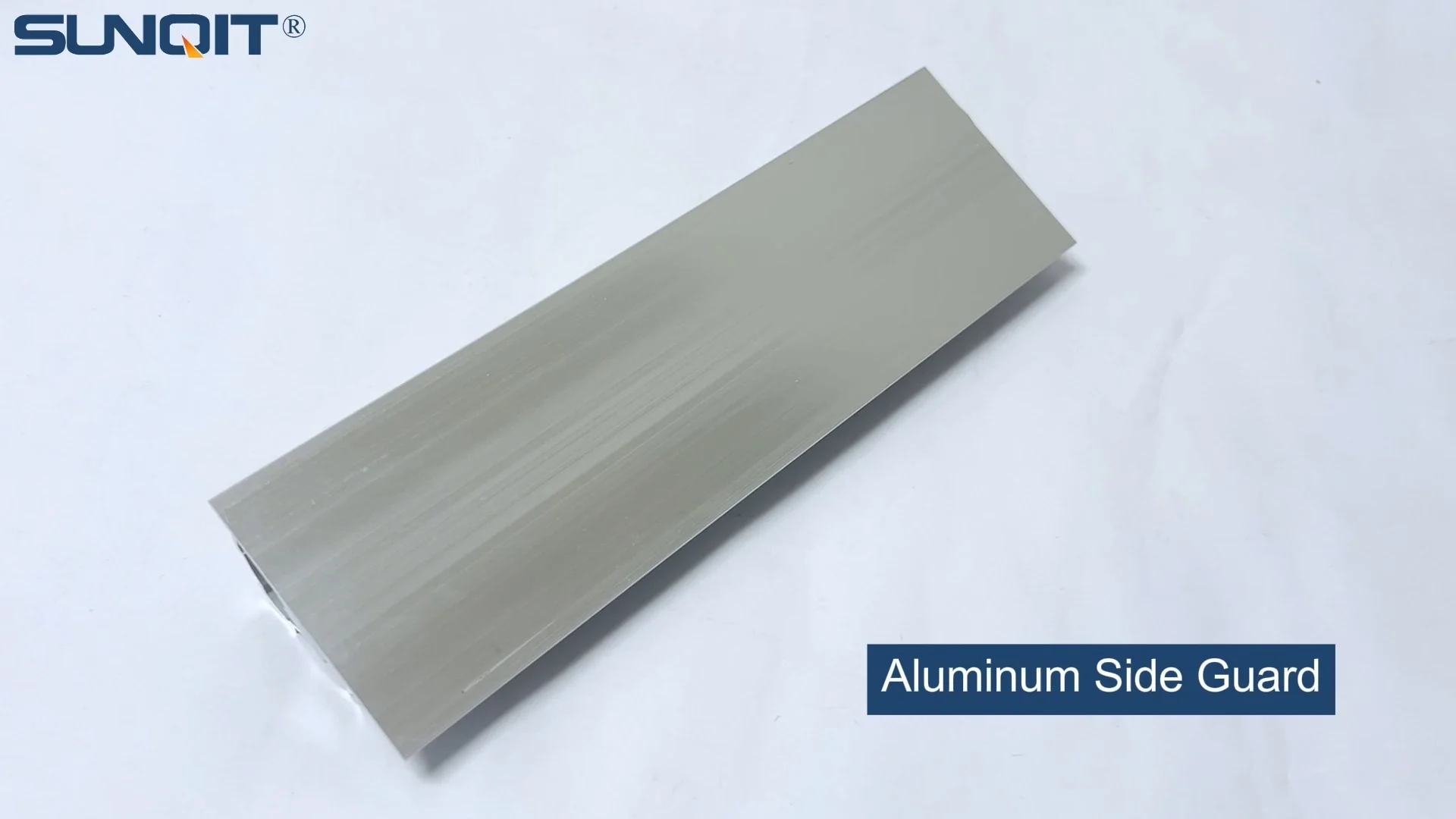
Aluminum Side Guard
Aluminum side guard, it works with a aluminum pipe or a roller track as side guard to prevent material drop,or move to wrong direction.
In the fast-paced world of manufacturing and production, where every second counts and efficiency is king, the lean system has become a cornerstone of operational success. Lean principles—eliminating waste, streamlining processes, and maximizing value—drive teams to optimize every aspect of their workflow, from inventory management to workspace design. But in the rush to cut inefficiencies, there's one critical element that should never be compromised: safety. This is especially true when it comes to the workhorses of the production floor: lean tube workbenches. These versatile, modular stations are the heart of assembly lines, packing areas, and quality control zones, where workers spend hours each day handling tools, materials, and delicate components. Yet, despite their importance, many workbenches lack a simple but vital feature: aluminum side guards. In this article, we'll explore why these unassuming accessories are non-negotiable for safety compliance, how they integrate seamlessly with lean systems, and why they're a smart investment for any facility prioritizing both productivity and worker well-being.
The Hidden Risks of Unprotected Workbenches
Walk through any production facility, and you'll likely spot lean tube workbenches lined up in neat rows, each bustling with activity. Workers assemble parts, sort components, or inspect finished products, surrounded by tools, bins, and materials stacked within arm's reach. At first glance, these workspaces might seem organized and efficient—but look closer, and you'll notice the silent hazards lurking at the edges. Without proper protection, the edges of a workbench become a minefield of potential accidents. A technician reaching for a wrench might accidentally knock a small part off the side, sending it clattering to the floor and creating a tripping hazard. A packer rushing to meet a deadline could slide a heavy box across the bench, only for it to slip off the edge and onto a colleague's foot. Even a momentary lapse in focus—a distracted worker turning to answer a question—could result in a sharp corner grazing an arm or elbow, leading to cuts or bruises.
These aren't just hypothetical scenarios. According to the Occupational Safety and Health Administration (OSHA), falls, trips, and slips are among the most common causes of workplace injuries, accounting for over 25% of all non-fatal occupational injuries each year. Many of these incidents trace back to unprotected work surfaces, where materials, tools, or even body parts make unintended contact with unguarded edges. In one recent case study from a mid-sized electronics assembly plant, a worker suffered a fractured toe when a metal chassis slipped off an unguarded lean tube workbench, falling 3 feet to the floor. The incident not only resulted in weeks of lost work and medical costs but also disrupted the assembly line, as the team had to pause production to investigate and implement temporary safety measures. The root cause? A workbench that prioritized speed and flexibility over edge protection—a mistake that's all too easy to make in lean-focused environments.
The risks extend beyond physical harm, too. Accidents like these erode worker confidence, create a culture of fear, and even lead to increased turnover. When employees worry about getting hurt on the job, their focus shifts from quality and efficiency to simply staying safe, undermining the very lean principles the facility is trying to uphold. Worse, non-compliance with safety regulations can result in hefty fines: OSHA penalties for serious violations now top $15,625 per incident, with willful or repeated violations costing up to $156,259. For small to medium-sized businesses, these fines can be devastating, wiping out profits and damaging reputations. In short, unprotected workbenches aren't just a safety risk—they're a threat to your bottom line, your team's morale, and your facility's compliance standing.
What Are Aluminum Side Guards, and Why Do They Matter?
So, what exactly are aluminum side guards, and how do they address these risks? At their core, aluminum side guards are protective barriers attached to the edges of workbenches, designed to prevent materials, tools, and even body parts from sliding off or making contact with sharp edges. Made from lightweight yet durable aluminum profile, they're engineered to withstand the rigors of daily use—scratches, impacts, and constant handling—while remaining easy to install and adjust. Unlike flimsy plastic guards or bulky steel rails, aluminum side guards strike a perfect balance between strength and flexibility, making them ideal for lean tube workbenches, which are prized for their modularity and adaptability.
But what sets aluminum side guards apart from other protective solutions? Let's start with the material itself: aluminum profile. Aluminum is naturally resistant to corrosion, so it won't rust or degrade even in humid or industrial environments—a critical feature for workbenches near cleaning stations or in outdoor warehouses. It's also lightweight, which means adding guards to a workbench doesn't make it cumbersome to move or reconfigure, a key advantage in lean systems where layouts often change to accommodate new projects or production goals. Unlike steel, which can add unnecessary weight and require heavy-duty tools to install, aluminum side guards can be mounted using simple aluminum pipe accessories—clamps, brackets, and connectors—that snap or screw into place, allowing teams to upgrade their workbenches in minutes, not hours.
Another standout feature is their versatility. Aluminum side guards come in a range of styles to suit different workbench needs. Some are low-profile, designed to keep small parts from rolling off without obstructing access to the work surface. Others are taller, with padded edges, ideal for workbenches handling heavy or bulky items that might otherwise slide or tip. Many are also adjustable, with slots or notches that let workers raise or lower the guard height based on the task at hand—say, 2 inches high for sorting screws, or 6 inches high for stacking boxes. This flexibility aligns perfectly with lean principles, where tools and workspaces should adapt to the task, not the other way around. And because they're made from aluminum profile, they can be easily cut to custom lengths, ensuring a snug fit for workbenches of any size, from compact single-person stations to large collaborative worktables.
Perhaps most importantly, aluminum side guards are designed with safety compliance in mind. OSHA requires employers to "provide a workplace free from recognized hazards that are causing or are likely to cause death or serious physical harm to employees," and unguarded workbench edges fall squarely into the "recognized hazards" category. By installing these guards, facilities not only reduce the risk of injuries but also demonstrate a commitment to meeting OSHA standards, which can protect against fines and legal liability. In fact, many third-party safety auditors now specifically check for edge protection on work surfaces when evaluating compliance, making aluminum side guards a visible and verifiable way to show that safety is a priority.

How Aluminum Side Guards Enhance Lean Pipe Workbench Safety
Now that we understand what aluminum side guards are, let's dive into how they specifically enhance the safety of lean tube workbenches. These workbenches, constructed from lightweight steel or aluminum tubes and joints, are beloved for their modularity—they can be quickly assembled, disassembled, or reconfigured to suit changing production needs. But this flexibility can sometimes come at the cost of stability, especially when loaded with heavy tools or materials. Aluminum side guards add a layer of structural support while addressing three key safety challenges: edge protection, material containment, and ergonomic safety.
First, edge protection. Lean tube workbenches often have hard, angular edges, either from the metal tubes themselves or from the plywood, MDF, or aluminum tops used as work surfaces. These edges can be surprisingly sharp, especially if they've been scratched or nicked from years of use. An aluminum side guard acts as a buffer, covering these edges with a smooth, rounded surface that reduces the risk of cuts or abrasions. For example, a worker leaning against the bench while reaching for a tool is far less likely to sustain a scrape if the edge is covered by a 1-inch aluminum guard with a soft plastic coating. Even in the case of a fall—say, a worker losing balance and bumping into the bench—the guard absorbs some of the impact, minimizing injury severity. This is particularly important in fast-paced environments, where split-second movements are common and accidents can happen in the blink of an eye.
Second, material containment. One of the hallmarks of a lean workbench is its clutter-free surface—tools and materials are stored in bins, racks, or drawers, leaving only what's needed for the current task within reach. But even with the best organization, small parts roll, tools slide, and materials shift. A tiny screw, for instance, can easily roll off an unguarded bench and disappear under a machine, leading to wasted time spent searching or, worse, becoming a projectile when a machine is turned on. Aluminum side guards create a physical barrier, keeping these items on the work surface where they belong. In a study by the Manufacturing Safety Alliance, facilities that installed side guards reported a 40% reduction in "lost part" incidents, saving an average of 2 hours per week per workbench in recovery time. For a facility with 50 workbenches, that's over 5,000 hours of productivity saved annually—proof that safety measures can also boost efficiency, a win-win for lean operations.
Third, ergonomic safety. Lean systems emphasize reducing physical strain on workers, and aluminum side guards play a role here, too. By containing materials, they eliminate the need for workers to constantly lean over the edge of the bench to retrieve items that have slipped off, which can strain the lower back or shoulders. They also encourage better posture: with guards in place, workers are less likely to hunch or overreach to keep materials from falling, reducing the risk of repetitive stress injuries. Some guards even come with built-in tool rails or hooks, allowing workers to hang frequently used tools (like tape measures or screwdrivers) within easy reach, further reducing unnecessary movement. This focus on ergonomics not only keeps workers safer but also more comfortable—leading to higher job satisfaction and lower turnover, both of which are critical for maintaining lean efficiency over the long term.

Comparing Aluminum Side Guards to Traditional Safety Solutions
To truly appreciate the value of aluminum side guards, it helps to compare them to other safety solutions commonly used on workbenches. Let's take a look at how they stack up against three alternatives: plastic edge guards, steel rails, and adhesive tape.
| Safety Solution | Durability | Installation Ease | Flexibility/Adjustability | Cost-Effectiveness | Compliance with Lean Principles |
|---|---|---|---|---|---|
| Aluminum Side Guards | High (resistant to corrosion, scratches, and impacts) | Easy (uses aluminum pipe accessories; no special tools needed) | High (adjustable heights, custom lengths, modular design) | Medium upfront cost, low long-term cost (durable, reusable) | Excellent (adapts to changing needs, reduces waste from replacements) |
| Plastic Edge Guards | Low (prone to cracking, warping, or tearing over time) | Very easy (peel-and-stick or snap-on) | Low (fixed height; difficult to cut or adjust) | Low upfront cost, high long-term cost (needs frequent replacement) | Poor (generates waste from frequent replacements; not reusable) |
| Steel Rails | Very high (extremely strong and impact-resistant) | Difficult (requires drilling, welding, or heavy hardware) | Low (fixed length and height; hard to reconfigure) | High upfront cost, medium long-term cost (durable but heavy/inflexible) | Poor (adds weight, limits reconfiguration, violates "flexibility" lean principle) |
| Adhesive Tape | Very low (peels off easily; not resistant to moisture or wear) | Very easy (peel-and-stick) | Low (fixed width; can't adjust height or length) | Low upfront cost, very high long-term cost (needs constant reapplication) | Very poor (generates massive waste; not a "lean" solution) |
As the table shows, aluminum side guards outperform traditional options in nearly every category. Plastic edge guards, while cheap and easy to install, quickly degrade in industrial environments—cracking under heavy use, melting near heat sources, or peeling off in humid conditions. This means facilities end up replacing them every few months, creating a cycle of waste that contradicts lean principles. Steel rails, on the other hand, are durable but and hard to install. Welding or drilling into a lean tube workbench undermines its modular design, making it nearly impossible to reconfigure later—a major drawback in lean systems where adaptability is key. Adhesive tape is even worse: it offers minimal protection, peels off after a few weeks, and leaves behind sticky residue that's time-consuming to clean, all while generating endless rolls of waste.
Aluminum side guards, by contrast, strike the perfect balance. Their durability means they last for years, even in harsh environments, reducing the need for replacements and cutting down on waste. Their lightweight design and compatibility with aluminum pipe accessories make installation a breeze—no welding or heavy tools required—and their modularity allows for easy adjustments. Need to shorten a guard for a new workbench layout? Simply cut it with a hacksaw. Want to add a higher guard for a specific project? Swap out the brackets. This flexibility ensures they grow and change with your facility, aligning perfectly with the lean principle of "continuous improvement." And while their upfront cost is higher than plastic or tape, their longevity and reusability make them far more cost-effective over time—turning them from an expense into an investment.
Integration with Lean Systems: More Than Just Safety
At first glance, safety features and lean systems might seem like opposing priorities. Lean is about cutting waste and maximizing efficiency; safety is about adding protections that could, at first, feel like "extra" steps or costs. But in reality, the two are deeply interconnected—and aluminum side guards are a perfect example of how safety can enhance, rather than hinder, lean operations. Let's break down how these guards support key lean principles, from "just-in-time" production to 5S methodology.
Take "just-in-time" (JIT) production, which focuses on minimizing inventory by delivering materials exactly when they're needed. In a JIT environment, workbenches are often kept clear of excess stock, with only the current batch of components on hand. But this means workers are frequently reaching for materials, moving parts across the bench, or passing items to colleagues—all actions that increase the risk of slips or falls. Aluminum side guards contain these materials, ensuring that even in the busiest JIT workflows, parts stay where they're supposed to be. This reduces the time spent searching for lost items or cleaning up spills, keeping the production line moving smoothly. In one automotive assembly plant that switched to JIT and added aluminum side guards, managers reported a 15% reduction in time spent on "non-value-added" tasks like retrieving dropped parts—proof that safety can directly boost efficiency.
Then there's 5S, a lean methodology focused on workplace organization: Sort, Set in Order, Shine, Standardize, and Sustain. Aluminum side guards support every step of the 5S process. "Sort" (removing unnecessary items) is easier with guards, as there's less risk of accidentally discarding useful parts that have fallen off the bench. "Set in Order" (arranging tools for easy access) is enhanced by guards with built-in tool hooks or rails, keeping frequently used items within reach. "Shine" (cleaning and maintaining the workspace) is simpler, too—aluminum guards are easy to wipe down, and their smooth surfaces don't trap dust or debris like rough steel or cracked plastic. "Standardize" (creating consistent processes) is possible because guards can be installed uniformly across all workbenches, ensuring every station meets the same safety standards. Finally, "Sustain" (maintaining the system) is achievable thanks to the guards' durability; unlike plastic alternatives that need constant replacement, aluminum guards stay in place, reinforcing the new safety habits over time.
Waste reduction, the cornerstone of lean, is another area where aluminum side guards shine. In lean terms, "waste" includes defects, overproduction, waiting, non-utilized talent, transportation, inventory, motion, and extra processing (the "8 Wastes"). Unprotected workbenches contribute to several of these: defects (parts damaged when falling), waiting (time lost retrieving items), motion (workers bending or reaching to catch falling materials), and even non-utilized talent (supervisors spending time investigating accidents instead of improving processes). By preventing these issues, aluminum side guards directly reduce waste. They also generate less waste themselves: unlike disposable plastic guards, they're reusable, and their aluminum construction is recyclable at the end of their long lifespan. This aligns with the growing trend of "lean sustainability," where environmental responsibility and efficiency go hand in hand.
Choosing the Right Aluminum Side Guards for Your Lean Tube Workbench
Now that you're convinced of the value of aluminum side guards, how do you choose the right ones for your facility? With so many options on the market, it's important to consider your specific needs, from the type of workbench you have to the materials you handle. Here are five key factors to keep in mind:
1. Workbench Type and Size : Start by assessing your lean tube workbench. Is it a standard single-deck workbench (like the "Workbench E (Single Deck-Without Caster)" often used in assembly lines)? Or a larger, multi-person station? Measure the length and width of the bench edges to determine how much guard material you'll need. For irregularly shaped workbenches, look for guards that can be easily cut or bent to fit. Also, consider the bench height—guards for a standing workbench might need to be taller than those for a seated station to account for the increased reach.
2. Materials and Tasks : What do you use the workbench for? If you're handling small, lightweight parts (like electronics components), a low-profile guard (1-2 inches high) should suffice. For heavy materials (like metal brackets or machinery parts), opt for a taller, sturdier guard (4-6 inches high) with a reinforced base to prevent tipping. If your tasks involve frequent loading and unloading (e.g., sliding boxes onto the bench), look for guards with smooth, rounded edges to minimize friction and prevent snags. And if you work with electrostatic discharge (ESD)-sensitive items, consider ESD-safe aluminum guards, which are treated to dissipate static electricity and protect delicate electronics from damage.
3. Compliance Requirements : Different industries have different safety standards. For example, medical device manufacturers must adhere to strict FDA guidelines for workspace cleanliness, so they'll need guards that are easy to sanitize and resistant to harsh cleaning chemicals. Food processing facilities might require guards made from food-grade aluminum to avoid contamination. Always check with your industry's regulatory body (e.g., OSHA, FDA, ISO) to ensure the guards you choose meet their specific criteria. A reputable lean pipe workbench supplier should be able to provide compliance documentation for their guards, including material safety data sheets (MSDS) and third-party certification.
4. Installation and Reconfiguration Needs : In lean environments, workbench layouts change frequently—so your guards should be easy to install, remove, and reinstall. Look for guards that use aluminum pipe accessories like clamps, brackets, or snap-on connectors, which allow for tool-free adjustments. Avoid guards that require drilling into the workbench or permanent adhesives, as these will make reconfiguration difficult. If you anticipate moving the workbench often, consider guards that are lightweight and can be quickly detached, or even built-in guards that stay with the bench during transport.
5. Budget and Long-Term Value : While it's tempting to opt for the cheapest guards available, remember that safety is an investment. Cheap plastic guards might save money upfront, but they'll need frequent replacement, costing more in the long run. Aluminum guards, while pricier initially, last for years and can be reused when you reconfigure your workspace. When comparing costs, factor in not just the purchase price but also installation time, maintenance, and replacement frequency. A good rule of thumb: a high-quality aluminum guard should pay for itself within 1-2 years through reduced accidents, lower waste, and improved efficiency.
Conclusion: Safety as a Lean Advantage
In the world of lean manufacturing, every decision is measured by its impact on efficiency, waste reduction, and value. Aluminum side guards for lean tube workbenches pass this test with flying colors—not just because they keep workers safe, but because they make lean systems stronger. By preventing accidents, reducing waste, and supporting key principles like 5S and JIT, these unassuming accessories transform safety from a "cost center" into a competitive advantage. They send a clear message to your team: that their well-being matters, and that efficiency and safety can coexist. In an industry where talent retention, compliance, and productivity are constantly under pressure, that's a message worth investing in.
So, if you're still using unprotected lean tube workbenches, ask yourself: Can you afford the cost of an accident? The lost time, the medical bills, the fines, the damaged morale? Aluminum side guards aren't just a "nice-to-have"—they're a must-have for any facility serious about lean excellence. They're the silent partners in your team's success, working behind the scenes to keep workbenches safe, workers productive, and operations compliant. And in the end, that's the true spirit of lean: finding solutions that make everyone's job easier, safer, and more valuable. So why wait? Upgrade your workbenches with aluminum side guards today—and watch as safety becomes your secret weapon for lean success.