- Company Articles
- Industry articles
- Industry standards
- Aluminum Side Guards for Home Appliance Production Lines: Safety Standards

Aluminum Side Guards for Home Appliance Production Lines: Safety Standards
Related Product
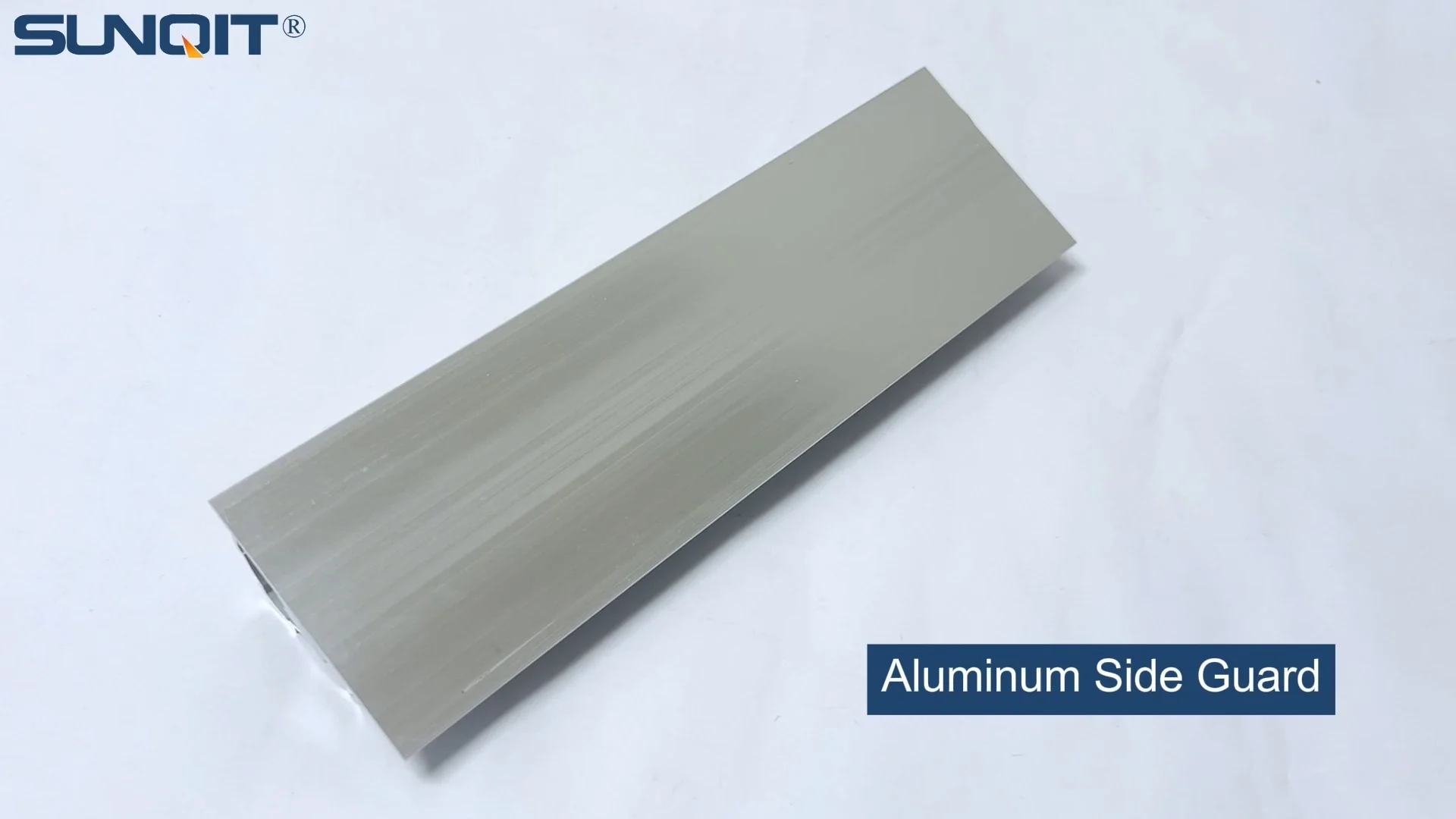
Aluminum Side Guard
Aluminum side guard, it works with a aluminum pipe or a roller track as side guard to prevent material drop,or move to wrong direction.
Walk into any home appliance production facility, and you'll be met with a symphony of activity: conveyors hum as they carry half-assembled refrigerators, workers lean over workbenches tightening screws on washing machine panels, and robotic arms glide precision through the air. In this organized chaos, every component has a role—but few are as quietly critical as the aluminum side guards lining the edges of conveyors and workstations. These unassuming barriers aren't just metal rails; they're the silent guardians that keep parts from tumbling onto the floor, prevent accidental contact with moving machinery, and ensure every team member goes home safely at the end of the day. Today, we're diving deep into the world of aluminum side guards for home appliance production lines, exploring why they matter, how they're built, and the strict safety standards that ensure they never let you down.
What Are Aluminum Side Guards, and Why Do They Matter?
At their core, aluminum side guards are protective barriers designed to line the edges of conveyors, workbenches, and material transport systems in manufacturing environments. Think of them as the "guardrails" of the factory floor—simple in concept, but indispensable in practice. In home appliance production, where even small parts (like a dishwasher door hinge or a microwave control panel) can cause injuries if they fall, or where heavy components (like a refrigerator compressor) might slide off a conveyor, these guards act as the first line of defense.
But why aluminum? Walk through older factories, and you might still see side guards made of steel or plastic. Steel is strong, but it's heavy—making installation and adjustments a back-breaking task. Plastic is lightweight, but it cracks easily under impact, especially in busy environments where parts are constantly moving. Aluminum, though? It's the sweet spot. Aluminum extrusion profile, the material most commonly used for these guards, offers a rare blend of strength, flexibility, and lightness. It's durable enough to withstand the daily bumps and scrapes of a production line, yet lightweight enough that workers can reposition guards as workflows change. Plus, aluminum's natural resistance to corrosion means it holds up well in the sometimes humid or dusty conditions of a factory, ensuring long-term reliability without constant maintenance.
The Backbone: Aluminum Extrusion Profile and Its Role in Safety
To understand why aluminum side guards are so effective, we need to start with the material itself: aluminum extrusion profile. Extrusion is a manufacturing process where aluminum alloy is heated and pushed through a die to create long, uniform shapes—think of it like squeezing toothpaste through a tube, but with metal. This process allows for incredible precision, creating profiles with specific cross-sections tailored to their intended use. For side guards, common profiles include simple rectangular tubes, L-shaped angles, or even more complex designs with built-in channels for attaching accessories like brackets or mounting hardware.
What makes aluminum extrusion profile ideal for safety? Let's break it down: Strength-to-weight ratio : Aluminum is about one-third the weight of steel, but modern alloys (like 6061-T6, a common choice for industrial profiles) offer impressive tensile strength—meaning they can withstand significant force without bending or breaking. This is crucial for side guards, which need to stop a sliding component mid-motion without collapsing. Customizability : Extrusion dies can be tooled to create profiles of almost any shape, allowing manufacturers to design guards that fit specific conveyor widths, workbench heights, or material flow paths. Need a guard with a lip to catch small parts? Or one with pre-drilled holes for quick installation? Extrusion makes it possible. Cost-effectiveness : While the initial tooling for extrusion dies might have a cost, aluminum itself is abundant, and the extrusion process is efficient at scale—meaning high-quality profiles are often more affordable than custom-fabricated steel guards in the long run.
Of course, the profile alone isn't enough. To build a functional side guard, you need aluminum profile accessories: brackets, connectors, end caps, and mounting hardware that hold the profile in place and integrate it with the rest of the production line. For example, a 4040 aluminum profile (a square profile with 40mm sides, common in industrial settings) might use angle brackets to attach to a conveyor frame, while end caps cover sharp edges to prevent cuts. These accessories aren't afterthoughts—they're critical to ensuring the guard stays secure and compliant with safety standards.
| Profile Series | Cross-Section Dimensions (mm) | Wall Thickness (mm) | Max Load Capacity (kg/m) | Typical Application | Safety Standard Compliance |
|---|---|---|---|---|---|
| 2020 | 20x20 | 1.5 | 80 | Light-duty workbenches, small conveyors | ISO 12100, ANSI B11.0 |
| 3030 | 30x30 | 2.0 | 150 | Medium conveyors, material racks | ISO 12100, ANSI B11.0, OSHA 1910.22 |
| 4040 | 40x40 | 2.5 | 250 | Heavy-duty conveyors, large appliance assembly lines | ISO 12100, ANSI B11.0, OSHA 1910.22, CE EN 60204 |
| 4080 | 40x80 | 3.0 | 400 | High-load applications (e.g., washing machine drum transport) | ISO 12100, ANSI B11.0, OSHA 1910.22, CE EN 60204 |
The table above highlights common aluminum extrusion profiles used in side guards, along with their key specs. Notice how as the profile size and wall thickness increase, so does the load capacity—this ensures that guards can be matched to the specific needs of the production line. For example, a line assembling small appliances like blenders might use 2020 or 3030 profiles, while a line handling large refrigerators would opt for 4040 or 4080 to handle the heavier components.

Safety Standards: What Every Production Line Must Follow
Aluminum side guards aren't just "nice to have"—they're legally required, and for good reason. Governments and industry bodies around the world have established strict safety standards to ensure that manufacturing facilities protect their workers and maintain consistent quality. For home appliance production lines, two sets of standards are particularly critical: ISO 12100 (International Organization for Standardization) and ANSI B11.0 (American National Standards Institute), along with regional regulations like OSHA 1910.22 in the U.S. or CE marking requirements in the EU.
ISO 12100: Risk Assessment and Safety Design
ISO 12100 is a global standard that outlines principles for designing machinery to be safe. It focuses on risk assessment—identifying potential hazards (like parts falling from conveyors, workers getting limbs caught in moving parts) and implementing safeguards (like side guards) to reduce those risks to an acceptable level. For side guards, ISO 12100 mandates several key considerations:
- Height and spacing : Guards must be tall enough to prevent parts from clearing them. For most home appliance components, this means a minimum height of 100mm (about 4 inches), though larger parts may require taller guards. Spacing between guard rails (if using a multi-rail design) must be small enough to prevent small parts from slipping through—typically no more than 50mm (2 inches) for small components.
- Impact resistance : Guards must withstand the maximum foreseeable impact force from a falling or sliding part. ISO 12100 provides formulas to calculate this force based on the mass and speed of the component. For example, a 20kg refrigerator door sliding at 0.5 m/s would generate a force of around 10 Newtons—guards must absorb this without failing.
- Accessibility : Guards shouldn't impede normal operations. Workers need to load/unload parts from conveyors, so guards should be designed with hinges, removable sections, or quick-release latches for easy access when needed—without compromising safety during operation.
ANSI B11.0: Safety of Machinery
In North America, ANSI B11.0 is the go-to standard for machinery safety, covering everything from design to operation. It aligns closely with ISO 12100 but adds region-specific requirements. For side guards, ANSI B11.0 emphasizes structural integrity : guards must be securely mounted to the conveyor or workbench frame, with fasteners (like bolts or brackets) rated for the expected load. It also requires that guards are non-conductive if used near electrical equipment, which is where aluminum's natural conductivity might be a concern—though this is easily mitigated by adding insulating gaskets or using anodized aluminum (a process that coats the surface with a non-conductive oxide layer).
OSHA 1910.22: General Requirements for Workrooms
OSHA (Occupational Safety and Health Administration) in the U.S. doesn't specifically regulate side guards, but its general duty clause (OSHA 1910.22) requires employers to "maintain a workplace free from recognized hazards that are causing or are likely to cause death or serious physical harm." This means that if side guards are necessary to prevent falls or injuries, they must be provided. OSHA inspectors often reference ANSI B11.0 when evaluating guard effectiveness, so compliance with ANSI standards is a practical way to meet OSHA requirements.

Designing Aluminum Side Guards: Beyond the Basics
Meeting safety standards is the baseline—but great side guards go further, integrating with the production line to enhance efficiency and worker comfort. Let's explore some design considerations that set apart effective guards from merely compliant ones.
Ergonomics: Keeping Workers Comfortable
A guard that meets every safety standard but makes workers strain to do their jobs is a failure. Ergonomics—the study of designing tools and workspaces to fit the human body—plays a big role here. For example, side guards on workbenches should be low enough that workers don't have to reach over them to access parts, but high enough to prevent parts from sliding off. A common height for workbench guards is 100-150mm (4-6 inches), which balances safety and accessibility.
Another ergonomic consideration is visibility . Guards shouldn't block workers' line of sight to the conveyor or workbench. Using aluminum extrusion profile with a slim cross-section, or incorporating transparent materials (like polycarbonate panels mounted in aluminum frames), ensures workers can see parts moving without leaning over or around the guard—reducing neck and back strain.
Integration with Conveyors and Workbenches
Side guards rarely exist in isolation—they're part of a larger ecosystem that includes conveyors, workbenches, and material handling equipment. To work seamlessly, they must integrate with these systems. For conveyors, this means matching the guard height to the conveyor belt's surface (typically 50-100mm above the belt) and ensuring the guard runs the entire length of the conveyor, with no gaps where parts could fall off. For workbenches, guards might be mounted along the back edge to prevent parts from sliding off the rear, while leaving the front open for worker access.
Aluminum profile accessories are key here. Brackets, corner connectors, and T-joints allow guards to be attached directly to conveyor frames or workbench legs, creating a rigid system. For example, a 3030 aluminum profile guard might use L-brackets to bolt to the side of a roller conveyor, while a 4040 profile could be connected to a workbench using T-slot nuts (a common aluminum profile accessory that slides into the profile's T-shaped channel, allowing for tool-free adjustments).
Color Coding: Visual Cues for Safety
In a busy factory, visual cues save lives. OSHA and ISO standards recommend color-coding safety equipment to make it instantly recognizable. For side guards, the most common color is yellow —a high-visibility shade that signals "caution." You might also see red for guards around high-risk areas (like conveyors with heavy components) or green for guards that are part of a low-risk workflow. Aluminum extrusion profile can be anodized or powder-coated in these colors, ensuring the finish is durable and resistant to scratches.
Installation and Maintenance: Keeping Guards Effective
Even the best-designed aluminum side guard will fail if installed incorrectly. Proper installation starts with working with a reputable aluminum profile supplier—one that understands the specific needs of home appliance production. A good supplier will not only provide high-quality extrusion profiles but also offer technical support, helping you select the right profile size, accessories, and mounting hardware for your line.
Installation steps typically include: Measuring : Accurately measuring the length of the conveyor or workbench to ensure guards are cut to the correct size. Most aluminum extrusion profile suppliers offer custom cutting services, so you don't have to invest in specialized tools. Mounting : Using brackets or T-slot accessories to attach the guard to the conveyor/workbench frame. It's critical to tighten all fasteners securely—loose guards can vibrate loose over time, creating hazards. Testing : After installation, test the guard by simulating a falling part (using a weighted bag or dummy component) to ensure it holds. Check that hinges or removable sections open/close smoothly and lock securely.
Maintenance is equally important. A monthly inspection routine should include:
- Checking for damage : Look for dents, bends, or cracks in the aluminum extrusion profile—even small damage can weaken the guard's structural integrity.
- Tightening fasteners : Vibrations from conveyors can loosen bolts or brackets. Retighten any loose hardware to prevent the guard from shifting.
- Cleaning : Wipe down guards to remove dust, grease, or debris that could obscure visibility or cause parts to stick.
- Replacing worn parts : If accessories like brackets or hinges show signs of wear (e.g., rust, bending), replace them immediately. Aluminum profile accessories are often inexpensive, making this a small cost for ongoing safety.
Case Study: How Aluminum Side Guards Transformed a Refrigerator Production Line
To put this all in context, let's look at a real-world example (adapted from common industry scenarios). A mid-sized home appliance manufacturer in the Midwest was struggling with a recurring issue: parts falling off their refrigerator door assembly conveyor. The line used plastic side guards, which were lightweight but prone to cracking when hit by heavy door panels. Over six months, there were three minor injuries (workers stepping on fallen parts) and countless production delays as teams stopped to retrieve parts. The company decided to upgrade to aluminum side guards using 4040 aluminum extrusion profile.
Working with an aluminum profile supplier, they selected 4040 profiles with a 2.5mm wall thickness, powder-coated yellow for visibility. The supplier provided custom-cut lengths and recommended L-brackets and T-slot nuts for mounting to the conveyor frame. The new guards were installed over a weekend, with minimal downtime. Within a month, the results were clear: zero parts fell off the conveyor, injuries dropped to zero, and workers reported feeling more confident and less stressed, as they no longer had to constantly watch for falling parts.
The maintenance team also noted benefits: the aluminum guards were easier to clean than the old plastic ones, and after six months of use, there were no signs of cracking or bending—even with daily impacts from door panels. The initial cost of the aluminum guards was higher than plastic, but the savings from reduced downtime and fewer injuries made it a smart investment.
Conclusion: Safety as a Foundation for Success
Aluminum side guards might not be the most glamorous part of a home appliance production line, but they're a cornerstone of a safe, efficient workplace. By leveraging the strength and versatility of aluminum extrusion profile, and adhering to strict safety standards like ISO 12100 and ANSI B11.0, manufacturers can create guards that protect workers, reduce downtime, and ensure compliance with regulations.
The key takeaway? Safety isn't an afterthought—it's an investment. Choosing the right materials (like high-quality aluminum extrusion profile), working with knowledgeable suppliers, and prioritizing design, installation, and maintenance ensures that these silent guardians do their job, day in and day out. In the end, a production line with strong, reliable side guards isn't just a safer one—it's a more productive one, too. After all, when workers feel safe, they can focus on what they do best: building the appliances that make our homes better.