- Company Articles
- Industry articles
- Industry standards
- Aluminum Side Guards in Aerospace Manufacturing: Precision & Safety Requirements

Aluminum Side Guards in Aerospace Manufacturing: Precision & Safety Requirements
Related Product
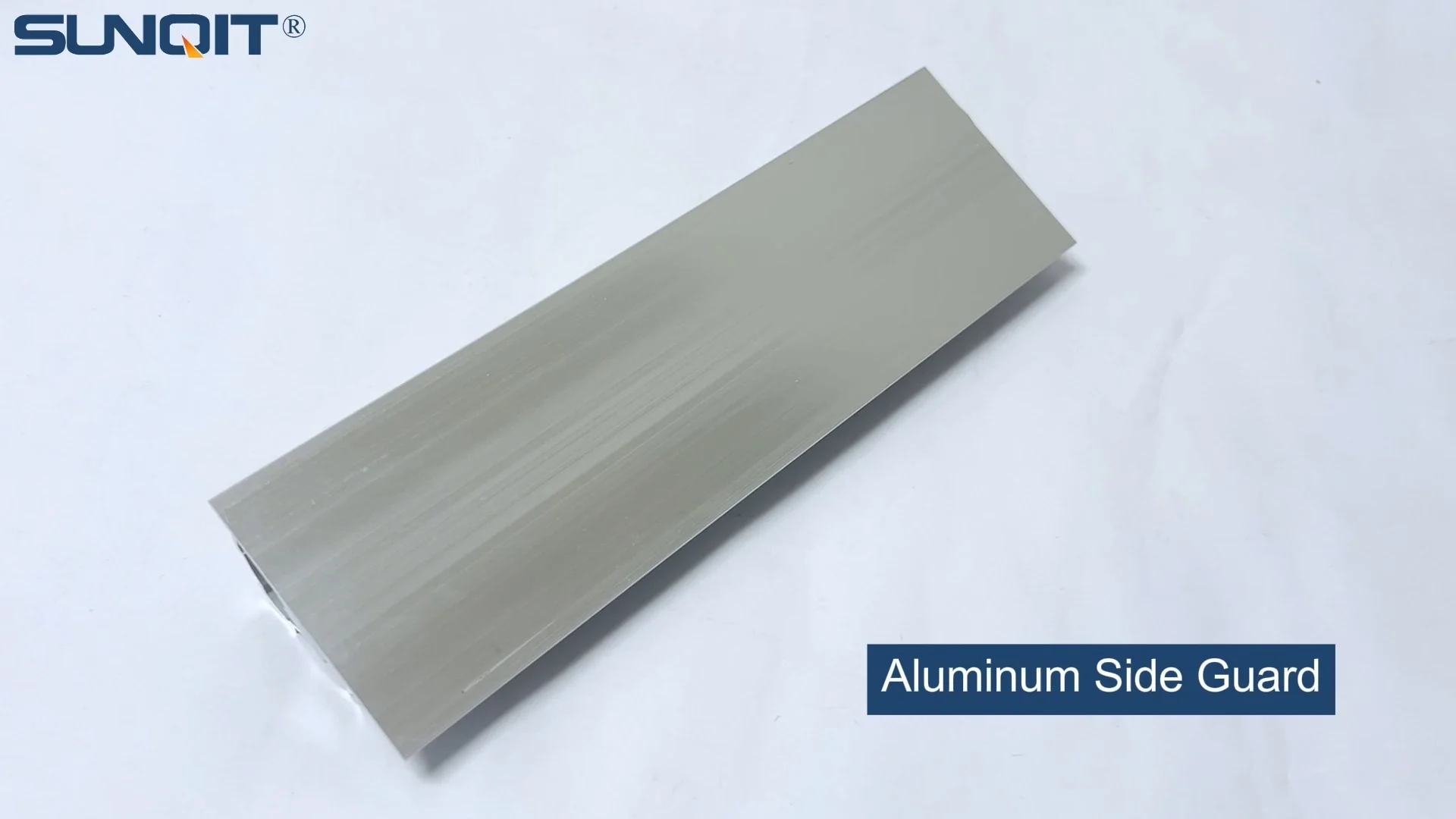
Aluminum Side Guard
Aluminum side guard, it works with a aluminum pipe or a roller track as side guard to prevent material drop,or move to wrong direction.
Introduction: The Invisible Backbone of Aerospace Excellence
When we think of aerospace manufacturing, our minds often drift to sleek jet engines, cutting-edge avionics, or the towering wings of airliners. But behind these headline-grabbing components lies a world of unsung heroes—subtle yet critical parts that ensure every step of the production process is safe, efficient, and precise. Aluminum side guards are among these quiet champions. These unassuming structures, often crafted from specialized aluminum extrusion profiles and paired with carefully designed aluminum profile accessories, play a pivotal role in protecting both workers and sensitive aircraft components during manufacturing. In an industry where a single miscalculation can have catastrophic consequences, the precision and safety standards governing these guards are nothing short of extraordinary. Let's take a closer look at why aluminum side guards matter, how they're built, and the rigorous requirements that make them indispensable in aerospace manufacturing.
Why Aluminum Side Guards Are Non-Negotiable in Aerospace
Aerospace manufacturing facilities are dynamic environments. Heavy machinery moves with pinpoint accuracy, technicians work at heights, and delicate parts—some worth hundreds of thousands of dollars—are transported across factory floors daily. In this chaos, aluminum side guards act as the first line of defense. Imagine a scenario where a robotic arm is assembling a wing panel: without a sturdy barrier, a misstep by a worker or a sudden equipment malfunction could result in a collision with the panel, ruining hours of work and endangering lives. Side guards prevent that.
But their role goes beyond mere physical separation. In aerospace, even minor damage to components like wiring harnesses or composite panels can compromise an aircraft's integrity. Aluminum side guards create controlled pathways, ensuring that tools, materials, and personnel stay within designated zones. They also serve as guides for automated guided vehicles (AGVs), which ferry parts between workstations, reducing the risk of collisions that could damage both the AGV and the valuable cargo it carries.
Regulators like the Federal Aviation Administration (FAA) and the European union Aviation Safety Agency (EASA) don't just recommend these safeguards—they mandate them. Safety protocols in aerospace manufacturing are among the strictest in any industry, and aluminum side guards are a key part of meeting those standards. Without them, facilities risk fines, production halts, or worse: a compromised aircraft entering service.

The Material Choice: Why Aluminum Extrusion Profiles Reign Supreme
Not all materials are created equal, especially in aerospace. When it comes to side guards, aluminum extrusion profiles have emerged as the gold standard—and for good reason. Let's break down why aluminum, and specifically extruded aluminum, is the material of choice.
First, there's the strength-to-weight ratio. Aluminum is significantly lighter than steel, which matters in a manufacturing setting where equipment is often moved or reconfigured. A side guard made from aluminum extrusion profiles can be just as strong as a steel alternative but weigh 30-50% less, making installation, adjustments, and transportation far easier. This lightweight nature also reduces the load on the structures they're attached to, whether it's a workstation frame or a mobile cart.
Then there's corrosion resistance. Aerospace facilities are tightly controlled, but they're not immune to moisture, oils, or chemicals used in production. Aluminum naturally forms a thin oxide layer that protects it from rust, ensuring side guards maintain their integrity over years of use. Unlike steel, which requires regular painting or coating, aluminum extrusion profiles can withstand harsh environments with minimal maintenance—a critical factor in reducing downtime.
But perhaps the biggest advantage of aluminum extrusion profiles is their versatility. The extrusion process involves forcing heated aluminum through a die to create custom cross-sectional shapes. Need a guard with built-in channels for wiring? Or one with a serrated edge to prevent slips? Extrusion makes it possible. This customization allows engineers to design side guards that fit the exact needs of a workstation, whether it's a curved barrier for a circular assembly table or a flat panel with cutouts for tool access. Plastic might offer some flexibility, but it lacks the structural strength needed for heavy-duty aerospace applications. Steel, on the other hand, is strong but rigid—extruded aluminum strikes the perfect balance.

Precision Engineering: Tolerances That Leave No Room for Error
In aerospace, "close enough" isn't close enough. When it comes to aluminum side guards, precision is measured in thousandths of an inch. Why? Because these guards often interface with other equipment—think of a guard that needs to align perfectly with a conveyor belt or a workstation with pre-drilled mounting holes. A tolerance of ±0.005 inches (about the thickness of a human hair) is standard, and in some cases, even tighter.
Achieving these tolerances starts with the extrusion process. Modern extrusion dies are machined using computer numerical control (CNC) technology, ensuring that each aluminum extrusion profile comes out with consistent dimensions. After extrusion, profiles undergo secondary machining—often using CNC mills or laser cutters—to refine edges, drill holes, or add slots. This step is crucial for ensuring that brackets, hinges, or other aluminum profile accessories fit seamlessly.
Quality control doesn't stop there. Each batch of aluminum extrusion profiles is inspected using coordinate measuring machines (CMMs), which use lasers or touch probes to map the profile's dimensions with pinpoint accuracy. If a profile is even slightly out of spec, it's rejected. This level of scrutiny might seem excessive, but in aerospace, it's non-negotiable. A guard with misaligned holes, for example, could require extra force to install, stripping threads or weakening the structure over time. In the worst case, it might fail under stress, putting workers and parts at risk.
Safety Compliance: Beyond the Basics
Meeting safety standards isn't just about checking boxes—it's about anticipating risks and designing guards that can withstand real-world challenges. Let's dive into the specific safety requirements that aluminum side guards must meet in aerospace manufacturing.
Impact resistance is a top priority. Side guards must be able to absorb blows from tools, equipment, or even fallen objects without deforming or breaking. To test this, manufacturers subject aluminum extrusion profiles to impact tests using weights dropped from specified heights, simulating common workplace accidents. The goal? The guard should either bounce back without damage or, in extreme cases, deform in a way that absorbs energy without shattering—preventing sharp edges or flying debris.
Fire safety is another critical consideration. Aluminum is non-combustible, which means it won't catch fire or release toxic fumes in the event of a workplace fire. This is a huge advantage over plastic guards, which can melt and spread flames. In fact, some aluminum extrusion profiles are even treated with fire-retardant coatings for added protection, though the base material itself already meets most fire safety standards.
Ergonomics also plays a role. Side guards shouldn't create new hazards, like sharp edges or tripping risks. That's where aluminum profile accessories come into play. Rounded edge trim, for example, can be added to extrusion profiles to eliminate sharp corners, while anti-slip (foot pads) prevent guards from sliding on smooth factory floors. These small details might seem minor, but they make a big difference in day-to-day safety.
| Safety Requirement | Test Method | Pass/Fail Criteria |
|---|---|---|
| Impact Resistance | 10kg weight dropped from 1m height onto guard surface | No permanent deformation exceeding 2mm; no cracking or splintering |
| Fire Safety | ASTM E84 flame spread test | Flame spread index ≤25; no smoke development index >450 |
| Edge Safety | 30N force applied to edge with probe | No penetration; edge radius ≥2mm |
| Corrosion Resistance | 500-hour salt spray test (ASTM B117) | No visible corrosion or pitting |
Aluminum Profile Accessories: The Unsung Heroes of Guard Assembly
A strong aluminum extrusion profile is just the starting point. To build a functional, safe side guard, you need the right aluminum profile accessories. These small but critical components—brackets, fasteners, hinges, and more—turn a simple piece of aluminum into a robust barrier.
Take brackets, for example. They're what attach the guard to a workstation, floor, or ceiling. In aerospace, brackets must be strong enough to hold the guard in place even during vibrations from nearby machinery. That's why most are made from the same high-grade aluminum as the extrusion profiles, or sometimes from steel for extra strength. They're also designed with slotted holes to allow for minor adjustments during installation, ensuring the guard lines up perfectly with other equipment.
Hinges are another essential accessory, especially for guards that need to swing open for maintenance or part access. Aerospace-grade hinges are engineered to withstand thousands of openings and closings without wearing out. Many are also equipped with locking mechanisms to prevent accidental opening—imagine a guard swinging shut on a worker's hand while they're reaching for a tool. A good hinge keeps that from happening.
Then there are gaskets and seals. These accessories might not seem glamorous, but they're crucial for protecting sensitive areas. For example, a foam gasket along the bottom edge of a side guard can block debris from rolling under the guard and into a workstation. In cleanroom environments, where dust and particles can ruin precision parts, specialized seals create airtight barriers, ensuring the guard doesn't compromise the cleanroom's integrity.
The best part? Aluminum profile accessories are modular. This means guards can be easily modified or expanded as production needs change. Need to add a window to a guard to monitor a process? Swap out a solid panel for one with a viewing port using compatible hinges and brackets. Moving a workstation to a new location? Disassemble the guard, transport the extrusion profiles and accessories, and reassemble them in minutes. This flexibility is a huge advantage in aerospace, where production lines are often reconfigured to accommodate new aircraft models or updated manufacturing techniques.
Real-World Impact: How Aluminum Side Guards Improve Manufacturing
To understand the true value of aluminum side guards, let's look at a real-world example. Consider a major aerospace manufacturer producing commercial airliner fuselages. Before implementing aluminum extrusion profile guards, their assembly line had frequent incidents: tools falling onto fuselage panels, workers accidentally brushing against sensitive wiring, and AGVs colliding with stationary equipment. These incidents led to an average of two production delays per week and a monthly injury rate of 1.2 incidents per 100 workers.
After installing custom side guards made from aluminum extrusion profiles and paired with durable aluminum profile accessories, the results were striking. Over six months, production delays dropped by 75%, and the injury rate fell to 0.3 incidents per 100 workers. The guards created clear pathways for AGVs, preventing collisions, and the lightweight aluminum design made it easy for workers to reposition guards as fuselage sections moved through the line. Maintenance teams also reported spending less time repairing damaged equipment, freeing up resources for other tasks.
Another example comes from a helicopter manufacturer. Their rotor blade assembly process required workers to stand on elevated platforms, with the blades hanging below. Without side guards, there was a constant risk of tools or debris falling from the platform and damaging the blades. By installing aluminum guards with transparent polycarbonate panels (held in place by aluminum profile brackets), they eliminated this risk entirely. The panels allowed workers to see the blades while protecting them from falls, and the aluminum structure was light enough to not overload the platforms.
Future Innovations: What's Next for Aluminum Side Guards?
The aerospace industry never stands still, and neither do the technologies that support it. Aluminum side guards are no exception—manufacturers and engineers are constantly finding ways to make them safer, more efficient, and more adaptable.
One emerging trend is the use of advanced aluminum alloys. Companies are developing alloys with even higher strength-to-weight ratios, allowing for thinner extrusion profiles that are just as strong as thicker, heavier versions. Some alloys are also being engineered to have better thermal conductivity, which could help dissipate heat in areas near high-temperature equipment, preventing warping or weakening over time.
Smart guards are another exciting development. Imagine a side guard embedded with sensors that monitor stress, vibration, or temperature in real time. If a guard is damaged or under excessive strain, it could send an alert to maintenance teams before it fails. This predictive maintenance could reduce downtime and prevent accidents. Some prototypes even include LED strips that change color to indicate when a guard is open or when a workstation is active, improving communication on busy factory floors.
Sustainability is also driving innovation. Aluminum is already highly recyclable—up to 95% of the energy used to produce new aluminum can be saved by recycling scrap—but manufacturers are taking it further. Some are using recycled aluminum to create extrusion profiles, reducing the carbon footprint of guard production. Others are designing guards with fewer components, making them easier to disassemble and recycle at the end of their lifecycle.
Conclusion: The Quiet Guardians of Aerospace Quality
Aluminum side guards might not get the same attention as jet engines or flight computers, but they're just as vital to aerospace manufacturing. From protecting workers and parts to ensuring compliance with strict safety standards, these unassuming structures are the backbone of efficient, safe production lines. And at their core are aluminum extrusion profiles—lightweight, strong, and endlessly customizable—paired with aluminum profile accessories that turn simple materials into sophisticated barriers.
As aerospace manufacturing continues to evolve, so too will the technology behind side guards. Advanced alloys, smart sensors, and sustainable practices will push the boundaries of what these guards can do, ensuring they remain a critical part of the industry for years to come. So the next time you walk through an aerospace factory, take a moment to appreciate the aluminum side guards. They might be quiet, but their impact is anything but.