- Company Articles
- Industry articles
- Industry standards
- Aluminum Workbench D in Cleanroom Environments: Meeting Medical Industry Standards

Aluminum Workbench D in Cleanroom Environments: Meeting Medical Industry Standards
Related Product
Aluminum Workbench D
Aluminum tube workbench is more flexible and durable, compared with traditional PE/ABS coated steel tube. It is easy to assemble, anti corrosion, rust protection, and recycle use after disassemble.
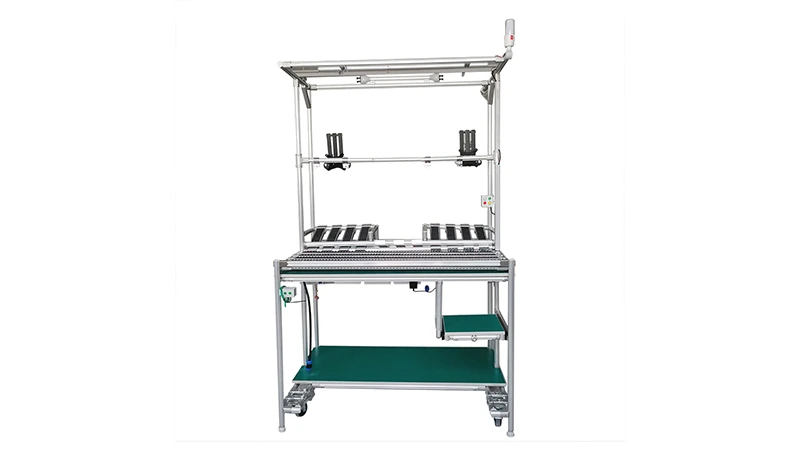
In the world of medical manufacturing, research, and device assembly, precision isn't just a goal—it's a necessity. Every component, every surface, and every piece of equipment plays a critical role in ensuring the safety and efficacy of products that directly impact patient health. Among these essential tools, the workbench stands as a silent workhorse, providing the foundation for tasks ranging from sterile drug compounding to intricate medical device assembly. But not all workbenches are created equal. In cleanroom environments—where even a single airborne particle or static discharge can compromise an entire batch of life-saving equipment—only the most meticulously designed solutions will do. Enter the Aluminum Workbench D: a modular, durable, and standards-compliant workstation engineered to meet the rigorous demands of the medical industry. In this article, we'll explore how this unassuming piece of furniture becomes a cornerstone of cleanroom efficiency, safety, and compliance, with a focus on its integration with aluminum profiles, ESD workstation capabilities, and alignment with global medical standards.
The Unique Demands of Medical Cleanrooms
Before diving into the specifics of Aluminum Workbench D, it's essential to understand why cleanroom environments in the medical sector are so unforgiving. Unlike general manufacturing spaces, medical cleanrooms—whether used for pharmaceutical production, medical device assembly, or biological research—operate under strict protocols to control airborne particles, microbial contamination, electrostatic discharge (ESD), and cross-contamination. These controls aren't just best practices; they're legally mandated by organizations like the FDA, ISO, and EMA, with non-compliance carrying severe consequences, including product recalls, fines, or even shutdowns.
Consider, for example, the production of a pacemaker. A single dust particle lodging in its internal circuitry could cause a malfunction, putting a patient's life at risk. Similarly, in a lab culturing stem cells for regenerative medicine, a stray bacterium could render an entire batch unusable. Even something as subtle as static electricity can damage the microchips in diagnostic equipment, leading to inaccurate test results. For these reasons, every piece of furniture in a medical cleanroom must be intentionally designed to mitigate these risks.
Key requirements for cleanroom furniture include: non-porous surfaces to prevent bacterial growth, resistance to harsh cleaning agents (like alcohols and disinfectants), minimal crevices where particles can accumulate, ESD-safe properties to protect sensitive electronics, and durability to withstand daily sanitization. Traditional workbenches—often made of wood, plastic, or uncoated steel—fall short here. Wood is porous and can harbor bacteria; plastic may warp under repeated cleaning; uncoated steel rusts and creates metal particles. This is where aluminum, and specifically Aluminum Workbench D, begins to shine.
Aluminum Profile: The Foundation of Cleanroom Excellence
At the heart of Aluminum Workbench D lies one of the most versatile materials in modern manufacturing: aluminum profile. Unlike generic aluminum sheets or tubes, aluminum profiles are extruded into precise, uniform shapes with built-in features—in this case, a t-slot design—that make them inherently modular. This isn't just a matter of convenience; in cleanroom settings, modularity translates to adaptability, which is critical as workflows evolve and regulatory requirements change.
Aluminum itself brings a host of benefits to the table. First, it's non-porous. Unlike wood or even some plastics, aluminum doesn't have tiny pores where bacteria, viruses, or particles can hide. This makes it inherently easier to sanitize, a must in environments where sterility is paramount. Second, it's corrosion-resistant. Medical cleanrooms often use aggressive cleaning agents to maintain sterility, and aluminum's natural oxide layer protects it from degradation, ensuring the workbench remains structurally sound and aesthetically consistent over time. Third, it's lightweight yet surprisingly strong. A typical aluminum profile can support heavy loads—often up to 500 kg or more, depending on the design—without the bulk of steel, making it easier to reconfigure the cleanroom layout when needed (a common occurrence as production scales or processes change).
The t-slot design of aluminum profiles is another game-changer. These slots run along the length of the profile, allowing for easy attachment of accessories without drilling or welding—both of which would create debris and compromise cleanroom integrity. Need a tool holder? Slide a bracket into the t-slot and secure it with a bolt. Want to add a shelf for raw materials? Attach an aluminum profile crossbeam using t-slot nuts. This modularity means Aluminum Workbench D can be customized to fit specific tasks, from assembling delicate catheters to weighing pharmaceutical ingredients, without requiring a complete overhaul of the workspace.
For medical applications, the aluminum profiles used in Workbench D are typically anodized. Anodization is an electrochemical process that thickens the aluminum's natural oxide layer, enhancing its corrosion resistance and creating a surface that's both scratch-resistant and ESD-conductive. This anodized finish ensures the workbench doesn't shed particles (a common issue with painted surfaces) and can be grounded to dissipate static electricity—two critical features for maintaining cleanroom classification and protecting sensitive components.

Aluminum Workbench D: Engineered for Medical Cleanrooms
Aluminum Workbench D isn't just a generic aluminum table; it's a purpose-built solution tailored to the unique needs of medical cleanrooms. Let's break down its design features and how they address the challenges of medical manufacturing and research.
Single-Deck, Caster-Free Design
Aluminum Workbench D features a single-deck configuration without casters (a deliberate choice for cleanroom stability). In environments where even minor vibrations can disrupt precision tasks—like microelectrode placement in a neurosurgical device—casters introduce unnecessary movement. By eliminating them, the workbench sits firmly on the cleanroom floor, providing a stable platform for delicate operations. The single-deck design keeps the workspace uncluttered, reducing the number of surfaces where particles can accumulate. This simplicity also makes cleaning easier: there's no lower shelf to maneuver around, ensuring every inch of the workbench can be reached with a disinfectant wipe or spray.
Surface Finish and Material Quality
The workbench's top surface is typically made from anodized aluminum or an ESD-safe laminate bonded to an aluminum core. Anodized aluminum offers excellent chemical resistance, standing up to frequent cleaning with isopropyl alcohol, hydrogen peroxide, or quaternary ammonium compounds—all common in medical sanitization protocols. For applications requiring additional ESD protection (e.g., assembling electronic medical devices), an ESD laminate can be added. These laminates are designed to dissipate static charges slowly, preventing sudden ESD events that could damage microchips or sensitive sensors.
Underneath the surface, the frame is constructed from heavy-duty aluminum profiles—often 4040 or 3030 series, named for their 40mm x 40mm or 30mm x 30mm cross-sections. These profiles are chosen for their balance of strength and weight; a 4040 aluminum profile, for instance, can support over 200 kg per linear meter, more than enough for most medical tasks, from holding equipment to storing raw materials. The profiles are connected using aluminum profile accessories like corner brackets and t-slot bolts, ensuring a secure, rattle-free frame that doesn't generate particles through friction.
Load Capacity and Ergonomics
Medical cleanrooms often require workbenches to support not just tools and materials, but also heavy equipment like microscopes, centrifuges, or automated assembly machines. Aluminum Workbench D is engineered to handle these loads, with a typical weight capacity of 300–500 kg, depending on the frame configuration. This robustness ensures the workbench remains stable even when fully loaded, preventing tipping or warping that could compromise precision.
Ergonomics is another key consideration. Medical professionals and technicians often spend hours at a time at their workbenches, and poor ergonomics can lead to fatigue and errors. Aluminum Workbench D is available in customizable heights (typically 750–900mm, the standard for seated or standing work) and depths (800–1200mm, to accommodate different equipment sizes). Some models even offer height-adjustable legs—another benefit of the modular aluminum profile design—allowing users to switch between seated and standing positions throughout the day, reducing strain and improving productivity.

Aluminum Workbench D as an ESD Workstation: Protecting Sensitive Electronics
Many medical devices today are as much electronic as they are mechanical. Think of insulin pumps with Bluetooth connectivity, wearable heart monitors, or surgical robots with microprocessor-controlled arms. These devices rely on tiny semiconductors and microchips that are extremely sensitive to electrostatic discharge (ESD). A single ESD event—even one too small to feel—can destroy a microchip, rendering the device useless (or worse, causing it to malfunction in use). For this reason, any workbench used in assembling or testing these devices must function as an ESD workstation.
Aluminum Workbench D excels in this role, thanks to the conductive properties of aluminum and thoughtful design features that channel static charges safely to ground. Here's how it works:
Conductive Pathways and Grounding
Aluminum is a natural conductor of electricity, which means static charges that build up on the workbench surface (from friction, for example) don't linger—they flow through the aluminum frame to a grounding point. Most Aluminum Workbench D models include integrated grounding ports, where a grounding cable can be attached. This cable connects to the cleanroom's grounding system, ensuring static charges are dissipated into the earth, not into sensitive components. For added protection, users can wear ESD wrist straps that connect to the same grounding port, preventing static from building up on their bodies and transferring to the device.
Compliance with ESD Standards
Not all ESD workstations are created equal, and in the medical industry, compliance with recognized standards is non-negotiable. Aluminum Workbench D is designed to meet ANSI/ESD S20.20, the leading standard for ESD control in electronics manufacturing. This standard specifies requirements for surface resistance (typically between 10^6 and 10^9 ohms for dissipative surfaces), grounding continuity, and regular testing. By adhering to these guidelines, Aluminum Workbench D ensures that even the most sensitive medical electronics—like the sensors in a fetal heart monitor—are protected from ESD damage during assembly and testing.
ESD-Safe Accessories
The modularity of aluminum profiles extends to ESD-safe accessories. For example, tool holders, bin dividers, and monitor arms designed for ESD workstations can be attached to the t-slots, ensuring that every component of the workspace contributes to static control. Even the aluminum profile accessories—like brackets and connectors—are made from conductive materials, maintaining the continuous grounding path throughout the workbench. This holistic approach to ESD protection sets Aluminum Workbench D apart from generic workbenches, which often treat ESD as an afterthought.
Meeting the Stringent Requirements of Medical Industry Standards
Regulatory compliance isn't optional in the medical industry—it's the foundation of patient safety. Aluminum Workbench D is engineered to meet or exceed a range of global standards, ensuring it can be integrated into even the most tightly regulated cleanrooms. Let's explore the key standards and how the workbench addresses them.
ISO 14644-1: Air Cleanliness
ISO 14644-1 classifies cleanrooms based on the number of particles per cubic meter of air (e.g., Class 5 allows no more than 3,520 particles of ≥0.5 μm per m³). To maintain this, furniture must not generate or trap particles. Aluminum Workbench D's smooth, crevice-free design minimizes particle accumulation. The anodized aluminum surface doesn't shed flakes, and the t-slot accessories are secured tightly to prevent rattling (which would release particles). Even the edges of the workbench are rounded to avoid sharp corners where dust might collect. During testing, Aluminum Workbench D typically produces fewer than 10 particles of ≥0.5 μm per minute—well below the limits for even the strictest ISO classes.
ISO 13485: Quality Management for Medical Devices
ISO 13485 is a quality management standard specific to medical device manufacturers, focusing on traceability, risk management, and process control. Aluminum Workbench D aligns with this by using aluminum profiles from suppliers with full material traceability. Each batch of aluminum can be traced back to the smelter, ensuring consistency in composition and properties. Additionally, the workbench's modular design allows for easy inspection and maintenance—critical for ISO 13485's requirement to identify and correct non-conformities quickly. If a component wears out, it can be replaced with a new one, and the replacement is documented, maintaining the audit trail required by regulators.
FDA and Biocompatibility
While the FDA doesn't regulate workbenches directly, it does regulate the medical devices produced on them. For devices that come into contact with patients (e.g., IV catheters, surgical instruments), the materials used in their manufacture must be biocompatible. Aluminum is generally recognized as safe (GRAS) by the FDA, and the anodized finish on Aluminum Workbench D is inert, meaning it won't leach chemicals into materials placed on the surface. This is especially important for pharmaceutical compounding, where drugs may come into brief contact with the workbench surface before being sealed in vials.
Resistance to Cleaning Agents
Medical cleanrooms are cleaned frequently—sometimes multiple times a day—using agents like 70% isopropyl alcohol, hydrogen peroxide, or peracetic acid. These chemicals can degrade lesser materials, but Aluminum Workbench D's anodized aluminum and ESD laminates are tested to withstand 1,000+ cycles of exposure without discoloration, warping, or loss of ESD properties. This ensures the workbench remains compliant and functional for years, even under heavy use.
Aluminum Workbench D vs. Traditional Workbenches: A Cleanroom Comparison
To truly appreciate the value of Aluminum Workbench D, it helps to see how it stacks up against traditional workbench materials in a cleanroom context. The table below compares key attributes:
| Attribute | Aluminum Workbench D | Wooden Workbench | Plastic Workbench | Uncoated Steel Workbench |
|---|---|---|---|---|
| Non-porous Surface | Yes (aluminum/anodized) | No (porous, traps bacteria) | Yes (but may scratch easily) | No (rusts, creates particles) |
| ESD-Safe | Yes (conductive aluminum, grounding) | No (insulative, builds static) | Only with specialized coatings | Yes (if grounded), but heavy |
| Resistance to Cleaning Agents | Excellent (withstands alcohols, peroxides) | Poor (swells, warps) | Good (but may discolor over time) | Fair (prone to rust if not dried) |
| Modularity | High (t-slot accessories) | Low (fixed design, no customization) | Low (limited accessory options) | Medium (welding/bolting required) |
| Particle Generation | Very low (anodized surface, tight joints) | High (sheds wood particles, splinters) | Medium (may shed plastic particles if scratched) | High (rust flakes, paint chips) |
| Weight | Light (easy to reconfigure) | Heavy (hard to move) | Light (but less durable) | Very heavy (difficult to reposition) |
Maintenance and Longevity: Keeping Your Workbench Cleanroom-Ready
Even the best cleanroom furniture requires proper maintenance to stay compliant, and Aluminum Workbench D is no exception. The good news is its design makes maintenance straightforward, ensuring it remains a reliable asset for years to come.
Daily Cleaning
Daily cleaning is simple: wipe the workbench surface with a lint-free cloth dampened with 70% isopropyl alcohol or a hospital-grade disinfectant. Pay special attention to the edges and any t-slot openings (though these are minimized in the design). For stubborn stains, a soft-bristled brush can be used—avoid abrasive pads, as they may scratch the anodized finish. After cleaning, allow the surface to air dry completely before resuming work.
Weekly Inspections
Once a week, inspect the workbench for loose accessories (e.g., tool holders, shelves) and tighten any bolts or nuts as needed. Check the grounding connection to ensure it's secure—loose grounding cables can compromise ESD protection. Also, inspect the surface for scratches or damage; while anodized aluminum is scratch-resistant, deep scratches may need to be repaired with a touch-up pen (available from aluminum profile suppliers) to prevent particle shedding.
Long-Term Care
Every 6–12 months, have the workbench's ESD properties tested using a surface resistance meter to ensure it still meets ANSI/ESD S20.20 standards. If the workbench needs to be reconfigured (e.g., adding a new shelf), use only aluminum profile accessories from the original supplier to maintain compatibility and compliance. Avoid using the workbench for tasks it wasn't designed for (e.g., heavy hammering), as this can damage the frame or surface.
With proper care, Aluminum Workbench D can last 10+ years in a medical cleanroom—far longer than wooden or plastic alternatives. Its durability and low maintenance requirements make it a cost-effective choice over time, even with a higher initial investment than generic workbenches.
Conclusion: Aluminum Workbench D—A Partner in Medical Cleanroom Success
Medical cleanrooms are environments where precision, safety, and compliance intersect, and every tool within them must rise to the occasion. Aluminum Workbench D does more than just provide a surface to work on—it's a strategic asset that supports the rigorous demands of medical device manufacturing, pharmaceutical research, and clinical testing. By leveraging the benefits of aluminum profile—modularity, durability, and inherent cleanliness—it addresses the unique challenges of cleanroom operations, from particle control to ESD protection.
Whether you're assembling life-saving medical devices, compounding sterile medications, or conducting cutting-edge research, Aluminum Workbench D offers the peace of mind that comes with knowing your workspace is designed to meet the highest industry standards. Its adaptability ensures it can grow with your needs, while its low maintenance requirements keep operational costs in check. In a field where there's no room for error, Aluminum Workbench D is more than furniture—it's a foundation for excellence.
As medical technology continues to advance, and cleanroom requirements grow stricter, the importance of purpose-built furniture like Aluminum Workbench D will only increase. For forward-thinking medical facilities, investing in such solutions isn't just about compliance—it's about ensuring the safety of patients, the reliability of devices, and the efficiency of operations for years to come.