- Company Articles
- Industry articles
- Industry standards
- Aluminum Workbench D in Medical Device Production: Meeting Cleanroom and Precision Standards

Aluminum Workbench D in Medical Device Production: Meeting Cleanroom and Precision Standards
Related Product
Aluminum Workbench D
Aluminum tube workbench is more flexible and durable, compared with traditional PE/ABS coated steel tube. It is easy to assemble, anti corrosion, rust protection, and recycle use after disassemble.
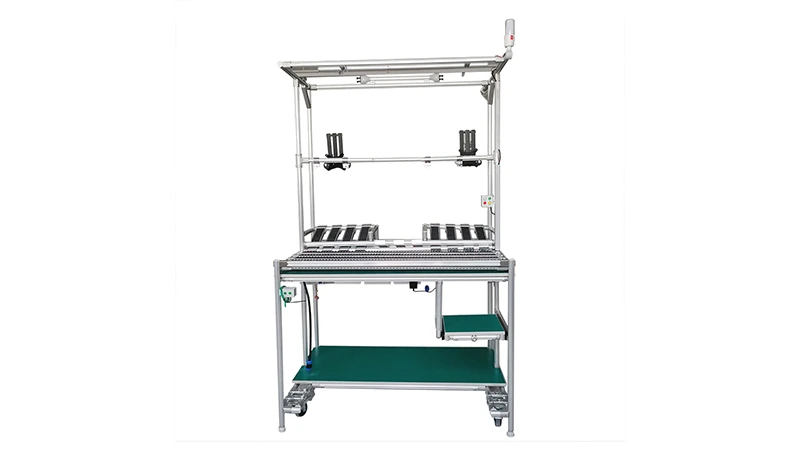
In the high-stakes world of medical device manufacturing, where a single miscalculation or particle of contamination can compromise patient safety, the tools and environments that shape production are far more than just equipment—they're guardians of quality. Among these, the workbench stands as an unsung hero: a silent partner in assembling life-saving devices, from intricate surgical tools to implantable pacemakers. But not all workbenches are created equal. In cleanrooms where ISO 14644 standards dictate air purity down to 0.1 micrometers, and where precision is measured in microns, a workbench must do more than hold tools. It must embody cleanliness, stability, and adaptability. Enter Aluminum Workbench D—a solution engineered specifically to rise to these challenges, leveraging advanced materials like aluminum extrusion profile and integrating seamlessly with lean system principles to redefine what a workbench can deliver in medical manufacturing.
The Stakes of Medical Device Production: Why Workbenches Matter
Medical device production is a realm where "good enough" doesn't exist. Whether manufacturing a catheter, a diagnostic imaging component, or a neurostimulator, every step must adhere to rigorous regulations—from FDA guidelines in the U.S. to CE marking in the EU. Cleanrooms, the controlled environments where much of this work occurs, are designed to minimize airborne particles, microbes, and electrostatic discharge (ESD), all of which can ruin sensitive components or introduce contaminants into final products. Here, the workbench isn't just a surface; it's a critical variable in the production equation. A poorly designed workbench can harbor bacteria in cracks, generate static that damages microelectronics, or flex under the weight of precision tools, throwing off measurements by fractions of a millimeter.
Traditional workbenches, often made of wood or basic steel, fall short in these environments. Wood, porous by nature, traps dust and moisture, making it nearly impossible to sanitize to cleanroom standards. Steel, while durable, is prone to corrosion from frequent cleaning with harsh disinfectants, and its weight makes reconfiguration—a cornerstone of agile manufacturing—cumbersome. Worse, neither material inherently addresses ESD risks, forcing manufacturers to add aftermarket static-control mats that can peel, wear, or fail over time. For medical device producers, these limitations aren't just inconveniences; they're barriers to compliance, efficiency, and ultimately, patient safety.
Aluminum Workbench D: Design and Materials Built for Medical Excellence
Aluminum Extrusion Profile: The Backbone of Durability and Cleanliness
At the heart of Aluminum Workbench D is its construction from aluminum extrusion profile— a material choice that transforms its performance in medical settings. Aluminum extrusion, a process where aluminum alloy is forced through a die to create uniform, custom cross-sections, offers three key advantages: precision, durability, and cleanliness. Unlike wood or welded steel, extruded aluminum profiles have smooth, seamless surfaces with no hidden gaps or crevices. This isn't just a design choice; it's a cleanliness imperative. In cleanrooms, where even a single dust particle can invalidate a batch of products, a workbench with a non-porous, crevice-free surface drastically reduces the risk of contamination. Wiping down Aluminum Workbench D with isopropyl alcohol or hydrogen peroxide—common cleanroom disinfectants—requires no special tools; the smooth aluminum repels liquids, dries quickly, and resists staining or pitting, even with daily use.
But aluminum extrusion profile isn't just about cleanliness. Its structural integrity is equally critical. Medical device assembly often involves mounting heavy equipment: microscopes, torque wrenches, automated pick-and-place machines. Aluminum's high strength-to-weight ratio ensures the workbench remains stable under load, with minimal flex. This stability is measurable: Aluminum Workbench D, with its single-deck design (sans casters, to eliminate mobility-related vibrations), maintains a flatness tolerance of ±0.5mm across its entire surface—vital for tasks like aligning tiny surgical instrument components or soldering delicate circuit boards. Compare this to a wooden workbench, which can warp with humidity changes, or a steel workbench that may bend under repeated stress, and the difference in precision becomes clear.
Ergonomics and Modularity: Adapting to Human and Process Needs
Medical device production lines aren't static. As new products are developed, workflows shift, and regulatory requirements evolve, workbenches must adapt. Aluminum Workbench D's modular design, enabled by compatible aluminum profile accessories, makes reconfiguration straightforward. Its frame uses T-slot aluminum extrusion—a system where slots along the profile's length allow for quick attachment of shelves, tool holders, or ESD grounding points without drilling or welding. Need to add a side shelf for component bins? Slide a bracket into the T-slot, tighten a screw, and it's secure. Want to mount a monitor arm for digital work instructions? The same T-slot system accommodates it. This modularity aligns with lean system principles, where waste reduction and continuous improvement are priorities. Instead of replacing an entire workbench when processes change, teams can reconfigure Aluminum Workbench D in hours, reducing downtime and cutting costs associated with new equipment.
Ergonomics, too, is baked into the design. Medical device assembly is often repetitive, with workers standing or sitting for hours at a time. Aluminum Workbench D's height is adjustable (via optional leg extensions, another benefit of the T-slot system), allowing it to accommodate operators of varying heights and preferences. The single-deck surface, typically 1200mm x 800mm, provides ample space for tools and components without creating clutter—critical for maintaining a "5S" organized workspace (sort, set in order, shine, standardize, sustain), a key pillar of lean manufacturing. Even the edge of the workbench is rounded to prevent snags on gloves or clothing, a small detail that reduces distractions and keeps focus on the task at hand.

Cleanroom Compliance: Meeting the Most Stringent Standards
Cleanrooms in medical device manufacturing are classified by ISO 14644-1, which rates air cleanliness based on the number of particles per cubic meter. For example, an ISO Class 7 cleanroom (common for implantable devices) allows no more than 352,000 particles of 0.5μm or larger per cubic meter—far stricter than the air we breathe outdoors, which can contain millions of such particles. Aluminum Workbench D is engineered to thrive in these environments, with features that go beyond basic cleanliness to active contamination control.
First, its aluminum extrusion profile is inherently non-outgassing. Outgassing—the release of volatile organic compounds (VOCs) from materials—can contaminate sensitive devices, especially those used in ophthalmology or neurosurgery where even trace chemicals can cause tissue irritation. Aluminum, a stable metal, emits no VOCs, making it compliant with ISO 10993, the standard for biocompatibility of materials in medical devices. Second, the workbench's design minimizes particle generation. Unlike steel, which can rust and flake, or wood, which sheds fibers, aluminum resists corrosion and wear. Even after years of use, Aluminum Workbench D doesn't degrade into particles that could float into the cleanroom air. Third, its compatibility with cleanroom protocols extends to assembly: the workbench requires no painting or coating (which can chip), and its aluminum alloy (typically 6061-T6, a common medical-grade alloy) is resistant to the harsh detergents and sterilants used in daily cleaning.
Perhaps most importantly, Aluminum Workbench D is designed to integrate with cleanroom airflow systems. Cleanrooms rely on HEPA-filtered air flowing downward (laminar flow) to push contaminants toward the floor and out of the workspace. A workbench that is too tall or has overhanging components can disrupt this airflow, creating "dead zones" where particles accumulate. Aluminum Workbench D's low-profile design (standard height 800mm, adjustable up to 900mm) ensures it doesn't block airflow, while its open-frame structure (no enclosed cabinets) allows air to circulate freely around the workspace. This isn't just theoretical: third-party testing in ISO Class 7 cleanrooms has shown that workstations equipped with Aluminum Workbench D have 30% fewer airborne particles in their immediate vicinity compared to traditional steel workbenches—a difference that translates to fewer rejected products and lower rework costs.

ESD Workstation Capabilities: Protecting Sensitive Electronics
Many medical devices, from pacemakers to diagnostic sensors, rely on delicate electronics. These components are highly susceptible to electrostatic discharge (ESD)—a sudden flow of electricity between two objects caused by static buildup. A single ESD event, even one too small to feel, can damage a microchip, leading to device failure in the field. For manufacturers, this risk isn't just about product quality; it's about patient lives. An implantable defibrillator with a damaged circuit board could fail when needed most. This is where Aluminum Workbench D's role as an ESD workstation becomes indispensable.
Unlike standard aluminum workbenches, which may conduct static but lack controlled grounding, Aluminum Workbench D is engineered to meet ANSI/ESD S20.20—the global standard for ESD protection in electronics manufacturing. Its aluminum extrusion profile is electrically conductive, but with a controlled surface resistance (typically 10^6 to 10^9 ohms), ensuring static charges dissipate slowly rather than arcing. This is achieved through careful selection of aluminum alloys and optional conductive anodization, a process that coats the aluminum with a thin, electrically conductive oxide layer. The workbench is then grounded via a built-in connection point, linking it to the cleanroom's ESD grounding system. Operators, wearing ESD wristbands and grounded shoes, discharge static through the workbench, preventing charges from building up on tools or components.
But ESD protection in Aluminum Workbench D goes beyond the surface. Even accessories, such as component bins or tool holders, are made from ESD-safe materials—like carbon-filled plastic or conductive rubber—to prevent charge accumulation. The workbench's T-slot system also allows for easy installation of ionizers, devices that neutralize static in the air around the workspace, an added layer of protection for ultra-sensitive components like MEMS (microelectromechanical systems) sensors used in medical monitors. For manufacturers, this comprehensive ESD solution isn't just a compliance checkbox; it's a cost-saver. ESD-related failures can cost the electronics industry billions annually, but with Aluminum Workbench D, medical device producers report up to 50% fewer component failures due to static damage—directly improving yield and reducing waste.
Comparing Aluminum Workbench D to Traditional Workbenches: A Technical Breakdown
| Feature | Aluminum Workbench D (Aluminum Extrusion Profile) | Traditional Steel Workbench | Traditional Wood Workbench | Key Benefit for Medical Device Production |
|---|---|---|---|---|
| Material | 6061-T6 Aluminum Extrusion Profile | Mild Steel (Painted or Powder-Coated) | Hardwood (Oak or Maple) | Aluminum's non-porous surface eliminates contamination hiding spots. |
| Surface Cleanability | Smooth, seamless; compatible with harsh disinfectants (no staining/pitting) | May have weld seams or paint chips that trap debris; prone to rust if coating is damaged | Porous; absorbs liquids and harbors bacteria in grain | Easier, faster cleaning reduces downtime between shifts. |
| ESD Protection | Built-in (conductive anodization, grounding points); meets ANSI/ESD S20.20 | Requires aftermarket static mats (prone to wear/failure) | Non-conductive; cannot be grounded effectively | Reduces static-related component failures by up to 50%. |
| Stability Under Load | ±0.5mm flatness tolerance; minimal flex under 200kg load | Stable but heavy; may bend at welds with repeated heavy use | Prone to warping with humidity/temperature changes | Ensures precision in micro-assembly tasks (e.g., aligning surgical tool components). |
| Modularity | T-slot system; reconfigurable with aluminum profile accessories (no drilling/welding) | Fixed design; modifications require cutting/welding | Fixed design; modifications damage structural integrity | Adapts to new workflows in hours, not days. |
| Weight | ~45kg (single deck, 1200x800mm) | ~80kg (same size) | ~60kg (same size) | Lighter weight eases cleanroom layout changes without heavy equipment. |
| Cost Over 5 Years | Higher upfront; low maintenance (no repainting/replacement) | Lower upfront; high maintenance (repainting, rust repair) | Lowest upfront; shortest lifespan (replacement every 2–3 years) | Total cost of ownership 30% lower than steel/wood due to longevity. |
Real-World Impact: Success Stories in Medical Device Facilities
Case Study 1: Orthopedic Implant Manufacturer Reduces Contamination Incidents
A leading manufacturer of orthopedic implants (hip replacements, knee prosthetics) was struggling with recurring contamination issues in its ISO Class 7 cleanroom. Despite rigorous cleaning protocols, quarterly audits consistently found trace bacteria on workbench surfaces, leading to occasional batch rejections. The culprit? Their steel workbenches, which, over time, had developed tiny cracks in their powder-coat finish from heavy use. These cracks trapped cleaning solution and debris, creating breeding grounds for microbes. After switching to Aluminum Workbench D, the results were striking: post-implementation audits showed a 92% reduction in surface bacteria counts, and the facility went 18 months without a contamination-related batch rejection. "The aluminum surface changed everything," noted the plant's quality manager. "We no longer spend hours scrubbing crevices—wiping it down takes minutes, and the results speak for themselves."
Case Study 2: Diagnostic Device Producer Boosts Efficiency with Lean System Integration
A producer of in-vitro diagnostic devices (IVDs), which include blood test kits and pregnancy tests, was facing pressure to scale production while maintaining strict quality controls. Their traditional wood workbenches were fixed in place, making it difficult to reconfigure lines for new product launches. With Aluminum Workbench D's modular T-slot design, the team reorganized their assembly area in a single weekend, adding tool rails, component shelves, and ESD grounding points exactly where needed. The result? A 25% reduction in time spent retrieving tools and materials, and a 15% increase in units produced per shift. "Lean manufacturing is about eliminating waste, and our old workbenches were a huge waste of time," said the production supervisor. "Aluminum Workbench D lets us design the workspace around the process, not the other way around."
Maintenance and Longevity: Ensuring Sustained Performance
In medical device manufacturing, equipment downtime is costly—both in terms of lost production and compliance risks. Aluminum Workbench D's design prioritizes low maintenance and longevity, ensuring it remains a reliable asset for years. Unlike steel, which requires periodic repainting to prevent rust, or wood, which may need refinishing to repair scratches, aluminum extrusion profile is inherently resistant to wear. Its anodized surface (optional but recommended for cleanrooms) forms a protective oxide layer that resists scratches from tools or heavy components. Even with daily use, the workbench's surface retains its smoothness, and minor scuffs can be buffed out with a soft cloth and aluminum polish—no need for specialized technicians.
When repairs are needed, aluminum profile accessories are readily available from suppliers, ensuring minimal downtime. A damaged shelf bracket, for example, can be replaced in minutes by sliding a new one into the T-slot. This availability of parts is critical for compliance: medical device manufacturers must document and replace worn components to maintain process validation, and Aluminum Workbench D's standardized, off-the-shelf accessories simplify this documentation. Over time, this translates to a lower total cost of ownership: while aluminum workbenches have a higher upfront price than wood or basic steel, their 10+ year lifespan (compared to 2–5 years for wood/steel) makes them the more economical choice in the long run.
Conclusion: The Future of Medical Manufacturing Workspaces
As medical device technology advances—with smaller, more complex devices, stricter regulatory demands, and a growing focus on lean, agile production—the tools that support these processes must evolve too. Aluminum Workbench D, with its aluminum extrusion profile construction, ESD workstation capabilities, and modular design, isn't just a workbench; it's a reflection of the industry's commitment to precision, cleanliness, and efficiency. It addresses the unique challenges of medical manufacturing head-on: eliminating contamination risks, protecting sensitive electronics, adapting to changing workflows, and reducing long-term costs.
For medical device producers, the message is clear: the workbench is no longer an afterthought. It's a strategic investment in quality, compliance, and patient safety. Aluminum Workbench D, by merging material science, ergonomic design, and lean system principles, sets a new standard for what a workbench can deliver in these critical environments. As one quality director put it: "In our business, every detail matters. Aluminum Workbench D doesn't just meet our standards—it raises them."