- Company Articles
- Industry articles
- Industry standards
- ANSI Guidelines for 40 Steel Roller Track Black ESD Wheel Installation

ANSI Guidelines for 40 Steel Roller Track Black ESD Wheel Installation
Related Product
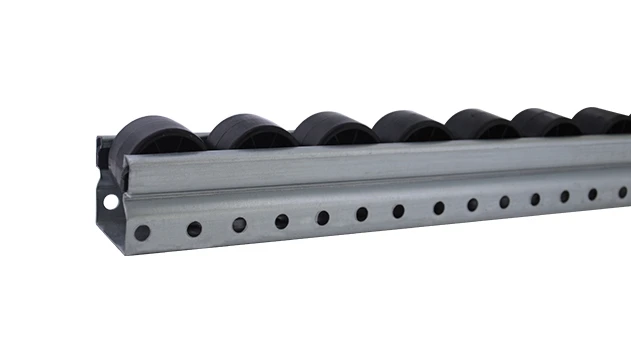
40 Steel Roller Track Black ESD Wheel
The roller track can be installed with multiple accessories to create different slopes and configurations of flow racks.All steel conveyor 40 roller track accessories are engineered to perfectly fit the sliding rail.
Why ANSI Standards Matter in Your Lean System
In the fast-paced world of manufacturing, where every second counts and precision is non-negotiable, the installation of equipment like the 40 steel roller track black ESD wheel isn't just a routine task—it's a critical step that impacts everything from production flow to product quality. Imagine walking through a 3C assembly plant: workers move with purpose, components glide smoothly along conveyors, and every workstation hums with efficiency. This isn't just luck; it's the result of following strict guidelines, especially those set by the American National Standards Institute (ANSI).
ANSI standards act as a common language for safety, reliability, and performance. When you're integrating these roller tracks into your lean system, adherence to ANSI guidelines ensures that your equipment works seamlessly with other components like esd workstations and conveyors, reducing downtime and minimizing errors. But beyond compliance, it's about protecting your team—ensuring that the tracks they interact with daily are stable, that ESD protection is effective, and that every part of the installation aligns with the lean principles of waste reduction and continuous improvement.
Let's dive into what makes the 40 steel roller track black ESD wheel unique. Its black ESD wheels are designed to dissipate static electricity, a must in environments where sensitive electronics are handled. Pair this with the durability of steel tracks, and you have a component that's built to withstand the rigors of high-volume production while keeping your products safe from electrostatic damage. Now, let's break down how to install it the right way, step by step.
Pre-Installation: Getting Ready for Success
Tools You'll Need
Essential Tools for Installation:
| Tool | Purpose | Quantity |
|---|---|---|
| ESD-Safe Torque Wrench | To tighten bolts without over-torquing (critical for ESD integrity) | 1 |
| Level (24-inch or longer) | To ensure the track is perfectly horizontal | 1 |
| Measuring Tape | For precise spacing between mounting points | 1 |
| Wire Brush | To clean mounting surfaces of debris or rust | 1 |
| Anti-Static Gloves | To protect ESD wheels from static during handling | 2 pairs |
| Mounting Brackets (Included with Track) | To secure the track to the frame or conveyor system | As per track length (typically 1 bracket per 2ft) |
Safety First: A Quick Checklist
Before you even pick up a tool, take a moment to ensure your workspace is safe. Here's what to verify:
- Power Down: If the roller track is near active conveyors or esd workstations, turn off power to avoid accidental activation.
- Clear the Area: Remove any loose materials or tools that could trip workers during installation.
- Inspect Components: Check the roller track for dents, bent wheels, or damaged ESD coatings. A small imperfection now could lead to big problems later.
- Ground Yourself: Wear ESD wrist straps when handling the black ESD wheels—static from your body can damage the wheel's conductive properties.
Pro Tip: Label each component with its position (e.g., "Left Track A" or "Right Track B") before unpacking. This saves time during assembly, especially if you're installing multiple tracks in a sequence.

Step-by-Step Installation: Aligning with ANSI Standards
Now that you're prepped and safe, let's walk through the installation process. Each step here is aligned with ANSI/ESD S20.20 (for ESD protection) and ANSI B56.1 (for material handling equipment), ensuring your track meets both safety and performance benchmarks.
Step 1: Prepare the Mounting Surface
Start by cleaning the surface where the roller track will be mounted—this could be a frame, a conveyor side rail, or part of an esd workstation. Use a wire brush to remove rust, paint chips, or grease. Even small debris can cause the track to sit unevenly, leading to misalignment later. Once clean, measure and mark the mounting points using your tape measure. ANSI recommends spacing brackets no more than 24 inches apart for steel tracks to prevent sagging under load.
Step 2: Attach Mounting Brackets
Using the marked points, secure the mounting brackets to the surface. Here's where your torque wrench becomes crucial: ANSI specifies that bolts for material handling equipment should be tightened to 25-30 ft-lbs (check your track's manual for exact specs). Over-tightening can strip threads or warp brackets; under-tightening leaves the track loose, risking movement during operation. As you attach each bracket, use a level to ensure they're all perfectly aligned—even a 1-degree tilt can cause components to stick or slide unevenly.
Step 3: Install the Roller Track
With brackets in place, carefully lift the 40 steel roller track (get a helper—these tracks can be heavy!) and set it onto the brackets. Align the track's pre-drilled holes with the bracket slots. Now, secure the track using the provided hardware. Again, torque the bolts to the manufacturer's recommendation—this is usually 15-20 ft-lbs for track-to-bracket connections. As you go, spin a few wheels by hand to ensure they rotate freely; if any wheel feels stuck, check for debris or misalignment before fully tightening.
Step 4: Calibrate ESD Continuity
ESD protection is non-negotiable here, especially if you're using the track with sensitive electronics. After mounting, use an ESD tester to verify continuity between the track, the wheels, and the ground. ANSI/ESD S20.20 requires a resistance of less than 3.5 x 10^7 ohms for conductive materials. If the reading is too high, check the wheel axles—they should be clean and making solid contact with the steel track. A little anti-static lubricant on the axles can help, but avoid overdoing it—excess lubricant can attract dust and compromise ESD performance.
Step 5: Test Load Capacity and Alignment
Finally, test the track with a load similar to what it will handle in production. Place a test cart or a box of components on the track and push it gently. It should roll smoothly without jerking or sticking. If it catches at a certain point, use your level to check for dips or rises in the track—you may need to adjust a bracket or shim a low spot. ANSI B56.1 requires that roller tracks handle 125% of their rated load without permanent deformation, so don't skip this test!
| Step | Key Action | ANSI Requirement |
|---|---|---|
| 1 | Clean and mark mounting surface | Bracket spacing ≤24 inches |
| 2 | Torque bracket bolts to 25-30 ft-lbs | ANSI B56.1 (fastener torque) |
| 3 | Secure track to brackets; test wheel rotation | Wheels must rotate freely (no binding) |
| 4 | Verify ESD continuity (<3.5 x 10^7 ohms) | ANSI/ESD S20.20 |
| 5 | Test with 125% rated load | ANSI B56.1 (load capacity) |

Integrating with Your Lean System: Beyond the Track
Installing the roller track is just the first piece of the puzzle. To truly maximize efficiency, you need to ensure it works in harmony with your broader lean system. Let's look at how it connects with two key components: esd workstations and conveyors.
Pairing with ESD Workstations
Many manufacturers use 40 steel roller tracks to feed components directly into esd workstations. For example, in a medical device assembly line, small parts might roll from the track onto a workstation where technicians assemble circuit boards. To make this handoff seamless, ensure the track's height matches the workstation's surface—ANSI/ESD S20.20 recommends a maximum height difference of 0.25 inches to prevent parts from bouncing or getting stuck. Also, check that both the track and workstation are grounded to the same system; separate grounding can create voltage differences that damage sensitive parts.
Syncing with Conveyors
When your roller track connects to a conveyor, alignment is everything. A misaligned junction can cause jams, leading to production delays and damaged goods. Use a straightedge to check that the track and conveyor are in the same plane—no vertical or horizontal gaps. If you're using the track to feed a powered conveyor, adjust the track's angle slightly (1-2 degrees) to let gravity assist movement, but not so steep that parts slide too quickly. This balance is key to maintaining the "flow" in your lean system, where materials move at a steady, predictable pace.
Maintenance: Keeping Your Track in Top Shape
ANSI standards don't stop at installation—they also emphasize ongoing maintenance to ensure long-term performance. A well-maintained roller track can last 5-7 years in heavy use, while neglect can cut that lifespan in half. Here's a quick routine to follow:
- Daily Checks: Walk the track and visually inspect for loose bolts, debris in wheels, or ESD wheel damage. Spin a few wheels to ensure they're still free-moving.
- Weekly Cleaning: Wipe down the track with a dry cloth to remove dust (static-attracting dust can compromise ESD performance). For sticky residue, use isopropyl alcohol on a lint-free cloth.
- Monthly Lubrication: Apply a small amount of ESD-safe lubricant to wheel axles. Avoid oil-based lubes—they attract dust. ANSI recommends silicone-based lubricants for ESD applications.
- Quarterly ESD Testing: Re-test continuity with your ESD tester to ensure the wheels and track are still grounding properly. replace any wheels with resistance above 3.5 x 10^7 ohms.
Troubleshooting Common Issues
| Issue | Possible Cause | Solution |
|---|---|---|
| Wheels stick or slow down | Dust in axles or misaligned track | Clean axles with alcohol; re-level track |
| High ESD resistance reading | Damaged wheel coating or loose ground | replace wheel; tighten ground connection |
| Track sags under load | Brackets spaced too far apart | Add intermediate brackets (per ANSI's 24-inch rule) |
| Parts bounce at track-conveyor junction | Height difference >0.25 inches | Shim track or adjust conveyor height |
Real-World Impact: Success Stories from the Factory Floor
To see these guidelines in action, let's look at a case study from a leading 3C manufacturer. Before implementing ANSI-aligned installations, their production line struggled with frequent jams on roller tracks, leading to 2-3 hours of downtime weekly. ESD-related defects were also a problem, costing them thousands in scrap. After training their team on these steps—proper cleaning, precise torqueing, and ESD testing—downtime dropped by 80%, and ESD defects became almost non-existent. "It's not just about following rules," their plant manager noted. "It's about creating a system where everyone trusts the equipment to work as it should, so they can focus on building better products."
Another example comes from a medical device assembler integrating the 40 steel roller track with esd workstations. By aligning the track height exactly with their work surfaces and ensuring ESD continuity across both systems, they reduced part handling errors by 30%. "The track isn't just moving parts—it's connecting our team's workstations into a single, efficient flow," their lean coordinator explained. "That's the power of a well-installed lean system."
Final Thoughts: More Than Installation—Building a Lean Future
Installing a 40 steel roller track black ESD wheel might seem like a small part of your manufacturing process, but as we've explored, it's a cornerstone of your lean system. By following ANSI guidelines, you're not just checking a box—you're investing in safety, efficiency, and the long-term success of your operation. Remember, lean manufacturing is about continuous improvement, and that starts with the details: a level track, properly torqued bolts, effective ESD protection, and a team trained to maintain it all.
So the next time you're on the factory floor, take a moment to look at those roller tracks. They're more than metal and wheels—they're the silent partners in your production line, keeping things moving, keeping your team safe, and keeping your products ready for the world. And with these ANSI guidelines in hand, you're ready to make sure they do their job—today, tomorrow, and for years to come.