- Company Articles
- Industry articles
- Industry standards
- Anti-Slip Adjustable Leveling Feet: Compliance with Industrial Safety Standards

Anti-Slip Adjustable Leveling Feet: Compliance with Industrial Safety Standards
Related Product
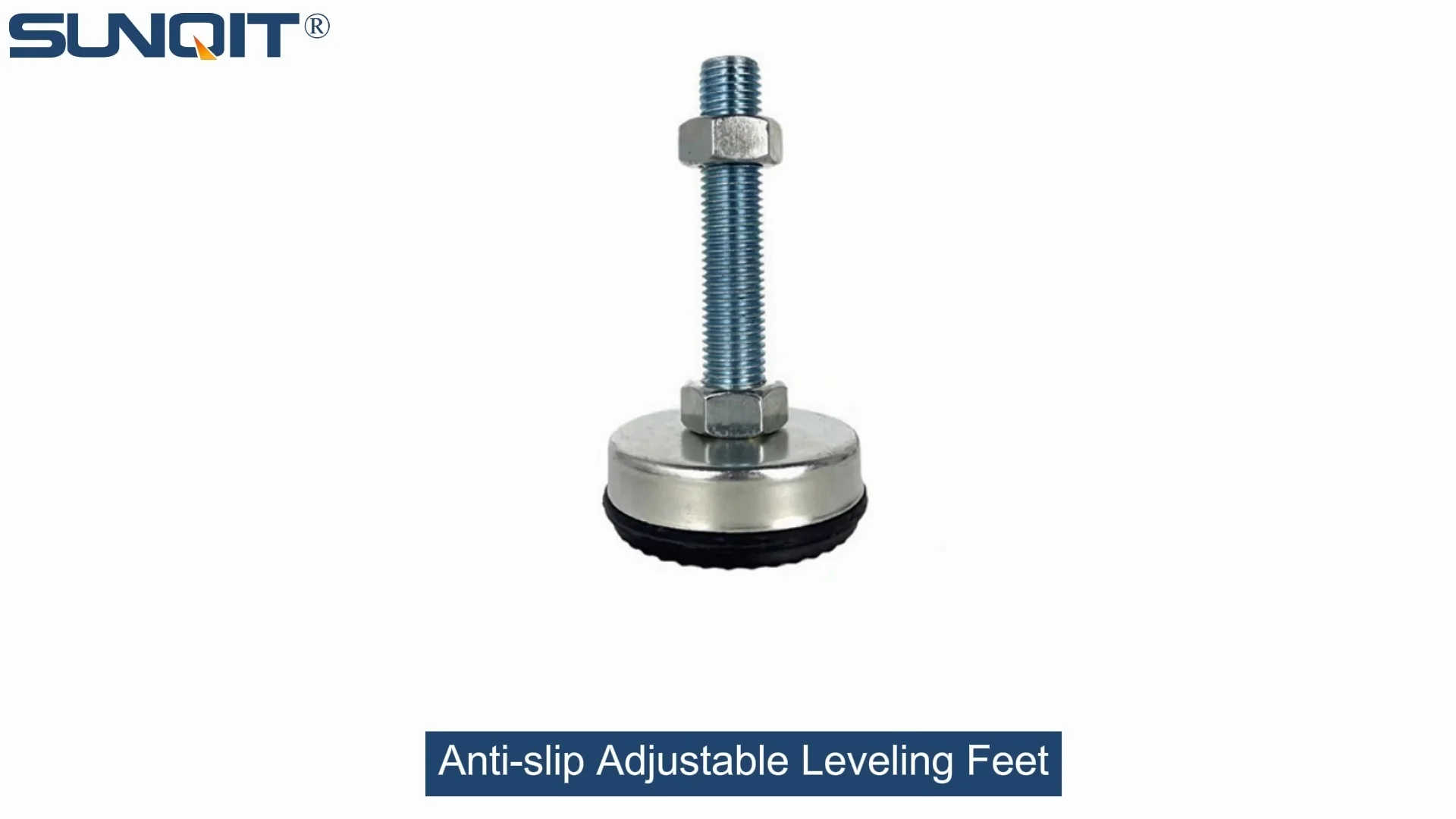
Anti-slip Adjustable Leveling Feet
Anti-slip Adjustable Leveling Feet are designed to keep machines level when placed on uneven or sloped ground, the rubber base will prevent product slip during work.
In the bustling world of manufacturing, warehousing, and industrial production, safety isn't just a buzzword—it's the backbone of every efficient, responsible operation. From heavy machinery to delicate assembly lines, every component plays a role in keeping workers protected and processes running smoothly. Yet, some of the most critical safety elements are the ones we often overlook: the small, unassuming parts that form the foundation of our workspaces. Today, we're shining a spotlight on one such unsung hero: anti-slip adjustable leveling feet. These humble components might not grab headlines, but they're indispensable for maintaining stability, preventing accidents, and ensuring compliance with the strict industrial safety standards that govern workplaces worldwide.
Imagine a scenario: a busy assembly line where workers stand for hours, maneuvering tools and components on a workbench. The floor, worn from years of use, has subtle dips and uneven patches. Without proper stabilization, that workbench might wobble, causing tools to slip, parts to misalign, or worse—creating a tripping hazard. Now, picture that same workbench equipped with high-quality anti-slip adjustable leveling feet. Suddenly, those uneven floors are no longer a threat. The feet adapt to the surface, locking the workbench into place, their textured bases gripping firmly to prevent slips. This isn't just about convenience; it's about protecting lives and livelihoods. In this article, we'll dive deep into how these unassuming components work, why they matter for safety compliance, and how they integrate seamlessly with other industrial systems like aluminum profiles and lean pipe workbenches.
The Critical Role of Stable Work Surfaces in Industrial Safety
Before we explore the specifics of anti-slip adjustable leveling feet, let's first understand why stable work surfaces are non-negotiable in industrial settings. According to the Occupational Safety and Health Administration (OSHA), slips, trips, and falls are among the leading causes of workplace injuries, accounting for over 25% of all non-fatal accidents annually. Many of these incidents trace back to unstable equipment or uneven work surfaces. A wobbly material rack, for example, might tip over when loaded with heavy boxes, crushing toes or damaging inventory. A workbench that shifts during use could cause a worker to lose balance, leading to falls or lacerations from sharp tools. Even minor instability can have ripple effects: misaligned parts during assembly, increased product defects, and chronic fatigue from workers unconsciously compensating for a wobbly surface.
Stability isn't just about preventing accidents, though. It's also a cornerstone of operational efficiency. In lean manufacturing systems—where minimizing waste and maximizing productivity are priorities—a stable workspace ensures that processes flow smoothly. When tools and materials stay in place, workers spend less time readjusting and more time adding value. For instance, in electronics manufacturing, an ESD workstation (Electrostatic Discharge) must remain perfectly level to prevent static buildup and protect sensitive components. A single wobble could disrupt the ESD protection, leading to costly product failures. Similarly, in automotive plants, conveyor systems rely on stable supports to keep parts moving at consistent speeds; instability here could jam the line, halting production for hours.
The bottom line? Stable work surfaces are the silent enforcers of both safety and efficiency. And at the heart of that stability lie components like anti-slip adjustable leveling feet. These feet act as the "feet" of industrial equipment, bridging the gap between uneven floors and the machinery, workbenches, and racks that depend on a solid base. By allowing precise height adjustment and providing superior grip, they turn potentially hazardous surfaces into reliable foundations.
What Are Anti-Slip Adjustable Leveling Feet?
At their core, anti-slip adjustable leveling feet are mechanical components designed to stabilize equipment by compensating for uneven surfaces. They consist of three main parts: a threaded stem, an adjustable base, and an anti-slip pad. The threaded stem screws into the bottom of a piece of equipment (like a workbench or material rack), while the base—often made of rubber, plastic, or metal—rests on the floor. By rotating the stem, users can raise or lower the base, fine-tuning the height to level the equipment. The anti-slip pad, typically made of high-friction materials like nitrile rubber or textured plastic, ensures that the foot doesn't slide once positioned, even under heavy loads or vibrations.
But not all leveling feet are created equal. The "anti-slip" and "adjustable" features are what set industrial-grade models apart from generic household versions. Industrial anti-slip pads, for example, are engineered to withstand oils, chemicals, and extreme temperatures—common in manufacturing environments—without losing their grip. The adjustability range also varies: some feet can extend by just a few millimeters for minor adjustments, while heavy-duty models offer several inches of travel to accommodate severely uneven floors. Materials matter too: stainless steel stems resist corrosion in damp or chemical-exposed areas, while aluminum components reduce weight without sacrificing strength—ideal for mobile equipment like turnover trolleys.
One of the key advantages of these feet is their versatility. They're used across industries, from food processing (where hygiene and stability are critical) to aerospace manufacturing (where precision is paramount). They're found under workbenches, material racks, conveyor supports, and even medical equipment. In lean pipe systems, for example, lean pipe workbenches often rely on adjustable leveling feet to maintain stability while remaining compatible with the system's modular design. This adaptability makes them a staple in modern industrial setups, where one-size-fits-all solutions rarely work.

Compliance with Industrial Safety Standards: Why It Matters
In industrial settings, safety isn't optional—it's regulated by a web of standards and regulations designed to protect workers and ensure fair, responsible practices. Organizations like OSHA (U.S.), ISO (international), and ANSI (American National Standards Institute) set strict guidelines for everything from equipment stability to slip resistance. Anti-slip adjustable leveling feet don't just "help" with compliance; they're often a legal requirement. Let's break down what these standards entail and how leveling feet play into them.
OSHA's General Industry Standards (29 CFR 1910) are a prime example. These regulations mandate that "all walking-working surfaces are free of hazards such as loose boards, protruding nails, holes, and uneven surfaces." While this might seem focused on floors, it indirectly applies to equipment like workbenches and racks. If a workbench is unstable due to poor leveling, it creates a hazard by potentially tipping or causing tools to fall—violating OSHA's duty to provide a "safe and healthful workplace." OSHA also specifies that "portable ladders, scaffolds, and other elevated surfaces must be stable and secure," a requirement that extends to the supports (like leveling feet) that keep these structures grounded.
Internationally, ISO 45001 (Occupational Health and Safety Management Systems) takes a broader approach, requiring organizations to "identify hazards and assess risks" in their operations. Unstable equipment is a clear hazard, and using certified anti-slip adjustable leveling feet is a proactive way to mitigate that risk. ISO 12100, which focuses on machinery safety, further emphasizes "stability under all intended conditions of use," including dynamic loads (like workers leaning on a workbench) and environmental factors (like wet floors). For leveling feet, this means they must undergo rigorous testing to prove they can withstand specified loads without slipping or failing.
Slip resistance is another critical area of compliance. The American National Standards Institute (ANSI) has developed standards like ANSI/ASSE A1264.2, which outlines requirements for slip-resistant materials in industrial settings. Anti-slip pads on leveling feet are tested using methods like the Coefficient of Friction (COF) test, where a higher COF indicates better grip. For example, a COF of 0.5 or higher is typically required for wet surfaces to prevent slips. Reputable manufacturers will provide COF ratings and material certifications (like FDA approval for food-grade environments) to prove their feet meet these standards.
Non-compliance isn't just a legal issue—it's a financial and reputational risk. OSHA fines for safety violations can reach up to $156,259 per serious violation, and that's before accounting for the costs of accidents: medical bills, lost productivity, increased insurance premiums, and damage to brand trust. By investing in compliant anti-slip adjustable leveling feet, businesses protect themselves on all fronts.

Key Features of Industrial-Grade Anti-Slip Adjustable Leveling Feet
Now that we understand why compliance matters, let's explore the features that make industrial-grade anti-slip adjustable leveling feet up to the task. These aren't your average furniture feet; they're engineered with precision and durability in mind, designed to thrive in harsh industrial environments. Here are the must-have features to look for:
1. Adjustable Threaded Stem
The threaded stem is the heart of adjustability. Industrial feet typically use coarse threads (like M10 or M12) for quick, easy height adjustments, even under heavy loads. Some models feature a hex socket or knurled base for tool-free adjustment, allowing workers to level equipment on the fly without specialized tools. The stem material is also critical: stainless steel is ideal for corrosive environments (like chemical plants), while zinc-plated steel offers a balance of strength and affordability for general use.
2. High-Friction Anti-Slip Base
The base is where the "anti-slip" magic happens. Look for feet with pads made from materials like nitrile rubber, polyurethane, or thermoplastic elastomers (TPE). These materials excel at gripping both smooth and rough surfaces, even when wet or oily. Many bases also feature textured patterns (like diamond tread or raised ribs) to channel away liquids and increase surface contact. For ESD-sensitive environments (such as electronics manufacturing), conductive rubber bases are available to dissipate static electricity, preventing damage to sensitive components.
3. Heavy-Duty Load Capacity
Industrial equipment isn't light. A single workbench might support hundreds of pounds of tools, materials, and workers. That's why leveling feet must be rated for specific load capacities, often ranging from 200 lbs per foot for light-duty use to over 2,000 lbs for heavy machinery. Manufacturers test load capacity under both static (stationary) and dynamic (moving or shifting) conditions to ensure the feet won't deform or fail under stress. When selecting feet, always choose a rating that exceeds your expected maximum load to account for unexpected stressors.
4. Compatibility with Industrial Systems
In modern industrial setups, modularity is key. Anti-slip adjustable leveling feet should integrate seamlessly with other components like aluminum profiles, lean pipe workbenches, and caster accessories. For example, feet designed for aluminum profiles might feature T-slot mounting brackets, allowing them to attach directly to the profile's grooves without drilling. Similarly, feet for lean pipe systems often come with compatible joints or clamps, ensuring they fit the system's standardized tubing. This compatibility reduces installation time and ensures a cohesive, stable structure.
5. Resistance to Environmental Factors
Industrial environments are tough: extreme temperatures, chemicals, oils, and moisture can degrade inferior components. High-quality leveling feet are built to withstand these conditions. For example, feet used in food processing might have FDA-approved, corrosion-resistant materials and smooth surfaces for easy cleaning. In outdoor or high-moisture settings, stainless steel stems and UV-resistant rubber bases prevent rust and cracking. Some models even feature sealed threads to keep out dirt and debris, ensuring smooth adjustment over time.

Applications: Where Anti-Slip Adjustable Leveling Feet Shine
Anti-slip adjustable leveling feet are versatile workhorses, finding their place in nearly every corner of industrial operations. Let's explore some of their most common applications and how they enhance safety and efficiency in each scenario.
Workbenches and Assembly Stations
Workbenches are the heart of assembly lines, labs, and repair shops, and their stability directly impacts worker productivity and safety. A typical aluminum workbench, for example, might be used for electronics assembly, where precision is critical. Even a slight wobble could misalign tiny components, leading to defective products. Anti-slip adjustable leveling feet solve this by adapting to uneven floors, ensuring the bench remains level and stationary. In ESD workstations, conductive feet also help dissipate static, protecting sensitive circuit boards from damage. For heavy-duty workbenches (like those used in metalworking), feet with high load capacities prevent sagging, keeping the surface flat for accurate measurements.
Material Racks and Storage Systems
Material racks—whether holding boxes, pallets, or raw materials—are prone to tipping if not properly stabilized, especially when loaded unevenly. Adjustable leveling feet distribute the rack's weight evenly across the floor, reducing the risk of collapse. For flow racks (used in lean manufacturing to move materials along a production line), feet ensure the rack remains at the correct angle, preventing jams or spills. In warehouses with concrete floors that have settled over time, these feet can compensate for dips, keeping racks aligned and accessible. Heavy-duty models with steel bases are ideal here, as they can withstand the weight of stacked pallets without sinking into the floor.
Conveyor Systems and Production Lines
Conveyor systems rely on precise alignment to move products smoothly. A misaligned conveyor can cause jams, product damage, or even belt failure. Anti-slip adjustable leveling feet are used to level conveyor supports, ensuring the belt runs straight and true. In roller conveyors, where products slide along roller tracks, stable supports prevent the track from shifting, keeping products centered and moving at the correct speed. For mobile conveyors (used in flexible manufacturing setups), feet with locking mechanisms can be engaged when the conveyor is stationary, preventing it from rollingly. This combination of adjustability and stability is critical for maintaining the efficiency of automated production lines.
Medical and Laboratory Equipment
In medical and lab settings, precision and sterility are paramount. Equipment like centrifuges, microscopes, and diagnostic machines must remain perfectly stable to ensure accurate results. Anti-slip leveling feet with non-marking, easy-to-clean bases are ideal here, as they prevent the equipment from sliding on polished floors and resist contamination from chemicals or disinfectants. Some models even feature height scales for precise leveling, ensuring sensitive instruments are calibrated correctly. In surgical settings, where even minor vibrations can affect procedures, heavy-duty feet with vibration-dampening pads further enhance stability.
Comparing Types of Anti-Slip Adjustable Leveling Feet
With so many options on the market, choosing the right anti-slip adjustable leveling feet can feel overwhelming. To simplify the process, we've compiled a comparison table of common types, their features, and ideal applications. This will help you match the right foot to your specific needs.
| Type | Material | Load Capacity (lbs) | Anti-Slip Feature | Compatible With | Best For |
|---|---|---|---|---|---|
| Standard Rubber Base | Zinc-plated steel stem, nitrile rubber base | 200–800 | Diamond-textured rubber pad; good grip on dry/wet floors | General workbenches, light material racks | Small workshops, assembly lines, retail storage |
| Heavy-Duty Steel | Stainless steel stem, steel base with rubber insert | 800–2,500 | Thick rubber insert with metal cleats for extra grip; corrosion-resistant | Heavy machinery, industrial material racks, conveyor supports | Manufacturing plants, warehouses, construction sites |
| ESD-Safe | Conductive steel stem, conductive rubber base | 300–1,000 | Conductive rubber dissipates static; meets ESD standards (ANSI/ESD S20.20) | ESD workstations, electronics assembly, lab equipment | Semiconductor manufacturing, medical device production |
| Aluminum Profile-Mounted | Aluminum stem, TPE base, T-slot bracket | 300–1,200 | Textured TPE pad; lightweight and corrosion-resistant | Aluminum profile workbenches, modular racks, lean pipe systems | Lean manufacturing, modular setups, clean rooms |
| Swivel-Head | Steel stem, polyurethane swivel base | 400–1,500 | Swivel base adjusts to uneven surfaces; polyurethane resists oils/chemicals | Outdoor equipment, inclined floors, mobile workstations | Construction sites, agricultural machinery, marine applications |
Integration with Lean Systems and Modular Industrial Setups
In today's fast-paced industrial landscape, flexibility is key. Lean manufacturing principles, which focus on minimizing waste and maximizing adaptability, have led to the rise of modular systems like lean pipe workbenches and aluminum profile structures. These systems allow businesses to reconfigure workspaces quickly, adding or removing components as needs change. Anti-slip adjustable leveling feet are a natural fit for these setups, offering the stability needed without sacrificing flexibility.
Lean pipe workbenches, for example, use lightweight steel or aluminum pipes and joints to create customizable work surfaces. Adjustable leveling feet attach to the base of these benches, providing stability even as the bench is modified (e.g., adding shelves or tool holders). Because lean systems often involve frequent reconfiguration, feet with quick-release mechanisms or tool-free adjustment are especially valuable, allowing workers to level the bench in minutes after moving it. This adaptability ensures that even as workflows change, safety and stability remain constant.
Aluminum profiles, known for their strength, light weight, and modularity, are another area where leveling feet shine. Profiles with T-slots allow feet to be mounted anywhere along the length of the profile, giving designers flexibility in where to place supports. This is particularly useful for large structures like assembly lines or material racks, where weight distribution can vary. Aluminum profile-mounted feet also complement other accessories like caster wheels—creating mobile workstations that can be locked into place with leveling feet when stationary. For example, a turnover trolley might use casters for mobility and leveling feet for stability when loading/unloading, combining the best of both worlds.
Sustainability is another benefit of this integration. Modular systems reduce waste by allowing components to be reused or repurposed, and high-quality leveling feet are built to last, reducing the need for frequent replacements. Many manufacturers also use recycled materials in their feet, aligning with the eco-friendly goals of modern lean systems. By choosing feet that work with existing modular setups, businesses can reduce costs while maintaining compliance and safety.
Choosing the Right Supplier: What to Look For
Not all anti-slip adjustable leveling feet are created equal, and choosing the right supplier is just as important as selecting the right product. Here are key factors to consider when evaluating suppliers:
1. Compliance and Certifications
A reputable supplier will prioritize compliance, providing documentation like OSHA, ISO, and ANSI certifications for their products. Ask for test reports (like COF ratings, load capacity tests, and material safety data sheets) to verify that the feet meet your industry's standards. For specialized environments (like food processing or healthcare), look for suppliers with FDA, NSF, or UL certifications.
2. Customization Options
Every industrial setup is unique, and off-the-shelf feet might not always fit your needs. The best suppliers offer customization options, such as custom stem lengths, base materials, or mounting brackets. For example, if you need feet that attach to a specific type of aluminum profile, a supplier with in-house engineering capabilities can design a solution tailored to your system.
3. Quality and Durability
Industrial equipment is an investment, and your leveling feet should be too. Look for suppliers that use high-quality materials (like stainless steel, aircraft-grade aluminum, and premium rubber) and rigorous manufacturing processes (like CNC machining for precise threads). Read customer reviews and ask for references to gauge the durability of their products in real-world settings.
4. Technical Support and Expertise
Selecting the right leveling feet can be complex, especially for specialized applications. A good supplier will have knowledgeable technical support staff who can help you choose the right product based on your load requirements, environment, and compliance needs. They should also offer guidance on installation, maintenance, and troubleshooting.
5. Inventory and Lead Times
In industrial settings, downtime is costly. Choose a supplier with a large inventory of standard feet to ensure quick delivery. For custom orders, ask about lead times and whether they offer expedited shipping options to keep your project on track.
Conclusion: Investing in Safety, One Foot at a Time
Anti-slip adjustable leveling feet might not be the most glamorous components in your industrial setup, but they're among the most critical. They're the foundation upon which safe, efficient workspaces are built—preventing accidents, ensuring compliance, and supporting the lean, modular systems that drive modern manufacturing. By understanding their features, applications, and the standards they must meet, you can make informed choices that protect your workers, your equipment, and your bottom line.
As you evaluate your current setup, take a moment to inspect the feet under your workbenches, racks, and conveyors. Are they worn? Do they slip on wet floors? Are they rated for the loads you're placing on them? If the answer to any of these questions is "yes," it might be time to upgrade. Remember, safety isn't a one-time expense—it's an ongoing commitment. By investing in high-quality anti-slip adjustable leveling feet, you're not just checking a box for compliance; you're creating a workplace where workers feel valued, processes run smoothly, and success is built on a foundation of stability.
In the end, the true measure of these humble components isn't in their size or cost, but in the peace of mind they provide. When you know your workbenches won't wobble, your racks won't tip, and your workers are protected, you can focus on what really matters: growing your business and innovating for the future. So here's to the unsung heroes of industrial safety—may they keep us stable, compliant, and moving forward, one foot at a time.