- Company Articles
- Industry articles
- Industry standards
- ASTM Standards for 1.2mm Stainless Steel Pipe: Ensuring Quality in Medical Devices

ASTM Standards for 1.2mm Stainless Steel Pipe: Ensuring Quality in Medical Devices
Related Product
1.2mm Stainless Steel Pipe
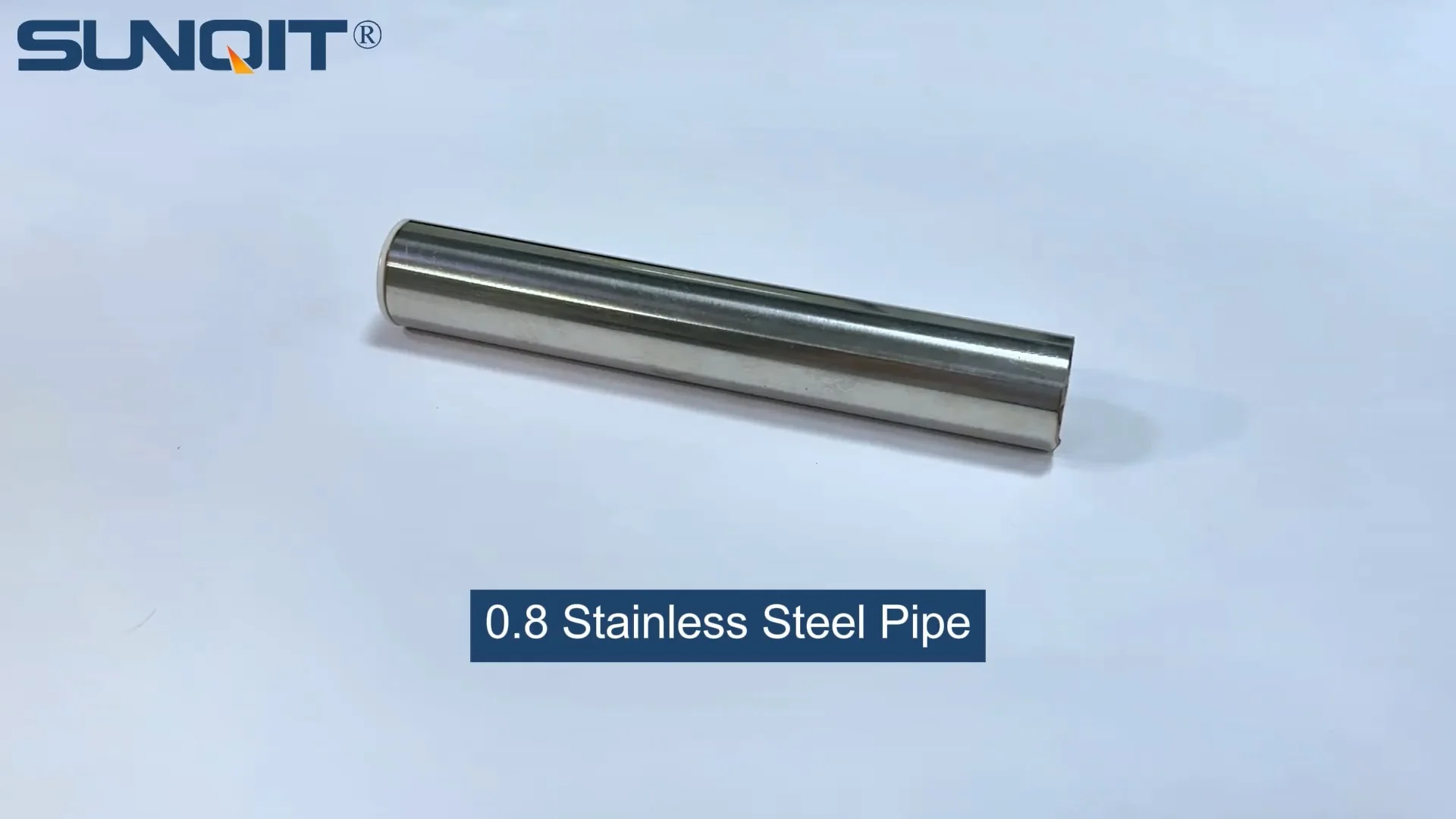
Stainless steel pipe, lean pipe, diameter is 28mm, material is SS201 or SS304, SS201 is normally used in the market. It knows a KARAKURI, KAIZEN material for industrial plant to improve efficiency, save labor cost, standard management.
The Critical Role of 1.2mm Stainless Steel Pipe in Medical Technology
In the world of medical devices, precision isn't just a buzzword—it's a lifeline. From the tiny tubes that deliver medication in an IV system to the structural components of surgical robots, every part must perform flawlessly, even under the most demanding conditions. Among these components, 1.2mm stainless steel pipe stands out as a workhorse, valued for its unique blend of strength, flexibility, and biocompatibility. But what ensures that a 1.2mm stainless steel pipe used in a heart monitor is as reliable as one in a dental tool? The answer lies in rigorous standards, and none are more trusted in the industry than those set by ASTM International.
Stainless steel has long been the material of choice for medical applications, thanks to its resistance to corrosion, ease of sterilization, and ability to maintain structural integrity in extreme environments. The 1.2mm diameter, in particular, hits a sweet spot: it's small enough to fit into compact devices like endoscopes or insulin pumps yet robust enough to withstand repeated use and cleaning. But without clear standards, even the best materials can fall short. That's where ASTM standards come in—they're the backbone of quality assurance, ensuring that every 1.2mm stainless steel pipe meets the exacting demands of the medical field.
What Are ASTM Standards, and Why Do They Matter?
ASTM International, formerly known as the American Society for Testing and Materials, is a global leader in developing voluntary consensus standards for materials, products, systems, and services. These standards are created by committees of industry experts, researchers, and regulators, ensuring they reflect the latest science and real-world needs. For medical-grade stainless steel pipe, ASTM standards act as a common language between manufacturers, suppliers, and regulators, defining everything from material composition to performance under stress.
For medical device manufacturers, choosing a 1.2mm stainless steel pipe that adheres to ASTM standards isn't just a best practice—it's often a legal requirement. Regulatory bodies like the FDA (Food and Drug Administration) in the U.S. and the EU MDR (Medical Device Regulation) in Europe mandate compliance with recognized standards to ensure patient safety. A stainless steel pipe supplier that can't provide documentation of ASTM compliance is a red flag, as non-compliant components can lead to device failures, infections, or even life-threatening malfunctions.

Key ASTM Standards for 1.2mm Stainless Steel Pipe in Medical Devices
Not all ASTM standards are created equal—different applications call for different specifications. When it comes to 1.2mm stainless steel pipe used in medical devices, three standards rise to the top: ASTM A269, ASTM A270, and ASTM F2945. Each targets a specific use case, but together, they form a comprehensive framework for quality.
ASTM A269: General Service Tubing
ASTM A269 is the go-to standard for seamless and welded austenitic stainless steel tubing intended for "general service." While it's not exclusive to medical devices, its broad scope makes it a foundational standard for many applications, including some medical tools like surgical handpieces or diagnostic equipment housings. For 1.2mm pipe, ASTM A269 sets strict limits on dimensional tolerances—outer diameter (OD) must be within ±0.05mm, and wall thickness (WT) within ±10% of the nominal value. It also mandates mechanical properties, such as a minimum tensile strength of 515 MPa for 316L stainless steel, ensuring the pipe can withstand bending and pressure without fracturing.
ASTM A270: Sanitary Tubing for Critical Applications
When sterility is non-negotiable—think IV lines, hemodialysis machines, or surgical suction tools—ASTM A270 takes center stage. This standard is specifically designed for "sanitary tubing" used in food, dairy, pharmaceutical, and medical industries, where contamination risks are highest. For 1.2mm stainless steel pipe, ASTM A270 goes beyond A269 by requiring a mirror-like surface finish (typically 20 Ra or lower) to prevent bacterial adhesion and simplify cleaning. It also includes stringent testing for corrosion resistance, such as the salt spray test, where the pipe must withstand 1000 hours of exposure without pitting or rust.
ASTM F2945: Medical Device Components
The newest of the three, ASTM F2945, is tailored explicitly for "stainless steel tubing for medical device components." It builds on A269 and A270 by adding requirements unique to medical use, such as biocompatibility testing under ISO 10993 (to ensure the pipe doesn't trigger allergic reactions or tissue damage) and stricter controls on surface defects. For 1.2mm pipe used in implantable devices or long-term contact with bodily fluids, ASTM F2945 is often the gold standard, as it addresses the specific risks of prolonged human exposure.
| Standard | Primary Use Case | Material Focus | Key Requirements for 1.2mm Pipe |
|---|---|---|---|
| ASTM A269 | General service (diagnostic tools, housings) | Seamless/welded austenitic stainless steel (e.g., 304, 316) | OD tolerance ±0.05mm; Tensile strength ≥515 MPa; Basic corrosion testing |
| ASTM A270 | Sanitary applications (IV lines, dialysis) | High-purity austenitic stainless steel (e.g., 316L) | Surface finish ≤20 Ra; 1000-hour salt spray resistance; Sterilization compatibility |
| ASTM F2945 | Implantable/long-term contact devices | Biocompatible stainless steel (e.g., 316LVM) | ISO 10993 biocompatibility; Zero surface defects; Fatigue resistance testing |

The Cost of Cutting Corners: Why Compliance Can't Be Ignored
Imagine a scenario: a medical device manufacturer opts for a cheaper 1.2mm stainless steel pipe from a supplier that skips ASTM testing. The pipe looks identical to a compliant one, but its wall thickness is 0.1mm thinner than specified. During routine use in a portable ultrasound machine, the pipe cracks under minimal pressure, causing a fluid leak. The result? A recalled device, costly repairs, and most importantly, a risk to patient safety. This isn't just a hypothetical—it's a cautionary tale that plays out far too often when standards are overlooked.
Non-compliance with ASTM standards can have legal consequences, too. In the U.S., the FDA can issue warning letters, seize products, or even pursue criminal charges if a device is found to use substandard components. In the EU, under MDR, manufacturers face fines up to 4% of global revenue for non-compliant devices. For a mid-sized company, that could mean millions in penalties—not to mention the damage to brand reputation.
On the flip side, investing in ASTM-compliant 1.2mm stainless steel pipe pays dividends. It reduces the risk of product failures, streamlines regulatory approval, and builds trust with customers and patients. For a stainless steel pipe supplier, adherence to these standards is a mark of professionalism, setting them apart in a crowded market.
How Manufacturers Meet ASTM Standards: From Raw Material to Finished Pipe
Producing 1.2mm stainless steel pipe that meets ASTM standards is no accident—it requires a meticulous, multi-step process that starts long before the first inch of pipe is rolled.
Raw Material Selection
The foundation of a compliant pipe is high-quality stainless steel. Most medical-grade pipes use 316L (low-carbon) or 304 stainless steel, chosen for their biocompatibility and corrosion resistance. A reputable stainless steel pipe supplier will source raw material with certified mill test reports (MTRs), verifying its composition (e.g., 16-18% chromium, 10-14% nickel for 316L) and mechanical properties before production begins.
Precision Forming
To achieve the 1.2mm diameter and tight tolerances required by ASTM, manufacturers use cold drawing or extrusion. Cold drawing pulls a larger-diameter tube through a die, reducing its size incrementally while work-hardening the material to meet tensile strength requirements. For seamless pipe, this process ensures uniform wall thickness, critical for applications like pressure lines. Welded pipe, while less common in medical devices, uses laser welding followed by annealing to eliminate weaknesses in the seam.
Heat Treatment and Testing
After forming, the pipe undergoes heat treatment (annealing) to relieve internal stresses and optimize its microstructure. For 316L stainless steel, this typically involves heating to 1050°C and cooling rapidly in water. Non-destructive testing (NDT) then takes place: ultrasonic testing checks for internal defects, eddy current testing detects surface cracks, and dimensional inspection verifies OD, WT, and straightness against ASTM limits.
Surface Finishing
For ASTM A270 and F2945 compliance, surface finish is critical. Electropolishing is the method of choice, where an electric current dissolves a thin layer of metal, creating a smooth, passive oxide layer that resists corrosion and bacteria. The result is a surface finish of 10-20 Ra, far below the 32 Ra limit for non-medical pipes.
The Future of ASTM Standards: Adapting to Emerging Medical Technologies
As medical devices become smaller, more complex, and more integrated with digital technology, ASTM standards must evolve to keep pace. One emerging trend is the demand for thinner-walled 1.2mm pipes (e.g., 0.1mm WT) for miniaturized devices like neurostimulators, requiring even tighter tolerances than current standards specify. ASTM committees are also exploring new testing methods, such as 3D scanning for dimensional accuracy and advanced biocompatibility assays to address novel materials like coated stainless steel.
Sustainability is another growing focus. ASTM is developing standards for recycled stainless steel in medical devices, ensuring that environmental responsibility doesn't compromise quality. For suppliers, this means investing in green manufacturing processes, such as energy-efficient annealing or water-based coolants, while still meeting ASTM's rigorous performance criteria.
Conclusion: ASTM Standards—The Unseen Guardians of Medical Device Quality
In the fast-paced world of medical innovation, it's easy to overlook the humble 1.2mm stainless steel pipe. But without it, many life-saving devices would grind to a halt. ASTM standards ensure that this unassuming component is anything but ordinary—they guarantee it's strong enough, pure enough, and precise enough to meet the demands of modern medicine. For manufacturers, choosing a stainless steel pipe supplier that prioritizes ASTM compliance isn't just a business decision; it's a commitment to patient safety. And for patients, it's the quiet assurance that the devices keeping them healthy are built on a foundation of uncompromising quality.
As medical technology continues to advance, ASTM standards will remain at the forefront, evolving to meet new challenges and ensuring that 1.2mm stainless steel pipe—and all the devices it powers—remain trustworthy, reliable, and ready to save lives.