- Company Articles
- Industry articles
- Industry standards
- Automotive Industry Uses 2020r EU Standard Aluminum Profile: Lightweight & Durable Solutions

Automotive Industry Uses 2020r EU Standard Aluminum Profile: Lightweight & Durable Solutions
Related Product
2020R EU Standard Aluminum Profile
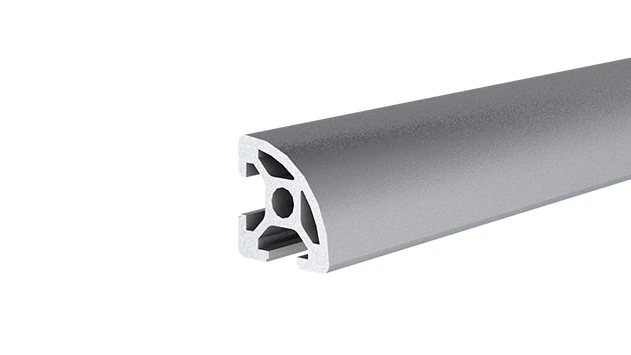
2020R is a 2.00 x 2.00CM fractional 20 series square extrusion T-slot profile with four open T-slots, two side with 2.00cm face, the other side with round face. The profile has align-a-grooves to assist in aligning connecting profiles.
In the fast-paced world of automotive manufacturing, where every minute of downtime costs thousands and every gram of excess weight impacts efficiency, the search for smarter, more adaptable materials never stops. Today's plants aren't just building cars—they're building ecosystems of precision, speed, and sustainability. At the heart of this evolution lies a material that's quietly transforming production lines: the 2020r EU Standard Aluminum Profile. More than just a piece of metal, it's a bridge between the industry's need for lightweight flexibility and its demand for uncompromising durability. Let's dive into how this unassuming component is becoming a cornerstone of modern automotive manufacturing.
What Makes the 2020r EU Standard Aluminum Profile Stand Out?
First, let's break down the name. The "2020" refers to the profile's cross-sectional dimensions: typically 20mm x 20mm, a sweet spot for balancing strength and versatility. The "r" often denotes a rounded edge design, reducing sharp corners that could damage parts or injure workers—small details that make a big difference in busy factories. But the real star here is the "EU Standard" label. In an industry where parts from Germany, Spain, or Hungary might end up on the same production line, consistency is non-negotiable. EU standards ensure uniform quality, strict material testing, and compatibility across borders, so a 2020r profile from one supplier fits seamlessly with accessories from another. This isn't just about compliance; it's about reliability.
Manufactured using aluminum extrusion profile techniques—where heated aluminum is pushed through a die to create precise, complex shapes—these profiles offer exceptional structural integrity. Unlike welded steel, extrusion ensures no weak points, and the process allows for intricate designs, like T-slots that let workers attach accessories (think tool holders, shelves, or roller tracks) without drilling or welding. For automotive plants running 24/7, this means less time modifying equipment and more time building cars.
Lightweight: The Unsung Hero of Efficiency
Weight matters in automotive manufacturing—both in the cars themselves and the equipment that builds them. Let's start with the obvious: lighter cars mean better fuel efficiency for gas-powered vehicles and longer range for EVs. But what about the workbenches, roller tracks, and material racks that line the factory floor? A traditional steel workbench might weigh 150kg, making it nearly impossible to reposition if production needs shift. Swap that for a 2020r aluminum profile workbench, and the weight drops to 60kg—light enough for two workers to move, no forklift needed. In a plant reconfiguring lines to produce a new model, that flexibility translates to days (or weeks) of saved time.
Even smaller components add up. Roller tracks, which ferry parts from station to station, rely on smooth movement to keep production flowing. Steel tracks, heavy and prone to rust, create friction that slows parts down and wears out motors. Aluminum roller tracks, paired with 2020r profiles, cut that friction in half. One plant in Bavaria reported a 12% reduction in energy use for conveyor systems after switching to aluminum—all because lighter materials require less power to move.
| Material | Density (g/cm³) | Tensile Strength (MPa) | Corrosion Resistance | Recyclability Rate | Typical Use Case |
|---|---|---|---|---|---|
| Mild Steel | 7.85 | 370-460 | Low (prone to rust without coating) | 90% | Heavy-duty machinery frames |
| 2020r EU Standard Aluminum Extrusion Profile | 2.7 | 200-300 (alloy-dependent) | High (natural oxide layer) | 100% | Workbenches, roller tracks, lean system frames |

Durability: Built to Outlast the Long Shifts
Critics used to argue aluminum was "too soft" for industrial use, but that's a myth the 2020r profile shatters. Modern aluminum alloys, especially those meeting EU standards, offer impressive strength-to-weight ratios. Take the 6063 alloy, common in these profiles: it has a tensile strength of around 215 MPa—more than enough to support a 200kg load on a workbench or withstand the constant vibration of a roller track moving hundreds of parts daily.
Then there's corrosion resistance. Automotive plants are messy places: oil, coolant, and cleaning chemicals are everywhere. Steel would rust in months without constant painting, but aluminum forms a thin, invisible oxide layer that self-repairs if scratched. A plant in Madrid switched to 2020r aluminum material racks in their engine assembly area five years ago; today, those racks still look new, with zero signs of corrosion. Compare that to the steel racks they replaced, which needed repainting every 18 months—saving time, money, and labor.
Durability also means consistency. Aluminum profiles don't warp under heat or cold, so a roller track that works perfectly in a sweltering summer won't jam in winter. For plants with strict temperature-controlled zones (like battery production for EVs), that stability is invaluable. Workers don't have to waste time adjusting misaligned tracks or replacing warped shelves—they can focus on building cars.
From Lean Systems to Workbenches: Real-World Impact
The true power of the 2020r EU Standard Aluminum Profile lies in its versatility. Let's walk through a typical automotive production line to see it in action.
Lean Systems: Lean manufacturing is all about eliminating waste—whether it's time, space, or materials. Aluminum profiles excel here because they're modular. A lean system workbench can start as a simple table, then have shelves added, a roller track attached to one side, or a tool panel mounted overhead—all without cutting or welding. When production needs change, just unbolt the accessories and reconfigure. A plant in Stuttgart recently retooled their door assembly line in 48 hours using 2020r profiles, compared to the week it would have taken with steel. "We used to dread model changes," said one production manager. "Now? It's just a matter of rearranging parts."
Workbenches: Every worker needs a station tailored to their task. A mechanic assembling dashboards might need a lower workbench with storage drawers, while a quality inspector checking welds needs a higher surface with good lighting. 2020r profiles let plants build custom workbenches quickly. Add a pegboard for tools, a bin rail for fasteners, or a non-slip mat top—all via T-slot accessories. And because they're lightweight, these workbenches can be mounted on casters for mobility, letting workers roll their entire setup to where the parts are, instead of carrying parts to the bench.
Roller Tracks: Moving parts from the warehouse to the assembly line should be seamless. Roller tracks made with 2020r profiles and aluminum roller track guide rails do just that. The T-slots make it easy to adjust track width for different part sizes—no need for custom rails. Plus, aluminum's smooth surface paired with plastic or steel rollers reduces jams. A plant in Barcelona reported a 30% drop in "line stops" after installing aluminum roller tracks, simply because parts glide instead of getting stuck.
Sustainability: Building Cars, Not Waste
Today's automakers aren't just judged by the cars they build, but by how they build them. Aluminum is a sustainability champion, and 2020r profiles are no exception. For starters, aluminum is 100% recyclable, and recycling it uses just 5% of the energy needed to produce new aluminum. When a production line is retired, those 2020r profiles can be melted down and turned into new profiles—no waste, no landfill. EU standards even mandate strict recycling protocols, ensuring suppliers source aluminum from responsible, low-carbon sources.
Then there's the energy savings during use. Lighter equipment requires less power to move, as we saw with roller tracks. And because aluminum doesn't rust, plants use fewer harsh chemicals for cleaning and maintenance. A recent study by the European Aluminum Association found that automotive plants using aluminum profiles reduced their carbon footprint by an average of 8% annually—small numbers that add up to big change when multiplied across the industry.
Why It's More Than Just a "Profile"
At the end of the day, the 2020r EU Standard Aluminum Profile isn't just a component—it's a partner in progress. It's the reason a worker can adjust their workbench in 10 minutes instead of 10 hours. It's why a plant can switch from building SUVs to electric hatchbacks without rebuilding the entire line. It's how automakers are meeting stricter emissions targets and sustainability goals, one lightweight, durable profile at a time.
For automotive manufacturers, the choice is clear: in a world where speed, flexibility, and sustainability define success, the 2020r EU Standard Aluminum Profile isn't just keeping up—it's leading the way. And as cars evolve, from combustion engines to EVs, and production lines adapt to new technologies, one thing remains constant: the need for materials that work as hard as the people who use them. Aluminum profiles? They're up to the task.