- Company Articles
- Industry articles
- Industry News
- Automotive Industry: Why 2040 Aluminum Profile End Caps Are Essential

Automotive Industry: Why 2040 Aluminum Profile End Caps Are Essential
Related Product
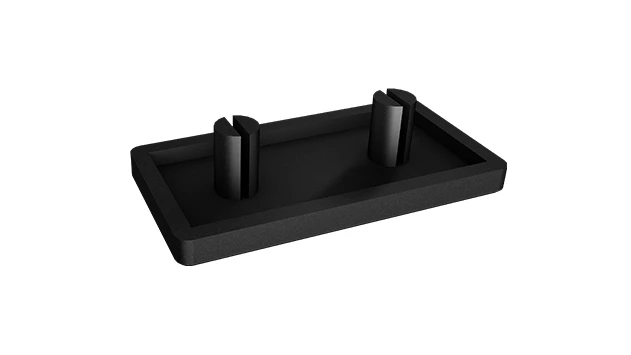
2040 Aluminum Profile End Cap
The aluminum profile end cap adds a finishing touch to your project and closes off profile ends to limit dust and debris buildup, also it can avaid some scratch for material and labor during the assemble work.
In the fast-paced world of automotive manufacturing, every component—no matter how small—plays a critical role in ensuring efficiency, safety, and reliability. Among these unsung heroes are 2040 aluminum profile end caps: simple yet indispensable accessories that bridge the gap between raw materials and seamless production. Let's dive into why these small components are making a big impact on the factory floor.
The Demands of Modern Automotive Manufacturing
Walk into any automotive plant today, and you'll be met with a symphony of precision: robots assembling engines, conveyor belts moving components, and workers orchestrating the flow of materials. Behind this harmony lies a relentless pursuit of two goals: speed and safety . With production lines churning out hundreds of vehicles daily, even a minor hiccup—a loose part, a sharp edge, or a delayed workstation setup—can ripple into costly downtime.
To meet these demands, manufacturers have turned to modular solutions that offer flexibility without sacrificing strength. Enter the aluminum extrusion profile: a lightweight, durable, and highly customizable material that forms the backbone of workbenches, material racks, assembly lines, and lean system setups. Unlike rigid steel structures, aluminum profiles can be reconfigured in hours, not days, making them ideal for adapting to evolving production needs—whether it's a new car model, a redesigned assembly process, or a shift toward leaner workflows.
Industry Insight: According to the Automotive Manufacturing Solutions Association, 78% of Tier 1 automotive suppliers now use aluminum profiles in their production setups, citing "reduced reconfiguration time" and "lower long-term maintenance costs" as top benefits.
But here's the thing: an aluminum extrusion profile is only as good as its components. While the profile itself provides the structural framework, it's the accessories—like brackets, connectors, and end caps—that turn a raw extrusion into a functional, safe, and efficient tool. And among these accessories, 2040 aluminum profile end caps stand out as a linchpin for both performance and worker well-being.
Aluminum Profiles 101: Why They're a Game-Changer
What Makes Aluminum Extrusion Profiles Unique?
Aluminum extrusion profiles are created by forcing heated aluminum through a die, shaping it into consistent cross-sections—think T-slots, channels, or tubes. This process allows for intricate designs that balance strength and weight, making them far more versatile than traditional steel pipes or wooden frames. In automotive manufacturing, they're used for everything from workbench frames and material storage racks to conveyor supports and machine guards.
One of the key advantages of aluminum profiles is their modularity . Thanks to T-slot designs, accessories like brackets, shelves, and tools can be attached or repositioned without welding or drilling, using simple fasteners. This modularity aligns perfectly with lean system principles, where minimizing waste (time, materials, effort) is paramount. For example, a workstation built with aluminum profiles can be adjusted in minutes to accommodate a taller worker or a larger component, eliminating the need for custom-built furniture and reducing idle time.
The Role of Aluminum Profile Accessories
While the aluminum profile provides the "bones" of a structure, aluminum profile accessories are the "muscles" that bring it to life. These include connectors that join profiles at angles, brackets that support shelves, and—crucially—end caps that seal the open ends of the profiles. Without these accessories, the profiles would be little more than hollow tubes: functional but far from optimized.
End caps, in particular, address two critical needs: safety and durability . Let's break that down.

The Unsung Role of End Caps in Automotive Plants
At first glance, an end cap might seem like an afterthought: a small plastic or rubber piece that plugs the end of an aluminum profile. But in reality, it's a multi-tasker that solves several common headaches on the factory floor.
Safety First: Eliminating Hazards
Raw aluminum extrusion profiles have open ends, which can be sharp, jagged, or prone to collecting debris. In a busy plant, where workers are constantly moving around workbenches, reaching for tools, or loading materials, these open ends pose a significant risk: cuts from sharp edges, snagged gloves or clothing, or even injuries from accidental bumps.
2040 aluminum profile end caps act as a protective barrier, covering these open ends with a smooth, rounded surface. Made from durable materials like nylon or polypropylene, they're designed to withstand impacts and resist wear—ensuring that even after months of use, the edges remain safe. For workers who spend 8+ hours a day on their feet, this small detail translates to fewer workplace injuries and a more comfortable, confident team.
Real-World Impact: A Midwest Automotive Plant's Safety Turnaround
A leading automotive parts manufacturer in Ohio recently switched to using 2040 end caps on all their aluminum profile workstations. Within six months, they reported a 40% drop in hand and arm injuries related to sharp edges—numbers that not only improved worker morale but also reduced workers' compensation claims by over $75,000 annually. "It's not just about compliance," said the plant manager. "It's about showing our team we care about their well-being, one end cap at a time."
Durability: Protecting the Profile, Extending Lifespan
Aluminum profiles are built to last, but their longevity depends on protecting their internal structure. Open ends can collect dust, oil, coolant, or metal shavings—common byproducts of automotive manufacturing. Over time, these contaminants can corrode the aluminum from the inside out or jam T-slots, making it harder to attach accessories or reconfigure the structure.
2040 end caps seal the profile's interior, keeping out debris and moisture. This not only extends the profile's lifespan but also reduces maintenance costs. Instead of spending hours cleaning out clogged slots or replacing corroded sections, maintenance teams can focus on more critical tasks—like keeping production lines running smoothly.
Efficiency: Streamlining Installation and Reconfiguration
Time is money in automotive manufacturing, and every minute spent on setup or adjustments is a minute lost. 2040 aluminum profile end caps are designed for quick, tool-free installation: most simply snap into place or twist on, requiring no screws or adhesives. This speed is a game-changer during workstation builds or reconfigurations.
For example, when a plant switches from assembling sedans to SUVs, workbenches may need to be raised or widened. With end caps that pop on and off in seconds, workers can adjust the aluminum profiles, reattach the end caps, and get back to production—all without halting the line for hours. This aligns perfectly with lean system goals, where minimizing downtime and maximizing flow are key to profitability.

Why 2040? The Specifics of This Critical Profile Size
Aluminum profiles come in various sizes, each tailored to specific needs. The "2040" in 2040 aluminum profile refers to its dimensions: 20mm in width and 40mm in height . This size strikes a sweet spot between versatility and strength, making it one of the most widely used profiles in automotive manufacturing. Let's explore why this particular size, paired with its end caps, is a factory favorite.
The 2040 Advantage: Balance of Strength and Flexibility
At 20x40mm, the profile is narrow enough to fit into tight spaces (like between conveyor belts or under workbenches) but tall enough to support heavy loads—up to 150kg per linear meter, depending on the material thickness. This makes it ideal for building workbenches, material racks, and light-duty assembly lines—all staples in automotive plants.
Unlike smaller profiles (e.g., 2020, which is 20x20mm), 2040 can handle heavier tools, larger components, and more frequent use without bending or warping. And compared to larger profiles (e.g., 4080, 40x80mm), it's lighter and easier to maneuver, reducing strain on workers during setup or reconfiguration.
2040 End Caps: Designed for the Profile's Unique Needs
Not all end caps are created equal. 2040 aluminum profile end caps are engineered specifically for the 20x40mm dimensions, ensuring a snug, secure fit that generic caps can't match. A loose or ill-fitting end cap might fall off during use, exposing the profile's end and undoing all the safety and durability benefits we've discussed.
These end caps also come in specialized designs to suit different environments. For example:
- ESD-safe end caps: In electronics assembly areas (like wiring harness production), static electricity can damage sensitive components. ESD-safe end caps (made with conductive materials) dissipate static, protecting both workers and parts.
- Heat-resistant end caps: Near welding stations or paint booths, high temperatures can warp standard plastic end caps. Heat-resistant versions (often made with fiberglass-reinforced polymers) stand up to these harsh conditions.
- Colored end caps: Some plants use color-coded end caps to organize workstations by function (e.g., red for quality control, blue for assembly), reducing errors and speeding up training for new workers.
Design Detail: Most 2040 end caps feature a ribbed interior that grips the profile's inner walls, preventing slipping even during vibrations from nearby machinery—a common issue in automotive plants.
Comparing 2040 End Caps to Other Sizes
To truly appreciate the 2040 end cap's value, let's compare it to other common profile sizes and their end caps. The table below highlights key differences in application, load capacity, and benefits:
| Profile Size | Typical Application | Max Load Capacity (per linear meter) | End Cap Key Benefit | Best For |
|---|---|---|---|---|
| 2020 (20x20mm) | Light-duty shelving, small tool holders | 50-80kg | Ultra-compact, fits tight spaces | Electronics assembly, small parts storage |
| 2040 (20x40mm) | Workbenches, material racks, assembly lines | 120-150kg | Balances strength, size, and versatility | General automotive assembly, component handling |
| 3030 (30x30mm) | Heavy-duty workstations, machine guards | 180-220kg | High load capacity for heavy tools | Engine assembly, large part fabrication |
| 4080 (40x80mm) | Conveyor supports, industrial racks | 300-400kg | Maximum strength for industrial use | Heavy machinery mounting, bulk material storage |
As the table shows, 2040 profiles and their end caps hit the "goldilocks zone" for most automotive applications: not too small to be limited, not too large to be cumbersome. This versatility is why they're the backbone of so many production setups.
Beyond the Factory Floor: 2040 End Caps and Lean Manufacturing
Lean manufacturing isn't just a buzzword in automotive—it's a philosophy that drives every decision, from how parts are ordered to how workstations are arranged. At its core, lean is about eliminating waste : waste of time, waste of materials, waste of effort. 2040 aluminum profile end caps align with this philosophy in several key ways.
Reducing Setup Waste
Traditional steel workbenches or wooden racks are fixed in place; if a production process changes, they're either modified with welding (which takes time and skilled labor) or replaced entirely (which wastes materials and money). Aluminum profiles with 2040 end caps, however, are modular by design. They can be disassembled, reconfigured, and reused—eliminating the waste of "one-and-done" furniture.
For example, a material rack built with 2040 profiles and end caps can be repurposed as a workstation shelf or a tool cart with minimal effort. This reduces the need to purchase new equipment, cutting costs and supporting sustainability goals.
Minimizing Maintenance Waste
As we discussed earlier, 2040 end caps protect aluminum profiles from debris and corrosion, extending their lifespan and reducing the need for frequent repairs or replacements. In lean terms, this is "maintenance waste" avoided: less time spent fixing things, more time spent producing.
Enhancing Flow and Visual Management
Lean systems rely on visual management —using colors, labels, and layout to make processes intuitive and errors visible. 2040 end caps support this through color coding (as mentioned earlier) and clean, consistent design. A workstation with mismatched or missing end caps looks unorganized, which can lead to confusion or complacency. But a workstation with properly fitted, color-coded end caps sends a message: "This space is cared for, and every detail matters." This attention to detail fosters a culture of accountability, where workers take pride in their environment and catch issues before they escalate.
Lean in Action: A European Automotive Giant's Success Story
A major German automaker recently redesigned its assembly line using 2040 aluminum profiles and end caps as part of a lean initiative. By standardizing on 2040 components, they reduced the number of unique parts needed for workstation builds by 60%. End caps, in particular, simplified training: new workers could quickly identify which profiles went where, thanks to color-coded end caps (e.g., green for "start of line," yellow for "in-process," red for "quality check"). The result? A 25% reduction in setup time and a 15% increase in line efficiency within the first year.
Choosing the Right 2040 End Caps: Key Considerations for Automotive Plants
Not all 2040 aluminum profile end caps are created equal. To maximize their benefits, automotive manufacturers should consider these factors when selecting end caps for their facility:
Material Matters
End caps are typically made from plastic (nylon, polypropylene), rubber, or metal (aluminum, steel). For most automotive applications, plastic end caps are the best choice: they're lightweight, affordable, and resistant to chemicals like oil and coolant. However, in high-heat or heavy-impact areas, metal or heat-resistant plastic end caps may be necessary.
Fit and Compatibility
Ensure the end caps are designed for 2040 aluminum extrusion profiles specifically. Generic end caps may not fit snugly, leading to slipping or dislodging. Look for end caps with a "grip ring" or ribbed interior to ensure a tight seal.
Environmental Factors
Consider the conditions where the end caps will be used:
- Chemical exposure: If the area uses harsh solvents or coolants, choose chemical-resistant end caps (nylon is a good option).
- Static sensitivity: For electronics areas, opt for ESD-safe end caps.
- Cleanliness requirements: In paint shops or sterile zones, end caps with smooth, non-porous surfaces are easier to clean and sanitize.
Supplier Reliability
Finally, partner with a reputable aluminum profile accessories supplier. Consistent quality is critical—even a slight variation in end cap size can lead to loose fits or breakage. Look for suppliers who offer warranties, have a track record in automotive, and can provide technical support (e.g., help selecting the right end cap for your needs).
Conclusion: Small Component, Big Impact
2040 aluminum profile end caps may be small, but their impact on automotive manufacturing is undeniable. They protect workers from injuries, extend the life of equipment, streamline production, and support lean principles—all while costing just a few dollars per unit. In an industry where margins are tight and competition is fierce, these small savings and efficiencies add up to big wins.
As automotive manufacturers continue to innovate, one thing remains clear: the future of production is modular, safe, and lean. And at the heart of that future? Components like the 2040 aluminum profile end cap—proving that sometimes, the most essential tools come in the smallest packages.
So the next time you walk through an automotive plant, take a moment to look at the workbenches, racks, and assembly lines. Chances are, you'll spot 2040 profiles—and their end caps—quietly keeping the line moving, one safe, efficient, and reliable day at a time.