- Company Articles
- Industry articles
- Industry standards
- Automotive Manufacturing: 2040 EU Standard Aluminum Profile in Assembly Stations

Automotive Manufacturing: 2040 EU Standard Aluminum Profile in Assembly Stations
Related Product
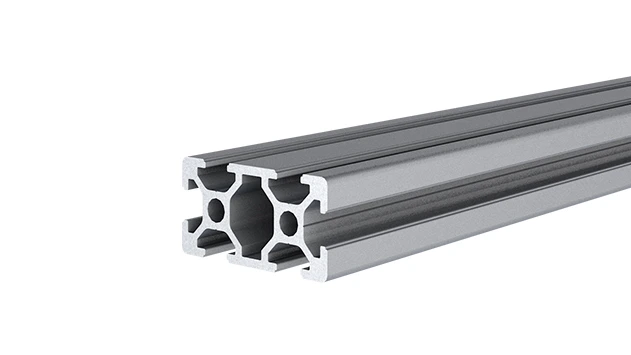
2040 EU Standard Aluminum Profile
2040 is a 2.00 x 4.00CM fractional 20 series square extrusion T-slot profile with four open T-slots, two side with 2.00cm face, the other side with 4.00cm face. The profile has align-a-grooves to assist in aligning connecting profiles.
On a crisp Tuesday morning at a bustling automotive plant outside Barcelona, Carlos, a third-shift team lead, watches as his crew preps the assembly line for a new batch of electric SUVs. "Remember, the new dashboard modules are bulkier than the last model," he calls out, gesturing to a stack of components. "But don't worry—the flow racks and workbenches can handle it. Just adjust the guides with those aluminum joints we installed last month." Across the line, Lucia, a 28-year-old operator, smiles as she loosens a connector with a hex key, sliding the workbench shelf up by 5 centimeters to better align with her waist height. "This thing's a lifesaver," she says, tapping the sleek silver frame. "Three years ago, we'd have needed a wrench and two people to move a steel bench. Now? I can reconfigure it in 2 minutes."
This scene—of adaptability, ergonomics, and efficiency—has become increasingly common in modern automotive plants, thanks in large part to innovations in material science. At the heart of this transformation lies the 2040 EU standard aluminum profile, a versatile building block that's redefining how assembly stations are designed, built, and adapted. More than just a piece of metal, it's a tool that empowers workers, streamlines production, and future-proofs factories against the fast-paced demands of automotive manufacturing. In this article, we'll dive into how this unassuming aluminum extrusion is reshaping assembly lines, from the workbenches operators rely on to the flow racks that keep parts moving, and why it's quickly becoming the backbone of lean, human-centered production.
The Backbone of Modern Assembly: What is 2040 EU Standard Aluminum Profile?
Before we explore its impact, let's demystify the star of the show: the 2040 EU standard aluminum profile. Part of a family of aluminum extrusion profiles—long, uniform shapes created by forcing heated aluminum through a die—this particular profile measures 20mm in width and 40mm in height, with a hollow, rectangular cross-section and T-slots running along its length. These T-slots are its superpower: they allow for quick attachment of accessories like brackets, shelves, and connectors without welding or drilling, turning the profile into a modular building system.
But why "EU standard"? Unlike generic aluminum extrusions, the 2040 profile adheres to strict European union guidelines for dimensions, material composition, and safety. It's made from 6063-T5 aluminum alloy, a blend prized for its balance of strength, lightweight, and corrosion resistance—critical in a factory environment where oil, coolant, and humidity are constant companions. The EU standard also ensures compatibility: profiles and accessories from different suppliers (think Germany's item Industrietechnik or Italy's Bosch Rexroth) work seamlessly together, giving plant managers the flexibility to mix and match components without worrying about fit issues.
To put its size in perspective: 20mm x 40mm is roughly the width of a smartphone and the height of a credit card. Yet despite its slim profile, it's surprisingly strong. A 1-meter length can support up to 75kg of evenly distributed weight—more than enough for most automotive components, from wiring harnesses to brake calipers. And at just 0.8kg per meter, it's less than half the weight of a comparable steel profile, making it easy for one person to handle during installation or reconfiguration.
Why Aluminum Extrusion Profiles Are Replacing Traditional Materials
For decades, automotive assembly stations relied on two main materials: steel and wood. Steel was sturdy but heavy, requiring forklifts or cranes to move and welders to modify. Wood was cheap but prone to warping, splintering, and harboring bacteria (a major issue in hygiene-sensitive areas like electronics assembly). Then came early aluminum profiles in the 1990s, but they were often proprietary, expensive, or lacked the precision of today's EU standards. The 2040 profile, however, solves these pain points—and then some.
Take, for example, the issue of flexibility. In automotive manufacturing, model cycles are shorter than ever—some plants introduce updates every 12–18 months, and electric vehicle platforms require frequent tweaks to battery placement, wiring layouts, and component sizes. With steel workbenches, reconfiguring a line for a new model could take days: cutting steel, welding brackets, repainting. With 2040 aluminum profiles, it's a matter of loosening a few screws, sliding on new accessories (like a bracket for a battery module holder), and tightening them back down. "Last year, we switched from gas to electric powertrains on one line," says Marco, a plant engineer in Stuttgart. "With steel, that would've shut us down for a week. With aluminum? We did it over a long weekend. The operators even helped—they know how to use the T-slot nuts now."

Workbenches: Where Precision Meets Comfort
If assembly lines are the arteries of a factory, workbenches are the heart—where operators spend 60–70% of their shifts installing, inspecting, and testing components. A poorly designed workbench isn't just inefficient; it's a health hazard. Repetitive bending, reaching, or hunching can lead to chronic back pain, carpal tunnel syndrome, or tendonitis—costing plants millions in lost productivity and workers' compensation claims.
This is where the 2040 aluminum profile shines in workbench design. Unlike rigid steel benches, aluminum workbenches are customizable down to the millimeter. Let's take the "workbench e (single deck-without caster)" as an example—a popular model among automotive plants for its simplicity and adaptability. Built with 2040 profiles for the frame and aluminum honeycomb panels for the work surface, it weighs 30% less than a steel equivalent but supports up to 200kg. The T-slots along the profile allow operators to add tool holders, LED task lights, or anti-fatigue mats with ease. "I used to have to lean over 15 centimeters to reach my torque wrench," says Anna, an operator in Madrid who assembles door panels. "Now I just slide the tool holder along the bench rail and lock it in place at chest height. My shoulders don't ache anymore at the end of the day."
Ergonomics isn't the only win. The 2040 profile's lightweight nature also makes mobile workbenches—equipped with casters—a breeze to maneuver. In plants where space is tight, operators can roll benches out of the way during maintenance or reposition them to accommodate larger components. "We had a situation last month where a shipment of instrument clusters arrived in bulkier packaging," recalls Carlos, the Barcelona team lead. "Instead of stacking them on the floor, we wheeled three mobile workbenches into the aisle, linked them with aluminum connectors, and turned them into a temporary staging area. An hour later, we broke it down and had the line back to normal. With steel benches? We'd still be moving them with a pallet jack."
Flow Racks: Keeping Parts Moving, Workers Thriving
While workbenches are where the "making" happens, flow racks are where the "moving" begins. These inclined racks use gravity to feed parts from the back (where stockers load them) to the front (where operators pick them), reducing walking time and minimizing errors. But traditional flow racks, often made of steel or wood, have limitations: they're heavy, hard to adjust for different part sizes, and prone to jamming if not perfectly aligned.
Enter flow racks built with 2040 EU standard aluminum profiles. By combining the profiles with roller track and accessories—like plastic roller track guide rails (available in yellow or grey for visual organization) and aluminum guide rails—manufacturers create systems that are both robust and flexible. Let's break it down: the 2040 profiles form the rack's frame, while T-slots hold the roller tracks in place. If a part's width increases (say, from a 10cm to a 15cm plastic trim piece), operators can loosen the track mounts, slide them apart, and re-tighten—no drilling, no welding. "We used to have separate flow racks for every part size," says Laura, a material handler in Turin. "Now, one rack can handle 80% of our components. I just adjust the rails and add dividers using those small aluminum brackets. It's like building with Legos, but for car parts."
The benefits extend beyond flexibility. Aluminum's smooth surface reduces friction, so parts glide more evenly than they would on steel, cutting down on jams. And because the profiles are lightweight, the racks are easier to reposition when production lines are rearranged. "Last quarter, we shifted our battery assembly line to the west wing," explains Marco, the Stuttgart engineer. "We disassembled six flow racks, loaded them onto a pallet truck, and had them set up in the new location in 45 minutes. With steel racks? We would've needed a crane and a crew of four. The aluminum saved us 8 hours of downtime."
Aluminum Profile Accessories: The Unsung Heroes of Adaptability
A profile is only as good as the accessories that bring it to life—and the 2040 system's ecosystem of aluminum profile accessories is where its true versatility shines. These small, often-overlooked components—connectors, end caps, hinges, and brackets—turn static frames into dynamic, multi-functional tools. Let's take a closer look at a few workhorses:
90° Aluminum Profile Connectors
These L-shaped brackets, designed to fit snugly into the T-slots of 2040 profiles, are the backbone of any structure. Made from die-cast aluminum, they lock into place with a hex screw, creating a rigid joint that can still be disassembled in seconds. "We use these everywhere," says Lucia, the Barcelona operator. "To attach shelves to workbenches, to connect flow rack sides to the frame—even to mount our barcode scanners above the line. They're so strong, I once stood on a shelf held by four of these connectors, and it didn't budge."
Plastic Roller Track Guide Rails
Available in bright yellow or neutral grey, these plastic rails snap into the T-slots of aluminum profiles, guiding parts along flow racks and preventing them from sliding off. The yellow version is especially popular for high-priority parts (like airbag modules), making them easy to spot at a glance. "The color coding alone reduced our picking errors by 12%," notes Laura, the Turin material handler. "And since they're plastic, they don't scratch the parts—important for those glossy interior trim pieces."
Aluminum End Caps
Small but mighty, these rubberized caps fit over the ends of 2040 profiles, eliminating sharp edges that could snag gloves, clothing, or wiring. "Safety first," says Carlos, the team lead. "A few years back, an operator caught her sleeve on a steel bench with a sharp edge and strained her arm. Now, every aluminum profile end has a cap. No more snags, no more injuries—just peace of mind."
Case Study: How XYZ Motors Cut Downtime by 35% with 2040 Aluminum Profiles
The Challenge: XYZ Motors, a mid-sized automaker in Hungary, was struggling to keep up with demand for its new hybrid hatchback. Their 10-year-old assembly line relied on steel workbenches and fixed wooden flow racks, which made reconfiguring for model updates time-consuming. "We were losing 4–5 hours of production every time we switched from the base model to the premium trim," says Peter, the plant manager. "And our ergonomics survey showed 60% of operators reported back pain—hardly ideal for a workforce averaging 45 years old."
The Solution: In early 2024, XYZ invested in a full line upgrade using 2040 EU standard aluminum profiles, including workbenches, flow racks, and mobile trolleys. They trained operators on basic reconfiguration (adjusting heights, moving roller tracks) and tasked maintenance with handling more complex setups.
The Results: Within six months, model changeover time dropped from 5 hours to 1.5 hours—a 70% improvement. Operator-reported back pain fell to 22%, and productivity rose by 12% as workers spent less time adjusting to uncomfortable positions. "The aluminum profiles paid for themselves in 11 months," Peter says. "But the real win? Our team feels valued. They see we're investing in tools that make their jobs easier—and that makes them more engaged."
Sustainability: Building Greener Cars with Greener Materials
In an industry under pressure to reduce its carbon footprint, the 2040 aluminum profile offers an eco-friendly edge. Aluminum is 100% recyclable, and recycling it requires just 5% of the energy needed to produce new aluminum from bauxite ore. For automotive plants aiming to meet EU sustainability targets (like the 2030 carbon reduction goals), this is a game-changer. "When we replace old steel equipment, we can melt down the aluminum profiles and turn them into new ones," explains Marco, the Stuttgart engineer. "Last year, we recycled 12 tons of aluminum from outdated workbenches—that's like taking 40 cars off the road in terms of emissions saved."
Lightweighting also plays a role. Aluminum workbenches and flow racks are easier to transport, reducing fuel consumption during plant relocations or line rearrangements. And because they're modular, plants can reuse components instead of buying new ones. "We've had the same set of 2040 profiles for flow racks since 2019," says Laura, the material handler. "We just take them apart, repaint if needed, and rebuild them for new lines. Steel? Once it's welded, it's done. You either scrap it or let it rust in a corner."
The Future: Where 2040 Aluminum Profiles and Automotive Manufacturing Go Next
As automotive manufacturing evolves—with electric vehicles, autonomous systems, and AI-driven production—so too will the role of 2040 EU standard aluminum profiles. Here's what industry experts predict:
Integration with Smart Factory Tech
Future profiles may include embedded sensors to monitor weight loads, vibration, or temperature—alerting maintenance teams to potential issues before they cause downtime. Imagine a workbench that sends a notification to Carlos's tablet when a shelf is overloaded, or a flow rack that flags a roller track running slower than normal due to debris buildup.
Custom Extrusions for Specialized Tasks
While 2040 is the workhorse, expect to see tailored profiles for specific applications: think heat-resistant versions for battery assembly lines or conductive profiles to dissipate static electricity in electronics workshops (paired with ESD workbenches, another key component in modern plants).
3D-Printed Accessories
As 3D printing becomes more affordable, plants may print custom aluminum profile accessories on-site—like unique brackets for one-off prototype parts or specialized tool holders. This would cut lead times from weeks (waiting for supplier shipments) to hours.
Conclusion: More Than Metal—A Tool for People
At the end of the day, the 2040 EU standard aluminum profile is more than just a piece of material. It's a testament to how thoughtful design can empower workers, boost productivity, and build a more sustainable future for automotive manufacturing. It's the reason Lucia can adjust her workbench in 2 minutes instead of 2 hours, why Laura can reconfigure a flow rack during her lunch break, and why Carlos's team can adapt to new models without stress. In an industry driven by innovation, sometimes the most impactful changes aren't flashy robots or AI algorithms—they're the quiet, versatile tools that put control back in the hands of the people building the cars of tomorrow.
As Carlos walks the line at the end of his shift, he pauses to watch Lucia and her crew wrap up the day's production. The new SUV dashboards are stacked neatly on the reconfigured flow rack, and the workbenches stand ready for the next shift. "See that?" he says, nodding at the aluminum frames glinting under the overhead lights. "That's not just metal. That's how we build better cars—and better jobs."