- Company Articles
- Industry articles
- Industry standards
- Automotive Manufacturing: 4040r EU Standard Aluminum Profile for Material Handling

Automotive Manufacturing: 4040r EU Standard Aluminum Profile for Material Handling
Related Product
4040R EU Standard Aluminum Profile
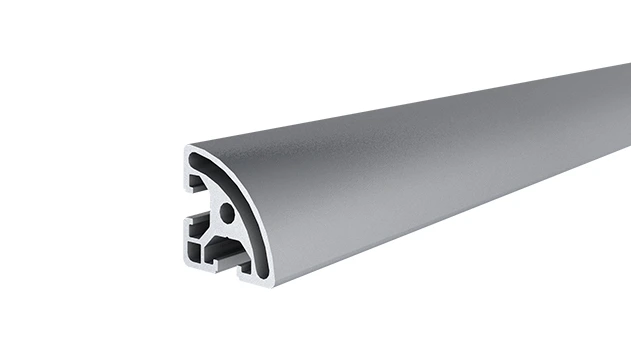
4040R is a 4.00x4.00 CM fractional 40 series square extrusion T-slot profile with two side open T-slots, each side with 4.00cm face,the other side is round face. The profile has align-a-grooves to assist in aligning connecting profiles.
In the fast-paced world of automotive manufacturing, where precision, speed, and reliability are non-negotiable, the backbone of efficient operations often lies in the details—like the materials that keep production lines moving. Every part, from a small sensor to a bulky engine component, needs to flow seamlessly from storage to assembly, and then to final inspection. When material handling falters, bottlenecks form, deadlines slip, and costs rise. That's where the right tools come in. Today, we're diving into a game-changer for automotive material handling: the 4040r EU Standard Aluminum Profile . More than just a piece of metal, this profile is a versatile, durable, and cost-effective solution that's reshaping how automotive plants manage their workflows—one T-slot at a time.
The Critical Role of Material Handling in Automotive Manufacturing
Before we get into the specifics of the 4040r profile, let's take a step back and understand why material handling matters so much in automotive manufacturing. Imagine a plant producing 500 cars a day. Each car has over 30,000 parts. That's 15 million parts moving through the facility daily—no room for error. Material handling isn't just about "moving stuff around"; it's about ensuring the right part is in the right place, at the right time, in the right condition, and accessible to the right worker. When done well, it reduces waste, cuts downtime, improves ergonomics, and keeps production lines humming. When done poorly? It's a logistical nightmare.
Traditional material handling systems often rely on rigid steel structures—fixed racks, heavy conveyors, and one-size-fits-all workbenches. But automotive manufacturing isn't static. New models roll out yearly, production lines reconfigure, and customer demands shift. Steel, while strong, is heavy, hard to modify, and prone to corrosion in busy, oil-and-grease-filled environments. This rigidity becomes a liability when plants need to adapt quickly. Enter aluminum profiles: lightweight, modular, and designed for flexibility. And among these, the 4040r EU Standard Aluminum Profile stands out as a workhorse tailored to the unique demands of automotive material handling.
What Makes the 4040r EU Standard Aluminum Profile Special?
At first glance, aluminum profiles might all look similar—long, rectangular tubes with slots. But the 4040r isn't just any profile. Let's break down what sets it apart, starting with its name: "4040r" refers to its dimensions (40mm x 40mm) and a specific groove design optimized for industrial use. The "EU Standard" badge isn't just marketing talk, either. It means the profile meets strict European union regulations for quality, consistency, and safety—critical in an industry where even a minor defect can have major consequences.
So, what's under the hood? The 4040r is made from high-grade aluminum alloy (typically 6063-T5), known for its excellent strength-to-weight ratio. Unlike steel, which can weigh 2-3 times more for the same structural support, aluminum makes the 4040r easy to handle during installation and reconfiguration. This lightness doesn't compromise strength, though. A single 4040r profile can support up to 200 kg/m when properly mounted—more than enough for the metal bins, toolboxes, and component trays common in automotive plants.
The real magic, however, is in its T-slot design. Running along all four sides of the profile, these slots are like built-in attachment points. With the right aluminum profile accessories —think T-slot nuts, brackets, connectors, and end caps—you can mount almost anything directly to the profile without welding or drilling. Need to add a shelf to a material rack? Slide a bracket into the T-slot and tighten a nut. Want to attach a light fixture over a workbench? Clip it on and secure it in seconds. This modularity is a game-changer for automotive plants, where production lines are constantly evolving.
Why EU Standards Matter for Automotive Applications
In automotive manufacturing, precision is everything. Parts must fit together with tolerances measured in millimeters, and equipment must perform consistently day in and day out. EU standards ensure that the 4040r profile isn't just "good enough"—it's reliable. Every batch of 4040r undergoes rigorous testing for dimensional accuracy (so all profiles fit together perfectly), load capacity (to avoid unexpected failures), and corrosion resistance (thanks to anodizing, which gives the aluminum a protective oxide layer). For automotive plants, this means less downtime due to equipment failures, fewer quality control issues, and peace of mind knowing the profiles can withstand the harsh conditions of a busy factory floor.

4040r in Action: Key Applications in Automotive Material Handling
Now that we understand what makes the 4040r tick, let's look at how it's applied in real-world automotive settings. From flow racks that keep parts moving to workbenches that adapt to workers' needs, the 4040r is a versatile tool that solves multiple material handling challenges.
1. Flow Racks: Keeping Parts Moving Efficiently
In automotive assembly, time is money. Workers can't waste minutes searching for parts or waiting for bins to be restocked. That's where flow racks—also known as gravity-fed racks—shine. These racks use inclined roller tracks to let parts "flow" from the back (where they're restocked) to the front (where workers pick them), following the "first in, first out" (FIFO) principle. And the 4040r profile is the ideal backbone for these racks.
Here's how it works: The 4040r's T-slots make it easy to mount roller tracks (another common accessory) at a precise angle—usually 5-10 degrees—to ensure smooth, controlled movement of parts. Unlike steel racks, which require welding roller tracks into place (making adjustments a nightmare), the 4040r lets you reposition tracks in minutes. Need to switch from small plastic bins to larger metal containers? Simply loosen the T-slot nuts, adjust the track spacing, and retighten. This flexibility is crucial when a plant switches from producing sedans to SUVs, where part sizes and weights can vary dramatically.
Take, for example, a transmission assembly line. The 4040r flow rack here might hold bins of gears, bearings, and seals. As workers pick parts from the front, the weight of the remaining bins in the back pushes them forward, ensuring a constant supply. The aluminum's corrosion resistance also means the rack stays looking and functioning like new, even in areas where oil or coolant might drip onto it—no more rusted steel racks jamming up roller tracks.
2. Workbenches: Ergonomic, Adaptable, and Built to Last
Automotive workers spend hours at workbenches, assembling intricate components like wiring harnesses or dashboard panels. A poorly designed workbench can lead to fatigue, repetitive strain injuries, and slower production. The 4040r profile solves this by enabling the creation of fully customizable workbenches that adapt to both the task and the worker.
A typical 4040r workbench might feature a sturdy frame made from 4040r profiles, with adjustable height (thanks to telescoping legs and locking brackets) to suit workers of different heights. The tabletop—often a durable aluminum honeycomb panel or anti-static ESD board—attaches directly to the frame via T-slot brackets. Add-ons like tool holders, LED task lights, and storage shelves can be clipped on wherever needed, keeping tools within arm's reach and the workspace organized.
What happens when the task changes? Maybe the plant starts assembling a new type of sensor that requires a larger workspace. With a 4040r workbench, you don't need to buy a whole new bench. Just add an extension using extra 4040r profiles and brackets, or reposition the shelves to make room. This adaptability reduces costs and waste, aligning perfectly with the lean system principles many automotive plants adopt—focused on minimizing waste and maximizing value.
3. Material Handling Trolleys: Mobile Solutions for a Dynamic Floor
Not all parts stay in one place. Trolleys are essential for moving heavy loads—like engine blocks or door panels—from storage to the assembly line. But traditional steel trolleys are heavy, hard to maneuver, and prone to rust. 4040r profiles offer a lighter, more durable alternative.
A 4040r trolley frame is lightweight enough for one worker to push, even when loaded with parts, but strong enough to handle 500+ kg (when reinforced with cross-braces). The T-slots let you add custom features: side rails to prevent parts from sliding off, tool hooks for wrenches and screwdrivers, or even a small shelf for paperwork. Casters (another common accessory) attach easily to the bottom of the profile frame, with options for locking wheels to keep the trolley steady during loading/unloading. And when the trolley isn't needed for one task? Reconfigure it into a mobile storage unit or a temporary workstation—no need to store multiple specialized trolleys.
Comparing 4040r to Other Aluminum Profiles: Why Size and Design Matter
The automotive industry has no shortage of aluminum profiles to choose from—3030, 4040a, 2020, to name a few. So why pick the 4040r? Let's compare it to some common alternatives to see how it stacks up in automotive material handling applications.
| Profile Type | Dimensions (mm) | Load Capacity (kg/m) | Key Features | Ideal Automotive Applications |
|---|---|---|---|---|
| 4040r EU Standard | 40 x 40 | 180-220 | 4-sided T-slots, rounded edges, EU quality certified | Flow racks, heavy-duty workbenches, material trolleys |
| 4040a EU Standard | 40 x 40 | 150-190 | 2-3 T-slots, lighter weight | Light-duty shelving, small part storage |
| 3030a EU Standard | 30 x 30 | 100-140 | Compact, space-saving | Small component racks, desktop organizers |
| 2020 EU Standard | 20 x 20 | 50-80 | Ultra-lightweight, minimal footprint | Prototyping stations, small tool holders |
The 4040r's edge lies in its balance of size, strength, and versatility. At 40mm x 40mm, it's large enough to support heavy loads (like the bins of engine parts in flow racks) but not so bulky that it wastes space. The four-sided T-slots mean accessories can be mounted from any angle, unlike some profiles that only have slots on two sides. And the rounded edges (a unique feature of the "r" variant) reduce the risk of cuts or scrapes—important in busy plants where workers are constantly moving around.
Aluminum Profile Accessories: The Unsung Heroes of Customization
A profile is only as good as the accessories that bring it to life. The 4040r's true potential shines when paired with the right aluminum profile accessories , which turn a simple tube into a fully functional material handling system. Let's explore some must-have accessories for automotive applications:
- T-slot Nuts and Bolts: These are the foundation of any 4040r setup. Inserted into the T-slots, they let you attach brackets, shelves, or other components without drilling. Available in various sizes (M5, M6) to fit different accessories.
- Angle Brackets: Used to connect profiles at 90-degree angles (e.g., building the corners of a workbench or flow rack). Made from aluminum or steel for added strength.
- End Caps: Snap-on covers that seal the ends of profiles, preventing dust, debris, or moisture from getting inside. Also add a clean, finished look.
- Adjustable Feet: Attach to the bottom of profiles to level workbenches or racks on uneven factory floors, ensuring stability and safety.
- Roller Tracks: Mounted to 4040r flow racks, these plastic or aluminum tracks use gravity to move bins or parts from the back to the front, reducing manual lifting.
- ESD Components: For areas handling sensitive electronics (like car infotainment systems), anti-static brackets and workbench tops prevent static discharge that could damage parts.
The best part? These accessories are standardized, meaning you can mix and match from different suppliers (as long as they meet EU standards) to create a system that fits your exact needs. No more waiting for custom parts or paying premium prices for one-off solutions.
Case Study: How a European Automotive Plant Boosted Efficiency with 4040r
To put the 4040r's impact into perspective, let's look at a real-world example (with details anonymized for privacy). A mid-sized automotive parts manufacturer in Germany was struggling with outdated material handling systems. Their assembly line for brake components relied on fixed steel racks that were hard to adjust, leading to frequent bottlenecks when production shifted to new part sizes. Workers spent 15-20 minutes per shift just searching for tools or repositioning bins, and the heavy steel trolleys caused fatigue and slowdowns.
The plant's lean manufacturing team decided to overhaul their material handling with 4040r profiles. They replaced the steel racks with 4040r flow racks, complete with adjustable roller tracks and custom bins. Workbenches were upgraded to 4040r models with height-adjustable legs and tool holders mounted directly to the profile frames. Even the trolleys were swapped out for lightweight 4040r versions with locking casters.
The results were striking: Within three months, part-picking time dropped by 30%, and workers reported less fatigue. The plant's ability to reconfigure racks and workbenches cut changeover time between part models from 4 hours to just 1 hour. And because the 4040r profiles were lighter, installation required half the labor of steel racks, saving on upfront costs. "We used to see the racks as just 'something to hold parts,'" said the plant manager. "Now, they're an active part of our lean system—helping us adapt faster and work smarter."
The Future of Automotive Material Handling: Why 4040r is Here to Stay
As automotive manufacturing evolves—with trends like electric vehicles (EVs), automation, and smart factories—material handling systems need to keep up. The 4040r profile is well-positioned to meet these future demands for several reasons:
1. Compatibility with Automation: Smart factories rely on robots and automated guided vehicles (AGVs) to move parts. The 4040r's modular design makes it easy to integrate sensors, barcode scanners, or even small robotic arms directly into flow racks or workbenches, creating "smart" material handling stations that communicate with plant management systems.
2. Sustainability: Automotive OEMs are under increasing pressure to reduce their carbon footprint. Aluminum is 100% recyclable, and the 4040r's long lifespan (decades, with proper care) means less waste compared to disposable steel structures. Plus, its lightweight design reduces energy use during transportation and installation.
3. Scalability: As EV production ramps up, plants are adding new assembly lines or expanding existing ones. The 4040r's modularity makes scaling easy—simply add more profiles and accessories, no need to redesign from scratch.
Is the 4040r Right for Your Automotive Plant?
If your plant is struggling with rigid, heavy material handling systems, frequent reconfiguration needs, or high maintenance costs, the 4040r EU Standard Aluminum Profile is worth considering. It's not a one-size-fits-all solution—for extremely heavy loads (like full engine blocks), you might need larger profiles (e.g., 8080) or reinforced 4040r setups—but for most day-to-day material handling tasks, it offers an unbeatable mix of strength, flexibility, and cost-effectiveness.
When evaluating suppliers, look for those who specialize in EU standard profiles and can provide certifications for material quality and safety. Ask for samples to test load capacity and fit with your existing accessories. And don't forget to involve your frontline workers—they'll have valuable insights into how the 4040r can solve their specific pain points, from awkward workbench heights to hard-to-reach parts in flow racks.
Final Thoughts: More Than a Profile—A Partner in Productivity
In the end, the 4040r EU Standard Aluminum Profile is more than just a piece of aluminum. It's a tool that empowers automotive plants to work smarter, adapt faster, and focus on what matters most: building high-quality vehicles efficiently. Whether it's keeping parts flowing in a flow rack, supporting a worker at a custom workbench, or enabling a lean system that minimizes waste, the 4040r is a quiet hero of the factory floor—proving that sometimes, the smallest innovations make the biggest difference.
So, the next time you walk through an automotive plant, take a closer look at the racks, workbenches, and trolleys. Chances are, you'll spot the 4040r hard at work—keeping the industry moving forward, one T-slot at a time.