- Company Articles
- Industry articles
- Industry standards
- Automotive Parts Manufacturing: 4040E EU Standard Aluminum Profile for Tooling Frames

Automotive Parts Manufacturing: 4040E EU Standard Aluminum Profile for Tooling Frames
Related Product
4040E EU Standard Aluminum Profile
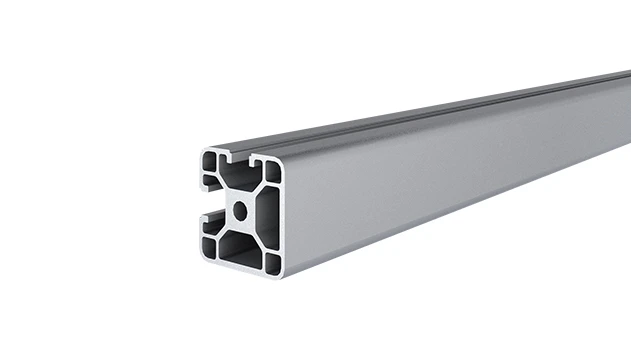
4040E is a 4.00x4.00 CM fractional 40 series square extrusion T-slot profile with two side open T-slots, two side with closed face, each side with 4.00cm face. The profile has align-a-grooves to assist in aligning connecting profiles.
Introduction: The Backbone of Automotive Precision
Walk into any modern automotive manufacturing plant, and you'll be met with a symphony of moving parts: robotic arms assembling engines, conveyor belts ferrying components, and workers hunched over workbenches installing intricate electronics. Behind this chaos lies a silent hero that keeps everything organized, stable, and efficient: the tooling frame. These unassuming structures—whether holding workbenches, supporting material racks, or forming the skeleton of assembly lines—are the backbone of automotive production. But not all tooling frames are created equal. In an industry where precision is measured in millimeters and downtime costs thousands per minute, manufacturers are increasingly turning to a material that blends strength, flexibility, and reliability: aluminum extrusion profiles. And among these, one stands out for its ability to meet the rigorous demands of European automotive standards: the 4040E EU Standard Aluminum Profile.
Why Tooling Frames Matter in Automotive Manufacturing
Let's start with the basics: What exactly is a tooling frame, and why does it matter? In automotive parts manufacturing, tooling frames are the structural frameworks that support almost every aspect of production. They hold workbenches where technicians assemble dashboards, material racks that store sensitive components like wiring harnesses, and roller tracks that guide parts from one station to the next. Think of them as the "bones" of the factory—without strong, well-designed bones, the entire operation risks collapse (or at the very least, inefficiency).
The stakes here are high. A wobbly workbench could lead to misaligned parts, causing a ripple effect of defects down the line. A flimsy material rack might buckle under the weight of heavy engine blocks, halting production and endangering workers. And in a sector that's rapidly adopting lean manufacturing principles—prioritizing waste reduction and workflow optimization—tooling frames need to do more than just "hold things up." They need to adapt, evolve, and support the ever-changing needs of a dynamic production floor.
This is where the choice of material becomes critical. For decades, steel was the go-to for tooling frames. It's strong, affordable, and familiar. But steel has drawbacks: it's heavy, prone to rust in humid factory environments, and notoriously difficult to reconfigure. When a production line needs to shift from assembling sedans to SUVs, a steel frame might as well be set in concrete—modifying it requires cutting, welding, and hours of downtime. That's a problem in an industry where agility is key.

Aluminum Extrusion Profiles: A Game-Changer for Modern Factories
Enter aluminum extrusion profiles. If steel is the reliable but rigid grandfather of manufacturing materials, aluminum extrusion is the innovative, adaptable younger sibling. Aluminum itself is lightweight—about one-third the density of steel—yet surprisingly strong, especially when formed into the precise shapes of extrusion profiles. But what really sets aluminum extrusion apart is the way it's made: through a process where heated aluminum billets are forced through a die, creating custom cross-sectional shapes (like the 4040E's iconic square tube with T-slots). These T-slots are the secret sauce—they allow for easy attachment of accessories like brackets, panels, and connectors, turning a simple tube into a modular building block.
For automotive manufacturers, this modularity is a revelation. Need to add a shelf to a material rack? Slide a bracket into the T-slot and tighten a screw. Want to reconfigure a workbench to accommodate a new tool? Loosen a few connectors, adjust the frame, and you're done—no welding, no cutting, no downtime. Aluminum's natural resistance to corrosion is another win, especially in factories where coolant, lubricants, and humidity are part of daily life. Unlike steel, aluminum doesn't rust, so frames stay sturdy and attractive for years, reducing replacement costs.
But not all aluminum extrusion profiles are the same. The European union, known for its strict industrial standards, has established guidelines for aluminum profiles used in manufacturing. These standards ensure consistency in dimensions, material quality, and load-bearing capacity—critical for cross-border supply chains and safety compliance. Among the most popular EU-standard profiles is the 4040E, a 40mm x 40mm square tube that's become a staple in automotive tooling frames across the continent.
Spotlight on 4040E EU Standard Aluminum Profile: What Makes It Stand Out?
Let's zoom in on the star of the show: the 4040E EU Standard Aluminum Profile. At first glance, it might look like any other square aluminum tube, but a closer inspection reveals why it's a favorite among automotive engineers.
First, the dimensions: 40mm x 40mm (about 1.57 inches per side), with a wall thickness that balances strength and weight. The "E" in 4040E refers to its specific cross-sectional design, which includes evenly spaced T-slots along all four sides. These slots are standardized, meaning accessories from different suppliers (think brackets, hinges, or roller track connectors) will fit seamlessly—a boon for manufacturers who source components globally.
Compliance with EU standards is non-negotiable here. The 4040E isn't just a "suggestion"; it's certified to meet EN 755-9, the European standard for aluminum and aluminum alloy extruded profiles. This means every batch undergoes rigorous testing for tensile strength, yield strength, and dimensional accuracy. For automotive manufacturers, this certification is more than a stamp of approval—it's a guarantee that the frames will perform consistently, even under the stress of 24/7 production cycles.
But what really makes the 4040E shine is its versatility. Let's say a plant needs to build a new assembly workbench for electric vehicle (EV) battery packs. These packs are heavy (some weigh over 500kg) but also sensitive—any vibration could damage delicate lithium-ion cells. The 4040E's rigid structure minimizes flex, while its lightweight nature makes the bench easy to move (with the addition of caster wheels, of course). The T-slots allow engineers to mount anti-static panels (critical for EV components) and adjustable shelving for tools, all without drilling or welding.
Or consider a material rack for storing plastic trim parts. These parts are lightweight but bulky, so the rack needs to be tall (to maximize vertical space) but not too heavy (to avoid damaging factory floors). The 4040E's high strength-to-weight ratio means the rack can reach heights of 2-3 meters without swaying, while its corrosion resistance ensures the frame won't degrade even if parts are stored in a humid warehouse. Add some roller track to the shelves, and suddenly parts glide smoothly from the rack to the assembly line—cutting down on worker strain and speeding up production.
Comparing 4040E with Other Aluminum Profiles: A Closer Look
To truly appreciate the 4040E, it helps to see how it stacks up against other common aluminum profiles. Let's compare it to two popular alternatives: the 4040A (another EU standard profile) and the 3030 (a smaller, 30mm x 30mm profile).
As the table shows, the 4040E's thicker wall (2.0mm vs. 1.5mm for the 4040A) gives it a higher load capacity, making it ideal for the heavy lifting of automotive manufacturing. Its evenly spaced T-slots also provide more flexibility for mounting accessories—no more struggling to align a bracket because the slots are too close together. The 3030, while useful for smaller applications, simply can't match the 4040E's strength for tasks like supporting engine blocks or large workbenches.
For automotive manufacturers, this translates to fewer frame failures, less downtime, and more confidence in their production setup. When every square meter of factory space is valuable, the 4040E lets you do more with less—supporting heavier loads without taking up extra space.
| Feature | 4040E EU Standard | 4040A EU Standard | 3030 EU Standard |
|---|---|---|---|
| Dimensions (W x H) | 40mm x 40mm | 40mm x 40mm | 30mm x 30mm |
| Wall Thickness | 2.0mm | 1.5mm | 1.5mm |
| T-Slot Configuration | 4 slots (1 per side), evenly spaced | 4 slots (1 per side), narrower spacing | 4 slots (1 per side), smaller slots |
| Max Load Capacity (Per Meter) | 150-200kg | 100-150kg | 50-80kg |
| Best For | Heavy-duty workbenches, material racks, roller tracks | Light to medium-duty frames, shelving | Small tool holders, lightweight carts |
Accessories: Turning a Profile into a System
A 4040E profile on its own is just a tube. But pair it with the right aluminum profile accessories, and it becomes a fully functional system. Let's break down some of the most essential accessories and how they enhance the 4040E's capabilities in automotive settings:
Joints and Connectors:
These are the "glue" that holds modular frames together. Corner brackets, T-connectors, and swivel joints let you build everything from simple cubes to complex, multi-level structures. For example, a 90° aluminum crossing joint allows two 4040E profiles to intersect at a right angle, creating the corner of a workbench. The beauty? These joints are reusable—take apart a frame, and you can rebuild it into something entirely different.
Panels and Work Surfaces:
Attach a plywood or aluminum honeycomb panel to a 4040E frame, and you've got a workbench. Add a (anti-static) surface, and it's ready for handling sensitive electronics like airbag control modules. Some panels even come with built-in cable management slots, keeping the workbench clutter-free and reducing tripping hazards.
Roller Tracks:
As mentioned earlier, roller tracks are a game-changer for material handling. Mount a plastic or aluminum roller track to a 4040E material rack, and suddenly heavy parts slide effortlessly from storage to assembly. The T-slots make installation a breeze—simply bolt the track brackets into the slots, and you're done. For automotive plants, this means less manual lifting, fewer worker injuries, and faster throughput.
Caster Wheels:
Need a mobile workbench or cart? Add caster wheels to the base of a 4040E frame. Lockable casters keep the unit stationary during use, while swivel wheels allow for easy maneuvering around tight factory corners. For extra stability, pair them with adjustable leveling feet—perfect for uneven factory floors.
Side Guards and Safety Rails:
In areas where parts are moved overhead (like on conveyor systems), safety is paramount. Aluminum side guards, mounted to 4040E frames via T-slots, prevent parts from falling off and injuring workers. They're lightweight enough to not add excess weight to the frame but strong enough to withstand accidental impacts.
Together, these accessories transform the 4040E from a passive structural element into an active participant in the manufacturing process. It's not just a frame—it's a platform for innovation.
Integrating 4040E into Lean Systems: Reducing Waste, Boosting Efficiency
The automotive industry's shift toward lean manufacturing isn't just a trend—it's a survival strategy. Lean systems focus on eliminating waste (whether it's time, materials, or motion) and streamlining workflows to deliver more value with less effort. The 4040E EU Standard Aluminum Profile aligns perfectly with this philosophy, and here's how:
Waste Reduction Through Modularity:
Traditional steel frames are "one and done." Build a frame for a specific task, and if that task changes, the frame becomes waste. The 4040E, with its modular design, eliminates this. A material rack that's no longer needed for engine parts can be disassembled and rebuilt into a workbench for brake assembly. No scrap metal, no wasted materials—just repurposed components.
Time Savings in Reconfiguration:
In lean manufacturing, "changeover time" (the time it takes to switch from producing one product to another) is a critical metric. With steel frames, changeover can take hours or even days. With 4040E, it takes minutes. Loosen a few connectors, adjust the frame, and you're ready for the next product. For example, when a plant shifts from assembling gasoline engines to hybrid engines, the 4040E workbenches can be quickly reconfigured to accommodate the new tooling—no downtime, no lost production.
Ergonomic Design for Reduced Motion Waste:
Lean systems also target "motion waste"—unnecessary movement by workers that slows them down. 4040E frames can be customized to fit the human body, reducing strain and speeding up tasks. A workbench can be adjusted to the ideal height (using adjustable feet), with tools mounted at arm level via T-slots. Material racks can be positioned closer to the assembly line, so workers don't have to walk as far to retrieve parts. The result? Happier, more productive employees—and fewer mistakes.
Space Optimization:
Factory floor space is expensive, and lean systems aim to use it efficiently. The 4040E's high strength-to-weight ratio means frames can be built taller (utilizing vertical space) without increasing their footprint. A 4040E material rack with multiple shelves takes up the same floor space as a shorter rack but holds twice as many parts. When combined with roller tracks, these racks also allow for "first-in, first-out" (FIFO) inventory management, ensuring parts are used in the order they're received—reducing waste from expired or obsolete components.
One automotive supplier in Germany put this to the test. They replaced their steel workbenches and material racks with 4040E-based systems and saw a 20% reduction in changeover time, a 15% drop in worker fatigue-related errors, and a 10% increase in floor space utilization. "It's like night and day," said the plant manager. "We used to dread product changes—now we look forward to them, because we know the 4040E frames can keep up."
Long-Term Value: Why 4040E Pays for Itself
Let's address the elephant in the room: aluminum extrusion profiles, especially EU-standard ones like the 4040E, are often more expensive upfront than steel. It's a valid concern—manufacturing budgets are tight, and every euro counts. But focusing solely on upfront cost misses the bigger picture: the long-term value of the 4040E.
Lower Maintenance Costs:
Steel frames need regular painting or coating to prevent rust. Over time, that adds up—labor, materials, and downtime during maintenance. Aluminum frames? They're virtually maintenance-free. No painting, no rust treatment, just an occasional wipe-down. For a large factory with hundreds of frames, this can save tens of thousands of euros annually.
Energy Savings:
Aluminum is lighter than steel, which means frames are easier to move. A mobile 4040E workbench requires less energy to transport around the factory than a steel one. Over the life of the frame, those energy savings add up. Plus, aluminum's thermal conductivity can help with climate control—frames stay cooler in summer, reducing the load on factory air conditioning.
Scalability:
As a company grows, its manufacturing needs grow too. With steel, scaling up means buying new frames. With 4040E, you can expand existing frames by adding more profiles and accessories. Need a longer material rack? Just bolt on another 4040E section. No need to start from scratch—saving money and reducing waste.
Resale Value:
Unlike steel, which depreciates quickly and is often sold as scrap, used 4040E profiles retain their value. If a factory upgrades to a newer system, the old 4040E frames can be resold to smaller manufacturers or repurposed in other parts of the business. Steel frames? They're lucky to fetch a few euros per kilogram as scrap.
When you factor in these long-term savings, the 4040E isn't just a "more expensive" option—it's an investment that pays dividends for years. As one plant manager put it: "We spent 15% more on 4040E frames upfront, but we saved 30% in maintenance and downtime in the first year alone. It was a no-brainer."
Conclusion: Building the Future of Automotive Manufacturing
The automotive industry is at a crossroads. Electric vehicles, autonomous driving, and global supply chain challenges are reshaping how cars are built. In this fast-paced environment, manufacturers need tools that can keep up—tools that are strong, flexible, and designed for the future. The 4040E EU Standard Aluminum Profile isn't just a tooling frame; it's a foundation for innovation.
From its modular design that supports lean manufacturing to its high strength-to-weight ratio that makes factories safer and more efficient, the 4040E embodies the qualities modern automotive plants need. It's a material that doesn't just "work"—it adapts, evolves, and grows with your business. Whether you're building a small workbench for assembling sensors or a massive conveyor system for engine blocks, the 4040E delivers the reliability, flexibility, and value that automotive manufacturing demands.
So the next time you see a car roll off the production line, take a moment to appreciate the silent hero behind it: the 4040E frame, quietly supporting the precision, efficiency, and innovation that make modern automotive manufacturing possible. It may not have the flash of a robotic arm or the excitement of a new car model, but without it, the wheels of the industry would grind to a halt.