- Company Articles
- Industry articles
- Industry standards
- Automotive Parts Storage: 2020 National Standard Profile Racks vs Traditional Steel Racks

Automotive Parts Storage: 2020 National Standard Profile Racks vs Traditional Steel Racks
Related Product
2020 National Standard Profile
45° external bending joint, used for 45° external connection of two aluminum pipes.
Walk into any automotive manufacturing plant or parts warehouse, and you'll quickly realize that storage isn't just about "putting things away." It's the silent engine that keeps production lines humming, technicians efficient, and orders fulfilled on time. From tiny washers and fuses to bulky transmission components and engine blocks, automotive parts come in every shape, size, and weight—each demanding a storage solution that balances accessibility, safety, and adaptability. In recent years, a new contender has emerged to challenge the long-reigning champion of industrial storage: the 2020 national standard profile rack. But how does it stack up against the traditional steel racks that have been the backbone of warehouses for decades? Let's dive in.
The Automotive Storage Challenge: Why "One-Size-Fits-All" Doesn't Work
Automotive parts storage is a unique puzzle. Unlike retail or general warehousing, where products might stay on shelves for weeks, automotive facilities deal with rapid turnover—especially in just-in-time (JIT) manufacturing models. A single line might need hundreds of different parts daily, and delays in retrieving even one component can bring production to a grinding halt. Add to that the variety of part sizes (from 0.5-inch screws to 6-foot-long axles), varying weights (some parts top 500 lbs), and the need for organization (imagine sorting 20 types of brake pads by make, model, and year), and it's clear: storage systems can't be rigid.
Traditional steel racks have long been the go-to solution. They're tough, they can handle heavy loads, and they're familiar. But in an industry where flexibility and efficiency are non-negotiable, many facilities are starting to ask: Is "tough" enough?
What Are 2020 National Standard Profile Racks?
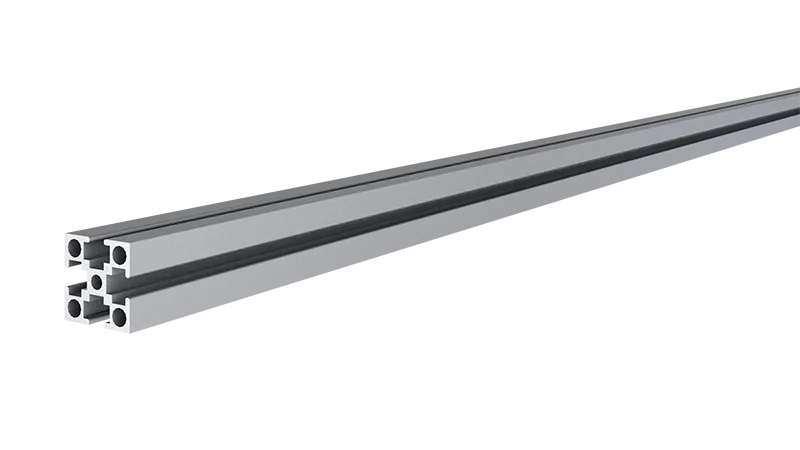
First things first: let's clarify what we mean by 2020 national standard profile racks. These systems are built around modular aluminum profile components—think lightweight, durable extruded aluminum tubes and accessories designed to be assembled, disassembled, and reconfigured with minimal effort. The "2020" refers to a common profile size (20mm x 20mm), though they come in larger variations too (30x30, 40x40, etc.). What sets them apart is their modularity: using T-slot grooves and simple fasteners, you can build shelves, racks, and even workstations that adapt to your needs in hours, not days.
These racks are often part of broader lean system strategies, which focus on eliminating waste—whether that's wasted space, wasted time searching for parts, or wasted effort moving heavy equipment. They're designed to be lightweight (aluminum is about 1/3 the weight of steel), corrosion-resistant (critical in garages and warehouses where oil, grease, and moisture are common), and highly customizable. Need a shelf that's 12 inches deep for small parts? Or a 3-foot-wide rack for bulky components? With aluminum profiles, you can adjust heights, add dividers, or even integrate flow rack components (like roller tracks) to let parts "flow" to pickers automatically.

The Old Reliable: What Are Traditional Steel Racks?
Traditional steel racks are the workhorses of industrial storage. Made from heavy-gauge steel, they're built to withstand extreme weights—some can hold 2,000+ lbs per shelf. They come in standard configurations: pallet racks for large items, cantilever racks for long parts (like pipes or rods), and boltless shelving for smaller components. For decades, they've been the default because they're strong, relatively inexpensive upfront, and easy to source.
But "old reliable" has its drawbacks. Steel is heavy—installing a single rack might require 2-3 people and heavy equipment. Once bolted or welded into place, they're hard to reconfigure; changing a shelf height means drilling new holes or even replacing the entire unit. They're also prone to rust if not regularly painted or coated, which is a problem in damp or oily automotive environments. And let's not forget about safety: a poorly installed steel rack can warp under heavy loads, and the sharp edges of steel beams pose a risk to workers moving parts around.
Head-to-Head: 2020 Profile Racks vs. Steel Racks in Automotive Storage
To really understand which is better for automotive parts storage, let's compare them across key factors that matter most in automotive facilities:
| Factor | 2020 National Standard Profile Racks | Traditional Steel Racks |
|---|---|---|
| Flexibility & Customization | Highly modular: Adjust shelf heights, add dividers, or integrate flow rack components (e.g., roller tracks) in minutes using T-slot fasteners. No welding or drilling required. | Limited: Fixed configurations; changing shelf heights often requires tools, new hardware, or replacing the unit entirely. |
| Weight & Installation | Lightweight (aluminum is 1/3 the weight of steel). A single worker can assemble a basic rack in under an hour with hand tools. | Heavy. Installation often requires 2-3 people, power tools, and sometimes forklifts. Welding may be needed for permanent setups. |
| Load Capacity | Moderate to high: Most aluminum profile racks hold 300-800 lbs per shelf (suitable for most automotive parts). Heavy-duty versions can reach 1,500 lbs. | Very high: Steel racks can hold 1,000-3,000 lbs per shelf, making them better for extremely heavy items (e.g., engines, transmissions). |
| Durability & Maintenance | Corrosion-resistant (aluminum doesn't rust). Minimal maintenance—just wipe down with a cloth to remove grease or dirt. | Prone to rust if not coated. Requires regular painting/touch-ups. Steel can warp under uneven loads, leading to costly repairs. |
| Cost (Short-Term vs. Long-Term) | Higher upfront cost (aluminum profiles are pricier than steel). But lower long-term costs: no repainting, faster reconfiguration, and reduced labor for installation/updates. | Lower upfront cost. But higher long-term costs: maintenance (painting, repairs), labor for reconfiguration, and potential downtime during updates. |
| Safety | Smooth, rounded edges reduce injury risk. Lightweight design means less risk of collapse if overloaded (racks bend gradually, warning of stress). | Sharp steel edges pose laceration risks. Heavy weight increases collapse danger if overloaded; steel can fail suddenly without warning. |
| Integration with Workflow | Easily integrates with lean systems: Add flow rack roller tracks for JIT picking, mount workbench surfaces for assembly stations, or attach tool holders—all in one system. | Limited integration. Workbenches and flow racks are often separate units, creating gaps in workflow (e.g., walking from rack to workbench). |
Real-World Impact: How Automotive Facilities Are Choosing
To see how these differences play out, let's look at a case study: a mid-sized auto parts distributor in Michigan. They'd relied on steel racks for 15 years, but as their inventory grew (adding electric vehicle parts with different sizes and weights), they struggled with rigid storage. Their steel shelves couldn't adjust to smaller EV components, and workers spent 20% of their day moving between racks and a separate workbench to sort orders.
In 2023, they switched to 2020 national standard profile racks. Here's what happened:
- Space savings: By customizing shelf heights to fit parts (no more wasted vertical space), they freed up 15% of their warehouse floor.
- Faster picking: Adding flow rack roller tracks let small parts "flow" to pickers, cutting order processing time by 30%.
- Safer workspace: Rounded aluminum edges reduced worker injuries from 5 incidents/year to zero.
- Adaptability: When they added a new line of EV batteries (bulky but lighter than traditional engines), they reconfigured 3 racks in a single day—no contractors needed.
Was it expensive upfront? Yes. But the distributor estimates they'll recoup the cost in 2 years through labor savings and reduced downtime.
Of course, steel racks still have a place. For facilities storing extremely heavy items (like full engines or palletized shipments of tires), steel's higher load capacity is non-negotiable. But for most automotive parts—from brake pads to sensors to small tools—aluminum profile racks offer a smarter, leaner alternative.
Beyond Storage: Building a Lean Workspace
What really sets 2020 national standard profile racks apart is how they blend storage with workflow. In automotive facilities, the line between "storage" and "work" is blurry—technicians often need to pick parts, assemble components, and test products in the same area. With aluminum profiles, you can build a single system that does it all.
For example, imagine a workbench built from the same aluminum profiles as your storage racks. The bench top is at waist height, with flow rack shelves above holding the parts needed for assembly. Below the bench, you can add drawers for tools, and on the sides, hooks for cables or hoses. When a new part is introduced, you don't need a new workbench—just adjust the shelves or add a divider. It's storage and work, unified.
This integration is a cornerstone of lean systems. By reducing the distance between storage and work, you eliminate "motion waste"—the time workers spend walking back and forth. In a busy shop, that adds up to hours of saved time each week.
Is It Time to Make the Switch?
Choosing between 2020 national standard profile racks and traditional steel racks isn't about picking "the best" option—it's about picking the best option for your facility. Ask yourself:
- Do we frequently add new parts or change production lines?
- Is our warehouse space limited, and could we use vertical space more efficiently?
- Do workers spend a lot of time moving between storage and work areas?
- Have we had issues with rust, injuries, or rack damage in the past?
If you answered "yes" to most of these, aluminum profile racks are worth considering. They're an investment in flexibility, safety, and long-term efficiency—qualities that matter in an automotive industry where change is constant.
Steel racks will always have their place, but for forward-thinking facilities looking to stay competitive, 2020 national standard profile racks offer a path to a leaner, smarter, and more adaptable workspace. After all, in automotive manufacturing, the goal isn't just to store parts—it's to keep the world moving. And sometimes, the right storage system is the key to keeping that momentum going.