- Company Articles
- Industry articles
- Industry standards
- Automotive Parts Storage: 4040r EU Standard Aluminum Profile Rack Design

Automotive Parts Storage: 4040r EU Standard Aluminum Profile Rack Design
Related Product
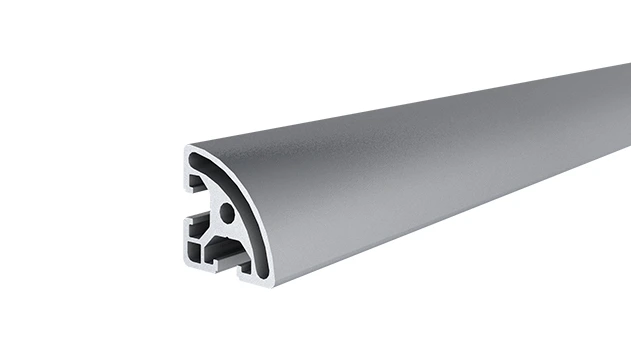
4040R EU Standard Aluminum Profile
4040R is a 4.00x4.00 CM fractional 40 series square extrusion T-slot profile with two side open T-slots, each side with 4.00cm face,the other side is round face. The profile has align-a-grooves to assist in aligning connecting profiles.
Walk into any automotive parts warehouse or workshop, and you'll quickly realize that storage isn't just about putting things on shelves. It's the backbone of efficiency. Every minute an employee spends searching for a misplaced part, every scratched component due to poor stacking, every strained back from lifting heavy items—these all add up to lost time, increased costs, and frustrated teams. The solution? A storage system that's built to handle the unique demands of automotive parts, combining durability, flexibility, and smart design. Enter the 4040r EU Standard Aluminum Profile Rack —a game-changer for how automotive parts are stored and managed.
The Unique Challenges of Automotive Parts Storage
Automotive parts are a diverse bunch. You've got tiny fasteners and sensors that could fit in the palm of your hand, medium-sized components like brake calipers or alternators, and bulky items such as transmissions or suspension assemblies. Each has different storage needs: small parts need secure, labeled compartments to prevent loss; heavy parts require sturdy shelving that won't buckle under weight; and fragile components (like electronic modules) need protection from dust, moisture, and impacts.
Then there's the issue of workflow. In busy shops, parts need to move quickly from storage to the assembly line or repair bay. A rack that's hard to access, or that requires employees to climb or stretch awkwardly, slows everything down. Safety is another critical factor—unstable racks, overloaded shelves, or sharp edges can lead to accidents, putting employees at risk and halting operations.
Traditional storage solutions often fall short here. Steel racks, while strong, are heavy and hard to reconfigure if your needs change (say, you start stocking larger parts or need to rearrange the workshop layout). Plastic shelving might be lightweight but lacks the durability to handle heavy automotive components long-term. What's needed is a system that checks all the boxes: strong enough for heavy parts, flexible enough to adapt, and safe enough for daily use.
Why Aluminum Profiles? The Material That Makes a Difference
When it comes to building storage racks that meet automotive demands, aluminum has emerged as a standout material—and for good reason. Unlike steel, aluminum is lightweight, making installation and reconfiguration a breeze (no need for heavy machinery or multiple people to move a single shelf). But don't let its lightness fool you: aluminum alloys, especially those used in industrial profiles, are remarkably strong. They resist bending and warping, even under the weight of heavy parts like engine blocks or gearboxes.
Corrosion resistance is another key advantage. Automotive workshops and warehouses are often exposed to oils, greases, and occasional spills. Steel racks can rust over time if not properly coated, but aluminum naturally forms a protective oxide layer, keeping it looking and performing like new for years. This longevity translates to lower maintenance costs—no repainting or rust treatments required.
Perhaps the biggest selling point, though, is flexibility. Aluminum profiles are designed with modularity in mind. They come in standard sizes and can be easily cut, joined, and extended using aluminum profile accessories like brackets, connectors, and end caps. This means you're not stuck with a one-size-fits-all rack; you can customize it to fit your exact needs, whether that's adding extra shelves, adjusting heights, or even integrating specialized features like roller tracks for smooth part movement.

Meet the 4040r EU Standard Aluminum Profile: The Star of the Show
Among the many aluminum profiles available, the 4040r EU Standard stands out for automotive storage. Let's break down what makes it special. The "4040" refers to its dimensions: 40mm by 40mm, a versatile size that balances strength and practicality. It's wide enough to support heavy loads but not so bulky that it wastes space. The "r" in the name denotes its rounded edges—a small detail with big benefits. Sharp edges on racks can snag on gloves, clothing, or parts themselves, leading to tears or damage. Rounded edges eliminate this risk, making the rack safer to work around daily.
As an EU standard profile, the 4040r meets strict quality and safety regulations, ensuring it's built to last in industrial environments. It's extruded from high-grade aluminum alloy (typically 6063-T5, known for its excellent strength-to-weight ratio), making it both rigid and lightweight. This combination is crucial for automotive storage, where racks need to hold heavy parts without being a hassle to install or reposition.
But what really sets the 4040r apart is its T-slot design. Running along its length are grooves (T-slots) that allow aluminum profile accessories —like brackets, shelves, or roller track mounts—to be attached quickly and securely, no welding or drilling required. Just slide a bolt into the T-slot, tighten it, and you're done. This makes the rack infinitely adaptable: if you need to add a shelf at 18 inches instead of 12, or install a roller track to feed parts directly to a workbench, you can do it in minutes, not days.
Designing Your 4040r Aluminum Profile Rack: Key Components
Building a 4040r rack isn't just about slapping together some aluminum bars. It's about combining the right components to create a system that works for your specific parts and workflow. Let's walk through the essential elements:
1. The 4040r Profiles: The Backbone of the Rack
The 4040r profiles form the vertical uprights and horizontal beams of your rack. Depending on the height and weight capacity you need, you can choose different wall thicknesses (typically 1.5mm to 3mm). For most automotive parts, a 2mm wall thickness is sufficient, supporting up to 200kg per shelf. Longer spans (like between vertical uprights) may require thicker profiles or additional support brackets.
2. Aluminum Profile Accessories: The Glue That Holds It All Together
Without the right accessories, even the best aluminum profile is just a metal bar. Aluminum profile accessories include:
- Connectors and Joints: These attach horizontal beams to vertical uprights. Options like 90° angle brackets, T-joints, and corner connectors ensure a secure, wobble-free fit.
- Shelf Supports: Slotted angle brackets or shelf clips slide into the T-slots of the vertical profiles, providing a stable base for shelves. They're adjustable, so you can set shelf heights in 10mm increments.
- End Caps: These snap onto the ends of profiles to cover sharp edges (though the 4040r's rounded edges already reduce this risk) and prevent dust from collecting in the T-slots.
- Foot Plates: Attached to the bottom of vertical uprights, these distribute the rack's weight evenly, preventing it from sinking into concrete floors or tilting.
3. Roller Tracks: For Smooth Part Flow
In automotive workshops, time is money—and nothing speeds up part retrieval like roller tracks . These are mounted along shelves or between racks, allowing parts (on bins or trays) to glide smoothly from storage to the point of use. For example, a roller track installed on a lower shelf can feed parts directly to a nearby workbench , eliminating the need for employees to carry heavy bins back and forth.
Roller tracks designed for 4040r profiles are easy to install using specialized brackets that fit into the T-slots. They come in various configurations: some have small, free-spinning wheels for lightweight bins, while others have heavier-duty rollers for larger parts. You can even add side guides to keep bins from sliding off, or brakes to stop trays at specific points.
4. Workbench Integration: Bringing Storage to the Workstation
The best storage systems don't just hold parts—they integrate seamlessly with where the work happens. Many workshops pair their 4040r racks with workbenches built from the same aluminum profiles. This creates a unified workspace: parts are stored in the rack, slide onto the roller track, and land right at the workbench, minimizing movement and maximizing efficiency. These workbenches can be customized with tool rails, LED lights, or ESD (electrostatic discharge) mats to protect sensitive electronic parts—all using compatible aluminum accessories.
Traditional Racks vs. 4040r Aluminum Profile Racks: A Head-to-Head Comparison
| Feature | Traditional Steel Racks | 4040r Aluminum Profile Racks |
|---|---|---|
| Weight | Heavy; requires machinery for installation/movement | Lightweight; can be assembled by 1-2 people |
| Flexibility | Fixed design; hard to reconfigure without cutting/welding | Modular; adjust shelves, add roller tracks, or expand with simple tools |
| Durability | Strong but prone to rust if not coated | Corrosion-resistant; no rust, even with oil/grease exposure |
| Safety | Sharp edges; heavy shelves risk injury if they fall | Rounded edges; lightweight components reduce injury risk |
| Installation Time | 2-3 days for a basic setup (due to welding/bolting) | 2-3 hours for a similar setup (modular assembly) |
| Long-Term Cost | Higher maintenance (repainting, rust repair); replacement needed every 5-7 years | Low maintenance; lasts 10+ years with minimal upkeep |
Real-World Benefits: How 4040r Racks Transform Workshops
Don't just take our word for it—shops that have switched to 4040r aluminum profile racks report tangible improvements. Take, for example, a mid-sized auto repair shop in Germany that was struggling with disorganized storage. Their old steel racks were fixed in place, so they couldn't add shelves for new parts lines, and heavy bins often got stuck when sliding them out. After installing 4040r racks with roller tracks, they saw a 30% reduction in time spent retrieving parts. Employees no longer had to strain to pull bins; parts glided smoothly to the edge of the shelf. They also reconfigured the racks twice in the first year alone—once to make space for electric vehicle components and again to add a dedicated area for fragile sensors—all without hiring contractors.
Another example: a parts warehouse supplying a car manufacturing plant. They needed a system that could handle frequent layout changes as production lines shifted. With 4040r racks, they could disassemble and rebuild sections overnight, ensuring parts were always stored close to the line they fed. The lightweight design also meant they could move entire racks to new locations using just a pallet jack, saving days of downtime compared to traditional steel racks, which would have required disassembly and reinstallation from scratch.
Installation and Maintenance: Keeping Your Rack in Top Shape
One of the best things about 4040r racks is how easy they are to set up and maintain. Here's a quick guide:
Installation Tips
- Plan first: Sketch your layout, noting shelf heights, roller track positions, and weight loads. This ensures you order the right profiles and accessories.
- Start with the frame: Assemble the vertical uprights and horizontal beams first, using a level to ensure everything is straight. Secure the foot plates to the floor (with bolts for heavy loads) to prevent tipping.
- Add accessories last: Once the frame is stable, attach shelf supports, roller tracks, or workbench components. Tighten bolts firmly but avoid over-tightening, which can strip the T-slots.
Maintenance Made Simple
- Clean regularly: Wipe down profiles and roller tracks with a damp cloth to remove dust and grease buildup. For stubborn grime, use a mild detergent—avoid harsh chemicals that can damage the aluminum finish.
- Check connections: Every few months, tighten any loose bolts (vibration from daily use can cause them to wiggle). This prevents shelves from sagging or accessories coming loose.
- replace worn parts: If a roller track wheel starts sticking or a bracket bends, replace it immediately. Aluminum profile accessories are affordable and easy to swap out, so there's no need to replace the entire rack.
Conclusion: Invest in a Storage System That Grows With You
In the fast-paced world of automotive repair and manufacturing, inefficiency isn't an option. The 4040r EU Standard Aluminum Profile Rack isn't just a storage solution—it's an investment in your team's productivity, safety, and adaptability. By combining the strength of aluminum, the flexibility of modular design, and the practicality of aluminum profile accessories like roller tracks and workbench integration, it addresses the unique challenges of automotive parts storage head-on.
Whether you're running a small repair shop or a large-scale warehouse, the 4040r rack grows with you. Need to add more shelves? Just buy a few extra profiles and brackets. Switching to electric vehicle parts that require different storage? Reconfigure the layout in an afternoon. With minimal maintenance and a lifespan that outlasts traditional racks, it's a choice that pays for itself in saved time, reduced costs, and happier, more efficient employees.
So, the next time you look at your current storage setup and see chaos, remember: there's a better way. The 4040r aluminum profile rack isn't just about storing parts—it's about building a workshop that works as hard as you do.