- Company Articles
- Industry articles
- Industry standards
- Bending 2040 EU Standard Aluminum Profile: Feasibility and Best Practices

Bending 2040 EU Standard Aluminum Profile: Feasibility and Best Practices
Related Product
2040 EU Standard Aluminum Profile
2040 is a 2.00 x 4.00CM fractional 20 series square extrusion T-slot profile with four open T-slots, two side with 2.00cm face, the other side with 4.00cm face. The profile has align-a-grooves to assist in aligning connecting profiles.
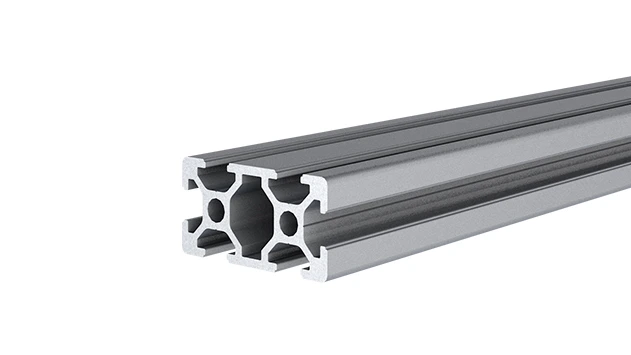
Walk into any modern factory, workshop, or even a trendy retail space, and you'll likely spot aluminum profiles holding things together—shelves, workbenches, machine frames, or custom display units. Lightweight, strong, and infinitely adaptable, aluminum extrusion profiles have become the backbone of modular design in manufacturing and beyond. Among the most versatile players in this space is the 2040 EU Standard Aluminum Profile. Its 20mm x 40mm cross-section hits the sweet spot between strength and flexibility, making it a go-to for everything from small workstations to industrial machinery.
But here's the question many designers and fabricators ask: Can you bend a 2040 EU standard aluminum profile? And if so, how do you do it without warping, cracking, or ruining that precision-engineered shape? Whether you're aiming to create a curved machine guard, a ergonomic workstation edge, or a custom display with flowing lines, bending this profile opens up a world of design possibilities. In this guide, we'll dive into the feasibility of bending 2040 EU standard aluminum profiles, break down the best practices, and share insights to help you achieve clean, consistent results—plus, how to pair your bent profiles with the right aluminum profile accessories for a polished finish.
First Things First: What Makes the 2040 EU Standard Aluminum Profile Special?
Before we talk bending, let's get to know the star of the show. The 2040 EU Standard Aluminum Profile is part of the European-standard series of aluminum extrusion profiles, designed with uniformity and compatibility in mind. Its dimensions—20mm in width and 40mm in height—are intentional: narrow enough to fit into tight spaces but wide enough to support significant weight when paired with the right connectors and brackets. Most 2040 profiles are made from 6063-T5 aluminum alloy, a heat-treated variant known for its excellent extrudability, corrosion resistance, and moderate strength.
What really sets it apart, though, is its T-slot design. Those grooves running along its length? They're not just for show. They let you slide in bolts, nuts, and aluminum profile accessories like end caps, rubber strips, or brackets, turning a simple piece of metal into a modular building block. It's why you'll find 2040 profiles in everything from lean manufacturing workstations to 3D printer frames—they're easy to assemble, reconfigure, and yes, even modify. But modifying often means bending, and that's where things get tricky.
Why Bother Bending a 2040 Profile? The Case for Curves
You might be thinking: "If aluminum profiles are meant to be straight and modular, why bend them?" Great question. Straight profiles work wonders for grids, frames, and linear structures, but curves add a layer of functionality and aesthetics that straight lines can't match. Imagine a production line where parts need to flow around a corner—curved 2040 profiles with roller tracks can guide materials smoothly without sharp edges. Or a workstation where the operator needs easy access to tools on both sides; a gently bent profile can create a wrap-around surface that's more ergonomic than a square frame.
Aesthetics matter too. In retail displays or office furniture, curved edges soften the industrial look of aluminum, making it feel more approachable. Think of a boutique clothing rack with curved arms or a reception desk with a sweeping front edge—both could be built with bent 2040 profiles. And let's not forget space constraints: in tight workshops, a curved profile can hug a wall or navigate around existing equipment, maximizing usable area without sacrificing structural integrity.

Feasibility 101: Can You Actually Bend a 2040 EU Aluminum Profile?
The short answer: Yes, but with caveats. Aluminum, by nature, is a ductile metal, meaning it can be deformed under stress without breaking—good news for bending. However, the 2040 profile's shape (hollow, with thin walls) and alloy type (6063-T5) add variables. Let's break down the key factors that determine feasibility:
1. Alloy Ductility: 6063-T5 vs. Other Grades
6063-T5 is a popular choice for extrusion because it's easy to shape during manufacturing, but after heat treatment (the "T5" designation), it gains strength—sometimes at the cost of ductility. Compared to softer alloys like 1100 or 3003, 6063-T5 is less malleable, which means it can crack if bent too sharply. However, it's still far more bendable than high-strength alloys like 6061-T6, which are better suited for structural beams than curved designs. So, 6063-T5 is bendable, but you need to respect its limits.
2. Wall Thickness: Thin Walls, Big Challenges
Most 2040 profiles have wall thicknesses ranging from 1.2mm to 2mm. Thin walls are great for reducing weight, but they're prone to wrinkling or collapsing when bent, especially if the bend radius is too small. Imagine trying to bend a thin straw versus a thick pipe—the straw crumples, right? The same principle applies here. A 2040 profile with 1.2mm walls will need a larger bend radius than one with 2mm walls to avoid deformation.
3. Minimum Bend Radius: The Golden Number
The "minimum bend radius" is the smallest curve you can bend a profile into without damaging it. For 2040 EU standard profiles in 6063-T5, this radius is typically 3-5 times the profile's height (40mm). So, a safe starting point is 120-200mm (3x40mm to 5x40mm). Bending tighter than that—say, 80mm—risks cracking the outer edge of the bend or wrinkling the inner edge. Some manufacturers push this limit with specialized tools, but for most small to medium shops, sticking to 3-5x the height is a smart rule of thumb.
Best Practices: How to Bend 2040 Profiles Like a Pro
Bending a 2040 aluminum profile isn't as simple as grabbing a pipe bender and going to town. It requires planning, the right tools, and a bit of finesse. Let's walk through the process step by step, from prep to post-bend finishing.
Step 1: Prep Like a Detective—Measure Twice, Bend Once
Before you touch a single tool, start with design. Use CAD software (like SolidWorks or Fusion 360) to model your bend. Input the profile's dimensions, wall thickness, and desired radius—many programs will even flag potential issues like excessive stress points. If you don't have CAD, sketch it out with precise measurements: where the bend starts, the angle, and the radius. Remember, aluminum has "springback"—after bending, it will slightly straighten, so you'll need to over-bend by a few degrees to compensate. A quick test with a scrap piece can help you dial in the exact over-bend amount.
Next, inspect your profile. Look for dents, scratches, or uneven walls—these weak points can crack during bending. If you're using a new profile, check the manufacturer's specs for alloy temper (T5 vs. T6) and wall thickness; don't assume all 2040 profiles are identical. Finally, mark your bend line clearly with a pencil or tape—accuracy here prevents costly mistakes.
Step 2: Choose Your Bending Method—Cold, Hot, or Rolled?
There are three main ways to bend aluminum profiles: cold bending, hot bending, and roll bending. Each has its pros and cons, depending on your project's needs. Let's compare them:
| Method | Process | Best For | Pros | Cons |
|---|---|---|---|---|
| Cold Bending | Bending at room temperature using a press brake, manual bender, or jig. | Small bends (90° or less), low-volume projects. | No heat required; faster setup; preserves alloy strength. | High springback; risk of wrinkling thin walls; limited to larger radii. |
| Hot Bending | Heating the bend area (350-450°C) to increase ductility, then bending. | Tight radii, complex curves, thick-walled profiles. | Reduces springback; allows smaller radii; less risk of cracking. | Requires heat source; can soften alloy if overheated; longer process. |
| Roll Bending | Feeding the profile through three rotating rollers to create a gradual curve. | Large radii (e.g., arcs, circles), long profiles. | Uniform bends; ideal for continuous curves; minimal distortion. | Not for sharp angles; requires specialized roller equipment. |
For most 2040 profile projects, cold bending with a press brake is the way to go—it's accessible, affordable, and works well for simple bends. If you need a tight radius (e.g., 100mm for a 40mm profile), hot bending might be necessary, but proceed with caution: overheating 6063-T5 can reduce its strength. Roll bending is perfect for large, sweeping curves, like a circular machine guard or a curved shelf.
Step 3: Bending Day—Steady Hands and Slow Moves
Let's focus on cold bending with a press brake, the most common method for small to medium shops. Start by securing the profile in the brake's jaws, aligning your marked bend line with the brake's die. Use a die that matches your desired radius—too small, and you'll crush the profile; too large, and the bend will be uneven. Apply pressure slowly: sudden force causes wrinkling. Once bent, release the pressure gradually to account for springback. If the angle is off, repeat the process (gently—aluminum fatigues with repeated bending).
For hot bending, use a propane torch or heat blanket to warm the bend area evenly (avoid focusing heat on one spot, as this causes local melting). Test the temperature with a pyrometer—aim for 350°C (about 660°F), where aluminum becomes pliable but not molten. Bend slowly using a jig or form, then quench in water (for T5 temper) to re-harden the alloy. Note: This method is best left to experienced fabricators, as overheating can ruin the profile.
Step 4: Post-Bend Finishing—Smooth Edges and Polished Looks
Once bent, your profile might have sharp edges, minor dents, or tool marks. Sand the bend area with 120-grit sandpaper to smooth rough spots, then switch to 240-grit for a finer finish. If the T-slots got distorted during bending, use a small file to clean them out—you'll need those slots to attach aluminum profile accessories later. Finally, wipe the profile with a degreaser to remove oil or debris before painting, anodizing, or assembling.
Troubleshooting Common Bending Headaches
Even with careful prep, bending 2040 profiles can throw curveballs (pun intended). Here are the most common issues and how to fix them:
Problem: Springback—The Profile "Unbends" After Bending
Aluminum is elastic, so after bending, it will spring back by 2-5 degrees. Solution: Over-bend by the springback amount. For example, if you need a 90° bend, aim for 93-95°; the profile will relax to 90°. Test with a scrap piece first to find your material's springback rate.
Problem: Cracking on the Outer Bend
The outer edge of the bend stretches; if it stretches too much, it cracks. Solution: Increase the bend radius, use hot bending to reduce brittleness, or choose a profile with a thicker wall. If cracking is minor, sand the area to smooth it, but severe cracks mean starting over.
Problem: Wrinkling on the Inner Bend
Thin walls can bunch up on the inner curve. Solution: Use a mandrel or internal support (like a foam plug) to keep the profile's shape during bending. For press brake bending, use a die with a wider groove to distribute pressure evenly.
Problem: Distorted T-Slots
Bending can pinch or flatten the T-slots, making accessories hard to install. Solution: Avoid bending directly over a slot; position the bend between slots if possible. If slots get distorted, use a T-slot cleaning tool or a small hex key to reshape them gently.
Pairing Bent Profiles with Aluminum Profile Accessories
A bent 2040 profile is just a curved piece of metal until you add the right accessories. Aluminum profile accessories like end caps and rubber strips turn a functional part into a finished product. Here's how to choose them:
Aluminum Profile End Caps: Cover Sharp Edges
The ends of bent profiles can be sharp, especially after cutting or sanding. 2040 aluminum profile end caps snap into the profile's open ends, covering edges and adding a clean look. Choose plastic end caps for lightweight applications or metal caps for industrial use. Pro tip: If your bend distorts the profile's end, trim it square first so the end cap fits snugly.
Aluminum Profile Rubber Strips: Seal, Cushion, and Protect
Rubber strips slide into the T-slots of your bent profile, serving multiple purposes: sealing out dust, cushioning parts that rest on the profile, or reducing noise (great for roller track applications). They come in colors like black or gray to match your design. For curved profiles, opt for flexible rubber strips—stiffer strips might kink at the bend.
Connectors and Brackets: Join Curves to Straight Profiles
To attach your bent profile to straight sections, use angle brackets, corner codes, or T-connectors. Look for accessories designed for 2040 profiles—ill-fitting connectors will create wobbly joints. For example, a 90° aluminum profile connector can link a straight vertical profile to a curved horizontal one, but ensure the connector's thickness doesn't interfere with the bend.
Real-World Applications: Where Bent 2040 Profiles Shine
Still not sure if bending 2040 profiles is worth the effort? Let's look at some real-world examples where curved 2040 profiles have made a difference:
Automotive Manufacturing: Curved Assembly Line Guides
Car parts like door panels or dashboards often need to move around corners on the assembly line. Bent 2040 profiles with roller tracks create smooth, curved pathways that reduce jamming and speed up production. The T-slots make it easy to adjust roller positions, and rubber strips dampen noise from sliding parts.
Retail Displays: Eye-Catching Curved Shelves
A clothing store wanted to stand out with unique shelving. By bending 2040 profiles into gentle S-curves and adding wooden shelves, they created a display that's both functional and artistic. Aluminum profile end caps in black gave the shelves a polished, modern look.
Workstations: Ergonomic Wraparound Desks
A tech startup needed workstations that fit more employees in a small office. Bent 2040 profiles formed U-shaped desk frames, maximizing surface area while keeping the footprint compact. The curved edges reduced elbow strain for workers, and T-slots let them attach monitor arms and tool holders.
The Future of Bending: What's Next for 2040 Profiles?
As manufacturing becomes more customizable, bending aluminum profiles will only grow in importance. New tools like CNC bending machines are making it easier to achieve precise, repeatable bends—even for small batches. 3D printing of bending jigs is another trend, letting fabricators quickly prototype custom shapes without expensive tooling.
Sustainability is also playing a role. Recycled aluminum profiles (which have similar bendability to virgin aluminum) are gaining popularity, and manufacturers are finding ways to reduce waste by optimizing bend layouts. Finally, we're seeing more integration of bent profiles with smart technology—think curved profiles with embedded sensors for IoT-enabled workstations or displays.
Final Thoughts: Bend, Don't Break—Unlocking the 2040 Profile's Potential
Bending a 2040 EU standard aluminum profile isn't a walk in the park, but it's absolutely feasible with the right knowledge and tools. From understanding the profile's alloy and wall thickness to choosing between cold, hot, or roll bending, each step requires attention to detail—but the payoff is a design that's both functional and unique. And when paired with the right aluminum profile accessories—end caps to finish edges, rubber strips to add comfort, and connectors to link parts—your bent profile becomes a seamless part of a larger, modular system.
So, the next time you're staring at a straight 2040 profile, ask yourself: What could a curve do here? Maybe it's the key to solving a space problem, improving ergonomics, or making your project stand out. With the best practices in this guide, you're ready to bend, not break—and turn that humble aluminum profile into something extraordinary.