- Company Articles
- Industry articles
- Industry standards
- Benefits of 3030a EU Standard Aluminum Profile for Small-Batch Manufacturing

Benefits of 3030a EU Standard Aluminum Profile for Small-Batch Manufacturing
Related Product
3030A EU Standard Aluminum Profile
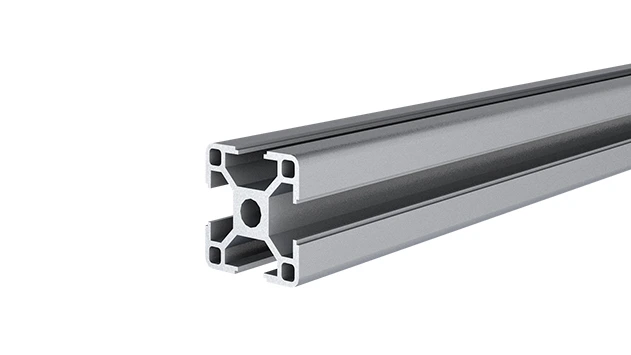
3030 is a 3.00 x 3.00CM fractional 30 series square extrusion T-slot profile with four open T-slots, each side with 3.00cm face. The profile has align-a-grooves to assist in aligning connecting profiles.
How a Modular Solution Transforms Flexibility, Cost, and Speed for Small-Scale Production
Small-batch manufacturing is a world of constant adaptation. Whether you're prototyping a new gadget, producing custom parts for local businesses, or pivoting between product lines to meet shifting customer demands, the name of the game is agility. Yet for too many small manufacturers, traditional production setups—think welded steel workbenches, fixed wooden racks, or one-off metal fixtures—feel like trying to dance in concrete boots. They're rigid, slow to adjust, and often eat into already tight budgets with high upfront costs and long lead times.
Enter the 3030a EU standard aluminum profile —a quiet workhorse that's changing how small-batch producers build, adapt, and thrive. Part of the broader family of aluminum extrusion profiles , this unassuming 30x30mm modular building block, paired with the right aluminum profile accessories , offers a level of flexibility, cost-effectiveness, and speed that traditional materials simply can't match. In this article, we'll dive into why this specific profile has become a go-to for small manufacturers, exploring its key benefits, real-world applications, and how it integrates seamlessly with lean principles to turn production challenges into opportunities.
What Exactly Is 3030a EU Standard Aluminum Profile?
Before we jump into the benefits, let's get clear on what makes the 3030a profile unique. First, the "3030" refers to its cross-sectional dimensions: 30 millimeters wide by 30 millimeters tall. This compact size strikes a sweet spot—sturdy enough to support tools, materials, and workbenches, yet lightweight enough to be easily maneuvered by a small team. The "a" in 3030a typically denotes a specific design variation, often with standardized T-slot configurations (the grooves running along the profile's length) that make it compatible with a wide range of accessories.
Then there's the "EU standard" label. This isn't just a marketing buzzword—it means the profile meets strict European union guidelines for quality, precision, and safety. From consistent wall thickness (usually 1.5–2.0mm, depending on the supplier) to tight tolerances on T-slot dimensions, EU standards ensure that 3030a profiles from different manufacturers will work together seamlessly. That's a big deal for small operations that can't afford to get locked into a single brand's ecosystem.
At its core, the 3030a is an aluminum extrusion profile , meaning it's created by forcing heated aluminum through a die to form its specific shape. This process results in a lightweight yet surprisingly strong material—aluminum has a strength-to-weight ratio that outperforms many steels—with a smooth, corrosion-resistant surface. Unlike welded steel or solid wood, it's designed to be modular: those T-slots running along its length? They're there to let you attach accessories—connectors, brackets, shelves, wheels—without drilling, welding, or specialized tools. It's like building with high-tech Legos, but for grown-ups running production lines.
Why 3030a Stands Out for Small-Batch Manufacturing
Small-batch manufacturing isn't just "big manufacturing but smaller." It has unique pain points: tight budgets, short product lifecycles, frequent design tweaks, and the need to switch between projects quickly. The 3030a profile addresses these head-on, offering benefits that feel tailor-made for the challenges of small-scale production. Let's break them down.
1. Flexibility That Keeps Up with Changing Needs
Imagine you run a small shop that produces custom guitar parts. One month, you're making necks for acoustic guitars; the next, you need to shift to electric guitar bodies, which are wider and require different clamping setups. With a traditional wooden workbench, you'd either need to buy a new bench (costing $500+) or spend hours modifying the old one (losing valuable production time). With 3030a, it's a different story.
The magic lies in the aluminum profile accessories —think 90° connectors, T-slot nuts, end caps, and adjustable brackets. These simple components let you reconfigure your setup in hours, not days. Need a wider workbench? Add a few extra 3030a rails and a plywood top secured with T-slot bolts. Want to add a shelf for tools? Snap on some angle brackets and slide in a panel. When the next project comes along, take it apart, repurpose the profiles, and build something new. It's modularity at its finest, turning your production floor into a blank canvas that adapts to your needs, not the other way around.
This flexibility extends beyond workbenches, too. Need a temporary material rack for incoming supplies? Build one with 3030a and some shelf brackets. A turnover trolley to move parts between stations? Add casters to a 3030a frame. When the project ends, disassemble it and store the profiles—no more clunky, unused fixtures taking up space in your shop.
2. Cost-Effectiveness That Protects Your Bottom Line
Small manufacturers know every dollar counts. Traditional production setups often require significant upfront investment: custom steel fabrication, specialized tools, or pre-built fixtures that depreciate quickly. The 3030a profile flips this script by prioritizing long-term value over short-term costs.
First, the initial cost is lower than you might think. A 1-meter length of 3030a profile typically costs $15–$30, depending on the supplier, and basic accessories (like connectors or end caps) are $2–$10 each. Building a simple workbench might cost $150–$250 in materials—far less than a custom steel bench ($500–$1,000) or even a high-end wooden workbench ($300–$600). But the real savings come from reusability. Unlike a wooden bench that gets damaged when you drill new holes or a steel frame that's welded into place, 3030a profiles can be reused dozens of times across projects. That $200 workbench today becomes a material rack next month, then a trolley the month after—turning a one-time expense into a long-term asset.
Waste reduction is another cost saver. In small-batch manufacturing, over-ordering materials for custom fixtures is common—you don't want to run short mid-project. With 3030a, you can buy exactly what you need for the current job, then repurpose it later. No more leftover steel scraps or half-used plywood sheets cluttering your shop and eating into profits.
| Material | Initial Cost (per Workbench) | Reusability | Setup Time | Weight (kg) |
|---|---|---|---|---|
| 3030a Aluminum Profile | $150–$250 | High (reusable for multiple setups) | 2–3 hours | 15–20 |
| Welded Steel | $500–$1,000 | Low (permanent welds) | 1–2 days | 40–50 |
| Plywood/Particleboard | $200–$350 | Very Low (easily damaged) | 4–6 hours | 25–30 |
2. Speed That Turns Ideas into Production Faster
In small-batch manufacturing, time is money—especially when you're racing to deliver a prototype or fulfill a rush order. Traditional setups can drag their feet: custom steel fabrication might take weeks, and even pre-built workbenches often require assembly with power tools and complicated instructions. The 3030a profile, by contrast, is designed for speed.
Assembly is a breeze, thanks to the T-slot design and intuitive accessories. No welding, no drilling, no grinding—just slide a T-slot nut into the profile, bolt on a connector, and tighten with a hex key. Even someone with minimal technical experience can build a basic workbench in a few hours. Compare that to a welded steel bench, which requires hiring a fabricator (or buying expensive welding equipment) and waiting days for completion.
This speed is a game-changer for small manufacturers. Let's say a client approaches you with a new product idea and needs a prototype built in a week. With 3030a, you can design a custom workbench, order the profiles and accessories (many suppliers offer next-day shipping), and have your production line ready in 48 hours. No delays, no missed deadlines—just the ability to seize opportunities as they come.
3. Durability That Stands Up to Daily Use
"Lightweight" sometimes gets a bad rap in manufacturing—people assume it means "flimsy." But aluminum extrusion profiles like 3030a are anything but. Aluminum has a tensile strength of around 200–300 MPa (megapascals), which is more than enough to support the tools, materials, and equipment used in small-batch production. A properly built 3030a workbench can easily hold 100–150 kg without bending or warping.
Corrosion resistance is another plus. Unlike steel, which rusts if not painted or treated, aluminum forms a natural oxide layer that protects it from moisture and chemicals. This makes 3030a ideal for shops with varying environments—whether you're working with wood dust, metal shavings, or even occasional spills. It also means less maintenance: no repainting, no sanding rust, just a quick wipe-down to keep it looking (and working) like new.
Don't just take our word for it. Many small manufacturers report using the same 3030a profiles for 5+ years, even with regular disassembly and reassembly. The accessories hold up too—high-quality aluminum connectors and brackets resist wear, ensuring a tight fit project after project.
4. Lean System Integration for Smarter Production
Lean manufacturing isn't just for big factories. Small-batch producers can benefit hugely from principles like 5S (Sort, Set in Order, Shine, Standardize, Sustain), continuous flow, and waste reduction. The 3030a profile is a natural fit for lean systems, acting as the backbone for organizing your workspace and streamlining processes.
Take 5S, for example. "Set in Order" requires tools and materials to be stored in designated, accessible places. With 3030a, you can build custom tool racks with labeled slots, ensuring everything has a home. "Shine" (cleanliness) is easier when your workbench has smooth, non-porous surfaces that wipe clean quickly. And "Standardize" becomes simple—you can replicate the same 3030a setup across workstations, so every team member knows exactly where to find what they need.
Continuous flow, a cornerstone of lean, is also easier with 3030a. By building modular material racks and conveyors (using roller track accessories), you can design production lines that move parts smoothly from one station to the next, reducing bottlenecks and idle time. And when a process isn't working? Reconfigure the racks or workbenches on the fly—no need to overhaul your entire layout to eliminate waste.

Real-World Uses: How Small Manufacturers Are Using 3030a Today
Theory is great, but nothing beats seeing how tools work in the real world. Let's look at a few examples of small manufacturers using 3030a to solve everyday challenges.
Case Study 1: The Custom Furniture Maker
Jake runs a small shop that builds custom dining tables and chairs for local restaurants. His biggest challenge? Each restaurant has unique needs—some want round tables, others rectangular; some need chairs with armrests, others without. Before 3030a, he used fixed wooden workbenches that limited his clamping options. If a tabletop was larger than the bench, he had to work on the floor, slowing production.
Now, Jake has a modular workbench system built with 3030a profiles and aluminum profile accessories. He can adjust the bench height (using adjustable feet) to match his team's comfort, add extension rails for large tabletops, and attach custom clamping brackets for odd-shaped pieces. When a restaurant orders a set of 10 chairs, he reconfigures the bench to hold multiple chair legs at once, cutting assembly time by 40%. "I used to dread big orders because of setup time," he says. "Now, I can switch from tables to chairs in an hour—and the bench looks as good as new, even after years of sawdust and glue."
Case Study 2: The Electronics Prototyping Lab
A small startup developing IoT sensors needed a flexible testing setup. They prototype 5–10 new sensor designs monthly, each requiring different mounting hardware, cable management, and testing equipment. Traditional steel racks were too rigid—they couldn't easily add or move shelves to fit new sensor sizes.
They switched to 3030a racks with adjustable shelves and cable management clips (aluminum profile accessories). Now, when a new sensor design comes in, the team can reposition shelves, add dividers, or even build a mini test enclosure using clear acrylic panels attached to the 3030a frame. "We used to spend 2 days setting up for a new prototype," says the lead engineer. "Now it's 2 hours. And when we pitch to investors, the clean, organized lab—thanks to the 3030a racks—makes a huge first impression."
Why 3030a Should Be in Your Small-Batch Toolkit
Small-batch manufacturing is all about making the most of limited resources—time, money, space. The 3030a EU standard aluminum profile doesn't just solve problems; it turns constraints into strengths. Its flexibility lets you adapt to new projects without overhauling your setup. Its cost-effectiveness keeps budgets in check while delivering long-term value. Its speed gets you from design to production faster than ever. And its durability ensures it will be there, project after project, as your business grows.
Whether you're building workbenches, material racks, or custom testing stations, the 3030a profile, paired with the right aluminum profile accessories, is more than a material—it's a partner in your success. It's no wonder small manufacturers across industries are making the switch: when you can build, adapt, and grow without being held back by rigid tools, the possibilities for innovation are endless.
So, if you're ready to stop working around your production setup and start building one that works for you, it might be time to give 3030a a closer look. Your next project (and your bottom line) will thank you.