- Company Articles
- Industry articles
- Industry standards
- Benefits of 4080B EU Standard Aluminum Profile in Lean Manufacturing Systems

Benefits of 4080B EU Standard Aluminum Profile in Lean Manufacturing Systems
Related Product
4080B EU Standard Aluminum Profile
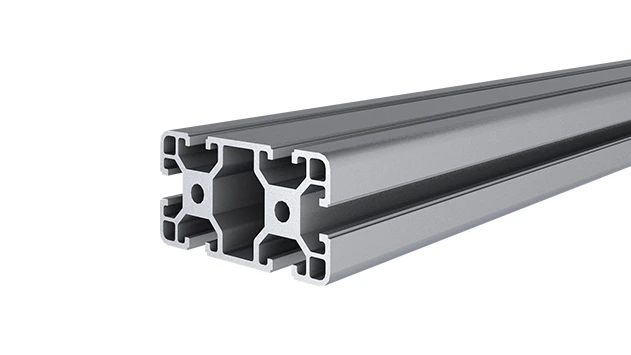
4080B is a 4.00x8.00 CM fractional 40 series square extrusion T-slot profile with two side open T-slots, each side with 4.00cm face, two side with 8.00cm face. The profile has align-a-grooves to assist in aligning connecting profiles.
In the fast-paced world of manufacturing, where every minute of downtime or inefficiency can eat into profits, lean manufacturing has emerged as more than just a buzzword—it's a lifeline. At its core, lean is about stripping away waste, streamlining processes, and fostering continuous improvement. But here's the thing: even the best lean strategies falter without the right tools to bring them to life. That's where components like the 4080B EU Standard Aluminum Profile come into play. More than just a piece of metal, this extrusion profile is a silent workhorse that empowers manufacturers to build flexible, durable, and efficient systems that align perfectly with lean principles. Let's dive into why this unassuming aluminum profile has become a cornerstone of modern lean manufacturing.
Understanding Lean Manufacturing: Why Infrastructure Matters
Before we get into the specifics of the 4080B profile, let's take a step back and revisit what lean manufacturing is really about. Lean isn't just about cutting costs—it's a philosophy centered on creating value for customers while minimizing waste. Think of it as a relentless pursuit of "better": better flow, better quality, better use of resources. To achieve this, manufacturers rely on principles like just-in-time production (JIT), 5S (sort, set in order, shine, standardize, sustain), and continuous improvement (kaizen). But here's the catch: these principles can't thrive in a rigid, one-size-fits-all workspace.
Traditional manufacturing setups often rely on fixed, welded steel structures or flimsy plastic components. These might work for a single product line, but when production needs change—and they always do—these setups become liabilities. Welding requires skilled labor and downtime; plastic warps under heat or heavy loads; reconfiguring a line can take days, grinding productivity to a halt. This is where adaptive infrastructure becomes critical. Lean systems need tools that can evolve with the business—tools that are modular, durable, and easy to adjust. And that's exactly where the 4080B EU Standard Aluminum Profile shines.
What Is 4080B EU Standard Aluminum Profile?
Let's start with the basics: the 4080B is an aluminum extrusion profile designed to meet strict EU standards for quality and performance. If you're not familiar with aluminum extrusion, it's a process where molten aluminum is pushed through a die to create a specific cross-sectional shape—in this case, a 40mm x 80mm profile with a distinctive T-slot design along its length. This T-slot is the profile's secret weapon: it allows for easy attachment of accessories like brackets, shelves, and connectors without the need for welding, drilling, or specialized tools.
Made from high-grade 6063-T5 aluminum alloy, the 4080B profile strikes a rare balance between strength and weight. Aluminum is naturally lightweight, which makes handling and installation a breeze, but the extrusion process (and the T5 tempering) gives it impressive structural integrity. It's also corrosion-resistant, thanks to its anodized finish—a thin, protective layer that forms on the surface when exposed to an electrolytic solution. This finish not only extends the profile's lifespan but also gives it a clean, professional look that fits well in modern workspaces.
What sets the "EU Standard" apart? EU standards (like EN 755) ensure consistent quality, dimensional accuracy, and material purity. This means that whether you're buying 4080B profiles from a supplier in Germany, Poland, or China, you can trust that they'll fit together seamlessly and perform as expected. For lean systems, this standardization is non-negotiable—imagine trying to reconfigure a workbench only to find that your new profile is slightly too wide or your accessories don't align. With EU-standard 4080B, that's a problem of the past.

The Core Benefits of 4080B Aluminum Profile in Lean Systems
Now, let's get to the heart of the matter: how does the 4080B profile support lean manufacturing goals? Let's break it down into five key benefits, each backed by real-world applications and examples.
1. Modularity: The Flexibility to Adapt Without Disruption
Lean manufacturing thrives on change. New products, updated processes, shifting customer demands—these are all part of the game. The problem with traditional infrastructure is that change equals chaos: you either live with an inefficient setup or shut down production for days to rebuild. The 4080B profile eliminates this dilemma with its modular design.
Thanks to its T-slot design and compatible aluminum profile accessories (think brackets, hinges, sliding nuts, and end caps), the 4080B allows you to build, modify, and rebuild structures in hours, not days. Need to add a shelf to a workbench? Slide a bracket into the T-slot and tighten a screw. Want to reconfigure a flow rack to accommodate larger parts? Swap out the crossbars and reposition the roller tracks. It's like building with industrial-grade Legos—only sturdier and more functional.
Take, for example, a small electronics manufacturer that produces both smartphones and tablets. Their production lines need to switch between the two products weekly. With traditional steel workbenches, this meant disassembling and rewelding fixtures, taking up to 48 hours of downtime. After switching to 4080B aluminum profiles, they can now reconfigure their workbenches in under 2 hours using nothing more than a hex key. The result? Downtime cut by 96%, and the ability to respond to customer orders faster than ever.
2. Durability: Reducing Waste Through Longevity
One of the seven wastes in lean manufacturing is "defects," but another critical waste is "unnecessary replacement." If your tools and structures break down or wear out quickly, you're not just spending money on replacements—you're wasting time, labor, and materials. The 4080B profile addresses this head-on with its exceptional durability.
Aluminum, by nature, is resistant to rust and corrosion, but the 4080B's anodized finish takes this a step further. Unlike painted steel, which chips and fades, the anodized layer is integral to the metal, so it won't peel or wear off even with heavy use. The 6063-T5 alloy also has impressive tensile strength (around 180 MPa), meaning it can handle heavy loads without bending or warping. In fact, many manufacturers report using 4080B profiles for 10+ years with minimal signs of wear—and when they finally do retire a structure, the aluminum is 100% recyclable, aligning with lean's sustainability goals.
Compare this to plastic profiles, which degrade under UV light or high temperatures, or wood, which warps with moisture. Even lower-grade aluminum profiles (often made with recycled or impure alloys) can bend or crack under stress. The 4080B's EU-standard construction ensures that you're investing in a material that will stand the test of time, reducing waste and supporting long-term continuous improvement.
3. Cost-Efficiency: Lower Total Cost of Ownership (TCO) Than You Think
At first glance, aluminum profiles like the 4080B might seem more expensive than steel or plastic. It's true—you'll pay more upfront. But lean manufacturing teaches us to look at the total cost of ownership (TCO), not just the initial price tag. When you factor in durability, reusability, and maintenance, the 4080B often comes out ahead.
Let's break it down with a simple example: a workbench. A basic steel workbench might cost $500, while a 4080B aluminum workbench costs $700. But the steel bench, if not properly maintained, will rust within 3–5 years, requiring replacement. The 4080B bench, on the other hand, will last 15+ years. What's more, when you need to reconfigure the steel bench, you'll likely have to cut and weld, paying $100–$200 in labor each time. With the 4080B bench, reconfiguration takes 2 hours with basic tools, costing just $50 in labor (if you even need to hire someone). Over 15 years, the steel bench would need 3 replacements ($1,500) and 5 reconfigurations ($1,000), totaling $2,500. The 4080B bench? $700 upfront + $250 in reconfigurations = $950. That's a TCO savings of 62%.
To illustrate this further, let's look at a comparison table of TCO for common manufacturing structures over a 10-year period:
| Structure Type | Initial Cost | Maintenance Cost (10 Years) | Replacement Cost (10 Years) | Reconfiguration Cost (5 Reconfigs) | Total Cost (10 Years) |
|---|---|---|---|---|---|
| Steel Workbench | $500 | $300 (painting, rust repair) | $500 (1 replacement) | $1,000 (welding, labor) | $2,300 |
| Plastic Workbench | $300 | $200 (repairs, cleaning) | $600 (2 replacements) | $500 (limited reconfigurability) | $1,600 |
| 4080B Aluminum Workbench | $700 | $50 (minimal cleaning) | $0 (no replacement needed) | $250 (tool-free adjustments) | $1,000 |
The numbers speak for themselves: the 4080B aluminum profile offers significantly lower TCO, making it a smart long-term investment for lean-focused manufacturers.
4. Ergonomics: Putting Workers First to Boost Productivity
Lean manufacturing isn't just about processes—it's about people. Workers who are comfortable, safe, and equipped with the right tools are more productive, make fewer mistakes, and stay with the company longer. The 4080B profile excels at creating ergonomic workspaces that prioritize worker well-being.
Thanks to its modularity, the 4080B can be used to build workbenches with adjustable heights, tiltable surfaces, and integrated features like tool rails, monitor mounts, and footrests. For example, a assembly line worker who spends 8 hours a day hunched over a fixed-height bench will inevitably experience fatigue and discomfort. With a 4080B workbench equipped with aluminum pipe adjustable leveling feet, that worker can raise or lower the bench to their ideal height, reducing strain on their back and shoulders.
Another example: in a warehouse using 5S principles, tools and materials need to be within easy reach to minimize "motion waste." 4080B profiles can be used to build overhead tool racks, under-bench storage bins, and mobile carts that keep everything organized and accessible. A study by the Occupational Safety and Health Administration (OSHA) found that ergonomic workstations reduce musculoskeletal disorders by up to 50% and increase productivity by 15–20%—a win-win for both workers and employers.
5. Seamless Integration with Lean Tools and Systems
Lean manufacturing relies on a toolkit of systems and practices: flow racks for just-in-time material delivery, kanban boards for inventory management, 5S stations for organization. The 4080B profile doesn't just support these tools—it enhances them.
Take flow racks, for instance. A well-designed flow rack ensures that materials move smoothly from storage to the production line, minimizing handling and waiting time. The 4080B's strength and precision make it ideal for building these racks: its straight, consistent edges ensure that roller tracks align perfectly, preventing jams and ensuring a steady flow. Add in accessories like plastic roller track guide rails (yellow or grey, depending on your 5S color-coding) and you've got a system that's both functional and visually intuitive.
Or consider workbenches for quality control. In lean systems, quality checks are integrated into the production process, not done after the fact. A 4080B workbench can be outfitted with ESD (electrostatic discharge) mats, task lighting, and magnifying glasses—all attached via T-slot accessories—to create a dedicated inspection station. This integration ensures that quality is built into every step, reducing the "defects" waste that plagues many manufacturers.
Even turnover trolleys and racks—essential for transporting materials between stations—benefit from the 4080B profile. Lightweight yet strong, these trolleys are easy to maneuver, reducing transportation waste and worker fatigue. And when the production layout changes? The trolleys can be disassembled and rebuilt into something new, like a parts bin or a mobile tool cart.
Real-World Success Stories: How Companies Are Winning with 4080B
Theory is one thing, but real-world results are what matter. Let's look at two companies that have leveraged the 4080B profile to transform their lean manufacturing systems.
Case Study 1: Automotive Parts Manufacturer
Challenge: A mid-sized automotive parts manufacturer was struggling with frequent product changes. They produced over 20 different brake component models, each requiring a unique assembly setup. Traditional steel fixtures took 2–3 days to reconfigure, leading to missed deadlines and excess inventory (another lean waste).
Solution: The company replaced all steel fixtures with 4080B aluminum profile workbenches and flow racks. They standardized on a set of aluminum profile accessories—hinges, sliding brackets, and quick-release pins—to make reconfiguration even faster.
Result: Setup time dropped from 3 days to 4 hours per product change. The company now reconfigures lines twice as often, reducing lead times by 35%. Excess inventory (from overproduction to avoid downtime) decreased by 40%, and worker satisfaction scores rose by 28% due to the more comfortable, adaptable workspaces.
Case Study 2: Medical Device Assembly Plant
Challenge: A medical device manufacturer needed to comply with strict FDA regulations while increasing production of a new line of surgical tools. Their existing plastic workbenches were prone to harboring bacteria and couldn't support the heavy equipment needed for precision assembly.
Solution: The plant invested in 4080B aluminum profile workbenches with stainless steel accessories and ESD surfaces. They also added modular flow racks to deliver components just-in-time, reducing inventory and contamination risks.
Result: The anodized aluminum surfaces were easy to sanitize, helping the plant pass FDA audits with zero violations. Production capacity for the new surgical tools increased by 50% thanks to faster material flow and more ergonomic workstations. Employee turnover in the assembly department dropped by 15%, as workers appreciated the clean, efficient environment.
Choosing the Right 4080B Profile and Accessories
Not all 4080B profiles are created equal. To maximize the benefits for your lean system, keep these tips in mind:
- Stick to EU Standards: Look for profiles certified to EN 755 or similar EU standards. This ensures dimensional accuracy and material quality.
- Invest in Quality Accessories: Cheap brackets or connectors will undo the profile's modularity. Opt for accessories from reputable suppliers that are designed specifically for 4080B profiles.
- Plan for Future Reconfiguration: When designing workbenches or racks, leave extra T-slot space for future additions. You never know when you'll need to add a shelf or a tool holder.
- Train Your Team: The 4080B's modularity is only useful if your team knows how to use it. Spend an hour training workers on how to assemble and reconfigure structures—you'll save hours of frustration later.
Conclusion: 4080B—More Than a Profile, a Lean Enabler
In the world of lean manufacturing, success hinges on the details. It's about choosing tools that don't just do a job, but enable a culture of continuous improvement. The 4080B EU Standard Aluminum Profile is one such tool. Its modularity lets you adapt to change; its durability reduces waste; its cost-efficiency boosts your bottom line; its ergonomics support your team; and its integration with lean tools turns good processes into great ones.
Whether you're building a single workbench or overhauling an entire production line, the 4080B profile isn't just a material choice—it's a strategic one. It's an investment in flexibility, efficiency, and the future of your manufacturing operation. And in lean manufacturing, that's the ultimate competitive advantage.