- Company Articles
- Industry articles
- Industry standards
- Best Practices for Stacking 3030 National Standard Profile A Structures in Warehouses

Best Practices for Stacking 3030 National Standard Profile A Structures in Warehouses
Related Product
3030 National Standard Profile A
Workbench, production line, logistic rack, warehouse rack Industry: Manufacturer workshop, Automobile, Electronic, Assembling, logistic
Introduction: The Backbone of Warehouse Efficiency
Walk into any well-run warehouse, and you'll notice a silent hero holding everything together: the structures that organize, store, and protect inventory. From workbenches where employees assemble products to racks that keep materials within arm's reach, these structures are the unsung champions of operational efficiency. Among the most versatile and widely used options in modern warehouses is the 3030 National Standard Profile A—a lightweight yet robust aluminum profile that has become a staple in industries ranging from electronics manufacturing to automotive parts storage. But here's the thing: even the best materials can fall short if they're not stacked properly. Poorly stacked structures don't just waste space; they risk damage to inventory, create safety hazards, and undermine the very efficiency they're meant to support. That's why mastering the art of stacking 3030 National Standard Profile A structures isn't just a "nice-to-have"—it's a critical skill for any warehouse looking to stay competitive, safe, and organized. In this article, we'll break down the best practices for stacking these profiles, from pre-stacking preparation to long-term maintenance, and show you how the right techniques (paired with quality aluminum profile accessories) can transform your warehouse's productivity.
Understanding 3030 National Standard Profile A: What Makes It Unique?
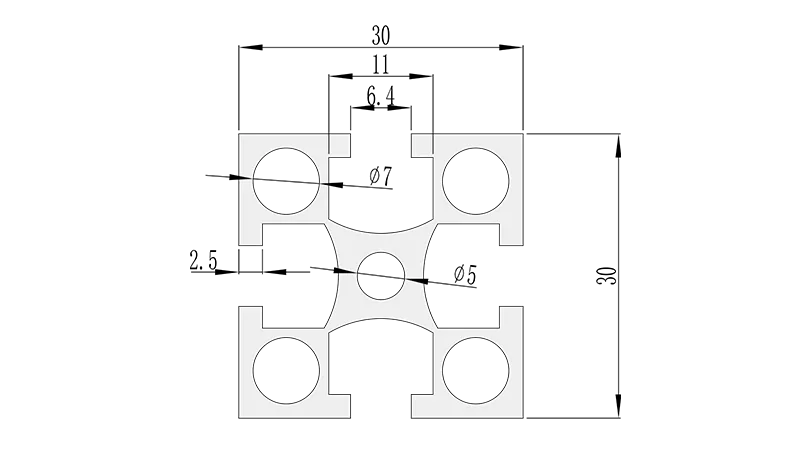
Before we dive into stacking techniques, let's take a moment to get to know the star of the show: the 3030 National Standard Profile A. If you've ever worked with aluminum profiles, you know they come in all shapes and sizes, but this particular model stands out for a few key reasons. First, its dimensions: as the name suggests, it measures 30mm by 30mm, making it compact enough for tight spaces but sturdy enough to support significant weight. Unlike heavier steel alternatives, it's lightweight, which means easier handling during stacking and reduced strain on warehouse floors. But don't let its lightness fool you—thanks to its aluminum construction, it's resistant to corrosion, a must in environments where moisture or chemicals might be present.
What really sets the 3030 National Standard Profile A apart, though, is its versatility. Its T-slot design (a series of grooves along its length) allows it to connect seamlessly with aluminum profile accessories like brackets, connectors, and panels, turning it into everything from a simple shelving unit to a complex workbench. This adaptability is why you'll find it in so many warehouse setups: one day, it might be part of a material rack holding heavy components; the next, it could be reconfigured into a turnover trolley and rack for moving inventory across the facility. And because it's a national standard, you never have to worry about compatibility issues—accessories from different suppliers will fit, giving you the flexibility to customize your setup without starting from scratch.
But here's the catch: its versatility can also be a double-edged sword. With so many ways to use it, it's easy to get overzealous when stacking, leading to unstable structures that wobble, lean, or even collapse. That's why understanding its limits—how much weight it can bear, how tall it can safely be stacked, and which aluminum profile accessories are best for securing it—is the first step toward stacking success.
Pre-Stacking Preparation: Laying the Groundwork for Success
Stacking 3030 National Standard Profile A structures isn't something you do on a whim. It starts long before you lift the first profile—with careful preparation. Think of it like building a house: you wouldn't start laying bricks without first checking the foundation, and the same logic applies here. Let's walk through the key steps to ensure your stacking project starts on the right foot.
Step 1: Assess the Site
First, take a good look at where you plan to stack your structures. Is the floor level? Even a slight slope can throw off the alignment of a tall stack, leading to instability. Use a spirit level to check the surface—if there's a dip or bump, you might need to add shims or adjust the position. Next, consider the floor's load capacity. The 3030 profile is lightweight, but when stacked with inventory, the total weight can add up quickly. Check your warehouse's blueprints or consult a structural engineer if you're unsure how much weight the floor can handle. Finally, think about access: will you need to reach the top of the stack with a forklift or pallet jack? Leave at least 3 feet of clearance around the stack for aisles, and ensure there's enough space for equipment to maneuver without bumping into the structure.
Step 2: Gather Your Materials and Tools
You can't build a strong stack with subpar materials. Start by inspecting your 3030 National Standard Profile A pieces: look for dents, bends, or cracks, which can weaken the structure. Even minor damage—like a bent edge from improper storage—can throw off the fit when connecting profiles. Next, gather your aluminum profile accessories: connectors, brackets, cross-braces, and fasteners. Make sure they're compatible with the 3030 profile (most national standard accessories will be, but double-checking never hurts). Pay extra attention to fasteners like bolts and nuts—rusted or stripped threads will make it impossible to secure the stack tightly.
Don't forget the tools. You'll need a measuring tape to ensure uniform spacing, a level to keep everything straight, and a wrench or Allen key to tighten accessories. Gloves are a must, too—aluminum edges can be sharp, and handling multiple profiles without protection increases the risk of cuts. If you're stacking heavy loads, consider using a turnover trolley and rack to move profiles into place; this reduces physical strain on your team and minimizes the chance of dropping a profile mid-stack.
Step 3: Plan the Stack Layout
Before you start stacking, sketch out a rough layout. How tall do you need the stack to be? How many profiles will you use per layer? Will you need to access items from the front, sides, or both? Answering these questions helps you avoid common mistakes, like building a stack that's too tall to reach safely or too wide to fit through doorways. If you're stacking workbenches or material racks, consider how they'll be used post-stacking—will employees need to stand next to them? Leave enough space for movement. And if you're stacking multiple structures side by side, ensure there's a gap of at least 6 inches between them to prevent them from leaning into each other.
Core Stacking Techniques: Building Stability from the Ground Up
Now that you've prepped the site, gathered your materials, and planned the layout, it's time to start stacking. This is where the rubber meets the road—or rather, where the profiles meet the floor. The goal here is to create a stack that's stable, space-efficient, and easy to access. Let's break down the key techniques that will help you achieve that.
Technique 1: Start with a Solid Base
The foundation of any stable stack is, well, the foundation. Start by laying the first layer of 3030 National Standard Profile A pieces on the floor, ensuring they're perfectly aligned. If you're building a square or rectangular structure, use the "corner-to-corner" method: measure the diagonal distance from one corner to the opposite corner, then do the same for the other two corners. If the measurements are equal, the base is square. If not, adjust the profiles until they are—even a 1-inch difference can lead to a lopsided stack.
For added stability, consider using aluminum profile accessories like base plates or floor brackets to anchor the first layer to the ground. This is especially important if the stack will be tall (over 6 feet) or if the warehouse is prone to vibrations from heavy machinery. If you're stacking on a turnover trolley and rack, make sure the trolley's caster wheels are locked to prevent movement during stacking—there's nothing worse than trying to align profiles on a rolling base!
Technique 2: Distribute Weight Evenly
Imagine stacking a tower of books: if you put all the heavy books on one side, the tower will tip over. The same principle applies to 3030 profiles. When adding layers, distribute weight evenly across the stack. If you're storing heavier items on one shelf, balance them with similarly heavy items on the opposite side. Avoid placing all the weight in the center, too—this can cause the profiles to bow in the middle over time.
Pro tip: Use a scale to weigh items before placing them on the stack, especially if you're unsure about their weight. The 3030 National Standard Profile A has a recommended load capacity (typically around 150-200 kg per linear meter, depending on the accessory setup), so stay well below that limit to avoid overstressing the material. And remember: the total weight of the stack includes the profiles themselves, not just the inventory on top. Add that to your calculations!
Technique 3: Use Cross-Bracing and Aluminum Profile Accessories for Lateral Stability
Vertical stability is important, but lateral (side-to-side) stability is where many stacks fail. Without proper bracing, a stack can sway in high winds (from open warehouse doors) or when bumped by equipment, leading to collapse. That's where aluminum profile accessories like cross-braces, angle brackets, and diagonal connectors come in. These accessories act like the skeleton of the stack, tying the vertical profiles together and preventing sideways movement.
A good rule of thumb is to add cross-bracing every 3-4 feet in height. For example, if you're stacking a 10-foot-tall structure, add bracing at the 3-foot, 6-foot, and 9-foot marks. Use diagonal braces (running from the top of one vertical profile to the bottom of the adjacent one) for maximum strength—they distribute force more evenly than horizontal braces alone. And don't skimp on fasteners: each brace should be secured with at least two bolts per connection point to ensure it doesn't come loose over time.
Technique 4: Limit Height and Avoid Overhang
It's tempting to stack as high as possible to save space, but there's a point where height becomes a liability. Most warehouses have a maximum stacking height for safety reasons (often 12-15 feet for non-palletized structures), but even if your warehouse allows taller stacks, consider practicality: can your team safely reach the top layer without using a ladder or forklift? If not, you're creating inefficiencies.
Another common mistake is overhang—letting profiles or inventory extend beyond the base of the stack. Overhang shifts the center of gravity, making the stack prone to tipping. As a general rule, nothing should extend more than 2 inches beyond the base layer. If you need to store longer items, build a wider base or use a specialized rack designed for oversize inventory. And always keep the top layer of the stack level—an uneven top can catch on equipment or cause items to slide off.
Safety First: Protecting Your Team and Inventory
At the end of the day, the most efficient stack in the world isn't worth much if it puts your team at risk. Warehouse accidents involving falling structures or heavy objects are all too common, but they're almost always preventable with the right safety measures. Let's cover the key practices to keep everyone (and everything) safe.
Calculate Load Capacity—And Stick to It
We touched on this earlier, but it's worth repeating: know the load capacity of your 3030 National Standard Profile A structures, and never exceed it. This includes the weight of the profiles, aluminum profile accessories, and the inventory they hold. If you're unsure about the capacity, check the manufacturer's specifications or consult with a supplier—most reputable suppliers will be happy to provide load charts.
When in doubt, err on the side of caution. For example, if the manufacturer says a single 3030 profile can hold 200 kg, aim for 150 kg to leave a safety buffer. And remember that load capacity decreases as the stack gets taller—gravity is not your friend here! A stack that's stable at 5 feet might become unstable at 10 feet, even with the same weight, because the leverage increases.
Secure the Stack to Prevent Movement
Even the most carefully stacked structure can shift if it's not secured. Use straps, clips, or ratchet ties to anchor the stack to a fixed point (like a wall or a permanent rack) if it's tall or located in a high-traffic area. For mobile structures (like those on a turnover trolley and rack), ensure the caster wheels are locked when the stack is not in use. If you're stacking outdoors or in a warehouse with fans or open doors, wind can be a factor—add extra bracing or lower the stack height to reduce wind resistance.
Train Your Team on Proper Handling
Your stack is only as safe as the people building it. Make sure everyone on your team knows how to handle 3030 National Standard Profile A pieces and aluminum profile accessories safely. Train them to lift with their legs, not their backs, when moving profiles. Show them how to recognize an unstable stack (signs include leaning, gaps between layers, or loose accessories). And teach them to never climb on stacks to reach items—use a step stool or forklift instead.
Regular safety meetings are a great way to reinforce these habits. Share stories of near-misses (without naming names) to highlight the importance of caution, and reward teams that follow best practices. Remember: safety is a team effort, and everyone has a role to play.
| Common Stacking Hazards | Prevention Tips |
|---|---|
| Unstable base due to uneven floor | Use a level to check the floor; add shims or adjust position as needed. | Overloaded layers causing bowing | Weigh items before stacking; distribute weight evenly; stay below load capacity. | Loose aluminum profile accessories | Tighten fasteners with a wrench; inspect for stripped threads before use. | Overhang leading to tipping | Ensure all items are within the base footprint; avoid extending beyond 2 inches. | Unsecured mobile stacks | Lock caster wheels on turnover trolley and rack; anchor tall stacks to fixed structures. |
Maintenance: Keeping Your Stacks Strong for the Long Haul
A well-stacked structure isn't a "set it and forget it" project. Over time, vibrations from warehouse equipment, temperature changes, and regular use can loosen accessories, bend profiles, or weaken connections. That's why regular maintenance is key to keeping your stacks strong and safe. Here's how to do it right.
Schedule Regular Inspections
Set a calendar reminder to inspect your 3030 National Standard Profile A stacks at least once a month (more often if they're in high-traffic areas or holding heavy loads). During inspections, check for:
- Loose accessories: Wiggle brackets, braces, and connectors—if they move, tighten the fasteners. replace any accessories that are cracked, bent, or stripped.
- Bent or damaged profiles: Look for dents, kinks, or bowing in the 3030 profiles. Even small bends can weaken the structure over time, so replace damaged profiles immediately.
- Corrosion: Aluminum is resistant to rust, but it can still corrode in humid or chemical-heavy environments. Clean off any white or greenish residue with a mild detergent and water, then dry thoroughly.
- Uneven settling: Check if the stack is leaning to one side. This could mean the floor has shifted or the base layer has become unstable. Adjust shims or re-level the base as needed.
Clean and Protect the Profiles
Dust, dirt, and debris can accumulate in the T-slots of 3030 profiles, making it hard to insert aluminum profile accessories later. Once a month, use a soft brush or compressed air to clean out the slots. For stubborn grime, wipe the profiles with a damp cloth and mild soap—avoid harsh chemicals, which can damage the aluminum's finish.
If your warehouse is particularly dusty or humid, consider applying a thin coat of wax to the profiles (make sure it's compatible with aluminum). This creates a barrier against moisture and makes cleaning easier next time. For mobile structures on a turnover trolley and rack, clean the caster wheels regularly—debris stuck in the wheels can cause the trolley to wobble, which in turn destabilizes the stack.
Repair or replace Damaged Parts Promptly
It's easy to put off replacing a loose bracket or a bent profile—after all, the stack seems stable enough, right? But small issues have a way of snowballing into big problems. A loose bracket today could lead to a collapsed stack next month if left unaddressed. Keep a stock of spare 3030 profiles and aluminum profile accessories on hand so you can make repairs immediately. This minimizes downtime and ensures your stack stays safe in the meantime.
Real-World Applications: Putting Best Practices into Action
Let's ground all this theory in real life. Here are two examples of how businesses have used these best practices to stack 3030 National Standard Profile A structures effectively—with impressive results.
Case Study 1: Electronics Manufacturing Warehouse
A mid-sized electronics manufacturer was struggling with limited space in their assembly area. They needed to store small components (like circuit boards and wiring harnesses) close to their workbenches but didn't have room for separate racks. Their solution? Stackable workbenches made from 3030 National Standard Profile A, paired with a turnover trolley and rack for moving materials between stations.
To maximize space, they stacked the workbenches 4 layers high, using aluminum profile accessories like cross-braces and angle brackets for stability. They distributed weight evenly by placing lighter components (like screws and connectors) on the top layers and heavier tools on the bottom. They also secured each layer with clips to prevent shifting during assembly. The result? They doubled their storage capacity in the same footprint, reduced time spent walking to retrieve materials, and eliminated accidents from cluttered aisles.
Case Study 2: Automotive Parts Storage Facility
A large automotive parts warehouse was dealing with frequent stack collapses, leading to damaged inventory and worker injuries. Their stacks of 3030 profiles were often overloaded, with no cross-bracing and unstable bases. After implementing the best practices outlined here, they saw a dramatic improvement. They started by assessing floor load capacity and limiting stack height to 8 feet (down from 12 feet). They added cross-bracing every 3 feet and trained their team to distribute weight evenly. They also invested in high-quality caster wheels for their turnover trolleys, ensuring stacks could be moved safely without wobbling. Within six months, stack-related accidents dropped to zero, and they saved thousands of dollars in damaged inventory.
Conclusion: Stacking for Success
Stacking 3030 National Standard Profile A structures in a warehouse might seem like a simple task, but as we've explored, it's a blend of art and science. It requires careful preparation, an understanding of the material's limits, and a commitment to safety. By starting with a level base, distributing weight evenly, using quality aluminum profile accessories, and maintaining the stack regularly, you can create structures that are not just space-efficient, but also safe and durable.
Remember, the goal isn't just to stack higher—it's to stack smarter. Whether you're building workbenches, material racks, or mobile trolleys, the best practices outlined here will help you get the most out of your 3030 profiles. And when in doubt, consult with a reputable supplier—they can provide guidance on load capacity, accessory compatibility, and custom solutions tailored to your warehouse's needs.
At the end of the day, a well-stacked warehouse is a productive warehouse. It's a place where inventory is easy to find, employees feel safe, and every square foot is used to its full potential. So take the time to stack right—your team, your bottom line, and your peace of mind will thank you.