- Company Articles
- Industry articles
- Industry standards
- Building Reusable Systems: 4040E EU Standard Aluminum Profile for Sustainable Manufacturing

Building Reusable Systems: 4040E EU Standard Aluminum Profile for Sustainable Manufacturing
Related Product
4040E EU Standard Aluminum Profile
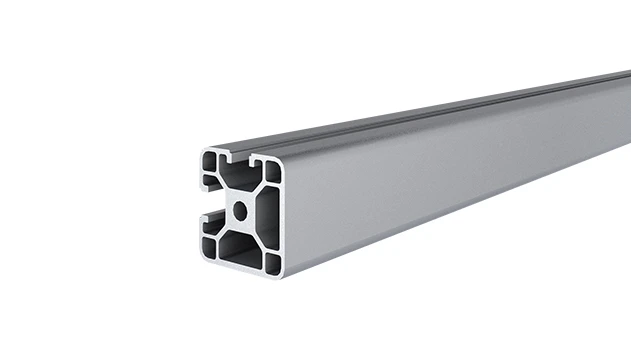
4040E is a 4.00x4.00 CM fractional 40 series square extrusion T-slot profile with two side open T-slots, two side with closed face, each side with 4.00cm face. The profile has align-a-grooves to assist in aligning connecting profiles.
Building Reusable Systems: 4040E EU Standard Aluminum Profile for Sustainable Manufacturing
In today's fast-paced manufacturing world, two words are on every plant manager's mind: sustainability and flexibility . We're no longer just chasing production quotas—we're chasing smarter, greener ways to meet them. The problem? Traditional manufacturing setups often feel like relics of a bygone era: rigid, wasteful, and about as adaptable as a concrete wall. Enter the 4040E EU Standard Aluminum Profile, a humble yet revolutionary component that's quietly transforming how factories build, rebuild, and rethink their production lines. This isn't just about metal and bolts; it's about creating systems that grow with your business, reduce waste, and keep your team agile in a world where change is the only constant.
The Hidden Cost of "One-and-Done" Manufacturing Setups
Let's start with a scenario we've all seen (or lived). Imagine a mid-sized electronics factory that needs to reconfigure its assembly line to accommodate a new product launch. The existing setup? Heavy steel workbenches bolted to the floor, custom wooden flow racks that took weeks to build, and conveyor systems that might as well be permanent fixtures. To make the switch, the team has to bring in welders to cut down the steel frames, discard the wooden racks (they're too beat up to reuse), and spend days (or weeks) installing new equipment. By the time they're done, they've racked up thousands in labor costs, sent tons of waste to the landfill, and lost valuable production time. Sound familiar?
This is the reality of "one-and-done" manufacturing setups—systems built for a single purpose, with no thought for tomorrow. They're expensive to create, expensive to modify, and terrible for the planet. According to the EPA, manufacturing accounts for nearly 20% of global waste, and a significant chunk of that comes from discarded production equipment and inflexible infrastructure. And it's not just about the environment; it's about competitiveness. In an industry where product lifecycles shrink by the month, a factory that can't pivot quickly gets left behind.
Meet Your New Workhorse: The 4040E EU Standard Aluminum Extrusion Profile
So, what if there was a better way? What if your factory's infrastructure could be as adaptable as your team? That's where the 4040E EU Standard Aluminum Profile comes in. At first glance, it's a simple thing: a 40mm x 40mm aluminum extrusion with a T-slot design running along its length. But that simplicity is its superpower. Unlike rigid steel or one-off wood, this aluminum extrusion profile is built to be reused , reconfigured , and repurposed —over and over again.
Let's break down why it matters. First, aluminum is lightweight but surprisingly strong. A single 4040E profile can support up to 200kg per linear meter, making it tough enough for workbenches, flow racks, and even light-duty conveyors. But unlike steel, it's easy to handle—no need for heavy machinery to move it around. Second, that T-slot design? It's a game-changer. Instead of welding or drilling, you use aluminum profile accessories—like brackets, connectors, and end caps—to attach components. Slide a bracket into the slot, tighten a bolt, and you're done. Need to adjust the height of a shelf? Loosen the bolt, move the bracket, retighten. It's that simple.
But the real magic is in its sustainability. Aluminum is 100% recyclable, and the 4040E is often made with recycled content (up to 70% in some cases). When a production line is retired, the profiles aren't sent to the scrapyard—they're disassembled, cleaned, and used to build something new. A workbench today could be a flow rack next month, and a material trolley the month after that. It's manufacturing infrastructure with a lifecycle, not an expiration date.
Building Reusable Systems: From Workbench to Whole Factory
The 4040E isn't just a part—it's the foundation of a reusable system. Let's walk through how it all comes together, starting with the basics: the profile itself, then the accessories that make it sing, and finally, the real-world systems you can build.
1. The Profile: Your Blank Canvas
The 4040E is part of the EU standard aluminum extrusion family, which means it's designed to work with a wide range of accessories across brands. Its dimensions (40mm x 40mm) strike the perfect balance between strength and versatility—small enough to build compact workbenches, large enough to support heavy-duty racks. The extrusion process itself is eco-friendly, too: unlike machining, which cuts away material, extrusion shapes aluminum by forcing it through a die, reducing waste by up to 90%.
2. Accessories: The Glue That Holds It All Together
You can't talk about the 4040E without mentioning its sidekicks: aluminum profile accessories. These are the small parts that turn a plain extrusion into a functional system. Think 90° connectors for building right angles, adjustable feet for leveling workbenches on uneven floors, and even casters for making mobile trolleys. The best part? They're all designed to be reused. A connector from an old workbench can just as easily be used on a new flow rack. No special tools, no custom parts—just a hex key and a little elbow grease.
3. Building Blocks: Workbenches, Flow Racks, and Lean Systems
Let's get practical. What can you actually build with 4040E profiles and accessories? The answer: almost anything. Take workbenches, for example. A basic 4040E workbench can be assembled in under an hour using four vertical profiles for legs, horizontal profiles for the frame, and a plywood or aluminum top. Add a shelf halfway up using adjustable brackets, and you've got storage for tools. Need to lower the height for a new operator? Loosen the brackets, slide them down, and you're set. When the product line changes, take it apart and rebuild it as a packing station or a testing bench.
Then there are flow racks—essential for lean manufacturing. Using 4040E profiles as the frame and roller tracks (another accessory) as the sliding surface, you can build a flow rack that tilts slightly, letting materials glide down to the assembly line. Need to add more levels? Just bolt on new horizontal profiles and roller tracks. Have a product that's taller than expected? Disassemble the top two levels and reconfigure them as a separate rack. It's lean manufacturing in action—reducing waste, improving workflow, and adapting to your needs.
And let's not forget lean systems. The 4040E is a cornerstone of lean manufacturing because it supports the "5S" principles: Sort, Set in Order, Shine, Standardize, Sustain. A messy workspace? Build custom tool holders using profile brackets to "Set in Order." Need to standardize workstations across shifts? Build identical 4040E workbenches so every operator has the same setup. When processes improve, update the system without starting from scratch.
The Numbers Don't Lie: Cost, Time, and Waste Savings
At this point, you might be thinking, "This sounds great, but is it worth the investment?" Let's crunch the numbers. Suppose a factory replaces 10 traditional steel workbenches with 4040E aluminum workbenches. The initial cost? Maybe 15-20% higher than steel (aluminum is pricier than raw steel). But here's the kicker: when the factory reconfigures its line in six months, the steel workbenches are scrapped (costing $500 to remove and dispose of), while the 4040E workbenches are disassembled and reused (costing $50 in labor). Over three line reconfigurations, the 4040E setup saves nearly $1,500 in disposal costs alone.
Then there's downtime. A traditional line reconfiguration takes 5-7 days; with 4040E, it takes 1-2 days. For a factory producing 1,000 units per day at $50 profit per unit, that's a savings of $150,000–$200,000 in lost revenue. And let's not forget waste: each steel workbench sends ~50kg of metal to the landfill; the 4040E workbench? Zero. Over 10 workbenches, that's 500kg of waste avoided—enough to fill two standard dumpsters.
| Metric | Traditional Steel/ Wood Setup | 4040E Aluminum Profile Setup | Annual Savings |
|---|---|---|---|
| Reconfiguration Time | 5-7 days | 1-2 days | ~$150,000 (revenue from avoided downtime) |
| Disposal Cost per Reconfiguration | $500 per setup | $50 per setup | $1,350 (3 reconfigurations/year) |
| Waste Generated | 500kg per 10 workbenches | 0kg (reused) | 500kg landfill waste avoided |
| Lifespan | 3-5 years (before disposal) | 10+ years (reused/ repurposed) | ~$20,000 (avoided replacement costs) |
Real Stories: Factories That Ditched Rigidity for Reusability
Don't just take my word for it—let's look at real-world examples. Take a automotive parts supplier in Germany, for instance. They used to build custom steel racks for each new part, costing €10,000 per rack and taking two weeks to fabricate. After switching to 4040E profiles, they now build modular racks that cost €3,000 each and take a day to assemble. When a part is discontinued, they disassemble the rack and reuse the profiles to build racks for new parts. In three years, they've saved over €150,000 and reduced waste by 80%.
Or consider a small electronics manufacturer in the U.S. They used to have a single production line that took a week to reconfigure. With 4040E workbenches and flow racks, they can now split the line into two smaller lines in a day, doubling their output during peak seasons. During slow seasons, they collapse the lines back into one, saving on energy costs. Their production manager put it best: "It's like having a factory that can shrink and grow with our orders. We're no longer stuck with space we don't need or scrambling to add capacity."
Getting Started: Tips for Adopting 4040E in Your Factory
Ready to make the switch? Here's how to start. First, audit your current setup. What systems are causing the most headaches? Is it the workbenches that can't be adjusted, the flow racks that are always too short, or the conveyors that block access? Start small—replace one problematic system (like a workbench) and see how it goes. You'll be surprised how quickly the team adapts to the flexibility.
Next, stock up on essential aluminum profile accessories. Start with the basics: 90° connectors, adjustable brackets, end caps (to prevent snags), and casters for mobility. Most suppliers sell starter kits with profiles and accessories, which is a great way to experiment. And don't forget to train your team. Show them how to use a hex key to adjust brackets, how to safely disassemble a frame, and how to brainstorm new configurations. The more comfortable they are, the more creative they'll get with reusing the profiles.
Finally, think long-term. When designing a new system, ask: "How might we reuse these parts in a year?" Maybe that workbench will become a cart, or those flow rack profiles will become a shelving unit in the warehouse. By planning for reuse from the start, you'll get even more value out of your 4040E investment.
The Future of Manufacturing: Reusable, Sustainable, and Ready for Whatever Comes Next
At the end of the day, the 4040E EU Standard Aluminum Profile isn't just a piece of metal—it's a mindset. It's about rejecting the idea that manufacturing has to be wasteful or rigid. It's about building systems that respect the planet, empower your team, and keep your business competitive in a world that won't stop changing. Whether you're a small workshop or a large factory, the message is clear: reusability isn't a luxury; it's a necessity.
So, the next time you look at your production line, ask yourself: Is this setup working for me, or against me? If the answer is the latter, maybe it's time to give the 4040E a try. Your wallet, your team, and the planet will thank you.