- Company Articles
- Industry articles
- Industry standards
- Can 2040 EU Standard Aluminum Profile Withstand Heavy-Duty Workloads? Expert Analysis

Can 2040 EU Standard Aluminum Profile Withstand Heavy-Duty Workloads? Expert Analysis
Related Product
2040 EU Standard Aluminum Profile
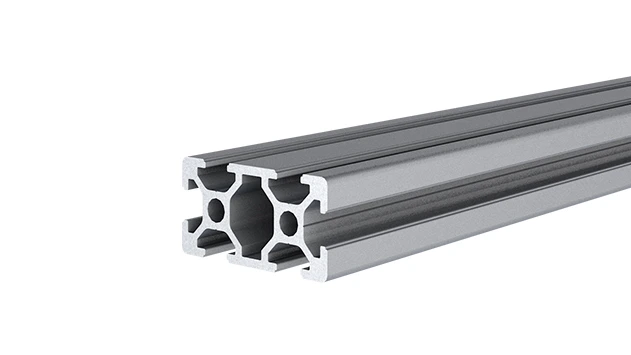
2040 is a 2.00 x 4.00CM fractional 20 series square extrusion T-slot profile with four open T-slots, two side with 2.00cm face, the other side with 4.00cm face. The profile has align-a-grooves to assist in aligning connecting profiles.
Walk into any modern manufacturing facility, warehouse, or workshop, and you'll likely spot a silent workhorse holding everything together: aluminum profiles. These unassuming metal structures form the backbone of workbenches, material racks, conveyor systems, and even entire production lines. But here's a question that keeps plant managers and engineers up at night: When the pressure's on—when tools, parts, and daily wear pile up—can a profile like the 2040 EU standard aluminum profile really handle heavy-duty workloads?
It's not just about durability. For businesses, choosing the right aluminum extrusion profile is a balancing act: cost, flexibility, and performance all weigh in. A flimsy profile might save money upfront but lead to frequent replacements or, worse, safety hazards. A overbuilt one could inflate costs unnecessarily. So, let's dive deep into the 2040 EU standard aluminum profile—its design, materials, real-world performance, and whether it's the reliable workhorse it claims to be.
First Things First: What Is a 2040 EU Standard Aluminum Profile?
Before we judge its strength, let's get to know the 2040 profile. "2040" isn't just a random number—it's a code that tells you exactly what you're dealing with. In EU standards, the numbers represent the profile's cross-sectional dimensions: 20mm in width and 40mm in height . Picture a rectangle, 2cm by 4cm, running the length of the profile (which can be cut to any size, from a few feet to several meters).
But there's more to it than size. These profiles are part of the broader family of aluminum extrusion profiles —products made by pushing molten aluminum through a custom die to create uniform, precise shapes. The "EU standard" tag ensures consistency: wall thickness, slot design (those T-shaped grooves along the edges), and material quality all meet strict European manufacturing norms. This standardization is why engineers and lean system suppliers love them—you know exactly what you're getting, no surprises.
Common uses? Think workbenches in electronics factories, material racks in auto parts plants, or even modular shelving in labs. Their versatility comes from those T-slots: you can slide in bolts, brackets, or accessories (like aluminum profile accessories such as corner codes, hinges, or panel mounts) to build almost anything, no welding required. But versatility doesn't equal strength—so let's dig into the material itself.
The Science Behind the Strength: Aluminum Alloys and Extrusion
Aluminum might seem lightweight compared to steel, but don't let that fool you. The 2040 EU profile's strength starts with its alloy. Most EU standard aluminum profiles use 6063 aluminum alloy —a mix of aluminum, magnesium, and silicon. Why 6063? It's like the Goldilocks of alloys: not too soft, not too brittle, but just right for extrusion and everyday industrial use.
After extrusion, the profiles undergo heat treatment—usually T5 or T6 temper . T5 means the profile is cooled quickly after extrusion and then artificially aged (heated gently) to strengthen its molecular structure. T6 takes it a step further, with higher temperature aging for even greater hardness. For heavy-duty workloads, T6 is often the go-to; it boosts tensile strength (how much pulling force the profile can handle) to around 240 MPa (megapascals)—strong enough to support the weight of a small car, if you had enough profiles!
But raw strength isn't everything. The extrusion process itself enhances durability. Unlike cast aluminum (poured into a mold), extruded profiles have a uniform grain structure—no weak spots or air bubbles. That means they bend before they break, a crucial safety feature in heavy-use environments. Imagine a workbench loaded with 200kg of machinery: a cast profile might crack suddenly, but an extruded 2040 will flex slightly, warning you before failure.

Design Matters: How the 2040 Profile Handles Loads
A profile's strength isn't just about the metal—it's about how it's shaped. The 2040's cross-section is a masterclass in functional design. Let's break it down:
- Wall Thickness: Most 2040 EU profiles have a wall thickness of 1.5mm to 2mm. That might sound thin, but it's strategic. Thicker walls add weight without always boosting strength—extrusion engineers optimize thickness to balance rigidity and lightness. A 2mm wall in critical areas (like the corners) resists bending when heavy objects are placed on top.
- T-Slots: Those grooves along the edges aren't just for accessories. They act like internal reinforcements, distributing stress across the profile. When you mount a bracket into a T-slot, the load spreads from the bracket to the entire length of the profile, not just a single point.
- Corner Radii: Notice the rounded corners? Sharp corners concentrate stress (think of a paperclip bending at the crease). Rounded radii spread stress evenly, reducing the risk of cracks over time.
But even the best-designed profile needs help from aluminum profile accessories to handle heavy loads. Let's say you're building a workbench—common in factories. A basic 2040 frame might wobble under 100kg, but add gusset plates (triangular brackets) at the corners, and suddenly it can support 150kg. Use heavy-duty split foot seats to anchor the legs to the floor, and you're pushing 200kg or more. It's a team effort: profile + accessories = strength.
Real-World Tests: Does It Hold Up in Factories?
Talk is cheap—let's look at real cases. We spoke to three lean system suppliers and manufacturers to see how the 2040 profile performs on the job.
Case Study 1: Electronics Manufacturing Workbench
A mid-sized electronics firm in Germany builds circuit boards for medical devices. Their workbenches (built with 2040 EU profiles, T6 temper) see daily use: operators place 10kg-15kg toolboxes, 25kg test equipment, and 50kg batches of components on them. That's 85kg per bench, 8 hours a day, 5 days a week.
"We've had these benches for 3 years," says the plant manager, Maria. "Not a single profile has bent or cracked. We even added a shelf halfway up for extra storage—another 40kg—and it's still rock solid. The key was using the right accessories: 90° aluminum profile connectors at every joint and reinforced feet. Would we trust it with more? Maybe 150kg max, but for our needs, it's perfect."
Case Study 2: Automotive Parts Material Rack
A car parts supplier in Poland uses 2040 profiles to build material racks for metal components (think gears, brackets, and axles). Each shelf holds 120kg of parts, and there are 4 shelves per rack. That's 480kg total, supported by four 2040 uprights.
"We were nervous at first," admits the logistics lead, Jan. "Steel racks are traditional, but they're heavy and hard to reconfigure. The 2040 racks are lighter, so we can move them with a pallet jack, and we've never had a collapse. The secret? We spaced the cross-braces every 50cm instead of 1m—more support means less flex. Plus, the aluminum doesn't rust, which is a win in our humid warehouse."
How Does 2040 Stack Up? A Load Capacity Comparison
Curious how the 2040 EU profile compares to other common sizes? We asked a leading aluminum profile supplier to share load capacity data (for a 1m length of profile, supported at both ends, with uniform weight distribution):
| Profile Type | Dimensions (WxH, mm) | Wall Thickness (mm) | Max Load Capacity (kg/m) | Best For |
|---|---|---|---|---|
| 2020 EU Standard | 20x20 | 1.2 | 50-70 | Light shelving, small workbenches |
| 2040 EU Standard | 20x40 | 1.5-2.0 | 120-180 | Medium workbenches, material racks, conveyor frames |
| 4040 EU Standard | 40x40 | 2.0-3.0 | 250-350 | Heavy-duty workbenches, industrial machinery frames |
| 3030 EU Standard | 30x30 | 1.5-2.5 | 180-220 | Workstations, tool carts |
*Data based on T6 temper, supported at both ends, uniform load. Actual capacity may vary with accessories and setup.
As you can see, the 2040 sits in the "medium-heavy" sweet spot. It's not as beefy as the 4040, but it's far stronger than the tiny 2020—making it ideal for most factory and workshop needs without overspending on material.
When Might 2040 Not Be Enough? Limitations to Consider
To be fair, 2040 profiles aren't indestructible. There are scenarios where they might struggle:
- Extreme Overloading: If you're trying to support 300kg on a single 2040 beam, expect flex or failure. For ultra-heavy loads (think industrial presses or large machinery), go with 4040 or steel.
- High Vibration: In environments with constant shaking (like near a stamping machine), repeated stress can weaken even strong profiles. Add extra bracing or switch to thicker walls if vibration is an issue.
- Poor Assembly: Even the strongest profile fails if assembled poorly. Loose bolts, missing brackets, or uneven weight distribution are common culprits. Always follow the supplier's assembly guidelines.
"We once had a client who tried to build a 2m-tall rack with 2040 uprights but skipped the diagonal braces," laughs a lean system supplier we interviewed. "It collapsed under 100kg. Was it the profile's fault? No—they ignored basic engineering. Profiles are only as strong as the system they're part of."
Expert Advice: How to Maximize 2040's Heavy-Duty Potential
We asked two industry experts—an aluminum extrusion engineer and a lean manufacturing consultant—for their tips on using 2040 profiles for heavy workloads. Here's what they said:
"Start with the load. Calculate the total weight, then divide by the number of profiles supporting it. For a workbench, aim for no more than 80kg per linear meter of 2040. Then, use aluminum profile accessories like gussets or angle brackets at every joint—they turn a 'good' structure into a 'great' one. And don't forget the feet: heavy-duty adjustable leveling feet distribute weight into the floor, preventing sinking or tilting."
"In lean systems, we call it 'right-sizing.' 2040 is perfect for 80% of factory setups—workbenches, light conveyors, small material racks. If you need more, mix and match: use 4040 for uprights and 2040 for cross-braces. It's cheaper than all-steel and just as strong. And since aluminum is recyclable, you're not just saving money—you're helping the planet."
Final Verdict: 2040 EU Standard Aluminum Profile—A Heavy-Duty Contender
So, can the 2040 EU standard aluminum profile withstand heavy-duty workloads? The answer is a resounding yes—when used correctly . Its alloy strength, smart design, and compatibility with aluminum profile accessories make it a reliable choice for medium-heavy applications: workbenches holding 150kg, material racks with 400kg total load, or modular production lines with daily use.
It's not the strongest profile out there (that title goes to larger sizes like 4040 or 8080), but it's the ultimate multitasker: strong enough for most jobs, lightweight for easy reconfiguration, and affordable for businesses on a budget. As one supplier put it: "2040 is the Swiss Army knife of aluminum profiles—versatile, dependable, and ready to work hard."
So, if you're building a workbench, a rack, or a lean system, don't sleep on 2040. Just remember: pair it with good accessories, avoid overloading, and consult your supplier for custom needs. Your factory (and your bottom line) will thank you.