- Company Articles
- Industry articles
- Industry standards
- Carbon Footprint of 2040 EU Standard Aluminum Profile: A Comparative Study

Carbon Footprint of 2040 EU Standard Aluminum Profile: A Comparative Study
Related Product
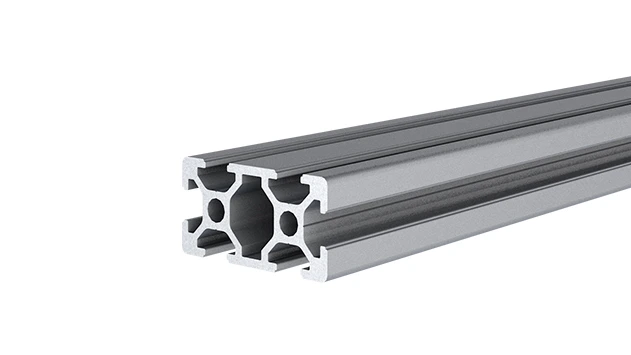
2040 EU Standard Aluminum Profile
2040 is a 2.00 x 4.00CM fractional 20 series square extrusion T-slot profile with four open T-slots, two side with 2.00cm face, the other side with 4.00cm face. The profile has align-a-grooves to assist in aligning connecting profiles.
In today's manufacturing landscape, sustainability isn't just a buzzword—it's a critical factor shaping decisions from factory floors to boardrooms. As industries worldwide strive to meet stringent environmental regulations and reduce their ecological impact, the materials they choose play a pivotal role. Among these, aluminum profiles have emerged as a cornerstone of sustainable manufacturing, thanks to their durability, recyclability, and versatility. But not all aluminum profiles are created equal. The 2040 EU standard aluminum profile , in particular, has gained attention for its balance of performance and environmental responsibility. In this article, we'll take a deep dive into the carbon footprint of this specific profile, comparing it to other materials and exploring how its design, production, and integration with systems like lean system solutions contribute to a greener future. Along the way, we'll also touch on the role of aluminum extrusion profile manufacturing and aluminum profile accessories in enhancing sustainability—because true environmental responsibility lies not just in the material itself, but in how it's made, used, and maintained.
Understanding Carbon Footprint in Aluminum Production
Before we zero in on the 2040 EU standard aluminum profile, let's clarify what "carbon footprint" means in this context. Simply put, a product's carbon footprint measures the total greenhouse gas (GHG) emissions generated throughout its lifecycle—from raw material extraction to manufacturing, transportation, use, and eventual disposal or recycling. For aluminum, this lifecycle is particularly impactful, as traditional production methods are energy-intensive. However, innovations in recycling, material design, and manufacturing processes are reshaping this narrative.
Aluminum's journey starts with bauxite, an ore rich in aluminum oxide. Extracting and refining bauxite into alumina (aluminum oxide) uses significant energy and water, but the most emissions-heavy step is smelting alumina into pure aluminum via the Hall-Héroult process. This step alone accounts for roughly 80% of the carbon footprint of primary (virgin) aluminum production. Here's where recycling changes the game: recycling aluminum scrap requires just 5% of the energy needed to produce primary aluminum, slashing emissions by up to 95%. For manufacturers, this means choosing profiles with high recycled content can drastically reduce their environmental impact.
Lifecycle Assessment: The 2040 EU Standard Aluminum Profile
The 2040 EU standard aluminum profile isn't just a random designation—it's a product of rigorous European union regulations aimed at reducing industrial emissions. Let's walk through its lifecycle to understand where its carbon footprint stands out.
1. Raw Material Sourcing and Refining
EU standards mandate strict guidelines for raw material sourcing, prioritizing recycled aluminum (also called "secondary aluminum") over primary production. The 2040 profile, for instance, often contains 70-90% recycled content, depending on the manufacturer. This immediately cuts emissions at the extraction stage: while primary aluminum refining emits approximately 16 kg of CO₂e (carbon dioxide equivalent) per kilogram of aluminum, recycled aluminum emits just 0.5 kg CO₂e/kg. By leaning heavily on recycled scrap, the 2040 EU profile reduces its upstream footprint by nearly 97% compared to profiles made with virgin aluminum.
2. Aluminum Extrusion Profile: Shaping with Efficiency
The next stage is extrusion—the process of shaping aluminum into the 2040 profile's specific cross-section. Aluminum extrusion profile manufacturing involves heating aluminum billets to around 500°C and forcing them through a die. Modern EU-compliant extrusion facilities use energy-efficient heaters and regenerative braking systems on extrusion presses, which capture and reuse excess energy. Additionally, the 2040 profile's design is optimized for minimal material waste: its T-slot structure (a common feature in industrial profiles) is engineered to balance strength and weight, ensuring no unnecessary aluminum is used. This precision reduces material input by 10-15% compared to bulkier, less optimized profiles, further lowering emissions.
3. Transportation: Lightweight Advantage
Aluminum is 30% lighter than steel and 75% lighter than copper, which translates to lower transportation emissions. A truckload of 2040 EU standard aluminum profiles can carry 30% more units than a truckload of steel profiles of the same length. Over 100 km, transporting one ton of aluminum emits approximately 12 kg CO₂e, compared to 18 kg CO₂e for steel. For manufacturers shipping profiles across Europe, this weight advantage adds up to significant savings in both fuel costs and emissions.
4. Use Phase: Durability and Adaptability
The 2040 profile's use phase is where its sustainability truly shines. Aluminum is naturally corrosion-resistant, meaning it requires no toxic coatings to maintain structural integrity. In factory settings—where profiles are used for workbenches, material racks, or conveyor systems—this durability translates to a lifespan of 15-20 years, far longer than plastic alternatives (which degrade in 5-7 years) or even steel (prone to rust in humid environments). Longer lifespans mean fewer replacements, reducing the need for new production and associated emissions.
Moreover, the profile's modular design, enabled by aluminum profile accessories like connectors, hinges, and end caps, allows for easy reconfiguration. A workbench made with 2040 profiles, for example, can be disassembled and repurposed into a material rack or trolley with minimal tools. This adaptability reduces waste: instead of scrapping an entire system when production needs change, manufacturers can reuse components, extending their functional life and cutting down on disposal-related emissions.
5. End-of-Life: Closing the Loop
Aluminum is infinitely recyclable—meaning it can be melted down and reused without losing quality. At the end of its lifecycle, the 2040 profile can be collected, shredded, and melted into new billets for extrusion. This recycling process saves 95% of the energy required for primary production, as mentioned earlier. EU regulations also enforce extended producer responsibility (EPR), requiring manufacturers to take back and recycle their profiles, ensuring minimal waste ends up in landfills. For every ton of 2040 profile recycled, approximately 1.5 tons of CO₂e are saved compared to producing new aluminum.

Comparative Analysis: How Does It Stack Up?
To truly appreciate the 2040 EU standard aluminum profile's sustainability, let's compare its carbon footprint to common alternatives: conventional aluminum profiles, mild steel, and high-density polyethylene (HDPE) plastic.
| Material | Extraction/Refining (kg CO₂e/kg) | Production (Extrusion/Smelting) (kg CO₂e/kg) | Transportation (per 100km) (kg CO₂e/ton) | Use Phase (Lifespan in Years) | End-of-Life Recycling (kg CO₂e/kg Saved) |
|---|---|---|---|---|---|
| 2040 EU Standard Aluminum Profile | 0.5-1.2* | 0.8-1.5 | 12 | 15-20 | 15.5 |
| Conventional Aluminum Profile (50% recycled) | 4.0-6.0 | 1.2-2.0 | 12 | 12-15 | 15.5 |
| Mild Steel | 1.8-2.2 | 0.5-0.8 | 18 | 10-12 (with corrosion) | 1.5 |
| HDPE Plastic | 2.5-3.0 | 1.0-1.5 | 10 | 5-7 (degradation) | 0.3 (limited recyclability) |
*Values based on 70-90% recycled content in 2040 EU profiles; CO₂e = carbon dioxide equivalent.
Key Takeaways from the Comparison
- Against Conventional Aluminum: The 2040 EU profile's higher recycled content cuts extraction-phase emissions by 75-90%. Its optimized extrusion process also reduces production emissions by 30%, making it 40-50% more carbon-efficient overall.
- Against Steel: While steel has lower production emissions, its heavier weight increases transportation emissions by 50%. Steel also has a shorter lifespan (due to rust) and far lower recycling savings (1.5 kg CO₂e/kg vs. 15.5 kg for aluminum). Over a 20-year period, the 2040 profile emits 30% less CO₂e than steel for equivalent applications.
- Against Plastic: HDPE plastic has lower transportation emissions but degrades quickly, requiring frequent replacement. Its limited recyclability (only 9% of plastic is recycled globally) means most plastic profiles end up in landfills, releasing methane. The 2040 profile, with its infinite recyclability and 20-year lifespan, is far more sustainable.
Lean System Integration: Enhancing Sustainability Through Efficiency
Sustainability isn't just about the material itself—it's also about how it's used. This is where lean system principles come into play. Lean manufacturing focuses on minimizing waste (time, energy, materials) and maximizing efficiency, and the 2040 EU standard aluminum profile is a natural fit for lean workflows.
Modular Systems for Flexible Production
Lean systems thrive on adaptability, and the 2040 profile's modular design—paired with aluminum profile accessories like swivel joints, caster wheels, and quick-connect brackets—enables just that. For example, a lean workbench made with 2040 profiles can be easily reconfigured with additional shelves or adjusted in height to accommodate new tools. This flexibility reduces downtime when production lines change, cutting energy use associated with idle machinery. A study by the European Lean Institute found that factories using modular aluminum systems reduced changeover time by 40%, translating to 15-20% lower energy consumption annually.
Flow Racks and Conveyors: Streamlining Material Flow
Lean systems prioritize "just-in-time" material delivery, and 2040 profiles are ideal for building flow racks and conveyor systems. Lightweight yet strong, these racks allow materials to glide smoothly (often via roller tracks, another accessory) to workstations, reducing the need for manual lifting or forklift use. Forklifts are major energy consumers—each hour of operation emits ~15 kg CO₂e—so minimizing their use directly lowers a factory's carbon footprint. A automotive parts manufacturer in Germany reported a 25% reduction in forklift usage after installing 2040 profile-based flow racks, cutting annual emissions by 80 tons of CO₂e.
Waste Reduction in Production
Lean's "zero waste" goal aligns with the 2040 profile's recyclability. Even during extrusion, the profile generates minimal scrap—thanks to precision die design—and any scrap is immediately recycled back into the production process. On the factory floor, damaged or outdated components (like a bent shelf bracket) can be melted down and recast, ensuring almost no material goes to waste. This closed-loop approach is a cornerstone of both lean and circular economy principles, making the 2040 profile a sustainability powerhouse.
Future Trends: Innovations in Aluminum Sustainability
The 2040 EU standard aluminum profile is already a leader in sustainable manufacturing, but ongoing innovations promise to push its carbon footprint even lower. Here are a few trends to watch:
1. Higher Recycled Content and "Green Aluminum"
EU regulations are tightening, with targets to increase recycled content in aluminum profiles to 90% by 2030. Manufacturers are also exploring "green aluminum"—produced using renewable energy like solar or wind during the smelting process. Some 2040 profile suppliers now offer "100% green" options, using only recycled scrap melted with renewable energy, further reducing emissions to near-zero.
2. Advanced Aluminum Profile Accessories for Energy Efficiency
Accessories are evolving too. New low-friction hinges and magnetic connectors reduce the energy needed to adjust modular systems. LED-integrated profiles (used for workbench lighting) are also emerging, cutting down on separate lighting fixtures and lowering electricity use.
3. Digital Twins and Lifecycle Tracking
Digital twin technology allows manufacturers to track a profile's lifecycle in real time—from production to recycling. By monitoring usage patterns, companies can optimize maintenance, extend lifespans, and ensure proper recycling. For example, a digital twin might alert a factory that a 2040 profile workbench is underused, prompting its repurposing elsewhere in the facility.
Conclusion: The 2040 EU Standard Aluminum Profile as a Sustainability Benchmark
The 2040 EU standard aluminum profile isn't just a material—it's a statement of commitment to a greener future. Its high recycled content, energy-efficient extrusion process, lightweight design, and infinite recyclability make it a low-carbon alternative to steel, plastic, and even conventional aluminum. When paired with aluminum profile accessories and integrated into lean systems, it becomes a tool for reducing waste, energy use, and operational emissions.
As manufacturers worldwide strive to meet net-zero targets, the 2040 profile offers a tangible solution. It proves that sustainability and performance can go hand in hand—delivering the strength, durability, and adaptability needed for modern manufacturing while treading lightly on the planet. In the end, the choice is clear: for a lower carbon footprint, smarter resource use, and a more resilient production system, the 2040 EU standard aluminum profile leads the way.