- Company Articles
- Industry articles
- Industry standards
- Castor Fixed Plate Hole Patterns: Standard vs. Custom for Lean Tubes

Castor Fixed Plate Hole Patterns: Standard vs. Custom for Lean Tubes
Related Product
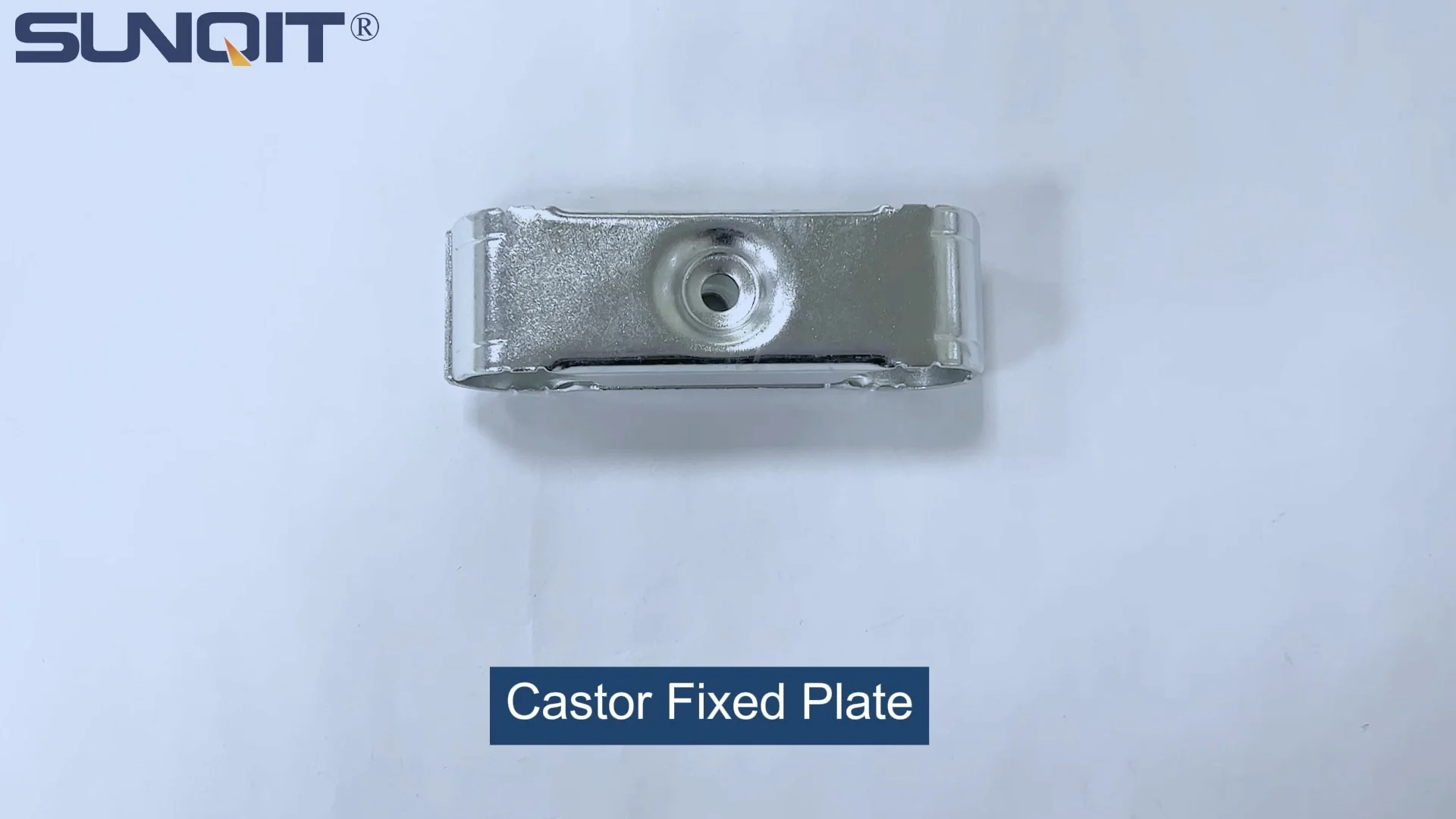
Castor Fixed Plate
Castor fixed plate, used for castor installation, one castor need two pcs castor plate to fix under the workbench, flow rack, and hand trolley.
In the bustling world of manufacturing and production, where every second counts and efficiency is king, there are countless small components working behind the scenes to keep operations running smoothly. One such unsung hero? The castor fixed plate . Tucked beneath workbenches, bolted onto turnover trolleys, and integrated into material racks, these unassuming plates play a critical role in connecting casters to lean pipe structures—ensuring that everything from heavy tool carts to delicate assembly stations can move with precision and stability. But here's the thing: not all castor fixed plates are created equal. The key difference often lies in their hole patterns—the arrangement of holes that determine how casters attach to the plate, and ultimately, how well the entire system performs. Today, we're diving deep into the world of standard vs. custom hole patterns for castor fixed plates, exploring when to stick with the tried-and-true and when to opt for a tailor-made solution in your lean system .
What Are Castor Fixed Plates, Anyway?
Before we get into hole patterns, let's make sure we're all on the same page about the star of the show: castor fixed plates. Simply put, these are flat, rigid plates (usually made of steel, aluminum, or heavy-duty plastic) designed to act as a bridge between casters and the structures they're attached to—think workbench legs, the base of a turnover trolley, or the frame of a material rack. Their job? To distribute weight evenly, secure casters firmly in place, and prevent wobbling or shifting during movement. Without a sturdy fixed plate, even the best caster wheels would struggle to support heavy loads or maintain stability, turning a smooth workflow into a clunky, accident-prone mess.
But here's where it gets interesting: the holes on these plates aren't just random. They're carefully positioned to align with caster mounting holes, ensuring a tight, secure fit. And that's where hole patterns come in. Whether you're using standard caster accessories or custom-designed ones, the spacing, size, and arrangement of these holes can make or break the functionality of your entire setup.
The Role of Hole Patterns in Lean Systems
Lean systems are all about eliminating waste, streamlining processes, and maximizing efficiency. Every component, from the lean pipe itself to the smallest joint, is chosen with purpose. Castor fixed plates are no exception. The right hole pattern ensures that casters are mounted in optimal positions to balance loads, reduce friction, and allow for easy maneuverability—all critical for keeping production lines moving and minimizing downtime.
Imagine, for example, a workbench in an electronics assembly line. It needs to hold delicate circuit boards, tools, and testing equipment, while also being mobile enough to shift positions when the production schedule changes. If the castor fixed plate's hole pattern is off—maybe the holes are too far apart, or the spacing doesn't match the caster's mounting bracket—the casters might not attach securely. This could lead to the workbench tipping, tools sliding off, or even casters breaking under stress. Suddenly, that "small" component becomes a big problem, disrupting the entire lean workflow.
On the flip side, a well-designed hole pattern ensures that casters are mounted precisely where they need to be. Weight is distributed evenly, movement is smooth, and the system can adapt to changing needs—whether that means adding more weight to the workbench or reconfiguring the layout of the factory floor. In short, hole patterns might seem like a minor detail, but they're a cornerstone of effective lean system design.

Standard Hole Patterns: The Backbone of Consistency
Let's start with the basics: standard hole patterns. These are pre-determined, industry-recognized layouts that most caster manufacturers and lean pipe supplier s adhere to. Think of them as the "one-size-fits-most" solution—designed to work with common caster sizes, mounting brackets, and lean pipe structures. Standard patterns typically include consistent hole spacing (like 50mm x 50mm or 2 inches x 2 inches), uniform hole diameters (often 8mm or 10mm for bolts), and symmetrical arrangements (like square or rectangular grids).
Why Choose Standard?
The biggest advantage of standard hole patterns is consistency . Since they're widely used across industries, you can walk into any hardware store or order from a lean pipe supplier and find castor fixed plates that match your existing casters or lean pipe structures. This saves time and reduces the risk of compatibility issues. For example, if a caster breaks on your turnover trolley, you can quickly swap in a new one without worrying about whether the mounting holes will line up with the fixed plate—they almost certainly will.
Cost is another big factor. Standard hole patterns are mass-produced, which means lower per-unit costs. Manufacturers don't have to invest in custom tooling or design work, and suppliers can keep large inventories, passing the savings on to you. This makes standard plates ideal for high-volume operations, like automotive assembly lines or large-scale warehouses, where you need dozens (or hundreds) of identical workbenches or trolleys.
Ease of installation is also a plus. Most maintenance teams are familiar with standard patterns, so mounting casters becomes a straightforward task—no special training or custom tools required. This is especially valuable in fast-paced environments where downtime is costly. If a new workbench needs to be set up quickly, standard plates let you get it up and running in minutes, not hours.
When Standard Falls Short
But standard isn't always the answer. The "one-size-fits-most" approach can become a problem when your needs are anything but "most." For example, if you're working with unusually heavy loads—say, a workbench that holds a 500kg industrial printer—standard hole spacing might not provide enough stability. The casters could be too close together, leading to uneven weight distribution and increased stress on the plate. Or, if you're designing a custom turnover trolley that needs to fit through narrow aisles, standard caster placement (which is often centered for balance) might make the trolley too wide, forcing you to compromise on maneuverability.
Another issue is unique lean pipe structures. If your system uses non-standard aluminum profiles or custom-bent steel pipes, the mounting points for the fixed plate might not align with standard hole patterns. In these cases, forcing a standard plate to work can lead to awkward, unstable setups—like drilling extra holes (which weakens the plate) or using shims to fill gaps (which introduces wobble).

Custom Hole Patterns: Tailoring to Your Unique Needs
Enter custom hole patterns. As the name suggests, these are designed from scratch to meet your specific requirements. Whether you need extra-large holes for heavy-duty bolts, asymmetrical spacing to balance an off-center load, or a unique grid that aligns with a custom aluminum profile , custom plates are built to fit your system like a glove.
Why Go Custom?
The biggest benefit of custom hole patterns is precision . If your operation has unique challenges—like oddly shaped workbenches, specialized caster wheels, or strict space constraints—custom plates ensure that every component works in harmony. For example, let's say you run a small electronics shop where most of your workbenches need to be ESD-safe (to prevent static damage to components). You might use specialized ESD casters with non-standard mounting brackets. A custom fixed plate can be designed to match those brackets exactly, ensuring a secure fit without compromising the ESD protection.
Custom patterns also open up possibilities for innovation. Maybe you want to design a modular workbench that can switch between fixed and mobile setups—using the same plate but with different caster positions for each mode. Or perhaps you need a turnover trolley that can tilt slightly to unload materials, requiring casters to be mounted at an angle. With custom hole patterns, these ideas aren't just possible—they're practical.
Durability is another advantage. When you design a custom plate, you can optimize the hole pattern to distribute weight more evenly, reducing stress on the plate and extending its lifespan. For example, if you're mounting casters on a heavy-duty material rack, a custom pattern might space the holes wider apart to spread the load, preventing the plate from bending or cracking over time.
The Downsides of Custom
Of course, custom comes with trade-offs. The biggest one is cost . Designing a custom hole pattern requires engineering work, and manufacturing it often means custom tooling (like CNC drilling or laser cutting). This drives up the per-unit price, making custom plates less feasible for high-volume orders. For small businesses or startups with tight budgets, the extra cost might not be justifiable unless the benefits (like improved safety or efficiency) are significant.
Lead time is another consideration. Standard plates are usually in stock, but custom ones need to be designed, prototyped, and manufactured—all of which takes time. If you need a replacement plate in a hurry, custom might not be an option. You'll also need to work closely with your supplier to ensure the design meets your needs, which requires clear communication and possibly multiple revisions.

Standard vs. Custom: A Comparative Analysis
| Factor | Standard Hole Patterns | Custom Hole Patterns |
|---|---|---|
| Cost | Lower (mass-produced, no custom tooling) | Higher (engineering, custom tooling, and prototyping) |
| Lead Time | Fast (readily available in stock) | Slow (requires design and manufacturing time) |
| Compatibility | High (works with most standard casters and lean pipe structures) | Depends on design (only compatible with your specific setup) |
| Flexibility | Low (limited to pre-determined hole spacing/sizes) | High (tailored to unique loads, spaces, or structures) |
| Installation | Easy (familiar to most maintenance teams) | May require specialized tools or training |
| Ideal For | High-volume operations, standard loads, common lean pipe structures | Unique loads, custom structures, specialized casters, tight spaces |
Real-World Applications: When to Choose Which
To better understand when to opt for standard or custom, let's look at two hypothetical (but realistic) scenarios:
Scenario 1: High-Volume Automotive Plant
A large automotive manufacturer needs to set up a new assembly line with 50 identical workbenches. Each workbench will hold tools, parts bins, and a small testing device—total load around 200kg. The plant uses standard lean pipe (1.5mm PE coated) and off-the-shelf casters with a 4-hole mounting bracket. For this operation, standard hole patterns are the clear choice. Why? The workbenches are identical, the load is standard, and the casters are widely available. Using standard fixed plates keeps costs low, ensures quick installation, and makes it easy to replace casters or plates if needed. The plant can order all 50 plates in bulk, set up the line in a week, and get production up and running with minimal hassle.
Scenario 2: Custom Furniture Workshop
A small custom furniture workshop specializes in building large, heavy wooden tables. They need a turnover trolley that can transport these tables (which weigh up to 800kg) from the assembly area to the finishing room. The workshop has narrow aisles, so the trolley needs to be compact but stable. Standard casters and fixed plates won't work here: the load is too heavy for standard spacing, and the trolley needs to be narrow (so casters can't be centered—they need to be offset to fit). In this case, custom hole patterns are necessary. The workshop works with a lean pipe supplier to design a plate with wider hole spacing (to distribute the 800kg load) and offset mounting points (to keep the trolley narrow). The custom plate ensures the casters can support the weight without bending, and the trolley can navigate the tight aisles without tipping. The extra cost is worth it for the workshop, as it prevents damage to expensive furniture and keeps their unique workflow efficient.
Conclusion: Finding the Right Fit for Your Lean System
At the end of the day, the choice between standard and custom castor fixed plate hole patterns comes down to your specific needs. Standard patterns are the workhorses of the industry—reliable, cost-effective, and perfect for high-volume, run-of-the-mill applications. They're the reason why most lean system s can operate smoothly with minimal fuss. But when your operation demands something more—whether it's unique loads, custom structures, or specialized casters—custom patterns are worth the investment. They turn "good enough" into "perfect," ensuring that your workbench , turnover trolley, or material rack fits your workflow like a well-tailored suit.
So, the next time you're setting up a new lean system or replacing a castor fixed plate, take a moment to think about the holes. They might seem small, but they're the foundation of a system that works for you—not against you. Whether you go standard or custom, the key is to align your choice with your goals: consistency and cost, or precision and flexibility. After all, in lean manufacturing, every detail matters—and that includes the ones you can't always see.