- Company Articles
- Industry articles
- Industry standards
- Castor Fixed Plate vs. Caster Plate: Clarifying Industry Terms

Castor Fixed Plate vs. Caster Plate: Clarifying Industry Terms
Related Product
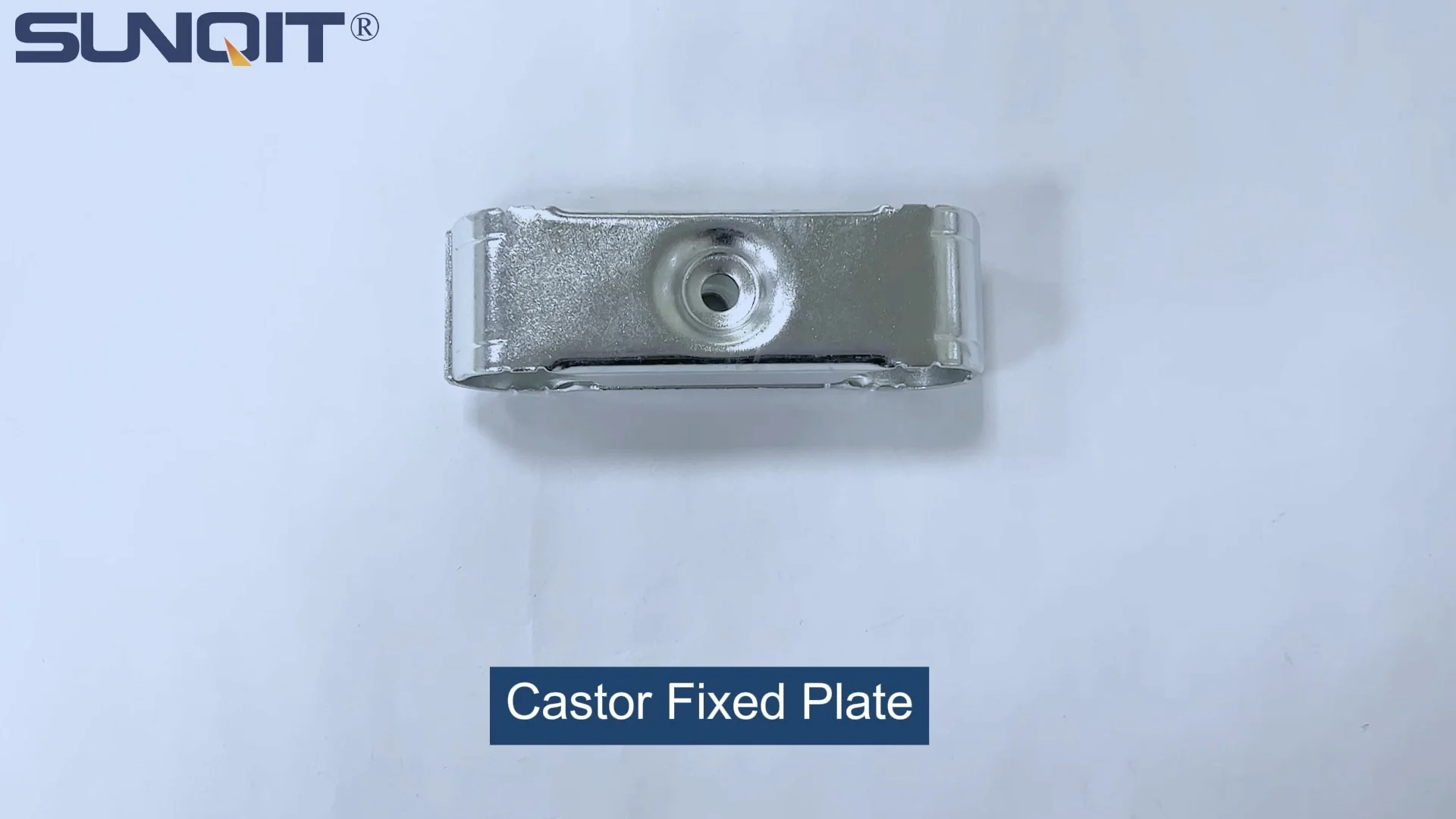
Castor Fixed Plate
Castor fixed plate, used for castor installation, one castor need two pcs castor plate to fix under the workbench, flow rack, and hand trolley.
If you've ever ordered industrial equipment, you know the frustration of decoding supplier catalogs. Terms that sound identical—like "castor fixed plate" and "caster plate"—pop up everywhere, leaving you wondering if they're just two names for the same part. But in the world of manufacturing, warehousing, and lean systems, assumptions can cost you. A misplaced order for the wrong plate might mean a turnover trolley that wobbles under load, a workbench that won't stay put, or a production line delayed by incompatible parts. Today, we're untangling this confusion. We'll break down what these plates are, how they differ, and why choosing the right one matters for your operations—especially if you're building or maintaining a lean system where every component counts.
Let's start with a simple truth: the smallest parts often have the biggest impact. When you're designing a workflow around efficiency—whether it's assembling electronics on an ESD workstation or moving raw materials with a material rack—mobility is key. And mobility starts with how your equipment connects to its wheels. That's where mounting plates come in. They're the bridge between your equipment (a trolley, a workbench, a rack) and the caster wheel that lets it move. But not all bridges are built the same. Castor fixed plates and caster plates each have unique jobs, and mixing them up can turn a smooth operation into a logistical headache. Let's start by defining each one.
What Is a Castor Fixed Plate?
Let's start with the castor fixed plate. The word "fixed" here is your first clue: this plate is designed for stability and rigidity. Think of it as the anchor that keeps a caster wheel firmly in place, preventing swiveling or rotation. Unlike plates that allow movement in multiple directions, a castor fixed plate locks the caster into a single, straight-ahead position. This makes it ideal for equipment that needs to move in a straight line—like a conveyor that feeds parts to an assembly line or a heavy-duty storage rack that only needs to be shifted occasionally.
Design and Function
A typical castor fixed plate is a flat, rectangular (or sometimes square) piece of metal—usually steel or aluminum—with pre-drilled holes for mounting. On one side, it bolts directly to the bottom of your equipment (say, the frame of a lean pipe workbench ). On the other side, it attaches to a rigid caster wheel—a wheel that doesn't swivel. The plate itself is thick and sturdy, often reinforced with edges or gussets to handle heavy loads. You'll rarely find moving parts here; the "fixed" design means no ball bearings or swivel mechanisms, just a solid connection.
Materials Matter
Materials depend on the job. For indoor use with moderate loads—like a small parts trolley—aluminum castor fixed plates are popular. They're lightweight, resistant to rust, and pair well with aluminum lean pipe systems. But for heavy-duty applications—think a 500-pound material rack in a warehouse—steel is the go-to. It's thicker (often 3/16-inch or more), stronger, and can handle the stress of constant loading and unloading. Some suppliers even offer stainless steel versions for cleanrooms or food processing facilities where corrosion resistance is non-negotiable.
Real-World Example:
A automotive plant uses castor fixed plates on their heavy-duty material racks. These racks hold engine blocks, so stability is critical. By using steel fixed plates with rigid casters, the racks move smoothly along straight aisles without tipping—even when fully loaded. If they'd used swivel plates here, the racks might veer off course, risking damage to parts or injury to workers.
What Is a Caster Plate?
Now, let's turn to the caster plate. Here's where things get tricky: "caster plate" is a broader term. It refers to any mounting plate used to attach a caster wheel to equipment—but with a key twist. Unlike castor fixed plates, caster plates often (but not always) support swivel casters. That means the plate itself might have a swivel mechanism, allowing the wheel to rotate 360 degrees. This makes them the go-to for equipment that needs to maneuver tight spaces—like a mobile workbench in a crowded electronics assembly line or a delivery cart in a busy warehouse.
Design and Function
A standard caster plate has two main parts: a top plate (bolted to the equipment) and a bottom plate (attached to the caster wheel). Between them is a swivel mechanism—usually a raceway with ball bearings—that lets the wheel turn freely. Some caster plates also include brakes, which lock the swivel motion or the wheel itself. This versatility is why they're so common: one plate design can work with swivel, rigid, or brake-equipped casters, depending on your needs.
Not Just for Swivels
Wait—does that mean caster plates can't be fixed? No. Some caster plates are designed for rigid casters, too. The difference lies in the terminology: "caster plate" is a general category, while "castor fixed plate" is a specific type of caster plate optimized for rigidity. Think of it like this: all castor fixed plates are caster plates, but not all caster plates are castor fixed plates. Confusing? Let's put it this way: if a supplier lists "caster plate" without specifying "fixed," it's safe to assume it might support swivel casters unless stated otherwise.
Real-World Example:
A medical device manufacturer uses caster plates with swivel casters on their ESD workstations. These workstations need to move between assembly stations, often navigating around other equipment. The swivel plates let workers pivot the workstation 90 degrees to fit through doorways or align with production lines. A brake on the caster plate ensures the workstation stays locked in place during use—critical for precision work like soldering delicate components.

Key Differences: Castor Fixed Plate vs. Caster Plate
To clear things up, let's compare these two side by side. The table below breaks down their design, function, and best uses:
| Feature | Castor Fixed Plate | Caster Plate (General) |
|---|---|---|
| Primary Function | Supports rigid casters; prevents swiveling | Supports swivel or rigid casters; may allow rotation |
| Design | Simple, flat plate with no moving parts; thick and rigid | May include swivel mechanism (raceway, ball bearings); often has brake options |
| Best For | Straight-line movement (e.g., heavy racks, conveyors) | Maneuverability (e.g., mobile workbenches, trolleys, carts) |
| Load Capacity | Higher (due to rigid design); often 500+ lbs per plate | Varies; swivel plates may have lower capacity than fixed plates of the same size |
| Common Materials | Steel (heavy-duty), aluminum (light-duty) | Steel, aluminum, or even plastic (light loads) |
| Installation | Bolt-on; no assembly of moving parts | May require assembling swivel mechanism or brakes |
The biggest takeaway? If you need straight-line stability, go with a castor fixed plate. If you need 360-degree movement, a swivel caster plate is your friend. And if you're not sure? Ask your supplier: "Does this plate support swivel casters, or is it fixed?" It's a simple question that can save you hours of hassle.

Why This Matters for Lean Systems
Lean systems thrive on precision. Every component should serve a purpose, and waste—whether it's time, money, or effort—should be eliminated. So how do these plates tie into lean? Let's count the ways:
Efficiency in Movement
In a lean setup, equipment should move when and where you need it—no more, no less. A lean system built with swivel caster plates on workbenches lets workers reconfigure their space in minutes, adapting to new orders or production changes. On the flip side, using swivel plates on a heavy material rack that only moves straight is a waste of money (swivel plates cost more than fixed ones) and a safety risk (unnecessary movement could cause spills or accidents).
Reduced Downtime
Imagine ordering castor fixed plates when you need swivel caster plates. When the parts arrive, you can't attach your swivel casters—so your mobile workbenches sit idle. Production grinds to a halt while you wait for replacements. Lean systems can't afford that. Clarity on plate types prevents these delays, keeping your workflow smooth and on schedule.
Safety First
Lean isn't just about efficiency—it's about creating a safe workplace. Using a castor fixed plate with a rigid caster on a trolley that needs to pivot could lead to tipping. Conversely, using a swivel plate on a heavy rack might cause it to drift, endangering workers. The right plate keeps equipment stable, reducing the risk of accidents and keeping your team safe.

Common Misconceptions (and How to Avoid Them)
Even seasoned pros mix up these terms. Let's debunk the most common myths:
Myth #1: "Castor" and "Caster" Are Just Spelling Variants
Sort of true—"castor" is British English, "caster" is American. But some suppliers use "castor fixed plate" to specifically mean a rigid, non-swivel plate, while "caster plate" refers to the swivel variety. Always check the product description for terms like "rigid," "fixed," or "swivel" to confirm.
Myth #2: All Plates Fit All Casters
Nope. Plates come in standard sizes (e.g., 4x4 inches, 6x6 inches), and casters have matching mounting holes. A castor fixed plate for a 5-inch caster won't fit a 3-inch caster. Always match plate size to caster size, and check weight ratings—using a light-duty aluminum plate with a heavy steel caster is a recipe for failure.
Myth #3: "Fixed" Means "No Movement"
Fixed plates prevent swiveling, but the wheel itself still rolls. Your equipment can move forward and backward—just not turn. If you need a completely stationary setup, skip the caster altogether and use leveling feet instead.
How to Choose the Right Plate for Your Needs
Ready to order? Follow these steps to pick the perfect plate:
Step 1: Define Your Movement Needs
- Straight-line only? Go with a castor fixed plate and rigid casters.
- Need to pivot or swivel? Choose a swivel caster plate with swivel casters.
- Some movement, some stability? Mix and match! Many trolleys use two fixed plates (for straight movement) and two swivel plates (for turning).
Step 2: Calculate Load Capacity
Add up the weight of your equipment plus its maximum load. If your trolley holds 300 lbs and weighs 50 lbs, you need plates rated for at least 350 lbs total (or ~88 lbs per plate if using four casters). Always overestimate—lean systems often handle variable loads, and extra capacity prevents failure.
Step 3: Consider Your Environment
Indoor, dry environments? Aluminum plates work great. Wet or corrosive areas (like food processing)? Stainless steel is a must. For cleanrooms, look for plates with smooth surfaces to avoid dust buildup.
Step 4: Check Compatibility
If you're using existing equipment, measure the mounting holes on your casters and compare to plate dimensions. If you're building a new lean pipe workbench or trolley, ask your supplier for a compatibility chart—most will have one that matches their caster and accessories to the right plates.
Final Thoughts: Small Plates, Big Impact
Castor fixed plates and caster plates might seem like parts, but they're the foundation of your equipment's mobility. In a lean system, where every second and every component counts, choosing the right plate keeps your workflow efficient, your team safe, and your operations on track. So next time you're ordering, take a minute to confirm: is it fixed or swivel? Rigid or maneuverable? Your future self (and your production schedule) will thank you.
And remember: when in doubt, ask. A good supplier—whether you're buying from a lean pipe supplier or a general industrial vendor—will walk you through the options, ensuring you get the plate that fits your needs. After all, lean systems are built on collaboration, and that starts with clear communication about even the smallest parts.