- Company Articles
- Industry articles
- Industry standards
- Castor Install Base for Cleanroom Equipment: Meeting Sterility Standards

Castor Install Base for Cleanroom Equipment: Meeting Sterility Standards
Related Product
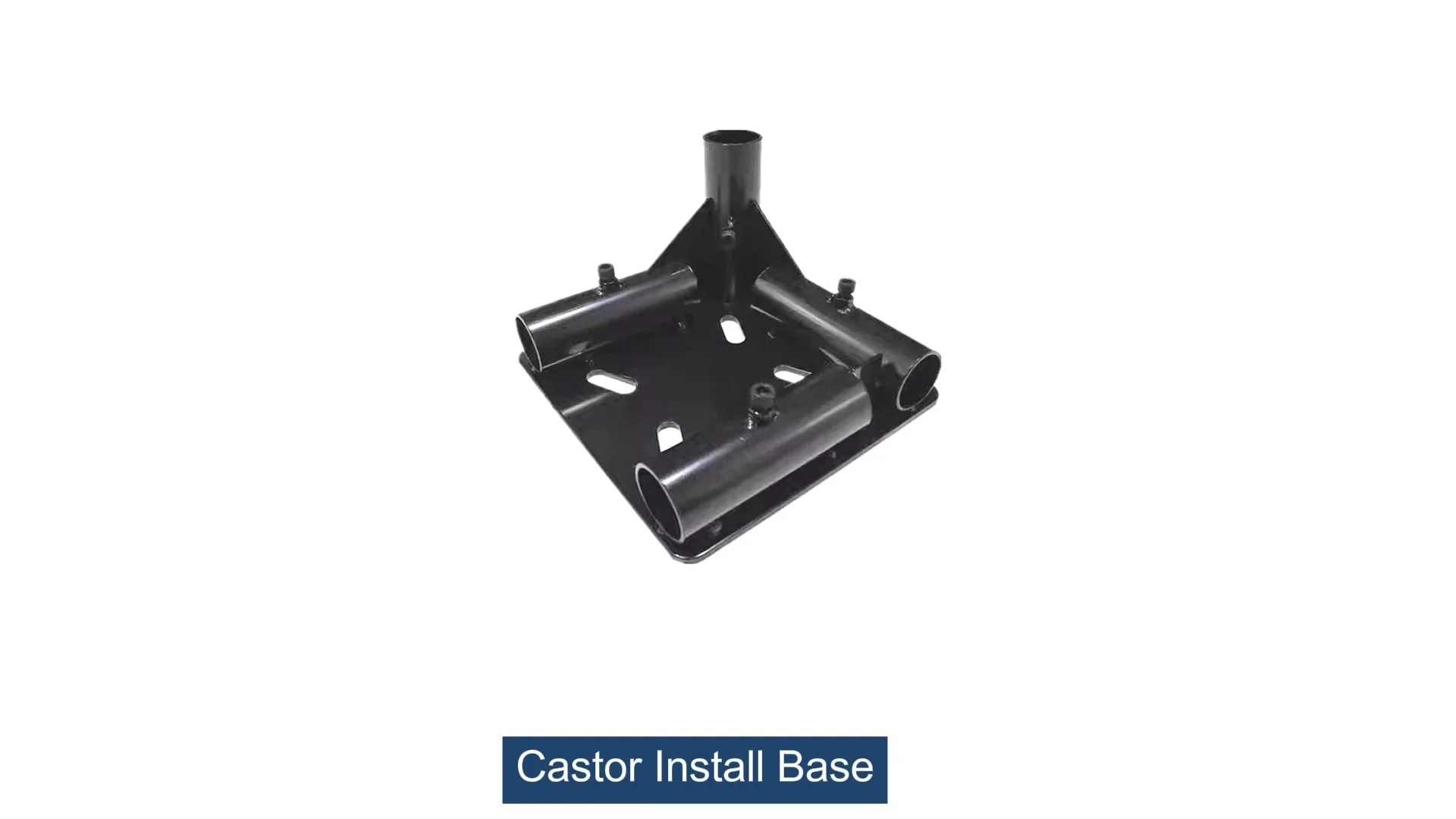
Castor Install Base
Castor install base, used for connection between pipe and castor, it can connect 4 pcs pipe by 1 pcs castor base, to make the structure strong and stable.
In the high-stakes world of cleanroom operations—where a single misplaced particle can compromise a pharmaceutical batch, derail a semiconductor wafer, or invalidate a medical device test—every component of the workspace matters. From the air filtration systems humming overhead to the gloves worn by technicians, sterility is the backbone of reliability. Yet one often-overlooked hero in this ecosystem is the castor install base : the unassuming platform that connects mobile equipment to its caster wheels. Far more than just a "wheel holder," this component plays a critical role in maintaining sterility, reducing contamination risks, and ensuring equipment moves smoothly without compromising the cleanroom's strict standards. Let's dive into why castor install bases are non-negotiable for modern cleanrooms, how they're designed to meet rigorous sterility requirements, and how choosing the right one can elevate your facility's efficiency and compliance.
Understanding Cleanroom Sterility: Why Mobility Can't Come at the Cost of Contamination
Cleanrooms are classified by ISO 14644 standards, which dictate the maximum allowable particle count per cubic meter. For example, an ISO 5 cleanroom (common in pharmaceutical compounding or microelectronics) permits no more than 3,520 particles of 0.5μm or larger—compare that to the millions of particles in a typical office. To achieve this, every surface, every movement, and every piece of equipment must be engineered to minimize particle generation and retention.
Mobile equipment—like workbenches, material carts, and testing stations—is essential for flexibility. In a busy cleanroom, being able to reposition a workbench for a new production run or roll a tool cart to a maintenance area can save hours of downtime. But mobility introduces unique challenges: casters and their mounting bases are prone to trapping dust, harboring bacteria in crevices, or shedding particles as they move. A poorly designed castor install base might have rough edges where particles collect, or joints that leak lubricant onto the floor—both disasters in a sterile environment.
This is where the castor install base steps in. By serving as a barrier between the equipment and the caster wheel, it must prevent contaminants from migrating upward (from the floor into the equipment) and downward (from the equipment onto the cleanroom surface). It also needs to withstand frequent cleaning—think harsh disinfectants, high-pressure hosing, or even autoclaving in some cases—without degrading. In short, the castor install base isn't just about movement; it's about movement without compromise .
What Is a Castor Install Base, and Why Does It Matter?
At its core, a castor install base is a structural component that attaches caster wheels to equipment. In non-cleanroom settings, this might be a simple metal plate with holes drilled for bolts. But in cleanrooms, "simple" isn't enough. Let's break down its key functions:
- Load Distribution: It evenly spreads the equipment's weight across the caster wheels, preventing uneven wear that could generate particles.
- Contamination Barrier: Seals gaps between the equipment and casters to block particles from entering or exiting.
- Cleanability: Smooth, non-porous surfaces that resist chemical damage and allow thorough sanitization.
- Stability: Prevents wobbling or tipping, which could dislodge particles or damage sensitive equipment.
Imagine a pharmaceutical company using a standard workbench with a basic castor mount. Over time, the mount's welded joints start to rust (a particle source), and its crevices trap cleaning solution residue, growing bacteria. When technicians roll the workbench, rust flakes and bacteria-laden dust are kicked up into the air—exactly what the cleanroom is designed to avoid. A purpose-built castor install base eliminates these risks by addressing each failure point of conventional designs.

Design Features for Sterility: How Castor Install Bases Are Engineered to Meet Cleanroom Demands
Smooth Surfaces and Seamless Construction
The first rule of cleanroom design is: no crevices, no corners, no hiding spots for particles . A high-quality castor install base will have a seamless, rounded-edge design to eliminate sharp angles where dust can collect. Welds, if present, are ground and polished to a mirror finish, leaving no raised edges. Some advanced models even use one-piece construction—machined from a single block of material—to avoid joints entirely.
Material Selection: Stainless Steel vs. Aluminum
Material choice is make-or-break for sterility. Two materials dominate the cleanroom castor install base market: stainless steel and aluminum. Here's how they stack up:
| Material | Sterility Advantages | Best For | Considerations |
|---|---|---|---|
| Stainless Steel (316L) | Non-porous, corrosion-resistant, withstands harsh disinfectants (e.g., bleach, hydrogen peroxide). Smooth surface resists particle adhesion. | ISO 5–7 cleanrooms, pharmaceutical production, biotech labs (where corrosion resistance is critical). | Heavier than aluminum; may require higher-load casters. |
| Anodized Aluminum | Lightweight, non-magnetic, easy to clean. Anodized layer adds scratch resistance and prevents oxidation. | ISO 6–8 cleanrooms, electronics assembly, medical device packaging (where weight and mobility are priorities). | Not ideal for repeated exposure to strong acids/alkalis; may pit over time. |
Some manufacturers also offer coated options (e.g., epoxy-coated steel), but these are less common in high-sterility environments—scratches in the coating can create new crevices for contamination. For most cleanrooms, stainless steel 316L (with its superior corrosion resistance) or anodized aluminum are the gold standards.
Sealed Bearings and Lubrication: Keeping Particles Locked In
Even the smoothest castor install base can fail if the caster wheel's bearings are exposed. Standard casters often use open bearings that require regular lubrication, which can leak onto cleanroom floors or attract dust. In contrast, cleanroom-specific castor install bases pair with caster wheels that have sealed, pre-lubricated bearings. These bearings are filled with food-grade or medical-grade lubricant (e.g., silicone grease) and sealed with rubber or Teflon to prevent leakage. The castor install base itself may include a protective shroud around the wheel hub, further blocking particle escape.

Integration with Lean Systems: Mobility That Supports Efficiency Without Sacrificing Sterility
Modern cleanrooms don't just prioritize sterility—they also embrace lean system principles, aiming to eliminate waste, streamline workflows, and maximize productivity. A well-designed castor install base aligns perfectly with these goals by enabling flexible, on-demand equipment movement. For example:
- 5S Compliance: In a 5S (Sort, Set in Order, Shine, Standardize, Sustain) cleanroom, tools and equipment must be "set in order"—easy to access and return to their designated spots. Mobile workbenches with reliable castor install bases allow teams to move equipment to the point of use, then return it to storage without disrupting sterility.
- Just-In-Time (JIT) Production: In pharmaceutical manufacturing, JIT means delivering raw materials to the production line exactly when needed. A material cart with a sturdy castor install base can safely transport sterile vials or powders through the cleanroom, reducing inventory waste and minimizing handling.
- Quick Changeovers: Switching between production runs (e.g., different drug formulations) requires reconfiguring workspaces fast. Mobile equipment with smooth-rolling casters (thanks to a well-engineered install base) cuts changeover time from hours to minutes, boosting throughput.
The key here is that the castor install base must support lean goals without introducing new risks. For instance, a lightweight aluminum base might make a workbench easier to move (supporting 5S), but if it's not strong enough to handle the bench's load, it could warp—creating gaps that trap particles. Balancing mobility, durability, and sterility is where the right castor install base shines.

Selecting the Right Castor Install Base: Key Considerations for Cleanroom Managers
Choosing a castor install base isn't a one-size-fits-all decision. Here are the critical factors to evaluate:
Cleanroom Class and Application
An ISO 5 cleanroom handling sterile injectables will demand a higher-grade base than an ISO 8 facility packaging medical devices. For example, ISO 5 may require stainless steel 316L with fully sealed joints, while ISO 8 could use anodized aluminum with minimal crevices. Consider the specific contaminants you're targeting: if your cleanroom deals with biologics, corrosion resistance (to frequent peroxide cleaning) is non-negotiable.
Load Capacity and Wheel Compatibility
The castor install base must support the total weight of the equipment, plus any materials it carries. Overloading can cause the base to bend, creating gaps or misaligning the wheels—both contamination risks. Always choose a base rated for 1.5x the expected load to account for sudden movements (e.g., rolling over a small floor imperfection). Additionally, ensure the base is compatible with your chosen caster wheels: check bolt patterns, hub sizes, and weight distribution to avoid uneven wear.
Ease of Cleaning and Maintenance
In a cleanroom, downtime for maintenance is costly. Look for castor install bases with features that simplify cleaning: smooth, non-porous surfaces (no weld seams to scrub), rounded edges (to prevent water pooling), and removable components (e.g., shrouds) for deep cleaning. Some manufacturers even offer bases with "tool-less" design, allowing technicians to remove and sanitize parts without specialized tools—critical for minimizing production interruptions.
Certifications and Compliance
Don't take a manufacturer's word for sterility—ask for certifications. Look for bases that meet FDA 21 CFR Part 117 (for food and pharmaceuticals), ISO 14644 particle emission testing, or USP Class VI (for biocompatibility, if the equipment contacts sterile products). A reputable supplier will provide test reports proving their bases don't shed particles or leach chemicals when cleaned.
Case Study: How a Pharmaceutical Facility Solved Contamination Issues with Upgraded Castor Install Bases
Let's look at a real-world example. A mid-sized pharmaceutical company specializing in sterile ophthalmic solutions was struggling with recurring particle contamination in their ISO 7 cleanroom. Batch testing consistently showed trace particles above the acceptable limit, leading to costly rejections. After months of investigating—checking filters, gowning protocols, and airflows—their quality team noticed something: contamination spikes correlated with days when technicians moved mobile workbenches to clean under them.
The culprit? The workbenches were using generic castor install bases made of painted steel. Over time, the paint had chipped, leaving rough metal surfaces that trapped particles. The bases also had visible weld seams where dust collected, and the casters' unsealed bearings leaked lubricant onto the floor. When the benches were moved, these particles and lubricant residues were kicked up into the air, landing on sterile vials.
The solution: upgrading to stainless steel 316L castor install bases with seamless construction, paired with sealed, lubricant-free caster wheels. The new bases had rounded edges, laser-welded joints (ground smooth), and a protective shroud around the wheel hubs. Within three months of installation, contamination rates dropped by 85%, and the facility saw zero batch rejections related to particle contamination. Additionally, the smoother-rolling casters reduced technician fatigue, and the easy-to-clean surfaces cut cleaning time by 30%—a win for both sterility and efficiency.
Maintaining Sterility: Best Practices for Castor Install Base Care
Even the best castor install base will fail if not properly maintained. Here's how to keep yours in top shape:
- Establish a Cleaning Schedule: Wipe down bases daily with a lint-free cloth and approved disinfectant (check compatibility with the base material). For critical cleanrooms, weekly deep cleaning—including removing the base (if tool-less) to scrub hidden areas—may be necessary.
- Inspect for Wear: Check for scratches, dents, or loose bolts monthly. A bent base or missing bolt can create gaps for particles. replace worn components immediately—don't wait for a contamination event.
- Lubricate (If Needed): Only use manufacturer-recommended lubricants for sealed bearings. Never apply extra lubricant unless specified—over-lubrication can lead to leakage.
- Train Staff: Ensure technicians know how to properly move equipment (e.g., push from the center to avoid tipping) and report damage to castor install bases promptly.
Future Trends: Innovations in Castor Install Base Design
As cleanroom technology evolves, so too do castor install bases. Here are emerging trends to watch:
- Smart Monitoring: Some manufacturers are adding sensors to castor install bases to track wheel wear, load distribution, or cleaning frequency. Data from these sensors can alert maintenance teams to issues before they cause contamination.
- Antimicrobial Coatings: New coatings (e.g., silver-ion infused stainless steel) inhibit bacterial growth on base surfaces, an added layer of protection in biotech and pharmaceutical cleanrooms.
- 3D-Printed Bases: Additive manufacturing allows for complex, one-piece designs with no seams—ideal for eliminating particle traps. While still niche, 3D-printed titanium or stainless steel bases are being tested in high-end semiconductor cleanrooms.
Conclusion: The Unsung Hero of Cleanroom Sterility
In the quest for cleanroom perfection, it's easy to focus on flashy technologies like HEPA filters or automated robots. But the castor install base—quietly holding equipment and caster wheels together—deserves just as much attention. It's the bridge between mobility and sterility, enabling lean workflows while keeping contamination at bay. By prioritizing design features like seamless construction, high-quality materials, and compatibility with caster and accessories , cleanroom managers can ensure their equipment moves as efficiently as it cleans. After all, in a space where precision is everything, even the smallest component can make the biggest difference.
So, the next time you walk through your cleanroom, take a moment to look down at those mobile workbenches and carts. The castor install base beneath them might not be glamorous, but it's working tirelessly to keep your operations sterile, efficient, and compliant. And in the world of cleanrooms, that's nothing short of heroic.