- Company Articles
- Industry articles
- Industry standards
- Castor Installation Base Certification: Meeting ISO Standards for Medical Industry

Castor Installation Base Certification: Meeting ISO Standards for Medical Industry
Related Product
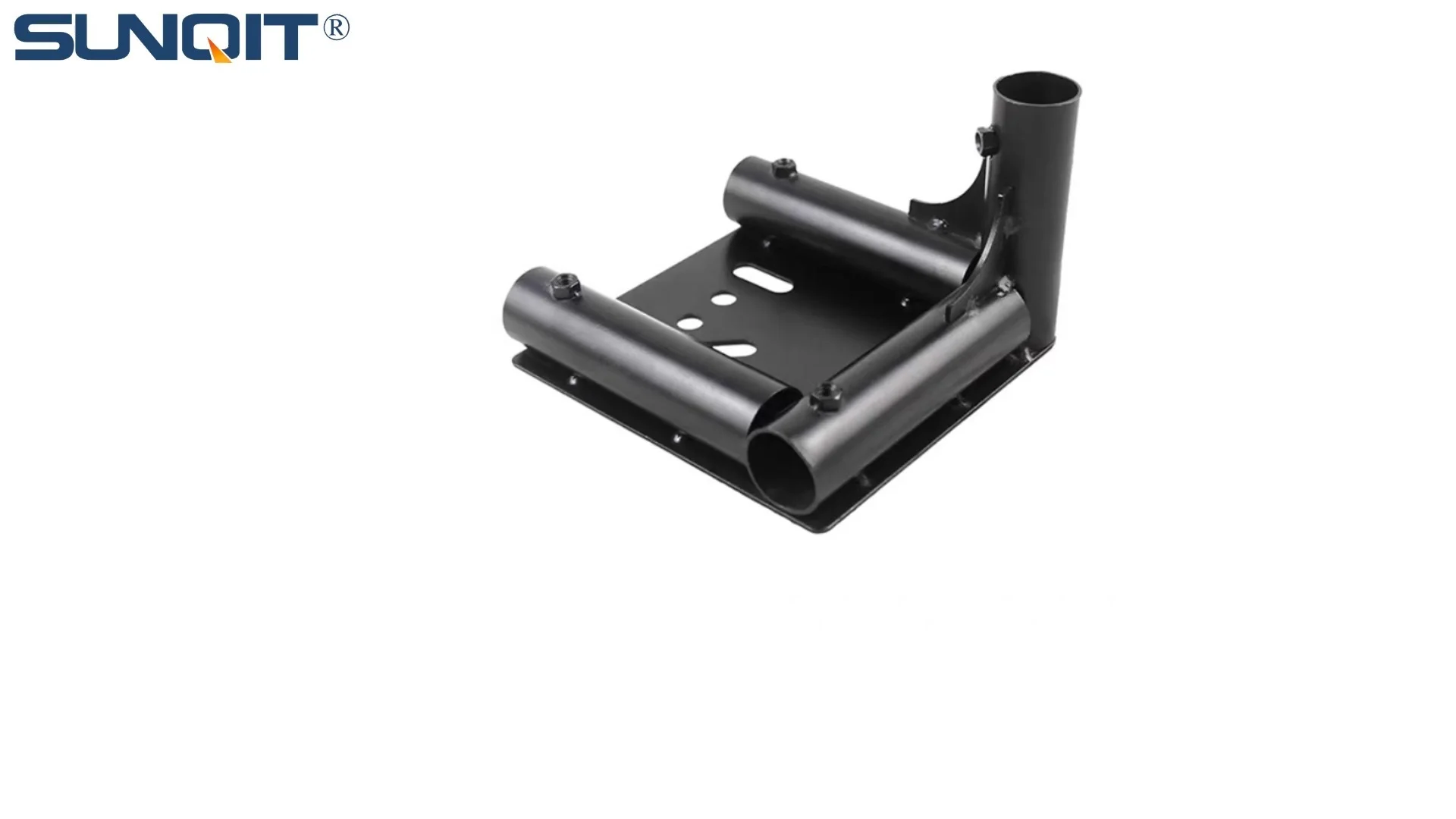
Castor Installation Base
Pipe fitting castor installation base,Well made, precise and strong. Made of high quality of steel,black painting surface treatment for greater resistance to corrosion. It is used for castor or foot lever connection with lean pipe.
In the fast-paced world of healthcare, where every second counts and patient safety is non-negotiable, the smallest components often play the biggest roles. Consider the medication carts gliding through hospital corridors, the surgical instrument trolleys positioned with precision in operating rooms, or the lab workstations that keep diagnostic samples organized and accessible. Behind their smooth movement, stability, and reliability lies an unsung hero: the castor installation base. These unassuming components are the foundation of mobility in medical environments, ensuring that critical equipment moves when needed, stays steady when required, and stands up to the rigorous demands of daily use. But in an industry governed by strict regulations, not all castor installation bases are created equal. Meeting ISO standards isn't just a badge of honor—it's a necessity. This article dives into why ISO certification matters for castor installation bases in the medical sector, how manufacturers achieve it, and the tangible benefits it brings to healthcare facilities worldwide.
The Critical Role of Castor Installation Bases in Medical Environments
To understand the importance of ISO-certified castor installation bases, we first need to appreciate their role in medical settings. Healthcare facilities are dynamic ecosystems where equipment mobility directly impacts workflow efficiency and patient care. A medication cart that jams halfway to a patient's room can delay treatment; a surgical trolley that wobbles during a procedure risks compromising sterility; a lab workstation that fails to lock securely could lead to sample contamination. Castor installation bases are the linchpin that prevents these scenarios.
These bases serve three primary functions: load distribution, stability control, and movement facilitation. When paired with high-quality caster wheels and accessories—components that fall under the broader umbrella of "caster and accessories"—they ensure that even heavy equipment (like carts loaded with IV fluids or surgical tools) moves smoothly over uneven hospital floors. They also incorporate locking mechanisms to keep equipment stationary during use, preventing accidental shifts that could endanger patients or staff. In labs and pharmacies, where precision is key, adjustable bases allow for height customization, ensuring workstations align with ergonomic standards and reduce strain on healthcare workers.
But medical environments aren't just about movement—they're also about hygiene. Castor installation bases are exposed to frequent cleaning with harsh disinfectants, from alcohol-based wipes to industrial-grade sanitizers. They must resist corrosion, avoid harboring bacteria in crevices, and maintain structural integrity even after repeated exposure to these chemicals. In this context, the materials and design of the base matter as much as its mechanical performance. This is where ISO standards step in, setting strict criteria for everything from material composition to manufacturing processes.
Why ISO Standards Are Non-Negotiable in Medical Manufacturing
The International Organization for Standardization (ISO) develops globally recognized standards to ensure products, services, and systems are safe, reliable, and of high quality. In the medical industry, ISO standards are particularly stringent because the stakes—human lives—are so high. For castor installation bases, the most relevant standard is ISO 13485:2016, titled "Medical devices—Quality management systems—Requirements for regulatory purposes." Unlike general quality standards like ISO 9001, ISO 13485 is tailored specifically to medical device manufacturers, with a focus on risk management, traceability, and compliance with regulatory bodies (such as the FDA in the U.S. or the EU MDR in Europe).
ISO 13485 isn't just about producing a good product—it's about documenting every step of the process to prove that the product is consistently good. For castor installation base manufacturers, this means tracking raw materials from suppliers, validating production processes to ensure uniformity, and conducting rigorous testing to verify performance under medical conditions. It also requires a commitment to continuous improvement, with systems in place to identify and address non-conformities, whether they arise during production or after the product has reached the market.
Beyond ISO 13485, castor installation bases may also need to comply with other standards depending on their application. For example, ISO 10993 addresses biocompatibility, ensuring that materials in contact with patients (or even just with frequently touched surfaces) don't cause adverse reactions. While castor bases rarely touch patients directly, their components (like "stainless steel pipe series" used in construction) must still meet biocompatibility thresholds to avoid leaching harmful substances into the environment. Similarly, ISO 7176 sets standards for wheelchair casters, which overlap with medical cart requirements for durability and maneuverability.

Key ISO Standards Shaping Castor Installation Base Design
To achieve certification, manufacturers must align their products with specific ISO criteria. Let's break down the most critical standards and how they impact castor installation base design:
ISO 13485: Quality Management Systems
At its core, ISO 13485 requires manufacturers to implement a quality management system (QMS) that covers every stage of the product lifecycle, from design and development to post-market surveillance. For castor installation bases, this means:
- Design Controls: Bases must be designed with medical use in mind. This includes factors like load capacity (to support heavy medical equipment), corrosion resistance (to withstand disinfectants), and ease of cleaning (smooth surfaces with minimal crevices to prevent bacterial buildup).
- Purchasing Controls: Suppliers of raw materials—such as "stainless steel pipe series" or aluminum alloys—must be vetted to ensure their materials meet ISO standards. Manufacturers must maintain records of supplier audits and material certificates (e.g., test reports for stainless steel corrosion resistance).
- Production and Process Controls: Manufacturing processes (like welding, machining, or coating) must be validated to ensure consistency. For example, a base's welding joints must be tested for strength to avoid failure under load, and coating processes must be monitored to ensure uniform thickness and adhesion.
- Monitoring and Measurement: Every batch of castor installation bases must undergo testing, from load-bearing trials to durability assessments (e.g., simulating thousands of cycles of movement to check for wear). Non-conforming products must be identified and quarantined, with root-cause analysis to prevent recurrence.
ISO 9001: A Foundation for Excellence
While ISO 13485 is specific to medical devices, many manufacturers also pursue ISO 9001 certification, which sets general quality management standards. ISO 9001 complements ISO 13485 by emphasizing customer focus, leadership, and continuous improvement—principles that translate to better communication with healthcare clients and a proactive approach to refining products based on feedback.
ISO 10993: Biocompatibility for Patient Safety
Though castor installation bases aren't implanted in patients, they're part of the medical environment, which means their materials must be biocompatible. ISO 10993 outlines tests for cytotoxicity (cell damage), sensitization (allergic reactions), and irritation. For example, plastic components in "caster accessories" (like wheel bearings or locking levers) must be tested to ensure they don't release harmful chemicals when exposed to bodily fluids or cleaning agents.

Materials Matter: Building Bases That Meet ISO Criteria
The choice of materials is a cornerstone of ISO compliance. Medical-grade castor installation bases are typically made from one of three materials: stainless steel, aluminum, or composite alloys. Each has its advantages, but all must meet strict ISO standards for strength, durability, and hygiene.
Stainless Steel: The Gold Standard for Durability
"Stainless steel pipe series" are a popular choice for castor installation bases in medical settings, and for good reason. Stainless steel offers exceptional corrosion resistance, thanks to its chromium content, which forms a protective oxide layer when exposed to air. This makes it ideal for environments where frequent cleaning with harsh chemicals is the norm. ISO 13485 requires stainless steel to meet specific grades (e.g., 304 or 316) to ensure it resists pitting and crevice corrosion. Additionally, stainless steel's high tensile strength allows bases to support heavy loads—up to 500 kg or more for industrial-grade models—without bending or warping.
Aluminum: Lightweight Strength for Agile Equipment
Aluminum bases are favored for lighter equipment, such as lab workstations or mobile medication carts, where maneuverability is key. Aluminum is lighter than stainless steel but still strong, and it can be anodized to enhance corrosion resistance. Anodization creates a hard, protective layer on the surface, making it resistant to scratches and chemical damage. Manufacturers must ensure their aluminum meets ISO 13485 criteria for purity (to avoid impurities that could leach) and mechanical properties (to ensure it doesn't fatigue under repeated use).
Composite Alloys: Balancing Performance and Cost
Composite materials, often reinforced with fiberglass or carbon fiber, are emerging as a third option. They offer high strength-to-weight ratios and excellent chemical resistance, but they must undergo rigorous testing to meet ISO standards for biocompatibility and durability. For example, composite bases must be tested for impact resistance to ensure they don't shatter if accidentally knocked over—a critical safety feature in busy hospitals.

The Certification Journey: How Manufacturers Achieve ISO Compliance
Earning ISO certification is a multi-step process that requires dedication, investment, and a commitment to quality. Here's a breakdown of the typical journey:
Step 1: Gap Analysis
Before pursuing certification, manufacturers conduct a gap analysis to compare their current processes with ISO requirements. This involves reviewing existing QMS documentation, production workflows, and testing protocols to identify areas that need improvement. For example, a manufacturer might discover they lack formal supplier audit procedures or fail to document post-market feedback—both gaps that must be addressed.
Step 2: Process Documentation
ISO standards require extensive documentation, from quality manuals and procedure guides to work instructions and record templates. Manufacturers must document everything: how raw materials are inspected, how production processes are monitored, how non-conforming products are handled, and how customer complaints are resolved. This documentation serves as a roadmap for consistent operations and is critical during certification audits.
Step 3: Employee Training
Certification isn't just about processes—it's about people. Employees at all levels (from assembly line workers to quality managers) must be trained on ISO requirements, the company's QMS, and their role in maintaining compliance. Training might include how to identify non-conforming products, how to complete inspection records, or how to report quality issues.
Step 4: Internal Audits
Before inviting a third-party certifier (like TÜV, SGS, or BSI), manufacturers conduct internal audits to verify that their QMS is functioning as intended. Internal auditors check that processes are followed, records are maintained, and corrective actions are implemented for past non-conformities. This step helps identify and resolve issues before the formal certification audit.
>Step 5: Third-Party Certification Audit
A certification body sends auditors to review the manufacturer's QMS, production facilities, and records. The audit has two phases: a documentation review (to ensure processes are correctly documented) and an on-site assessment (to verify that documented processes are followed in practice). If gaps are found, the manufacturer is given a timeline to address them. Once all issues are resolved, the certification is awarded.
Step 6: Ongoing Compliance
ISO certification isn't permanent. Manufacturers must undergo surveillance audits annually to maintain their certification. These audits ensure that the QMS remains effective and that any changes to processes (e.g., new materials or production techniques) are properly validated and documented. Every three years, a full recertification audit is required to confirm continued compliance.
Comparing Castor Installation Bases: Compliance and Performance
Not all castor installation bases are equal, even among ISO-certified products. To help healthcare facilities make informed choices, we've compared three common types based on key criteria:
| Base Type | Material | ISO 13485 Compliant | Load Capacity (kg) | Corrosion Resistance | Ease of Cleaning | Typical Application |
|---|---|---|---|---|---|---|
| Heavy-Duty Stainless Steel | 316 Stainless Steel (from "stainless steel pipe series") | Yes | 400–600 | Excellent (resists harsh disinfectants) | High (smooth, weld-free surfaces) | Surgical instrument trolleys, MRI-compatible equipment |
| Lightweight Aluminum | Anodized Aluminum Alloy | Yes | 200–350 | Good (anodized layer resists corrosion) | High (no paint to chip; easy to wipe clean) | Medication carts, lab workstations |
| Composite Reinforced | Fiberglass-Reinforced Polymer | Yes (with biocompatibility testing) | 150–250 | Excellent (chemically inert) | Very High (non-porous surface; no metal components to rust) | Pediatric care equipment, cleanroom environments |
Overcoming Challenges in Meeting ISO Standards
Achieving ISO certification isn't without hurdles. Manufacturers face several challenges, from rising material costs to the complexity of global supply chains. Here's how they navigate these obstacles:
Balancing Cost and Quality
Medical-grade materials—like high-quality "stainless steel pipe series" or anodized aluminum—are more expensive than standard alternatives. For small manufacturers, this can strain budgets. To offset costs, many invest in process optimization, such as automated production lines to reduce labor expenses, or bulk purchasing agreements with suppliers to secure lower material prices. Some also focus on niche markets (e.g., custom bases for specialized medical equipment) to justify premium pricing.
Rigorous Testing Requirements
ISO standards demand extensive testing, which can be time-consuming and costly. For example, durability testing might involve simulating 100,000 cycles of movement to ensure a base doesn't wear prematurely—a process that takes weeks. To streamline testing, manufacturers often invest in in-house testing labs, allowing them to conduct trials faster and more cost-effectively than outsourcing. They also leverage data from past tests to design products that are more likely to pass on the first try.
Supply Chain Disruptions
Global events (like pandemics or trade restrictions) can disrupt the supply of critical materials, such as "stainless steel pipe series" or "caster accessories." To mitigate this, manufacturers diversify their supplier base, working with multiple "caster accessories supplier" partners across different regions. They also maintain safety stocks of key materials and conduct regular supplier audits to ensure redundancy.
Evolving Standards
ISO standards are periodically updated to reflect new technologies and best practices. For example, ISO 13485 was revised in 2016 to align with new regulatory requirements (like the EU MDR). Manufacturers must stay ahead of these changes by participating in industry forums, subscribing to standards updates, and proactively updating their QMS to avoid certification gaps.
Benefits of ISO-Certified Castor Installation Bases for Healthcare Facilities
For healthcare facilities, investing in ISO-certified castor installation bases isn't just about compliance—it's about improving patient care, reducing costs, and enhancing operational efficiency. Here are the key benefits:
Enhanced Patient Safety
ISO-certified bases are rigorously tested to ensure they don't fail under load, lock securely, and resist corrosion. This reduces the risk of equipment accidents (like a cart tipping over or a workstation rolling unexpectedly), which could harm patients or staff. For example, a medication cart with a certified base is less likely to jam, ensuring timely delivery of critical drugs.
Reduced Maintenance Costs
High-quality materials and manufacturing processes mean ISO-certified bases last longer and require less maintenance. A stainless steel base, for instance, won't rust or corrode, eliminating the need for frequent replacements. This lowers long-term costs for healthcare facilities, freeing up budgets for other patient care needs.
Regulatory Compliance
Healthcare facilities are subject to strict regulations (e.g., FDA in the U.S., MHRA in the UK) that require medical equipment to meet recognized standards. Using ISO-certified castor installation bases helps facilities demonstrate compliance during inspections, reducing the risk of fines or penalties.
Improved Workflow Efficiency
Smoothly functioning castor systems—built on reliable installation bases—allow healthcare workers to move equipment quickly and easily. This is especially critical in emergencies, where every second counts. Additionally, bases with ergonomic designs (e.g., adjustable heights) reduce strain on staff, lowering the risk of workplace injuries and improving job satisfaction.
Support for Lean Systems
Many healthcare facilities adopt "lean system" principles to eliminate waste and streamline processes. ISO-certified castor installation bases align with lean goals by ensuring equipment is always where it's needed, when it's needed. For example, a lab workstation with a durable base can be repositioned quickly to adapt to changing workflow demands, reducing downtime and improving productivity.
Future Trends: Innovations in ISO-Certified Castor Installation Bases
As healthcare evolves, so too do the demands on castor installation bases. Here are three trends shaping their future:
Smart Bases with IoT Integration
Emerging technologies are enabling "smart" castor installation bases equipped with sensors that monitor performance in real time. These sensors can track metrics like load capacity (alerting staff if a cart is overloaded), wheel wear (predicting when maintenance is needed), or movement patterns (helping facilities optimize equipment placement). While still in early stages, these smart bases have the potential to further enhance safety and efficiency—though they will require new ISO standards for data security and reliability.
Antimicrobial Coatings
Infection control remains a top priority in healthcare, driving demand for bases with antimicrobial coatings. These coatings (often silver-based or copper-infused) inhibit bacterial growth on surfaces, reducing the risk of cross-contamination. Manufacturers are working to integrate these coatings into ISO-certified bases, with testing to ensure they meet biocompatibility standards and maintain effectiveness over time.
Sustainability
Healthcare facilities are increasingly prioritizing sustainability, and castor installation bases are no exception. Manufacturers are exploring eco-friendly materials (like recycled stainless steel or aluminum) and energy-efficient production processes. ISO 14001 (environmental management) is becoming a complementary certification for manufacturers, demonstrating their commitment to reducing environmental impact while maintaining medical-grade quality.
Conclusion: Investing in Excellence for Patient Care
Castor installation bases may be small, but their impact on healthcare is enormous. In a sector where safety, reliability, and efficiency are paramount, ISO certification isn't just a requirement—it's a promise. It tells healthcare facilities that the base beneath their critical equipment has been designed, tested, and manufactured to the highest global standards. For manufacturers, achieving ISO certification is a journey of continuous improvement, driven by a commitment to quality and patient safety. For healthcare workers, it's the assurance that the tools they rely on will perform when it matters most. As technology advances and healthcare evolves, ISO-certified castor installation bases will remain a cornerstone of safe, efficient, and compassionate care—proving that even the smallest components can make the biggest difference.