- Company Articles
- Industry articles
- Industry standards
- Chrome Coating Process for Vertical Lean Pipe Joints: Industry Standards

Chrome Coating Process for Vertical Lean Pipe Joints: Industry Standards
Related Product
Vertical Lean Pipe Joint
Vertical lean pipe joint is used for 28mm lean pipe fixed on ground and keep it stable.
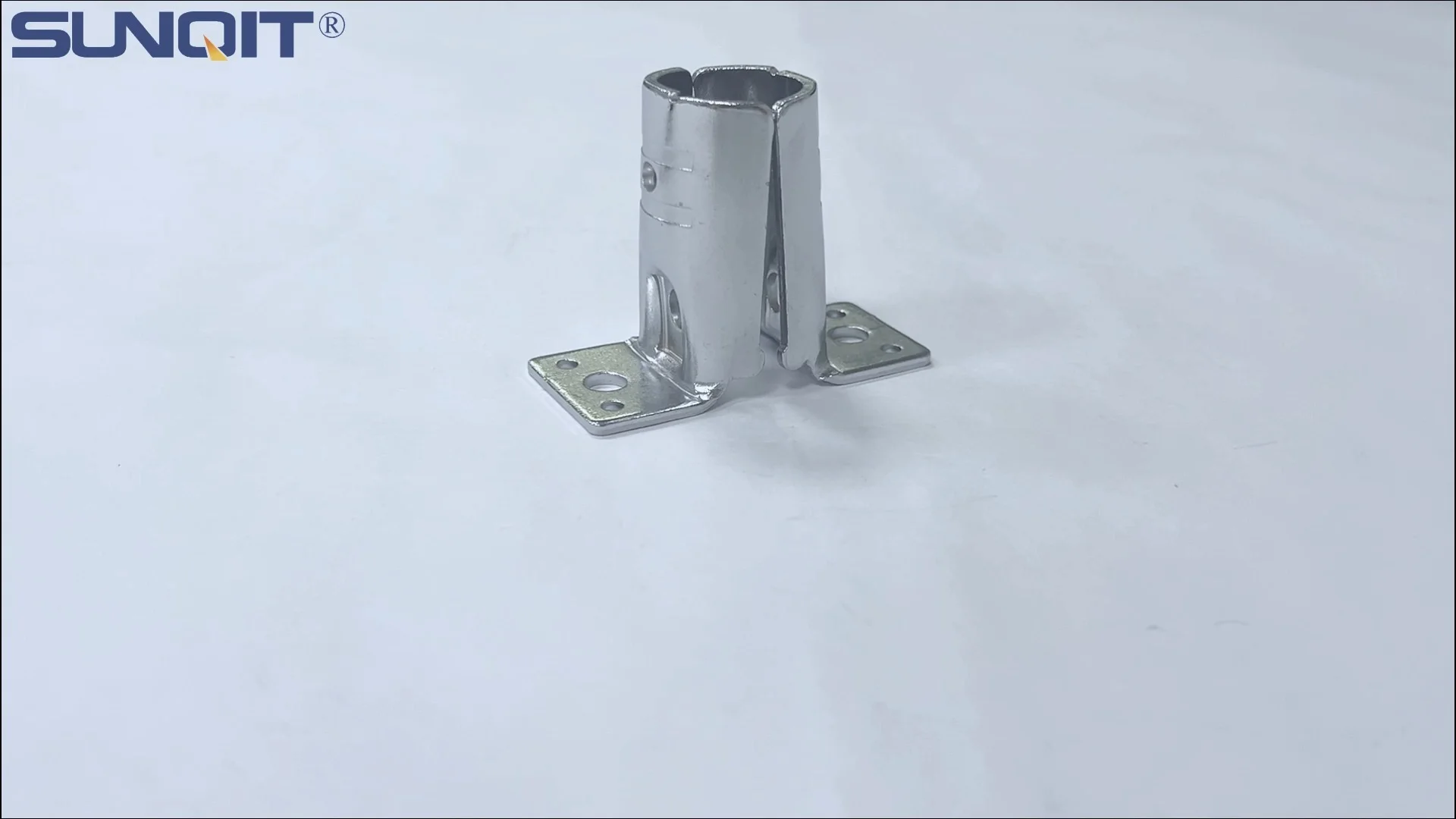
In the bustling environment of modern manufacturing facilities, where efficiency and durability are paramount, the unsung heroes of operational excellence often lie in the smallest components. Take, for instance, the vertical lean pipe joint—an unassuming connector that forms the backbone of modular workbenches, flow racks, and turnover trolleys. These joints are the quiet architects of lean systems, enabling quick assembly, reconfiguration, and adaptability to evolving production needs. But what ensures these critical components can withstand the daily rigors of factory life—constant assembly and disassembly, exposure to oils and coolants, and the wear of heavy loads? The answer often lies in a thin, gleaming layer: chrome coating. For vertical lean pipe joints, chrome coating isn't just about aesthetics; it's a shield that preserves functionality, extends lifespan, and upholds the reliability of the entire lean ecosystem.
The Role of Vertical Lean Pipe Joints in Lean Systems
Before delving into the chrome coating process, it's essential to understand why vertical lean pipe joints matter. In lean manufacturing, the goal is to eliminate waste—whether in time, materials, or space. Vertical lean pipe joints, often paired with aluminum or steel pipes, enable the creation of modular structures that adapt to changing workflows. Need a new workbench for a revised assembly line? A vertical joint connects pipes quickly without welding. Expanding a flow rack to accommodate more inventory? Swap out a few joints, add pipes, and the system evolves. This flexibility is why lean pipe suppliers emphasize the quality of these joints: a weak or corroded joint can compromise the entire structure, leading to production delays, safety risks, or costly replacements.
Vertical lean pipe joints, in particular, are designed to bear vertical loads—think of the upright supports of a workbench or the vertical rails of a material rack. They must maintain structural integrity under tension and compression, often while facilitating smooth movement (e.g., in trolleys with casters). Over time, however, factors like humidity, chemical exposure, and mechanical stress can degrade unprotected metal. This is where chrome coating steps in, transforming a basic metal joint into a resilient component that stands up to industrial challenges.
Why Chrome Coating? The Science Behind the Shine
Chrome coating, or chromium plating, is a process that deposits a thin layer of chromium onto a metal surface via electrolysis. While other coatings—like zinc or powder coating—offer protection, chrome stands out for three key reasons: hardness, corrosion resistance, and low friction. Hard chrome coatings, for example, can reach a hardness of 800-1000 HV (Vickers hardness), making them far more wear-resistant than bare steel or aluminum. This is critical for vertical lean pipe joints, which are often tightened and loosened repeatedly; a hard chrome layer prevents the threads or contact points from deforming over time.
Corrosion resistance is another advantage. In factories, joints are exposed to coolants, lubricants, and even moisture from washdowns. Without protection, steel joints can rust, leading to seized threads or weakened connections. Chrome acts as a barrier, preventing oxygen and water from reaching the base metal. Additionally, chrome's smooth, low-friction surface reduces wear during assembly—no more struggling with a rusted joint that sticks when you try to adjust a workbench height.

The Chrome Coating Process: From Raw Metal to Finished Joint
Chrome coating vertical lean pipe joints is a (precision) process that demands attention to detail at every step. Even minor flaws in preparation or plating can lead to peeling, pitting, or uneven protection. Let's break down the journey of a vertical lean pipe joint from raw metal to chrome-plated component.
Step 1: Pre-Treatment – Setting the Stage for Adhesion
The first rule of chrome plating is simple: the coating is only as good as the surface it adheres to. Before any chromium is deposited, the vertical lean pipe joint undergoes rigorous pre-treatment to remove contaminants and prepare the metal for plating. This stage typically includes three key steps:
Degreasing: Newly manufactured joints often have oils, greases, or cutting fluids from machining. These must be stripped away, usually with alkaline cleaners or solvent baths. For stubborn residues, ultrasonic cleaning—using high-frequency sound waves to dislodge particles—is employed. Any remaining oil will prevent chromium from bonding, leading to blisters or flaking later.
Pickling: Next, the joint is immersed in an acid bath (often hydrochloric or sulfuric acid) to remove oxides, rust, or scale from the metal surface. This step brightens the metal and creates a clean, reactive surface. Care is taken to avoid over-pickling, which can etch the metal too deeply and weaken the joint's structural integrity.
Surface Activation: Finally, the joint may undergo abrasive blasting (with materials like aluminum oxide) or etching to create a micro-rough texture. This roughness increases the surface area, allowing the chrome to "grip" the metal more effectively. For vertical joints with intricate features—like internal threads or recesses—specialized tools ensure every nook is activated, preventing thin or uneven coating in hard-to-reach areas.
Step 2: Electroplating – Depositing the Chrome Layer
Once pre-treated, the vertical lean pipe joint is ready for plating. The core of the process is electroplating, where the joint acts as the cathode (negative electrode) in an electrolytic cell. The cell contains a chromium plating bath—traditionally a solution of chromium trioxide (CrO3) and sulfuric acid (H2SO4), though modern facilities increasingly use trivalent chromium (Cr3+) baths for environmental reasons. A lead or titanium anode (positive electrode) supplies the chromium ions, which are drawn to the negatively charged joint and deposited as metallic chromium.
Several factors control the quality of the deposit:
- Current Density: Measured in amperes per square decimeter (A/dm²), current density determines the plating rate and thickness. For hard chrome coatings (used in industrial joints), current densities range from 20-60 A/dm², resulting in slower, denser deposits.
- Temperature: The bath is heated to 45-55°C for hexavalent chrome (traditional) or 30-40°C for trivalent chrome. Temperature affects ion mobility; too cold, and the coating may be porous; too hot, and it could crack.
- Bath Chemistry: The ratio of chromium trioxide to sulfuric acid is critical—typically 100:1. Impurities, like iron or copper ions, can contaminate the bath, leading to dull or defective coatings. Lean pipe suppliers with strict quality control regularly test and filter their baths to maintain purity.
For vertical lean pipe joints, uniformity is key. The joint's vertical orientation can create "shadowing"—areas where the electric field is weaker (e.g., recesses or threads), leading to thinner plating. To combat this, operators may use auxiliary anodes (small electrodes placed near shadowed areas) or rotate the joint during plating, ensuring every surface receives equal current exposure.
Step 3: Post-Treatment – Ensuring Durability and Quality
Plating isn't the final step. After leaving the bath, the chrome-plated vertical lean pipe joint undergoes post-treatment to lock in protection and verify quality:
Rinsing and Drying: The joint is rinsed thoroughly in deionized water to remove residual bath chemicals, which could cause pitting if left behind. It's then dried with hot air or in an oven to prevent water spots.
Passivation: Some facilities treat the chrome layer with a chromic acid solution to form a thin oxide film, further enhancing corrosion resistance. This is especially common for joints used in humid or chemical-heavy environments.
Quality Inspection: The final check is rigorous. Lean pipe suppliers use tools like eddy current testers to measure coating thickness (ensuring it meets specifications, often 5-25 μm for industrial joints). Adhesion is tested via the "bend test"—the joint is bent 180°, and inspectors check for cracks or peeling. For corrosion resistance, samples may undergo salt spray testing (per ASTM B117 standards), where they're exposed to a mist of saltwater for hours or days to ensure no rust forms.

Industry Standards: Setting the Bar for Chrome-Coated Joints
Chrome coating isn't a one-size-fits-all process. To ensure consistency and reliability, global standards govern everything from coating thickness to environmental impact. For vertical lean pipe joints, two types of standards matter most: performance standards (how well the coating protects the joint) and regulatory standards (how safely the coating is produced).
Performance Standards: Protecting Functionality
Organizations like the International Organization for Standardization (ISO) and the American Society for Testing and Materials (ASTM) have established benchmarks for chrome plating. For example:
These standards aren't just guidelines—they're a promise from lean pipe suppliers to manufacturers. A joint that meets ISO 1458 isn't just "good enough"; it's guaranteed to resist wear and corrosion under specified conditions, reducing the risk of unexpected failures.
Regulatory Standards: Safety and Sustainability
In recent years, environmental and health regulations have reshaped chrome plating practices. Traditional hexavalent chromium (Cr6+) is highly toxic, with links to cancer and environmental damage. As a result, regulations like the EU's REACH (Registration, Evaluation, Authorization, and Restriction of Chemicals) restrict hexavalent chrome use, while the U.S. EPA enforces strict emission limits for plating facilities. This has driven the shift to trivalent chromium (Cr3+) plating, which is less toxic but historically posed challenges in achieving the same hardness as hexavalent chrome. Today, however, advances in chemistry—including organic additives—have made trivalent chrome a viable alternative, with some formulations reaching hardness levels of 900 HV, suitable for most vertical lean pipe joint applications.
Lean pipe suppliers now prioritize compliance with these regulations, not just to avoid fines, but to align with customer demands for sustainable practices. A supplier using trivalent chrome and recycling plating bath water isn't just meeting standards; they're partnering with manufacturers to reduce their environmental footprint.

The Lean Pipe Supplier's Role: Beyond Manufacturing
For manufacturers, choosing the right lean pipe supplier is about more than comparing prices. It's about partnering with a company that understands the critical role of vertical lean pipe joints—and the chrome coating that protects them. A reputable supplier will:
Invest in Quality Control: In-house testing labs to verify coating thickness, adhesion, and corrosion resistance. Certifications like ISO 9001 (quality management) or ISO 14001 (environmental management) are red flags if missing—they signal a commitment to consistent, responsible production.
Collaborate on Custom Solutions: Not all vertical lean pipe joints are created equal. A workbench in a cleanroom may need a thinner, decorative chrome coat, while a joint in a foundry requires thick, hard chrome. Suppliers should work with customers to tailor the coating process to specific environments, ensuring optimal performance without over-engineering (and over-costing).
Educate Customers: A good supplier doesn't just sell a joint—they explain why chrome coating matters. They'll share test reports, help interpret industry standards, and advise on maintenance (e.g., avoiding abrasive cleaners that scratch the chrome layer). This transparency builds trust, especially for manufacturers new to lean systems.
Challenges and Innovations in Chrome Coating for Vertical Lean Pipe Joints
Despite its benefits, chrome coating vertical lean pipe joints isn't without challenges. One of the biggest hurdles is plating complex geometries. Vertical joints often have internal threads, blind holes, or right-angle bends, where the electric field during plating is uneven. This can lead to "throwing power" issues—thicker coating on exposed surfaces, thinner on recessed ones. To solve this, advanced suppliers use computer-aided design (CAD) to model the joint's geometry, then simulate the plating process to identify weak spots. Auxiliary anodes, flexible cathode shields, or pulsed current plating (where current alternates between high and low) help balance the field, ensuring uniform coverage.
Another challenge is balancing performance with cost. Hard chrome coatings offer superior wear resistance but are slower to apply and more expensive than decorative coats. For manufacturers on a budget, suppliers may recommend hybrid approaches—e.g., a thin hard chrome layer on load-bearing surfaces and a decorative chrome layer elsewhere. Alternatively, new nanocomposite coatings, which mix chrome with tiny particles (like alumina or diamond dust), are emerging as a middle ground: they're thinner than traditional hard chrome but offer comparable hardness, reducing material and energy costs.
The Future of Chrome Coating: Sustainability and Smart Plating
As manufacturing evolves, so too will chrome coating for vertical lean pipe joints. Three trends are poised to shape the future:
Eco-Friendly Formulations: Trivalent chrome will continue to replace hexavalent, with ongoing research into additives that boost its hardness and corrosion resistance. Some suppliers are even experimenting with chrome-free alternatives, like nickel-phosphorus coatings, though these have yet to match chrome's performance in all applications.
Automation and AI: Smart plating lines with robotic arms will handle joint positioning, ensuring consistent current exposure. AI-driven sensors will monitor bath chemistry in real time, adjusting temperature or pH to maintain optimal conditions, reducing waste and defects.
Circular Economy Practices: Lean pipe suppliers are exploring closed-loop systems, where spent plating baths are recycled, and chrome sludge is repurposed (e.g., in stainless steel production). This not only reduces environmental impact but also lowers costs, making high-quality chrome coating more accessible to small and medium manufacturers.
Conclusion: Chrome Coating as a Foundation of Lean Excellence
In the world of lean manufacturing, every component plays a role in eliminating waste and driving efficiency. Vertical lean pipe joints, as they may seem, are the connective tissue that makes modularity possible. Chrome coating, in turn, is the guardian of that connectivity—preserving the joint's strength, resisting corrosion, and ensuring smooth operation over years of use. For lean pipe suppliers, mastering the chrome coating process isn't just a technical skill; it's a commitment to their customers' success. By adhering to industry standards, innovating to overcome challenges, and prioritizing sustainability, these suppliers ensure that the vertical lean pipe joint remains a reliable, cost-effective cornerstone of modern manufacturing.
So the next time you walk through a factory and spot a sleek, sturdy workbench or a smoothly flowing material rack, take a moment to appreciate the vertical lean pipe joints holding it all together. Chances are, beneath that gleaming chrome surface lies a story of precision, science, and dedication to excellence—proof that even the smallest components can make the biggest difference in lean success.