- Company Articles
- Industry articles
- Industry standards
- Common Misconceptions About 2020 National Standard Profile Debunked

Common Misconceptions About 2020 National Standard Profile Debunked
Related Product
2020 National Standard Profile
45° external bending joint, used for 45° external connection of two aluminum pipes.
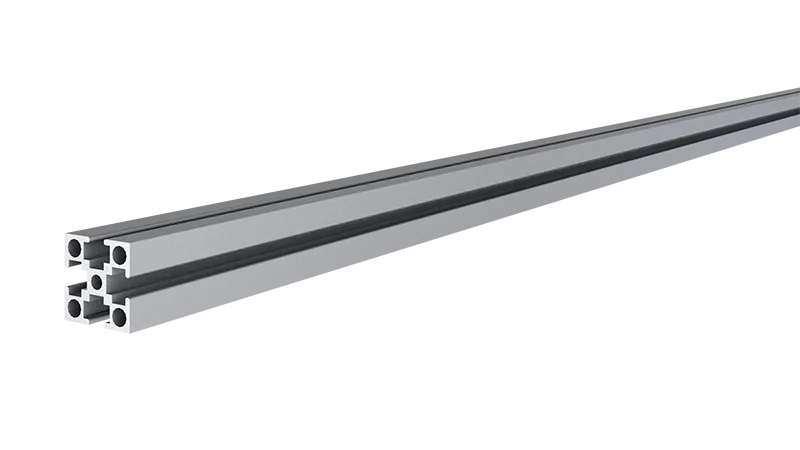
Aluminum profiles have become the unsung heroes of modern design and manufacturing, quietly shaping everything from factory workbenches to retail displays and even home DIY projects. Among the many options available, the 2020 National Standard Profile stands out—but it's also surrounded by myths that often scare people away from choosing it. Whether you're a small business owner outfitting a workshop, a hobbyist building custom shelves, or a procurement manager sourcing materials for a large project, separating fact from fiction can save you time, money, and frustration. Let's dive into the most common misconceptions about this versatile profile and set the record straight.
Myth #1: "2020 National Standard Profile Is Only for Industrial Giants—Too Specialized for Small Businesses or DIYers"
Walk into any manufacturing plant, and you're likely to see aluminum profiles hard at work—supporting conveyor belts, framing workstations, or organizing tools. It's no wonder many people assume the 2020 National Standard Profile is reserved for these industrial powerhouses. But here's the truth: this profile's versatility is exactly what makes it perfect for smaller operations and even home projects. Let's break it down.
The "2020" in its name refers to its cross-sectional dimensions: 20mm by 20mm. This compact size makes it ideal for projects where space is limited but strength still matters. A local bakery owner I worked with recently used 2020 National Standard Profile to build custom display racks for pastries—lightweight enough to move daily but sturdy enough to hold heavy glass shelves. A DIY enthusiast transformed their garage into a home gym by framing wall-mounted storage for weights and resistance bands, using the same profile. These aren't industrial-scale projects, but they relied on the profile's balance of size and strength.
What truly unlocks its potential for small-scale use is its compatibility with aluminum profile accessories . Unlike bulky industrial profiles that require specialized parts, the 2020 National Standard Profile works with off-the-shelf components designed for easy assembly. Need to cap the ends to avoid sharp edges? 2020 aluminum profile end caps snap on in seconds. Want to reduce noise when sliding tools onto a shelf? Aluminum profile rubber strips line the T-slots, cushioning impacts and creating a smoother glide. These accessories aren't just for factories—they make the profile approachable for anyone with a basic toolkit.
Small businesses, in particular, benefit from this flexibility. A boutique clothing store owner I advised used 2020 profiles to build adjustable clothing racks. By swapping out a few brackets and using aluminum profile fixings to secure shelves at different heights, they reconfigured their store layout monthly without buying new furniture. The profile's adaptability turned a one-time expense into a long-term investment—exactly the kind of resourcefulness small businesses need.
Myth #2: "All Aluminum Profiles Are the Same—The 'National Standard' Label Is Just a Marketing Gimmick"
It's easy to look at a pile of silver extrusions and think, "A profile is a profile." But that couldn't be further from the truth, especially when it comes to the 2020 National Standard Profile. The "National Standard" designation isn't a fancy sticker—it's a guarantee of consistency, quality, and performance that non-standard alternatives simply can't match. Let's compare apples to apples.
The Science Behind the Standard
National standards for aluminum profiles are set by regulatory bodies to ensure uniformity in dimensions, material composition, and safety. For the 2020 profile, this means every piece—whether from Supplier A or Supplier B—measures 20mm x 20mm with precise tolerances (usually ±0.1mm). Why does that matter? Imagine building a shelf where one profile is 19.8mm wide and another is 20.2mm. The brackets won't line up, the T-slots won't accept accessories, and the whole structure wobbles. With the 2020 National Standard Profile, you avoid that headache. Every piece fits, every time.
Material quality is another non-negotiable. Standard profiles are made from 6063-T5 aluminum alloy, known for its excellent strength-to-weight ratio and corrosion resistance. Non-standard profiles often cut corners, using recycled aluminum with inconsistent purity or lower-grade alloys. I once inspected a non-standard 20mm profile that bent under 15kg of weight—half the load the 2020 National Standard Profile handles effortlessly. When safety or durability matters (and when doesn't it?), that difference is critical.
The Accessory Advantage
Perhaps the biggest gap between standard and non-standard profiles is accessory compatibility. Aluminum profile fixings , like bolts and brackets, are engineered to fit the T-slots of National Standard Profiles perfectly. Non-standard profiles often have T-slots with irregular widths or depths, making it impossible to use these universal accessories. A furniture maker I know once tried to save money with non-standard profiles, only to discover the aluminum profile rubber strips he'd bought wouldn't fit—he had to custom-order strips at three times the cost. The "cheaper" profile ended up costing him more in time and materials.
| Feature | 2020 National Standard Profile | Generic Non-Standard 20mm Profile |
|---|---|---|
| Cross-Section Dimensions | 20mm x 20mm (±0.1mm tolerance) | Inconsistent (often 19.5mm–20.5mm) |
| Material Alloy | 6063-T5 (high strength, corrosion-resistant) | Unknown/recycled alloys (variable quality) |
| Accessory Compatibility | Works with standard accessories (end caps, rubber strips, fixings) | Requires custom or non-standard accessories |
| Load-Bearing Capacity | Up to 30kg per linear meter (uniform across suppliers) | 10–20kg per linear meter (inconsistent) |
| Warranty/Support | Often backed by manufacturer warranties | Rarely covered; limited supplier support |
The table above says it all: the 2020 National Standard Profile's consistency isn't just a marketing point—it's a practical benefit that saves time, reduces waste, and ensures your project works as intended. For small businesses and DIYers, that reliability is priceless.

Myth #3: "It's Too Expensive—Non-Standard Profiles Offer the Same Value for Less"
Let's talk money. At first glance, the price tag on 2020 National Standard Profile can make you pause. It often costs 10–15% more per meter than generic non-standard alternatives. But focusing only on the upfront cost is like judging a car by its monthly payment without checking the fuel efficiency or maintenance costs. The 2020 National Standard Profile's true value lies in its long-term cost-effectiveness—and for most projects, that makes it the cheaper choice.
Durability is the first piece of this puzzle. The 6063-T5 aluminum alloy used in standard profiles resists rust, dents, and warping. A warehouse manager I worked with replaced their non-standard profile shelving after just 2 years because the cheap aluminum had bent under heavy boxes and developed rust spots in humid conditions. They switched to 2020 National Standard Profile, and 5 years later, those shelves still look new. The initial 15% higher cost was offset by avoiding a full replacement—and the downtime that came with it.
Then there's the cost of mistakes. Non-standard profiles are infamous for inconsistencies. A cabinet maker once ordered 50 meters of non-standard 20mm profile for a client's kitchen renovation, only to find 10 meters were 1mm narrower than the rest. The T-slots didn't align with the aluminum profile fixings he'd purchased, and he had to reorder the profiles at the last minute—delaying the project and angering the client. The "savings" from the cheaper profile vanished in rush delivery fees and lost client trust.
Accessories play a role here, too. Aluminum profile accessories for standard profiles are mass-produced, driving down their cost. Non-standard profiles often require custom parts, which are pricier and harder to find. A startup tech company I advised initially bought non-standard profiles for their office workstation frames. When they wanted to add cable management clips (which slide into T-slots), they discovered no off-the-shelf clips fit. They had to 3D-print custom clips at $5 each—costing hundreds more than if they'd used standard profiles with $0.50 clips.
For small businesses, the math is clear: spending a little more upfront avoids costly delays, replacements, and custom parts down the line. The 2020 National Standard Profile isn't expensive—it's an investment that pays off.
Myth #4: "Installation Requires Pros—It's Too Complex for DIY Assembly"
If you've never worked with aluminum profiles before, the idea of assembling them might seem intimidating. Images of industrial workers using power tools and specialized equipment come to mind. But the 2020 National Standard Profile was designed with simplicity in mind—and with the right accessories, even someone with minimal DIY experience can put together a sturdy structure in an afternoon.
Let's walk through a basic assembly to prove it. Suppose you want to build a small storage shelf for your garage. You'll need 2020 National Standard Profile lengths, corner brackets, 2020 aluminum profile end caps , aluminum profile rubber strips , and a few aluminum profile fixings (like T-bolts and nuts). Here's how it goes:
- Cut the profiles to your desired length (most suppliers will cut them for you, or you can use a hacksaw).
- Slide the aluminum profile rubber strips into the T-slots of the horizontal pieces—this will help shelves glide smoothly and reduce noise.
- Attach corner brackets to the vertical and horizontal profiles using T-bolts and nuts. The T-bolts slide into the T-slots, and you tighten the nuts with a hex key—no drilling required.
- Snap the 2020 aluminum profile end caps onto the exposed ends to cover sharp edges.
- Place the shelves (plywood, glass, or even more profile) on top of the brackets, securing them with additional fixings if needed.
That's it. No welding, no specialized tools, and no prior experience. A friend of mine—who admits she can barely hang a picture straight—built a similar shelf in under 2 hours. The key is that the accessories are designed for "foolproof" assembly. The T-slots guide the fixings into place, the end caps require no adhesives, and the rubber strips just pop into the slots. It's like building with high-quality Legos for adults.
Even more complex projects, like adjustable workbenches or mobile carts, rely on this simplicity. A local brewery used 2020 National Standard Profile to build rolling carts for transporting kegs. They added casters to the base using standard brackets, and the height-adjustable shelves were secured with quick-release pins—no professional help needed. The owner joked that if his team of brewers (who specialize in hops, not hardware) could build them, anyone could.
The takeaway? You don't need a engineering degree or a workshop full of tools to work with 2020 National Standard Profile. With its user-friendly accessories and intuitive design, it's built for do-it-yourselfers and small teams alike.
Myth #5: "There's No Room for Creativity—It's One-Size-Fits-All"
Critics sometimes dismiss the 2020 National Standard Profile as "boring"—too rigid to accommodate unique designs. But anyone who's worked with it knows this couldn't be further from the truth. In fact, its standardization is what fuels creativity. Because the dimensions and accessories are consistent, you can mix and match components to create almost anything you can imagine—without reinventing the wheel.
Take customization. Want a curved structure? Bendable 2020 profile (available from most suppliers). Need to mount tools at odd angles? Swivel brackets that attach to the T-slots. Dream of a workstation that transforms from a desk to a standing desk? Adjustable height brackets with locking levers. The profile is a blank canvas, and the accessories are your paintbrushes.
A design student I mentored used this flexibility to create a modular bookshelf that doubles as a room divider. By combining 2020 profiles with transparent acrylic shelves and LED strip lights (wired through the T-slots), she built a piece that's both functional and artistic. When she moved to a smaller apartment, she disassembled it and reconfigured the profiles into a compact corner shelf—no waste, no new materials.
Businesses, too, thrive on this creativity. A coffee shop owner designed custom serving stations using 2020 profiles, adding hooks for mugs, rails for receipt printers, and adjustable shelves for syrups. When they introduced iced drinks in the summer, they added a slide-out bin for ice by attaching roller tracks to the T-slots—no need to rebuild the entire station. The profile's adaptability let them evolve with their menu without overhauling their space.
Even in industrial settings, creativity abounds. A manufacturing plant I visited repurposed old 2020 profile workstations into mobile tool carts by adding casters and tool holders. Instead of scrapping perfectly good profiles, they gave them a second life—saving money and reducing waste. That's the beauty of standardization: it creates a common language for innovation.
Why It Matters: Choosing the Right Profile for Your Project
Misconceptions about the 2020 National Standard Profile often stem from a narrow view of what aluminum profiles can do. They're not just metal bars for factories—they're building blocks for creativity, efficiency, and long-term value. Whether you're a small business owner, a DIY enthusiast, or a procurement manager, looking past these myths can open up a world of possibilities.
So, the next time you're shopping for aluminum profiles, remember: the 2020 National Standard Profile isn't too specialized, too expensive, or too complex. It's a versatile, cost-effective, and user-friendly solution that grows with your project. And with aluminum profile accessories like end caps, rubber strips, and fixings, you have everything you need to bring your vision to life—no industrial-sized budget required.
At the end of the day, the best profile is the one that works for you. But don't let myths about the 2020 National Standard Profile scare you off. It's time to see it for what it really is: a tool that empowers anyone to build, create, and innovate—one 20mm by 20mm piece at a time.