- Company Articles
- Industry articles
- Industry standards
- Common Mistakes to Avoid When Using 3030b EU Standard Aluminum Profile

Common Mistakes to Avoid When Using 3030b EU Standard Aluminum Profile
Related Product
3030B EU Standard Aluminum Profile
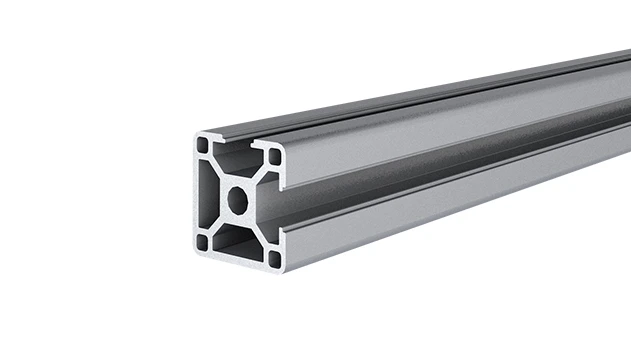
3030 is a 3.00 x 3.00CM fractional 30 series square extrusion T-slot profile with two side open T-slots, each side with 3.00cm face, 2 side with open slot, 2 side with closed face. The profile has align-a-grooves to assist in aligning connecting profiles.
In the world of industrial workspaces, manufacturing facilities, and even DIY projects, aluminum profiles have become the unsung heroes of flexibility and durability. Among the many options available, the 3030b EU Standard Aluminum Profile stands out for its perfect balance of strength, lightweight design, and adaptability. From building sturdy workbenches and material racks to constructing mobile trolleys and conveyor systems, this profile has earned its reputation as a go-to choice for engineers, workshop managers, and hobbyists alike. However, like any versatile tool, its effectiveness hinges on how well it's used. Even seasoned professionals can fall prey to common pitfalls that compromise structural integrity, safety, and efficiency. In this article, we'll walk through the most frequent mistakes made when working with 3030b aluminum profiles and share practical tips to avoid them—ensuring your projects stand the test of time and perform at their best.
Mistake #1: Mismatching Aluminum Profile Accessories
One of the biggest advantages of 3030b EU Standard Aluminum Profile is its compatibility with a wide range of aluminum profile accessories—connectors, end caps, brackets, and more. These accessories are designed to lock seamlessly into the profile's T-slots, creating rigid, secure joints that form the backbone of any structure. Yet, a surprisingly common mistake is using mismatched or low-quality accessories that aren't engineered for 3030b specifically.
Here's why this matters: 3030b profiles have standardized slot dimensions (typically 6mm or 8mm, depending on the exact variant) and wall thicknesses that accessories are precision-made to fit. Using a connector intended for a different profile—say, a 2020 or 4040—can result in loose fits, wobbly joints, or even stripped slots. For example, a 90° aluminum profile connector designed for a 2020 profile will have narrower prongs that fail to grip the 3030b's wider slots, leading to instability in corner joints. Over time, these weak points can cause the entire structure to shift, risking damage to equipment or injury to workers.
Another culprit is generic, off-brand accessories that skimp on material quality. Cheap plastic end caps may crack under pressure, while flimsy brackets can bend when supporting even moderate loads. To avoid this, always verify that accessories are labeled as compatible with 3030b EU standard profiles. Reputable suppliers will clearly state which profiles their accessories pair with—don't hesitate to ask for specifications if you're unsure. When in doubt, opt for trusted brands that specialize in aluminum extrusion components; the small extra cost upfront saves you from costly repairs or rebuilds later.
Mistake #2: Underestimating Load Capacity in Workbench and Rack Design
A workbench or material rack built with 3030b aluminum profile can look impressively sturdy at first glance, but appearances can be deceiving. One of the most dangerous mistakes is underestimating the load capacity of the profile when designing these structures. Whether you're setting up a workbench for heavy machinery or a material rack to hold boxes of parts, exceeding the profile's weight limits can lead to bending, warping, or even catastrophic failure.
3030b profiles are strong, but their load capacity isn't unlimited. Factors like span length (the distance between supports), the number of support points, and the direction of the load (vertical vs. horizontal) all play a role. For instance, a 3030b profile used as a horizontal beam with no intermediate supports over a 1.5-meter span can safely hold far less weight than the same profile supported every 50 centimeters. Ignoring these variables is a recipe for disaster—imagine a workbench collapsing under the weight of a CNC machine, or a material rack dumping its contents because the beams couldn't handle the load.
To avoid this, start by calculating the total weight your structure will need to support. Include not just the static weight (e.g., the workbench top itself) but also dynamic loads (tools, materials, or people leaning on the structure). Then, cross-reference this with the 3030b's load capacity data, which most suppliers provide. Below is a simplified table to guide load planning for common support configurations:
| Support Configuration | Recommended Maximum Load (kg per meter of profile) | Key Considerations |
|---|---|---|
| Unsupported span (1m length) | 45–50 kg | Visible deflection may occur under full load; avoid for heavy tools. |
| Supported at both ends (1.5m span) | 60–70 kg | Even weight distribution is critical; center loads should be minimized. |
| Supported every 50cm (2m total length) | 90–100 kg | Ideal for workbench surfaces with tools or medium-weight material storage. |
| Continuous support (e.g., mounted to a wall) | 120–150 kg | Suitable for heavy-duty racks or shelving with frequent access. |
When in doubt, err on the side of over-engineering. Adding extra support brackets, using thicker-walled 3030b variants (if available), or reducing span lengths can significantly boost load capacity. Remember: a structure that's slightly overbuilt is always safer than one that's just barely adequate.

Mistake #3: Improper Caster Wheel Installation for Mobile Structures
Many projects using 3030b aluminum profile require mobility—think tool trolleys, assembly carts, or mobile workbenches. Adding caster wheels to these structures seems straightforward, but improper installation is a common pitfall that turns a useful mobile unit into a wobbly, unsafe hazard. The root cause? Cutting corners with caster selection, mounting hardware, or installation technique.
First, choosing the wrong caster wheel size or type is a frequent error. 3030b profiles are lightweight, but the structures they form can still be heavy—especially when loaded with tools or materials. Using small, flimsy casters (e.g., 2-inch wheels) on a loaded trolley will struggle to roll smoothly, while casters without brakes or locking mechanisms make it impossible to secure the unit in place during use. Worse, using casters with a mounting plate that doesn't align with 3030b's T-slots often leads to makeshift solutions like drilling holes in the profile, which weakens its structural integrity.
Even when the right casters are selected, poor installation can undo all that. A critical but often overlooked component here is the castor install base—a bracket designed to bridge the gap between the caster's mounting plate and the profile's T-slots. Skipping this base or using a generic one that doesn't fit snugly can cause the caster to pivot or loosen over time, leading to uneven rolling or, in extreme cases, the caster detaching entirely.
To get it right: Start by matching caster capacity to the total weight of your loaded structure (aim for casters rated at 1.5x the expected load to be safe). Choose casters with mounting plates that align with 3030b's slot spacing, and always use a compatible castor install base to distribute the load evenly across the profile. When tightening the bolts, use a torque wrench to avoid over-tightening (which can strip T-slots) or under-tightening (which causes wobble). Finally, test the mobility before full use: roll the structure across different floor surfaces, apply brakes, and check for any shifting or looseness—catching issues early prevents accidents later.
Mistake #4: Ignoring Thermal Expansion in Long-Span Structures
Aluminum is a metal that expands when heated and contracts when cooled—a property known as thermal expansion. While this effect is minimal in small projects, it becomes a critical consideration when working with long spans of 3030b aluminum profile, such as in conveyor systems, large workbench tops, or overhead racks. Ignoring thermal movement can lead to warping, buckling, or stress cracks over time, especially in environments with temperature fluctuations (e.g., factories with heat-generating machinery or outdoor workshops).
Here's why it matters: A 3030b profile spanning 3 meters can expand by up to 5–6mm when exposed to a 30°C temperature rise (common in a busy factory). If both ends of the span are rigidly fixed (e.g., bolted tightly to immovable walls or frames), there's no room for this expansion. The resulting internal stress can bend the profile, pull joints apart, or even crack the aluminum itself. This is particularly problematic in roller track installations, where a warped profile can cause jams as materials slide or roll along the track.
The solution is to design for movement. In long spans, avoid rigidly fixing both ends—instead, secure one end firmly and allow the other to "float" using slotted brackets or adjustable connectors. For example, when installing a roller track along a 3030b beam, use sliding T-nuts in the profile's slots to attach the track brackets, letting the track shift slightly with temperature changes. In outdoor or high-temperature environments, consider adding expansion joints every 2–3 meters to break up long spans. These small adjustments prevent stress buildup and ensure your structure remains stable, no matter the temperature.
Mistake #5: Overlooking Edge Finishing and Safety
When focusing on structural strength and functionality, it's easy to overlook the smaller details that impact safety—like unfinished edges on 3030b aluminum profiles. Aluminum extrusion leaves sharp, raw edges at cut ends, which can pose significant risks: cuts to hands during assembly, snags on clothing or wiring, and even damage to delicate materials placed on workbench surfaces. This mistake is especially common in rush projects, where deburring or adding end caps is treated as an afterthought.
3030b EU Standard Aluminum Profile often comes with end caps designed to snap or screw into the profile's open ends, covering sharp edges and adding a clean, professional finish. Yet, many users skip these simple accessories, either to save time or because they don't see the value. The result? A workspace with hidden hazards that can lead to minor injuries or, over time, more serious accidents. For example, an uncovered end on a workbench corner might catch a worker's sleeve, causing them to trip or knock over tools.
The fix is simple but essential: Always deburr cut edges with a file or deburring tool to remove burrs and sharpness, then cap the ends with 3030b-specific aluminum profile end caps. For profiles used in high-traffic areas or where hands frequently touch (like handrails or trolley handles), consider adding rubber strips or foam grips for extra protection. Not only does this enhance safety, but it also extends the life of your structure by preventing moisture, dust, or debris from entering the profile's hollow core—reducing corrosion and keeping internal slots clean for future accessory adjustments.
Mistake #6: Rushing Assembly Without Pre-Fitting
Finally, one of the most human mistakes: rushing through assembly without pre-fitting parts first. It's tempting to dive straight into tightening bolts and locking connectors, especially when deadlines loom. But 3030b structures often involve multiple interconnected components—profiles, accessories, panels, and hardware—and even small misalignments during assembly can snowball into major issues.
For example, building a workbench by fully tightening each 90° aluminum profile connector as you go can lead to misaligned legs or a warped tabletop, as small errors in one joint throw off the entire square. Similarly, attaching a roller track to a frame without first checking that the track is level and parallel can result in materials jamming or sliding unevenly. These issues often require disassembling and reworking parts, wasting time that could have been saved with a pre-fitting step.
The solution is to adopt a "dry fit first" approach: Assemble all components loosely, using hand-tightened bolts or temporary clips to hold everything in place. Check for square, level, and alignment using a spirit level, square tool, or measuring tape. Adjust as needed—loosening connectors to shift profiles, adding shims if legs are uneven, or realigning accessories—before fully tightening any hardware. Once the dry fit is perfect, go back and torque all bolts to the manufacturer's recommended settings (typically 3–5 Nm for 3030b accessories). This extra step ensures your structure is not only strong but also precise, functional, and visually consistent.
The 3030b EU Standard Aluminum Profile is a versatile, reliable tool that can transform your workspace—when used correctly. By avoiding these common mistakes—mismatching accessories, underestimating load capacity, botching caster installation, ignoring thermal expansion, skipping edge finishing, and rushing assembly—you'll ensure your projects are safe, durable, and built to perform. Remember, the goal isn't just to "get it done" but to create structures that enhance efficiency, reduce downtime, and stand the test of daily use. With a little attention to detail and a commitment to best practices, your 3030b aluminum profile projects will exceed expectations and serve you well for years to come.