- Company Articles
- Industry articles
- Industry standards
- Common Myths About 3030a EU Standard Aluminum Profile Debunked

Common Myths About 3030a EU Standard Aluminum Profile Debunked
Related Product
3030A EU Standard Aluminum Profile
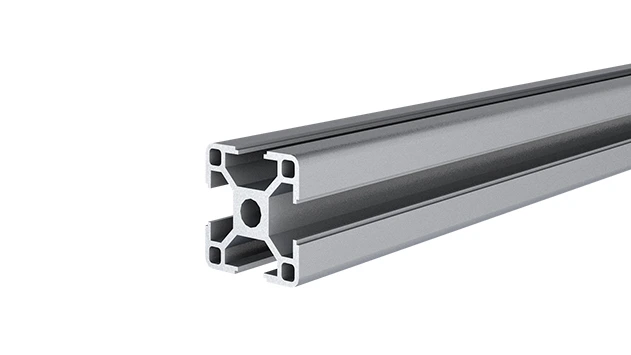
3030 is a 3.00 x 3.00CM fractional 30 series square extrusion T-slot profile with four open T-slots, each side with 3.00cm face. The profile has align-a-grooves to assist in aligning connecting profiles.
Aluminum extrusion profiles have quietly become the unsung heroes of modern design and manufacturing. From factory floors to home workshops, these versatile building blocks shape the way we create, organize, and innovate. Yet, among the many profiles available, the 3030a EU Standard Aluminum Profile often gets overshadowed by misconceptions. Is it really only for heavy industry? Too pricey for small businesses? Hard to work with? Today, we're setting the record straight. Let's dive into the most common myths surrounding this remarkable profile and uncover why it might just be the solution you've been overlooking.
Myth 1: "3030a EU Standard Aluminum Profile is Only Useful for Heavy-Duty Industrial Settings"
Walk into any manufacturing plant, and you'll likely spot aluminum profiles holding up conveyor belts, framing workstations, or organizing tools. It's no wonder many people assume the 3030a—with its sturdy build and "EU Standard" label—is reserved for factories and warehouses. But here's the truth: this profile is a chameleon, adapting to far more environments than you might think.
Let's start with the workshop. Hobbyists and small-scale makers often need flexible, durable setups for projects ranging from woodworking to electronics. A 3030a-based workbench, for example, offers the perfect balance of strength and customization. Unlike flimsy particleboard tables that warp or crack under tools, the 3030a's T-slot design lets you attach clamps, shelves, or tool holders exactly where you need them. And because it's lightweight compared to steel, you can move the workbench around your space without straining your back—no industrial crane required.
Then there's the lab or medical setting. Clean rooms, research facilities, and clinics demand materials that are easy to sanitize and resistant to corrosion. The 3030a's smooth aluminum surface wipes down effortlessly with disinfectants, and its anodized finish prevents rust or contamination. Labs often use it to build custom shelving for equipment or mobile carts for transporting samples—proof that it's not just for greasy factory floors.
Even retail spaces are jumping on board. Pop-up shops, boutique displays, and trade show booths need structures that are lightweight, reusable, and visually appealing. The 3030a's sleek, modern look pairs well with glass, acrylic, or wood panels, creating eye-catching displays that can be disassembled and reconfigured in hours. Compare that to traditional wooden fixtures, which are heavy, hard to modify, and prone to damage during transport. Suddenly, the "industrial-only" label feels more like a myth than a fact.
Let's hear from Sarah, a small-batch jewelry maker in Berlin. "I used to work on a rickety desk that wobbled every time I used my soldering iron," she says. "A friend suggested a 3030a workbench, and I was skeptical at first—it looked 'too industrial.' But now? I've added a LED light strip under the shelf, a small vice on the side, and even a little drawer unit for my tools. It's sturdy, clean, and I can change it up whenever I launch a new collection. Best of all, it cost less than a fancy craft table from a design store!"
The bottom line: 3030a isn't limited to factories. Its strength, versatility, and adaptability make it a star in workshops, labs, retail, and even home garages. So the next time you think "industrial," think again—this profile is ready to work wherever you need it.
Myth 2: "It's Too Expensive Compared to Generic Aluminum Extrusions"
Price is often the first objection when considering 3030a EU Standard Aluminum Profile. After all, you can find generic aluminum extrusions online for a fraction of the cost. Why splurge on the "EU Standard" version? Let's break this down—because the true cost of a profile isn't just the sticker price; it's about value, longevity, and hidden expenses.
First, let's talk about quality. EU Standard profiles like the 3030a are manufactured to strict specifications for material purity, wall thickness consistency, and dimensional accuracy. Generic extrusions, on the other hand, often cut corners: thinner walls that bend under stress, uneven T-slots that make (aluminum profile accessories) like brackets or end caps fit poorly, or low-grade aluminum that corrodes quickly. Imagine building a workstation with generic profiles, only to have a shelf collapse because the wall thickness was 0.5mm instead of the advertised 1.5mm. Suddenly, that "cheap" profile becomes expensive when you factor in replacement parts, downtime, or damaged tools.
Then there are the accessories. 3030a is part of a standardized system, meaning aluminum profile accessories—like end caps, corner brackets, or T-nuts—are widely available and guaranteed to fit. With generic profiles, you might spend hours hunting for compatible parts, only to find they're either overpriced or poor quality. A mismatched bracket here, a loose end cap there—these small frustrations add up to wasted time and money. As Mike, a small business owner who builds custom fitness equipment, puts it: "I tried generic profiles once to save costs. The T-slots were so uneven that half my brackets didn't fit. I ended up buying new profiles anyway—and losing a week of production. Now I stick to 3030a; the accessories always click into place, and I've never had to replace a part in three years."
Longevity is another key factor. The 3030a's anodized coating isn't just for looks—it's a protective layer that resists scratches, corrosion, and wear. In contrast, generic profiles often have thin or uneven coatings that chip off, leaving the aluminum exposed to rust or staining. A 3030a structure might cost 20% more upfront, but it will last 5–10 years longer than a generic one. Do the math: over a decade, the 3030a ends up being the cheaper option.
To put this in perspective, let's look at a quick comparison. Suppose you need 10 meters of profile for a workbench. A generic 30x30mm extrusion might cost $15/m, totaling $150. The 3030a EU Standard, at $20/m, would be $200—$50 more. But if the generic profile bends after a year and needs replacement, you're spending another $150. The 3030a, meanwhile, stays strong for five years. Suddenly, the $50 upfront savings vanish, and you're out $100 more with the generic option. When you add in the cost of mismatched accessories or lost productivity, the myth of the "expensive" 3030a falls apart.
So, is the 3030a more expensive than the cheapest generic extrusions? Yes. But is it overpriced? When you factor in quality, accessory compatibility, and longevity, it's an investment that pays off—especially for anyone who values reliability and long-term savings.

Myth 3: "Assembling 3030a Profiles Requires Specialized Tools and Expertise"
Picture this: You order a 3030a profile kit, excited to build your new workbench. You open the box and find a pile of metal tubes, brackets, and screws. Instantly, panic sets in. "Do I need a welding machine?" "Where's the instruction manual for that fancy laser cutter?" If this sounds familiar, you're not alone. Many people assume assembling aluminum profiles is a job for engineers or professional builders. But the reality is far simpler—you probably have most of the tools you need in your garage right now.
Let's start with the basics: the T-slot system. The 3030a's signature feature is its series of slots running along its length, designed to accept nuts, bolts, and brackets without drilling or welding. To attach two profiles at a 90-degree angle, for example, you'll need a T-nut (which slides into the slot), a bolt, and a hex key. That's it. No welding, no soldering, no complicated measurements. Just slide the T-nut into place, align the brackets, and tighten the bolt with a hex key—something even a DIY novice can master in minutes.
What about cutting the profile to length? While industrial settings might use miter saws for precision, home users can get by with a hacksaw or a reciprocating saw with a metal blade. For cleaner cuts, a jigsaw with a fine-tooth metal blade works wonders. Pro tip: Wrap masking tape around the area you want to cut to prevent the aluminum from splintering, and mark your line with a pencil. It's not rocket science—just patience and a steady hand. If you're really nervous, many suppliers will cut the profiles to your exact measurements for a small fee, eliminating the need to cut anything yourself.
Now, let's talk about accessories. Aluminum profile accessories like end caps, corner brackets, or shelf supports are designed to be user-friendly. Take the aluminum profile end cap, for example. These simple plastic or metal caps snap onto the ends of the profile, covering sharp edges and giving a finished look. No glue, no screws—just press them into place. Similarly, casters (wheels) for mobile carts attach with basic bolts and washers; most kits even include pre-drilled holes to make alignment a breeze.
John, a retired teacher who builds custom birdhouses as a hobby, shares his experience: "I'm 68, and I've never been great with tools. When I decided to build a 3030a workbench for my birdhouse materials, I was sure I'd mess it up. But the T-slots are like giant Lego blocks! I slid the brackets in, tightened the bolts with the hex key that came in the kit, and had the frame up in an hour. Cutting the profiles took a bit longer with my old hacksaw, but it worked. Now I have a bench that holds all my wood, paints, and tools—and I built it myself!"
Even more complex setups, like a lean system for a small bakery, are within reach. Lean systems focus on streamlining workflows, and 3030a profiles are ideal because they're easy to reconfigure. A bakery might use them to build a rolling cart for dough trays, with shelves that adjust as recipes change. Assembling this cart requires nothing more than connecting profiles with joints, adding casters, and attaching shelf brackets—all with basic hand tools. No engineering degree required.
The myth of "needing specialized tools" likely stems from industrial-scale projects, where companies use automated cutters or torque wrenches for precision. But for most home, workshop, or small business needs, a hex key, a hacksaw, and a measuring tape are more than enough. So next time you worry about assembly, remember: if John can build a workbench with a hacksaw, so can you.
Myth 4: "Customization is Limited – One Size Fits All"
You've seen the stock photos: rows of identical aluminum profiles in warehouses, all looking the same. It's easy to assume the 3030a is a "one size fits all" product, offering little room for personalization. But if there's one thing this profile excels at, it's customization. Thanks to its T-slot design and a vast ecosystem of aluminum extrusion profile accessories, the 3030a adapts to your unique needs—whether you're building a tiny electronics bench or a large-scale storage system.
Let's start with size. While the 3030a's standard dimensions are 30mm x 30mm (hence the name), you're not stuck with fixed lengths. Suppliers offer profiles in lengths from 1 meter up to 6 meters, and as we discussed earlier, cutting them to size is simple with basic tools. Need a 1.2-meter shelf for your garage? Cut a 2-meter profile down. Want a 4.5-meter frame for a greenhouse? Connect two 3-meter profiles with a straight bracket. The possibilities are limited only by your project's needs, not the profile's constraints.
Then there are the accessories—the real secret to customization. The market for aluminum extrusion profile accessories is massive, with thousands of parts designed to work seamlessly with the 3030a. Need to add a shelf? Use angle brackets or shelf supports that slide into the T-slots. Want to hang tools? Attach hook strips or pegboards with special mounting brackets. Need to route cables? Use cable management clips that snap into the T-slots, keeping wires organized and out of the way. Even lighting can be integrated: LED light strips with adhesive backing stick directly to the profile, turning your workbench into a well-lit workspace.
Color is another customization option. While the 3030a typically comes in silver anodized finish, many suppliers offer custom colors like black, blue, or red for a small upcharge. This is a game-changer for retail displays, home workshops, or any space where aesthetics matter. Imagine a 3030a-based bookshelf in matte black, complementing your living room decor—hardly the "industrial eyesore" some might expect.
For more complex projects, the 3030a plays well with other profiles. Mix it with 2020 EU profiles for lighter components or 4040a for heavier sections. For example, a photography studio might build a backdrop stand using 3030a for the main frame (sturdy enough to hold heavy backdrops) and 2020 profiles for adjustable crossbars (lightweight and easy to position). The T-slot system ensures all these profiles connect seamlessly, using the same accessories.
Let's take a concrete example: a home brewery. Jake, a craft beer enthusiast in Portland, built his entire brewing setup using 3030a profiles. "I needed a system that could hold fermenters, pumps, and hoses, but my basement is small, so it had to be compact," he explains. "I used 3030a for the main frame, added adjustable shelves to hold different-sized fermenters, and attached a fold-down table for bottling. The T-slots let me add hooks for hoses and a magnetic strip for tools. When I upgraded to a larger kettle, I just moved the shelf brackets up a few inches—no need to buy a whole new setup."
The idea that customization is limited likely comes from seeing pre-assembled products, like generic workbenches, that use 3030a but don't showcase its flexibility. But when you start with raw profiles and accessories, the only limit is your imagination. Whether you're a hobbyist, a small business owner, or a designer, the 3030a bends to your vision—not the other way around.
Myth 5: "It Lacks Durability for High-Traffic Environments"
Aluminum has a reputation for being lightweight, which some equate to being "flimsy." When people see the 3030a's sleek design and lightweight feel, they often assume it can't handle heavy use—whether that's daily wear and tear in a busy workshop or the constant movement of a lean system in a factory. But let's set the record straight: this profile is built to last, even in high-traffic environments.
First, let's talk about material composition. The 3030a is typically made from 6063-T5 aluminum alloy, a grade known for its strength, corrosion resistance, and weldability. T5 refers to the tempering process—heating the aluminum to strengthen it without making it brittle. This alloy has a tensile strength of around 180 MPa (megapascals), which means it can withstand significant force before bending or breaking. To put that in perspective: a 1-meter length of 3030a can support over 200 kg (440 lbs) when properly mounted—more than enough for most tools, equipment, or materials.
Then there's the anodization process. Most 3030a profiles undergo anodization, an electrochemical treatment that forms a protective oxide layer on the surface. This layer is harder than the aluminum itself, resisting scratches, dents, and corrosion. In industrial settings where profiles are bumped by carts, scraped by tools, or exposed to oils and chemicals, this coating is a lifesaver. Even in wet environments—like car washes or outdoor patios—the anodized finish prevents rust, ensuring the profile stays strong for years.
Let's test this with a real-world scenario: a busy restaurant kitchen. Commercial kitchens are chaos—pots clanging, chefs rushing, hot liquids spilling. A 3030a-based shelf system here needs to handle heavy pots, withstand heat, and resist water and grease. A local bistro in Chicago replaced their wooden shelving with 3030a three years ago, and manager Maria reports: "We were skeptical at first—wood felt sturdier. But the aluminum shelves have held up better. They don't warp from steam, we can hose them down at night, and the brackets never loosen, even when the line cooks are slamming pots on them. We haven't replaced a single shelf since we installed them."
Lean systems, which rely on constant movement and adaptability, are another test of durability. In manufacturing, a lean system might use 3030a profiles to build flow racks—structures that move materials from one workstation to the next. These racks are subjected to daily use: workers sliding bins, forklifts bumping into them, and constant vibration from machinery. Yet the 3030a holds up, thanks to its rigid frame and strong joints. A study by a manufacturing consultancy found that 3030a flow racks had a 75% longer lifespan than plastic or wooden alternatives in high-traffic settings, with fewer repairs needed over time.
What about impact resistance? drop a heavy tool on a wooden workbench, and you'll likely get a dent or a crack. Do the same on a 3030a workbench, and the aluminum might scratch, but it won't split or warp. The material's ductility—its ability to bend without breaking—means it absorbs impact better than brittle materials like wood or plastic. And if a section does get damaged, it's easy to replace a single profile or bracket rather than the entire structure.
To visualize the 3030a's durability, let's compare it to other common materials in a high-traffic environment:
| Material | Expected Lifespan in High-Traffic Use | Resistance to Scratches/Corrosion | Repair Ease |
|---|---|---|---|
| 3030a EU Aluminum Profile | 5–10 years | High (anodized finish) | Easy (replace individual parts) |
| Wood (Pine/Particleboard) | 1–3 years | Low (warps, stains, scratches) | Hard (often needs full replacement) |
| Plastic (PVC/ABS) | 2–4 years | Medium (resists corrosion, but scratches easily) | Medium (parts may be hard to source) |
| Steel (Uncoated) | 7–15 years | Low (prone to rust without coating) | Hard (heavy, requires welding) |
As the table shows, the 3030a holds its own against steel in lifespan while offering better corrosion resistance and easier repairs. It outperforms wood and plastic by a mile in durability and longevity. So the next time someone says aluminum is "too flimsy," show them the numbers—and maybe a restaurant kitchen shelf that's survived three years of chaos.
The 3030a EU Standard Aluminum Profile has long been shrouded in myths—from being "only for industry" to "too expensive" or "hard to customize." But as we've explored, these misconceptions couldn't be further from the truth. This versatile profile adapts to workshops, labs, retail spaces, and homes; offers long-term value despite a slightly higher upfront cost; assembles with basic tools; bends to your unique needs; and stands strong in high-traffic environments.
Whether you're a hobbyist building a workbench, a small business owner streamlining your workflow with a lean system, or a designer creating custom displays, the 3030a deserves a spot on your radar. Its T-slot design, paired with a vast array of aluminum profile accessories, makes it more than just a building material—it's a tool for innovation.
So the next time you're considering a project that needs strength, flexibility, and durability, don't let the myths hold you back. The 3030a EU Standard Aluminum Profile isn't just for factories—it's for creators, makers, and dreamers ready to build something that lasts.