- Company Articles
- Industry articles
- Industry standards
- Comparing 2020r EU Standard Aluminum Profile Prices: Factors Affecting Cost

Comparing 2020r EU Standard Aluminum Profile Prices: Factors Affecting Cost
Related Product
2020R EU Standard Aluminum Profile
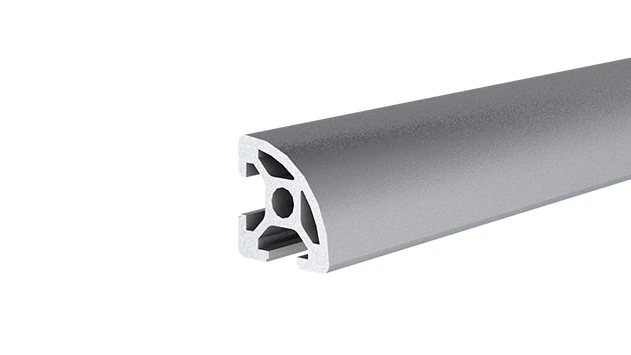
2020R is a 2.00 x 2.00CM fractional 20 series square extrusion T-slot profile with four open T-slots, two side with 2.00cm face, the other side with round face. The profile has align-a-grooves to assist in aligning connecting profiles.
If you've ever walked through a manufacturing plant, a workshop, or even a modern office, you've probably seen them—sleek, modular structures holding tools, shelving products, or supporting assembly lines. Chances are, those structures were built with aluminum profiles. And if they're up to EU standards, there's a good chance they include the 2020r EU Standard Aluminum Profile. But if you've tried to buy these profiles for your own business, you might have noticed something confusing: prices can vary wildly. One supplier quotes €8 per meter, another €15, and a third €12 but with "extra fees." What's behind these differences? Let's break it down.
Whether you're setting up a small workshop, scaling a production line, or designing custom workbenches, the 2020r EU Standard Aluminum Profile is a workhorse. Its name gives a clue: "2020" refers to its cross-section (20mm x 20mm), "r" likely denotes a specific design variant (maybe rounded edges or reinforced structure), and "EU Standard" means it meets strict European union regulations for quality, safety, and compatibility. But why does any of this matter for your wallet? Because understanding the factors that drive its price can help you make smarter buying decisions—saving you money now and headaches later.
First, What Exactly Is the 2020r EU Standard Aluminum Profile?
Before we dive into prices, let's make sure we're all on the same page. The 2020r EU Standard Aluminum Profile is a type of aluminum extrusion profile—a long, straight piece of aluminum shaped through a process called extrusion, where heated aluminum is pushed through a die to form a specific cross-section. In this case, that cross-section is 20mm by 20mm, with design features (like grooves or rounded edges) that make it easy to connect to other profiles using aluminum profile accessories.
EU standards are non-negotiable here. They ensure the profile is strong enough to hold weight, resistant to corrosion, and compatible with a wide range of accessories—think end caps, hinges, connectors, or even casters for mobile workbenches. For businesses, this compliance isn't just about following rules; it's about reliability. A profile that meets EU standards is less likely to bend under load, rust in humid environments, or fail to fit with the aluminum profile accessories you already own. That compatibility alone can save you from costly mistakes, like buying profiles that don't work with your existing shelving or workbenches.
The Big Question: Why Do 2020r Aluminum Profile Prices Vary So Much?
Let's get to the heart of the matter. You're scrolling through supplier websites, and the price tags for 2020r profiles range from €6 to €20 per meter. Why the gap? It's not just random—several key factors influence how much a supplier charges. Let's unpack each one.
1. Raw Material Quality: Not All Aluminum Is Created Equal
At the most basic level, the price starts with the aluminum itself. Aluminum is mined as bauxite, processed into alumina, then smelted into pure aluminum. But pure aluminum is soft—too soft for most industrial uses. So manufacturers mix it with other metals (like copper, magnesium, or silicon) to create alloys. The type of alloy and its purity play a huge role in cost.
Suppose you're comparing two suppliers: Supplier A uses 6063 aluminum alloy (a common choice for profiles), which has a higher magnesium content for strength and better extrusion properties. Supplier B uses a cheaper alloy with more impurities. The 6063 alloy will cost more upfront, but it's more durable, resistant to warping, and easier to machine—meaning it will last longer and require less maintenance. Over time, that "more expensive" profile might actually be cheaper because you won't need to replace it as often.
Purity matters too. Higher-purity aluminum (99.5% or higher) is pricier, but it's more corrosion-resistant. If your workshop is in a humid area or near the coast, a high-purity alloy could prevent rust, saving you from replacing rusted profiles in a year. Cheaper, lower-purity aluminum might look the same at first, but it could start pitting or discoloring within months—costing you more in replacements than you saved on the initial purchase.
2. Manufacturing Process: Precision Costs Money (But It's Worth It)
Once you have the right aluminum alloy, it's time to turn it into a profile. The extrusion process sounds simple—push heated aluminum through a die—but the details make all the difference. High-quality manufacturers invest in precision dies, temperature-controlled extrusion lines, and strict quality checks. Why? Because a poorly extruded profile can have uneven walls, rough edges, or inconsistent dimensions.
Imagine ordering 100 meters of 2020r profile, only to find that some pieces are 19.8mm wide and others 20.2mm. When you try to attach aluminum profile accessories like T-slot nuts or connectors, they won't fit properly. You'll spend hours filing edges, forcing connectors, or even returning the batch—wasting time and money. A reputable manufacturer, however, uses high-precision dies and checks each profile's dimensions to within 0.1mm. That precision costs more, but it ensures every piece works with every accessory, right out of the box.
Surface treatment is another factor. Most 2020r profiles undergo treatments like anodizing (creating a protective oxide layer) or powder coating (applying a colored, durable finish). Anodizing improves corrosion resistance and gives the profile a sleek, matte look; powder coating adds color and extra protection. Both processes add cost, but they extend the profile's lifespan. A supplier offering "raw" (untreated) profiles might charge less, but those profiles will scratch easily and rust faster—again, costing you more later.
3. Supplier Reputation: You Get What You Pay For (Usually)
Not all aluminum profile suppliers are the same. Some have been in the business for decades, with ISO certifications, in-house testing labs, and a track record of delivering consistent quality. Others are new, or worse, fly-by-night operations cutting corners to undercut prices. So when you see a rock-bottom price, ask: What's the supplier sacrificing?
Established suppliers often charge more, but they offer perks that matter. For example, they might provide certificates of compliance (proving the profile meets EU standards), offer warranties (covering defects for 1–5 years), or have dedicated customer support to help you choose the right aluminum profile accessories. A cheaper supplier might skip these steps. No warranty? If a profile cracks under load, you're out of luck. No compliance certificate? If an inspector visits your workshop and finds non-compliant profiles, you could face fines or production shutdowns.
Let's take an example. Supplier X charges €7 per meter for 2020r profiles but has no online reviews and won't share their quality control process. Supplier Y charges €11 per meter, has 10 years of reviews, and sends you a compliance certificate with every order. Which is the better deal? If Supplier X's profiles fail after 6 months, you'll spend €7 per meter again to replace them—plus labor costs to take down and rebuild your structures. Supplier Y's profiles might last 5 years, making the higher upfront cost a better long-term investment.
4. Aluminum Profile Accessories: The Hidden Cost (or Savings)
Here's a common mistake: focusing only on the profile price and forgetting about aluminum profile accessories. Most projects need more than just the profiles themselves—you'll need connectors to join them, end caps to cover sharp edges, hinges for foldable structures, or maybe feet to stabilize workbenches. Some suppliers bundle these accessories with the profiles; others charge extra for each piece.
For example, Supplier A quotes €10 per meter for profiles but charges €2 per connector and €1 per end cap. If you need 5 connectors and 2 end caps per meter, that's an extra €12 per meter—total €22. Supplier B quotes €12 per meter but includes 5 connectors and 2 end caps for free. Suddenly, Supplier B is cheaper. Always ask: What's included? Are accessories sold separately, or is there a bundle discount? A good supplier will be transparent about these costs, helping you avoid sticker shock at checkout.
Compatibility is another angle. If you buy profiles from Supplier X and accessories from Supplier Y, there's a risk the accessories won't fit. Maybe the T-slot in the profile is slightly narrower, or the connector's bolt doesn't align. That's why many suppliers sell profiles and accessories as a package—they're designed to work together. It might cost a bit more upfront, but it eliminates the guesswork.
5. Order Volume and Customization: Bulk Buys vs. One-Offs
How much do you need? And do you need something special? Suppliers love bulk orders—they can produce more profiles at once, reducing per-unit costs. So if you order 1,000 meters, you might get a price of €8 per meter. Order 10 meters, and that price could jump to €15 per meter. It's basic economics: higher volume = lower per-unit cost.
Customization also drives up prices. Standard profiles are cut to fixed lengths (like 2 meters or 3 meters) and come in standard colors (silver, black). But if you need profiles cut to 1.23 meters (to fit a specific workbench), or powder-coated in your company's brand color, expect to pay more. Custom cutting requires extra labor and setup time; custom colors mean smaller batches of powder coating, increasing per-unit costs. A supplier might charge €10 per meter for standard silver profiles but €14 per meter for custom-cut, blue ones.
The key here is planning. If you can adjust your project to use standard lengths and colors, you'll save money. If customization is non-negotiable, get quotes from multiple suppliers—some specialize in custom work and might offer better rates than general suppliers.

Putting It All Together: Comparing Prices Across Suppliers
Now that we know the factors, how do you actually compare prices? It's not as simple as picking the lowest number. You need to create a "total cost of ownership" picture—including the profile price, accessories, delivery, warranty, and potential replacement costs. To make this easier, let's look at a comparison of three hypothetical suppliers (based on real market trends) offering 2020r EU Standard Aluminum Profiles:
| Factor | Supplier A (Budget Option) | Supplier B (Mid-Range) | Supplier C (Premium) |
|---|---|---|---|
| Price per Meter (Standard Length, Silver Anodized) | €7.50 | €11.00 | €15.00 |
| Material Purity | 98% (Basic alloy) | 99.5% (6063 alloy) | 99.8% (High-grade 6061 alloy) |
| Surface Treatment | Basic anodizing (thin layer) | Hard anodizing (thick, durable layer) | Electrostatic powder coating + anodizing |
| Minimum Order Quantity | 500 meters | 100 meters | 50 meters |
| Accessories Included (per meter) | None (sold separately: €1.50/connector, €0.80/end cap) | 2 connectors + 1 end cap (extra accessories at 10% discount) | 5 connectors + 2 end caps + free design consultation |
| Warranty | 30 days (defects only) | 2 years (covers corrosion, bending under load) | 5 years (full replacement for any defects) |
| Compliance Documentation | Not provided (says "meets EU standards" but no certificate) | EU compliance certificate included | ISO 9001 certification + EU compliance + material test report |
At first glance, Supplier A looks cheapest at €7.50 per meter. But let's add in accessories: if you need 2 connectors and 1 end cap per meter, that's €1.50 x 2 + €0.80 = €3.80 per meter. Total: €7.50 + €3.80 = €11.30 per meter. And you have to order 500 meters—if you only need 100, you can't even buy from them. Supplier B, at €11 per meter with 2 connectors and 1 end cap included, is actually cheaper than Supplier A for small orders. Plus, Supplier B offers a 2-year warranty and compliance documentation—peace of mind that Supplier A can't match.
Supplier C is the priciest, but for businesses that need custom solutions or small orders (50 meters), it might be worth it. The free design consultation could save you from buying the wrong accessories, and the 5-year warranty means you won't worry about replacement costs for years. It all depends on your needs: Are you a large manufacturer with steady orders, or a small workshop needing a one-time setup?
How to Get the Best Deal on 2020r EU Standard Aluminum Profiles
Now that you know what affects prices, here are some practical tips to ensure you're getting the best value:
- Plan ahead for volume: If you know you'll need more profiles in 6 months, order in bulk now to lock in a lower per-meter price. Many suppliers offer "blanket orders" where you pay upfront for a large quantity and take delivery in installments.
- Ask for a detailed quote: Don't just ask for "price per meter." Ask what's included (accessories, delivery, compliance docs), what the minimum order is, and what customization options cost. A good supplier will provide a breakdown, not just a single number.
- Test a small batch first: If you're unsure about a supplier, order a small quantity (even if it costs more per meter) to test quality. Check if the profiles fit your accessories, if the surface treatment holds up to scratches, and if the supplier delivers on time.
- Negotiate on accessories: If a supplier won't budge on profile price, ask for a discount on aluminum profile accessories. Many are willing to throw in free connectors or end caps to close the deal.
- Look for bundled packages: Some suppliers offer "starter kits" with profiles, accessories, and even tools (like hex keys for connectors) at a discounted rate. These are great for small projects or first-time buyers.
Final Thoughts: It's About Value, Not Just Price
At the end of the day, comparing 2020r EU Standard Aluminum Profile prices isn't just about finding the cheapest option. It's about finding the best value—balancing upfront cost with quality, durability, and support. A €7 profile might seem like a steal, but if it fails in a year, it's more expensive than a €15 profile that lasts a decade.
Remember the key factors: raw material quality, manufacturing precision, supplier reputation, aluminum profile accessories, and order volume. By keeping these in mind, you'll be able to sift through the quotes, ask the right questions, and choose a profile that works for your budget and your business. After all, the goal isn't just to buy profiles—it's to build something that lasts.
So next time you're comparing prices, take a deep breath and look beyond the number. Your workshop (and your wallet) will thank you.