- Company Articles
- Industry articles
- Industry standards
- Comparing 2020r EU Standard Aluminum Profile with ISO 6060: Key Differences

Comparing 2020r EU Standard Aluminum Profile with ISO 6060: Key Differences
Related Product
2020R EU Standard Aluminum Profile
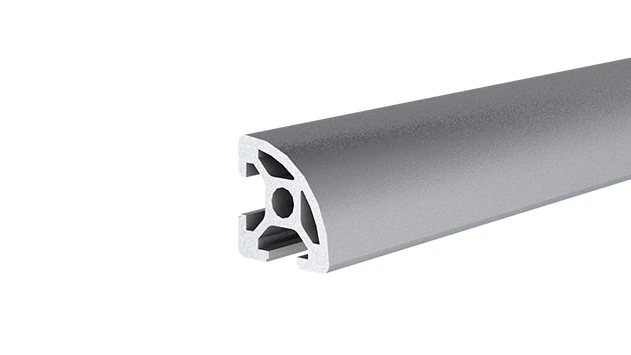
2020R is a 2.00 x 2.00CM fractional 20 series square extrusion T-slot profile with four open T-slots, two side with 2.00cm face, the other side with round face. The profile has align-a-grooves to assist in aligning connecting profiles.
Walk into any modern factory, warehouse, or workshop, and you'll notice a silent workhorse holding everything together: aluminum profiles. These unassuming metal structures form the backbone of workbenches, material racks, conveyor systems, and even entire lean manufacturing setups. They're the reason assembly lines run smoothly, tools stay organized, and teams can reconfigure their workspace in hours instead of days. But not all aluminum profiles are created equal. Two standards often stand out in industrial circles: the 2020r EU Standard Aluminum Profile and the ISO 6060 Aluminum Profile. If you've ever scratched your head trying to pick between them for a project, you're not alone. Let's break down what makes each unique, when to use one over the other, and why these differences matter for your workflow, budget, and long-term efficiency.
First Things First: What Even Are Aluminum Profiles?
Before diving into the standards, let's make sure we're on the same page. Aluminum profiles—often called aluminum extrusion profiles—are long, rigid pieces of aluminum shaped through a process called extrusion. Picture squeezing Play-Doh through a mold; that's basically how it works, but with molten aluminum and industrial-grade machinery. The result? Custom cross-sectional shapes (like squares, rectangles, or T-slots) designed to lock together with accessories (think brackets, end caps, or hinges) to build just about anything from a simple workbench to a complex conveyor system.
Why aluminum? It's lightweight, corrosion-resistant, and strong enough for most industrial tasks. Plus, it's infinitely recyclable, which doesn't hurt for sustainability-focused operations. But here's the catch: to ensure these profiles work with accessories from different suppliers and meet safety or performance standards, organizations like the EU and ISO have developed guidelines. That's where 2020r EU and ISO 6060 come in.
Meet the 2020r EU Standard Aluminum Profile: The Go-To for Small-Scale Agility
Let's start with the 2020r EU Standard Aluminum Profile. If you're based in Europe or work with European suppliers, you've probably seen this one pop up in catalogs. The "2020" refers to its cross-sectional dimensions: typically 20mm by 20mm (though we'll get into exact specs later). The "r"? That's likely short for "rounded," a nod to its gently curved edges—something that matters more than you might think for safety and assembly.
EU standards are known for prioritizing precision and practicality, and 2020r is no exception. It's part of a family of small-profile extrusions designed for light to medium-duty tasks. Think: desktop workbenches (like the "workbench e (single deck-without caster)" you might see in a lab), small material racks, or even custom storage solutions for tools. Because of its compact size, it's easy to handle—no need for heavy machinery to move or install it—and it's a favorite for teams that value flexibility. Want to rearrange your assembly line next month? 2020r profiles and their compatible aluminum profile accessories (like lightweight brackets or plastic end caps) make reconfiguration a breeze.
Another perk? Cost. Since it uses less aluminum than larger profiles, 2020r is often more budget-friendly, especially for small businesses or startups. And because it's a EU standard, suppliers in the region stock it readily, meaning shorter lead times for your projects. But don't let its size fool you—it's still tough. Made from high-quality aluminum extrusion profile, it can handle steady loads without bending, making it perfect for holding components during assembly or storing lightweight materials.

ISO 6060 Aluminum Profile: The Global Workhorse for Heavy-Duty Needs
Now, let's shift to ISO 6060. Unlike 2020r, which is more regionally focused, ISO 6060 is an international standard, adopted by manufacturers and engineers worldwide. It's part of the ISO 6000 series, which covers aluminum and aluminum alloys for general structural purposes. If 2020r is the agile sprinter, ISO 6060 is the marathon runner—built for endurance and consistency across borders.
ISO 6060 profiles come in a range of sizes, but they're generally larger and sturdier than 2020r. Think 30mm by 30mm, 40mm by 40mm, or even bigger. They're designed to handle heavier loads, tighter tolerances, and more demanding environments. You'll find them in automotive plants, aerospace facilities, and large-scale distribution centers—places where "good enough" just won't cut it. For example, a conveyor system moving pallets of goods? Chances are, its frame is made from ISO 6060. A lean system that spans an entire factory floor, connecting workstations and material flow? ISO 6060 provides the stability needed to keep that system running without wobbles or wear.
What sets ISO 6060 apart is its strict material and dimensional standards. ISO 6060 specifies not just the shape of the profile but also the aluminum alloy (often 6061 or 6063, known for strength and weldability), heat treatment, and even surface finish. This uniformity is a game-changer for global companies. Imagine a manufacturer with factories in Germany, China, and Brazil—using ISO 6060 ensures that a profile ordered in Berlin fits seamlessly with an accessory bought in Beijing. No more guessing if parts will align; ISO 6060 takes the uncertainty out of the equation.
Side-by-Side: Key Differences at a Glance
To make this clearer, let's put the two standards head-to-head. The table below breaks down their most important features, so you can see exactly where they overlap and where they diverge.
| Feature | 2020r EU Standard Aluminum Profile | ISO 6060 Aluminum Profile |
|---|---|---|
| Typical Cross-Sectional Size | 20mm x 20mm (small, compact) | 30mm x 30mm to 60mm x 60mm (larger, variable) |
| Edge Design | Rounded edges ("r" designation) for safety and easy handling | Often square or slightly beveled edges (tolerance-focused) |
| Primary Material Alloy | Aluminum-magnesium-silicon alloys (e.g., 6063-T5) | Aluminum-magnesium-silicon alloys (e.g., 6061-T6 or 6063-T6) |
| Maximum Load Capacity (per meter) | 50-100 kg (light to medium-duty) | 150-300 kg (medium to heavy-duty) |
| Accessory Compatibility | EU-specific accessories (e.g., 2020 aluminum profile end cap) | Globally standardized accessories (works with most international brackets/connectors) |
| Common Applications | Small workbenches, desktop racks, light-duty lean systems | Conveyors, heavy-duty material racks, large-scale lean systems, structural frames |
| Regional Focus | Europe and EU-aligned markets | Global (adopted worldwide) |
Diving Deeper: The Nitty-Gritty Differences That Matter
The table gives a quick overview, but let's dig into the details that'll actually impact your work. These are the differences that'll make you say, "Ah, that's why we had trouble with that last project!"
1. Dimensions and Tolerances: Precision vs. Practicality
Let's start with the basics: size and shape. 2020r's 20mm x 20mm cross-section is pretty fixed, with minimal variation between suppliers. Its rounded edges (usually a 1-2mm radius) aren't just for looks—they reduce the risk of cuts during assembly and make it easier to slide accessories into place. For example, when attaching a plastic end cap to seal the profile's end, those rounded edges ensure a snug, rattle-free fit.
ISO 6060, on the other hand, offers more size options, but with stricter tolerances. The standard specifies exactly how much a profile's actual dimensions can deviate from the nominal size. For a 40mm x 40mm ISO 6060 profile, the width might be allowed to vary by only ±0.2mm. Why does this matter? If you're building a conveyor system where each section must align perfectly, even a tiny mismatch can cause jams or uneven wear. ISO 6060's tight tolerances eliminate that risk, making it ideal for systems that need to work together flawlessly.
2. Material Composition: Strength for the Long Haul
Both profiles use aluminum-magnesium-silicon alloys, but the devil's in the details. 2020r often uses 6063-T5 aluminum. T5 refers to the heat treatment process—artificially aged but not quenched—which gives it good formability and moderate strength. It's perfect for bending or cutting on-site without cracking, which is why it's popular for custom workbenches or small racks.
ISO 6060, though, frequently uses 6061-T6 or 6063-T6. T6 heat treatment involves solution heat treating and artificial aging, resulting in higher tensile strength and hardness. A T6 profile can handle more stress without deforming, which is critical for heavy loads. For example, if you're storing steel components on a material rack made from ISO 6060-T6, you won't have to worry about the shelves sagging over time. That durability translates to longer lifespans, too—ISO 6060 profiles often outlast their 2020r counterparts in high-use environments.
3. Accessory Compatibility: Why Your Brackets Matter
Here's a scenario: You order a batch of 2020r profiles, excited to build a new workbench, only to find the brackets you bought online don't fit. Frustrating, right? That's because accessory compatibility is a big difference between these two standards.
2020r accessories are designed specifically for EU profiles. Take the 2020 aluminum profile end cap, for instance—it's molded to fit the 20mm x 20mm cross-section and rounded edges of 2020r. These accessories are widely available in Europe, but if you're sourcing from Asia or the Americas, you might struggle to find exact matches. That's not a dealbreaker, but it does mean you'll likely stick to regional suppliers.
ISO 6060, being international, plays well with a global pool of accessories. Whether you're buying brackets from Germany, connectors from China, or end caps from the U.S., they'll align with ISO 6060's dimensions and slot designs. This is a huge win for multinational companies. Imagine a company with factories in India and Mexico—they can order the same ISO 6060 profiles and accessories for both locations, ensuring consistency and simplifying their supply chain.
4. Applications: When to Choose Which
At the end of the day, the "better" profile depends on what you need it for. Let's break down real-world scenarios to help you decide.
Choose 2020r EU Standard if… You're working on a small to medium project with light loads. Think: a lab workbench for testing electronics, a mobile cart for moving tools around a workshop, or a small material rack for storing screws and bolts. You value flexibility and want to reconfigure the setup easily. You're based in Europe (or work with EU suppliers) and want to keep costs low. And you don't need to worry about global compatibility—your team and suppliers are all in the same region.
Choose ISO 6060 if… You're building something that needs to last, handle heavy loads, or work across borders. Examples include a conveyor system for a warehouse, a lean system that connects multiple production lines, or a structural frame for industrial machinery. You need tight tolerances to ensure parts align perfectly (like in automated assembly). And you work with international suppliers or have facilities in different countries—ISO 6060 ensures everyone is on the same page.
Let's take a concrete example: a local bakery expanding its kitchen. They need a new workbench for decorating cakes. 2020r makes sense here—it's lightweight, affordable, and the bakery can easily adjust its height or add shelves later using EU-sourced accessories. Now, compare that to a multinational beverage company building a new bottling plant. Their production line includes conveyors, palletizers, and large material racks for bottles. ISO 6060 is the way to go—it can handle the weight of the equipment, aligns with global safety standards, and ensures parts from their suppliers in Italy, Brazil, and Japan all fit together.
The Bottom Line: It's About Fit, Not Perfection
At the end of the day, both 2020r EU Standard Aluminum Profile and ISO 6060 are excellent choices—they're just built for different jobs. 2020r shines in small-scale, flexible, and budget-conscious projects, especially in Europe. ISO 6060 excels in heavy-duty, global, and precision-critical applications. The key is to match the profile to your needs: load capacity, location, accessory availability, and long-term goals.
Whether you're building a simple workbench or a sprawling lean system, remember that aluminum profiles are more than just metal—they're the foundation of your workflow. Choose wisely, and you'll get a setup that's efficient, durable, and ready to grow with your business. And if you ever find yourself torn? Reach out to a supplier who specializes in aluminum extrusion profiles—they'll help you pick the one that fits like a glove.