- Company Articles
- Industry articles
- Industry standards
- Comparing 3030a EU Standard Aluminum Profile Suppliers: Quality Metrics

Comparing 3030a EU Standard Aluminum Profile Suppliers: Quality Metrics
Related Product
3030A EU Standard Aluminum Profile
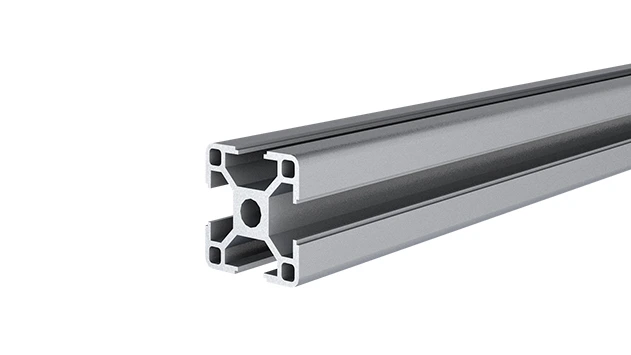
3030 is a 3.00 x 3.00CM fractional 30 series square extrusion T-slot profile with four open T-slots, each side with 3.00cm face. The profile has align-a-grooves to assist in aligning connecting profiles.
In the world of industrial manufacturing, lean systems, and workshop setups, few components are as foundational as the 3030a EU standard aluminum profile. From assembling sturdy workbenches and material racks to constructing efficient flow racks and turnover trolleys, this profile is the backbone of countless operational setups. But here's the thing: not all 3030a profiles are created equal, and the supplier you choose can make or break the performance, durability, and cost-effectiveness of your project. Whether you're a small workshop owner building a single workbench or a large manufacturer scaling a lean production line, understanding how to evaluate suppliers based on key quality metrics is critical. In this article, we'll break down the essential factors to consider when comparing 3030a EU standard aluminum profile suppliers, ensuring you invest in a product that meets your needs—today and for years to come.
Why 3030a EU Standard Aluminum Profile Matters
First, let's clarify what makes the 3030a EU standard aluminum profile so indispensable. The "3030" refers to its cross-sectional dimensions—30mm in width and 30mm in height—while "EU standard" ensures compliance with strict European manufacturing norms for material quality, dimensional accuracy, and safety. The "a" denotes specific tolerances and design features, such as T-slot configurations, that make it compatible with a wide range of aluminum profile accessories, from connectors and hinges to end caps and guide rails. This standardization is what allows for modular, flexible designs: you can easily reconfigure a workbench into a material rack or add roller tracks to a flow system without overhauling the entire structure.
But its utility goes beyond flexibility. Aluminum's inherent properties—lightweight yet strong, corrosion-resistant, and easy to machine—make the 3030a profile ideal for environments where durability and efficiency are paramount. Think of a busy production floor where material racks need to withstand daily use, or a cleanroom where corrosion resistance is non-negotiable. A subpar profile might bend under load, corrode prematurely, or fail to fit with accessories, leading to costly downtime, repairs, or even safety hazards. That's why choosing a reputable supplier isn't just about price—it's about investing in reliability.
Key Quality Metrics to Evaluate Suppliers
When comparing suppliers, it's easy to get swayed by low prices or flashy marketing. But to truly assess quality, you need to dig deeper into specific metrics that directly impact performance. Let's explore each one in detail.
1. Material Composition and Purity
At the heart of any aluminum profile is its material composition. The 3030a EU standard specifies the use of high-grade aluminum alloys, typically 6063-T5, known for its excellent extrudability, strength, and corrosion resistance. But not all suppliers adhere strictly to this standard. Some may cut corners by using recycled aluminum with higher impurity levels or lower-grade alloys to reduce costs. Why does this matter? Impurities like iron or silicon can weaken the profile, making it prone to bending or cracking under stress. Similarly, the temper (heat treatment) of the aluminum—like T5 (artificially aged)—directly affects its hardness and tensile strength. A profile with an improper temper might be too soft for heavy-duty applications, such as supporting a loaded material rack, or too brittle, leading to breakage during assembly.
To verify this, ask suppliers for material certificates (like mill test reports) that detail the alloy composition, temper, and impurity levels. Reputable suppliers will readily provide these documents, while vague or evasive responses are red flags. Additionally, consider requesting sample profiles to test for strength—even a simple bend test can reveal if the material meets the required standards.
2. Extrusion Precision
Extrusion is the process of shaping aluminum by forcing it through a die, and precision here is non-negotiable. The 3030a EU standard mandates tight tolerances for dimensions: for example, the width and height should deviate by no more than ±0.3mm, and wall thickness should be consistent across the profile. Why does this matter? Imagine assembling a workbench where one section of the profile is slightly wider than another—connectors won't fit snugly, leading to wobbling or instability. Or a roller track where the T-slot alignment is off, causing wheels to jam. Poor extrusion precision also affects straightness: a warped profile will make it impossible to build level workbenches or aligned flow racks, throwing off your entire production layout.
How to check? Request dimensional reports from suppliers, which should include measurements of key parameters like width, height, wall thickness, and straightness. For critical projects, consider using a caliper or straightedge to inspect sample profiles. Look for uniform wall thickness (no thin spots) and a straight edge when laid flat—even a small bow can cause big problems during assembly.
3. Surface Treatment
Aluminum naturally forms a thin oxide layer that resists corrosion, but in industrial settings, additional surface treatments are often necessary to enhance durability. The most common treatments for 3030a profiles are anodizing and powder coating. Anodizing creates a thicker, harder oxide layer (typically 10-20 microns) that improves scratch resistance and corrosion protection, while powder coating adds a colored, decorative finish with similar protective benefits. The quality of these treatments varies widely between suppliers: a poorly anodized profile might have uneven thickness, leading to patchy corrosion, while a low-quality powder coat could chip or fade after minimal use.
To evaluate surface treatment, inspect samples for uniformity: the color (if anodized) should be consistent, with no streaks or discoloration. For anodized profiles, ask about the coating thickness—15 microns or more is ideal for high-wear environments. For powder coating, perform a simple adhesion test: press a piece of tape firmly onto the surface and peel it off; if any coating comes off, the treatment is subpar. Also, inquire about salt spray test results, which measure corrosion resistance—suppliers should be able to provide data on how many hours the profile can withstand salt spray without rusting.
4. Compatibility with Aluminum Profile Accessories
One of the 3030a profile's biggest advantages is its compatibility with a vast array of aluminum profile accessories—think 90° connectors, internal rotatary joints, end caps, and roller track placon mounts. But this compatibility relies on strict standardization. A supplier that cuts corners on T-slot dimensions, for example, might produce a profile that doesn't fit standard connectors, forcing you to buy proprietary (and often pricier) accessories. Or imagine ordering aluminum guide rails only to find they don't align with the profile's T-slots, derailing your flow rack project.
To avoid this, ask suppliers for compatibility charts that list which accessories (from their own lineup or third-party brands) work with their 3030a profile. If possible, request sample accessories along with the profile to test fitment: a connector should slide into the T-slot smoothly and tighten securely without stripping threads. Reputable suppliers will also ensure their accessories meet EU standards, so you won't have to worry about mismatched parts down the line.
5. Manufacturing Standards and Certifications
Compliance with EU standards is a baseline, but top suppliers go further by adhering to international quality management systems and obtaining certifications that validate their processes. Look for suppliers with ISO 9001 certification, which ensures consistent quality control from raw material sourcing to extrusion and finishing. Additionally, EU-specific certifications, such as CE marking, confirm that the profile meets health, safety, and environmental requirements for use in European markets. These certifications aren't just pieces of paper—they indicate that the supplier has invested in rigorous testing, employee training, and process documentation to deliver reliable products.
Don't hesitate to ask for copies of certifications and audit reports. A supplier that is transparent about its manufacturing processes—such as providing tours of its facility or detailing quality control checkpoints (e.g., in-process dimensional testing, final inspection)—is more likely to deliver consistent, high-quality profiles.
6. Supplier Reliability and Support
Even the highest-quality profile won't help if your supplier can't deliver on time or support you when issues arise. Supplier reliability encompasses factors like lead times (how quickly they can fulfill orders), minimum order quantities (MOQs), and flexibility for customization. For example, if you need a custom length or special surface treatment, can the supplier accommodate that without exorbitant fees? Equally important is after-sales support: if a batch of profiles arrives with defects, will the supplier replace them promptly? Do they offer technical support for complex projects, like designing a custom workbench or flow rack?
To gauge reliability, check references from other customers (suppliers should be willing to share these) or read online reviews. Ask about average lead times for standard orders and how they handle rush requests. For long-term partnerships, inquire about their production capacity—can they scale with your business as your needs grow? A supplier that views itself as a partner, not just a vendor, will prioritize your success.

Comparing Suppliers: A Practical Example
To put these metrics into context, let's compare three hypothetical suppliers—Supplier A, Supplier B, and Supplier C—using the criteria above. This example will help you see how trade-offs between metrics can impact your decision.
| Quality Metric | Supplier A | Supplier B | Supplier C |
|---|---|---|---|
| Material Composition | 6063-T5 alloy, 99.7% purity, mill test reports provided | 6061-T6 alloy (weaker than 6063), no purity data available | 6063-T5 alloy, 99.5% purity, mill test reports on request |
| Extrusion Precision | ±0.2mm tolerance, wall thickness variation <0.1mm | ±0.5mm tolerance, wall thickness variation up to 0.3mm | ±0.3mm tolerance, wall thickness variation <0.2mm |
| Surface Treatment | Anodized (18 microns), salt spray test: 500+ hours | Powder coated (80 microns), salt spray test: 200 hours | Anodized (15 microns), salt spray test: 400+ hours |
| Accessory Compatibility | Compatible with all EU-standard accessories; provides compatibility chart | Proprietary T-slot design; only works with their accessories | Compatible with most EU-standard accessories; limited compatibility chart |
| Certifications | ISO 9001, CE marked, EU standard compliant | CE marked only | ISO 9001, EU standard compliant |
| Supplier Support | 1-2 week lead time, custom lengths available, 24/7 technical support | 3-4 week lead time, no customization, limited after-sales support | 2-3 week lead time, custom lengths available, 48-hour technical support |
In this example, Supplier A clearly leads in material quality, precision, and support, making them ideal for critical applications like heavy-duty workbenches or cleanroom setups. Supplier C offers a balance of quality and cost, suitable for standard projects where reliability is important but budget is a factor. Supplier B, despite potentially lower prices, falls short in key areas like material strength and precision, making them risky for most industrial uses.
Avoiding Common Pitfalls
Even with these metrics in mind, it's easy to fall for common supplier tactics. Here are a few red flags to watch for:
- Vague product descriptions: If a supplier can't specify alloy type, temper, or tolerance levels, walk away.
- Refusal to provide samples: A supplier confident in their quality will happily send samples for testing.
- Inconsistent pricing: Prices that are significantly lower than competitors may indicate cut corners in material or production.
- Lack of transparency: Avoid suppliers that dodge questions about certifications, manufacturing processes, or quality control.
Conclusion: Invest in Quality, Reap the Rewards
Choosing a 3030a EU standard aluminum profile supplier is more than a transaction—it's a decision that impacts the efficiency, safety, and longevity of your operations. By evaluating suppliers based on material composition, extrusion precision, surface treatment, accessory compatibility, certifications, and reliability, you can avoid costly mistakes and invest in a product that grows with your business. Remember, the cheapest option isn't always the best: a slightly higher upfront cost for a quality profile from a reputable supplier will pay off in reduced downtime, fewer repairs, and a more efficient workflow.
Whether you're building a single workbench or outfitting an entire production line, prioritize suppliers who demonstrate a commitment to quality, transparency, and customer support. After all, your 3030a profile is more than just a piece of aluminum—it's the foundation of your success.