- Company Articles
- Industry articles
- Industry standards
- Comparing 4080B EU Standard Aluminum Profile Suppliers: Quality & Price Factors

Comparing 4080B EU Standard Aluminum Profile Suppliers: Quality & Price Factors
Related Product
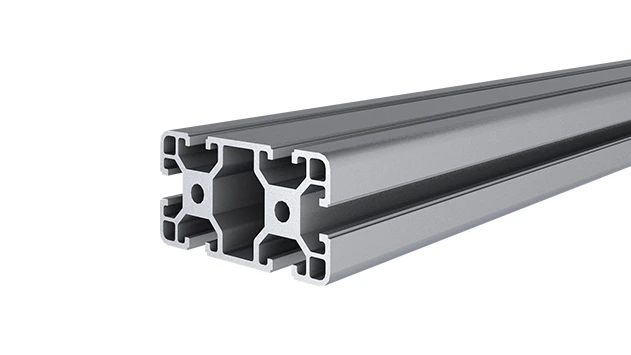
4080B EU Standard Aluminum Profile
4080B is a 4.00x8.00 CM fractional 40 series square extrusion T-slot profile with two side open T-slots, each side with 4.00cm face, two side with 8.00cm face. The profile has align-a-grooves to assist in aligning connecting profiles.
Introduction: The Backbone of Modern Manufacturing
Walk into any high-tech factory, automated warehouse, or precision assembly line today, and you'll likely spot a common element holding everything together: aluminum profiles. These unassuming metal structures are the unsung heroes of lean manufacturing, providing the flexibility, durability, and adaptability that modern production demands. Among the most widely used is the 4080B EU Standard Aluminum Profile —a workhorse in industries ranging from automotive and electronics to aerospace and logistics. But not all 4080B profiles are created equal, and choosing the right supplier can mean the difference between a smooth, efficient operation and costly delays, subpar performance, or even safety risks.
If you're in the market for 4080B profiles, you've probably noticed the dizzying array of suppliers out there. From local distributors to international manufacturers, each claims to offer the "best" product at the "best" price. But how do you cut through the noise? What separates a reliable supplier from one that might cut corners? In this article, we'll dive deep into the world of 4080B EU Standard Aluminum Profile suppliers, exploring the critical quality and price factors that should guide your decision. Whether you're a small workshop building custom workbenches or a large enterprise scaling up a lean system, this guide will help you partner with a supplier that aligns with your needs—without overspending or compromising on quality.
What Is 4080B EU Standard Aluminum Profile, Anyway?
Before we compare suppliers, let's make sure we're all on the same page about the star of the show: the 4080B EU Standard Aluminum Profile. At its core, this is an aluminum extrusion profile —meaning it's formed by pushing heated aluminum alloy through a die to create a specific cross-sectional shape. The "4080B" refers to its dimensions: 40mm in width and 80mm in height, with "B" indicating a specific groove design (typically with T-slots for easy accessory attachment) that complies with EU standards. These standards ensure consistency in dimensions, material quality, and performance across Europe and beyond.
Why does this matter? Unlike generic aluminum bars, the 4080B profile is engineered for modularity. Its T-slots allow for quick attachment of aluminum profile accessories like brackets, connectors, end caps, and panels—making it ideal for building everything from lightweight workbenches and material racks to heavy-duty conveyor systems and machine guards. Its EU certification also means it meets strict safety and quality benchmarks, which is non-negotiable for industries where precision and reliability are paramount.
But here's the catch: While the EU standard sets a baseline, suppliers can still vary dramatically in how they execute production. Two suppliers might both claim to sell "4080B profiles," but one could use high-purity aluminum alloy with tight extrusion tolerances, while the other uses recycled scrap with inconsistent wall thickness. The difference? The former will support your lean system for years, while the latter might warp under load, corrode prematurely, or fail to fit with standard accessories—costing you time, money, and headaches down the line.

Quality Factors: What Makes a 4080B Profile "Good"?
When evaluating suppliers, quality should always be your starting point. A cheap profile might save you money upfront, but if it fails, the cost of replacement, downtime, or even accidents can far outweigh the initial savings. Here are the key quality factors to inspect:
1. Material Purity and Alloy Grade
The foundation of any aluminum profile is its material. Most 4080B profiles are made from 6063-T5 aluminum alloy—a popular choice for its excellent combination of strength, weldability, and corrosion resistance. But not all 6063-T5 is the same. Reputable suppliers will use high-purity aluminum ingots (typically 99.7% pure) and precise alloying elements (like magnesium and silicon) to achieve the desired mechanical properties. Shoddy suppliers, however, might cut costs by using recycled aluminum with unknown impurities, which can weaken the profile, cause surface defects, or reduce its ability to withstand stress.
Ask suppliers for a material certificate (mill test report) that confirms the alloy grade and chemical composition. If a supplier hesitates to provide this, that's a red flag. You want transparency here—knowing exactly what's in the profile ensures it will perform as expected in your application.
2. Extrusion Precision and Tolerances
Extrusion is both an art and a science. Even with the right alloy, poor extrusion practices can result in profiles that are out of square, have uneven wall thickness, or feature rough, inconsistent surfaces. For 4080B profiles, EU standards specify tight tolerances: for example, the width and height should deviate by no more than ±0.3mm, and the straightness should be within 0.5mm per meter. Why does this matter? If your profile is slightly warped or oversized, it might not fit with aluminum profile accessories like connectors or end caps, forcing you to grind, file, or modify parts—wasting time and compromising structural integrity.
Look for suppliers with advanced extrusion presses (preferably 1000 tons or more) and computerized quality control systems. Many top suppliers use laser measuring tools to check dimensions at multiple points along each profile, ensuring consistency batch after batch. A quick visual inspection can also tell you a lot: high-quality profiles have smooth, uniform surfaces with no dents, scratches, or discoloration. If the T-slots are rough or misaligned, that's a sign of poor die maintenance or rushed production.
3. Surface Treatment and Corrosion Resistance
Aluminum naturally forms a thin oxide layer that resists corrosion, but in harsh environments (like factories with high humidity, chemicals, or salt air), this layer might not be enough. That's why most 4080B profiles undergo additional surface treatments: anodizing, powder coating, or electrophoresis. Anodizing is the most common—it creates a thicker, harder oxide layer that's both decorative and protective. The quality of this treatment varies widely, though. A cheap anodize might be uneven, thin, or prone to chipping, while a high-quality one will have a consistent color (often clear, silver, or black) and a thickness of at least 10 microns (per EU standards).
Ask suppliers about their anodizing process: Do they use sulfuric acid anodizing (the industry standard), or a cheaper alternative? How do they control the bath temperature and current density? A supplier that invests in quality surface treatment will ensure your profiles stand up to years of wear and tear, even in tough conditions.
4. Compatibility with Accessories
One of the biggest advantages of the 4080B profile is its compatibility with a wide range of aluminum profile accessories —from simple end caps and corner brackets to complex linear guides and cable management systems. But this compatibility relies on strict adherence to EU standards. If a supplier's T-slots are slightly narrower or deeper than specified, accessories from other manufacturers might not fit. This can be a nightmare if you need to replace a part quickly or expand your system later.
A good supplier will either produce their own accessories (ensuring a perfect fit) or explicitly state that their profiles work with leading accessory brands. Some even provide free sample kits that include a small section of profile and common accessories, so you can test compatibility before placing a large order. Don't skip this step—compatibility issues are often the most frustrating and costly problems to fix post-purchase.
5. Certifications and Compliance
Last but certainly not least: certifications. The 4080B profile is labeled "EU Standard," so your supplier should be able to provide documentation proving compliance with EN 755 (the European standard for aluminum extrusions) and ISO 9001 (quality management). For industries like aerospace or medical devices, additional certifications (like RoHS for lead-free materials or REACH for chemical safety) might be required. Certifications aren't just pieces of paper—they're proof that the supplier follows rigorous quality control processes, from raw material sourcing to final inspection.
Be wary of suppliers that claim compliance but can't produce certificates on request. Reputable manufacturers will happily share these documents, often even posting them on their website. If a supplier hesitates or makes excuses, it's a sign they might not be meeting the standards they claim.
Price Factors: Why Some Suppliers Charge More (or Less)
Quality is crucial, but let's be real: price matters too. Even the best profile won't help your business if it blows your budget. So why do 4080B profile prices vary so much? Let's break down the key factors that influence a supplier's pricing—and how to tell if you're getting a good deal or overpaying.
1. Raw Material Costs: Aluminum Ingot Prices
Aluminum is a commodity, and its price fluctuates daily based on global supply and demand, energy costs, and geopolitical events. Most suppliers price their profiles based on the current aluminum ingot price (often referenced as the LME, or London Metal Exchange, price) plus a processing fee. If ingot prices spike, you'll likely see profile prices rise too—though some suppliers lock in prices for 30-60 days to help customers plan. Be cautious of suppliers offering prices far below the current LME rate—they might be using lower-grade alloy, recycled scrap with unknown quality, or cutting corners in production.
2. Production Scale and Location
Where a supplier is based and how large their operation is can have a huge impact on price. Large manufacturers in countries with low labor and energy costs (like China or Turkey) often offer lower prices than small European suppliers—thanks to economies of scale and lower overhead. But there's a tradeoff: shipping costs, import duties, and longer lead times. A 4080B profile that costs $10/meter from China might end up costing $15/meter once you add shipping, customs, and insurance—making a European supplier charging $13/meter a better deal, especially if you need the profiles quickly.
Local suppliers also have the advantage of faster communication, easier returns, and in-person visits if needed. For critical projects with tight deadlines, the premium for a local supplier might be worth it. On the flip side, if you're ordering in bulk and can wait 6-8 weeks for delivery, an international supplier could save you 20-30%.
3. Customization vs. Standard Profiles
Standard 4080B profiles (cut to common lengths, with basic anodizing) are almost always cheaper than custom ones. If you need profiles cut to unusual lengths, with special holes, or coated in a custom color, expect to pay a premium. Some suppliers charge setup fees for custom orders, especially if they need to modify their extrusion dies or adjust their anodizing process. If you can work with standard sizes and finishes, you'll save significantly.
That said, don't let cost deter you from necessary customizations. If your application requires a specific length to minimize waste or a special coating for chemical resistance, the upfront cost will likely pay off in efficiency and durability down the line. The key is to balance customization with practicality—ask your supplier if they have any "semi-custom" options (like pre-cut lengths from stock) that might be cheaper than fully custom work.
4. Order Volume and Long-Term Contracts
Like most products, 4080B profiles are cheaper when bought in bulk. Suppliers often offer tiered pricing: the more meters you order, the lower the per-meter cost. For example, a supplier might charge $12/meter for 100 meters, $10/meter for 500 meters, and $8/meter for 1000+ meters. If you know you'll need profiles regularly, consider signing a long-term contract—many suppliers will offer additional discounts or priority production for repeat customers.
Even if you don't need bulk quantities right now, it's worth asking about volume discounts. You might be able to team up with other businesses to place a joint order, or negotiate a "future order" discount if you commit to buying a certain amount over the next 6-12 months.
5. Hidden Costs: The Fine Print
The quoted price per meter is rarely the final cost. Watch out for hidden fees that can add up quickly: shipping, handling, packaging, taxes, or "small order surcharges" (common for orders under a certain length or value). Some suppliers also charge extra for documentation (like material certificates) or expedited delivery. Always ask for a detailed quote that includes all fees, and compare total landed costs—not just the per-meter price.
For example, Supplier A might quote $9/meter but charge $300 for shipping, while Supplier B quotes $11/meter with free shipping on orders over 500 meters. Depending on your order size, Supplier B could be cheaper overall. Don't assume the lowest per-meter price is the best deal—do the math!
Comparing Suppliers: A Side-by-Side Look
To put all this into perspective, let's compare three hypothetical 4080B EU Standard Aluminum Profile suppliers: a premium European manufacturer, a mid-range Asian exporter, and a budget-focused local distributor. This table highlights how quality and price factors play out in real-world scenarios:
| Factor | Premium European Supplier | Mid-Range Asian Exporter | Budget Local Distributor |
|---|---|---|---|
| Alloy Grade | 6063-T5 (certified, 99.7% purity) | 6063-T5 (recycled alloy, 98.5% purity) | Unknown alloy (no certification) |
| Extrusion Tolerance | ±0.1mm (EN 755 compliant) | ±0.3mm (meets EU standards) | ±0.5mm (inconsistent batch to batch) |
| Surface Treatment | 15-micron anodizing (ISO certified) | 10-micron anodizing (basic process) | 5-micron anodizing (uneven finish) |
| Accessory Compatibility | Works with all major EU accessory brands; in-house accessory line | Compatible with most standard accessories; limited in-house options | Hit-or-miss compatibility; no accessory line |
| Certifications | ISO 9001, EN 755, RoHS, REACH | ISO 9001, EN 755 (basic compliance) | No certifications provided |
| Price (per meter, standard length) | $18–$22 | $10–$14 (plus $300 shipping for 500m) | $6–$8 (plus $50 small order fee) |
| Lead Time | 1–2 weeks (stock); 4–6 weeks (custom) | 6–8 weeks (ocean freight) | 2–3 days (from local stock) |
| Minimum Order Quantity | 100 meters | 500 meters | 10 meters |
As you can see, each supplier has its strengths and weaknesses. The premium European supplier offers unmatched quality and reliability but comes with a higher price tag and longer lead times for custom orders. The mid-range Asian exporter balances quality and cost but requires larger orders and longer shipping times. The budget local distributor is great for small, urgent orders but lacks transparency and consistency.
So which is right for you? It depends on your priorities. If you're building a critical lean system where precision and durability are non-negotiable (like a medical device assembly line), the premium supplier is worth the investment. If you're a small workshop needing profiles for a simple workbench, the budget distributor might suffice—just be prepared for potential compatibility or quality issues. For most businesses, the mid-range option offers the best balance of quality, cost, and flexibility.
How to Vet a Supplier: 5 Practical Steps
Now that you know what to look for, here's how to put it into action when evaluating potential suppliers:
1. Request Samples (and Test Them)
Never order in bulk without seeing a sample first. Ask for a 1-meter section of 4080B profile and a few common accessories (like end caps or brackets). Inspect the surface finish, measure the dimensions with calipers, and test how well the accessories fit. If possible, perform a simple stress test: clamp the profile and apply pressure to see if it bends or warps (it shouldn't, if it's 6063-T5). A sample costs a few dollars but can save you thousands in bad orders.
2. Check References and Reviews
A supplier's website will always make them look good—so go straight to the source: their customers. Ask for references from businesses in your industry, or search online reviews (Google, Alibaba, or industry forums). Look for patterns: Do customers praise the quality and reliability, or complain about late deliveries and poor communication? Pay special attention to reviews from customers who ordered the same profile (4080B) for similar applications.
3. Audit Their Production Process (If Possible)
For large orders, consider visiting the supplier's factory or requesting a virtual tour. This gives you a firsthand look at their extrusion equipment, quality control measures, and working conditions. A clean, organized factory with modern machinery is a good sign; a chaotic, outdated facility might indicate poor quality control. During the tour, ask questions: How do they test for material purity? What happens if a batch fails inspection? A transparent supplier will be happy to show you their process.
4. Evaluate Customer Service and Communication
Good suppliers don't just sell products—they partner with you. How responsive are they to emails or calls? Do they answer technical questions clearly? Are they willing to provide samples, certificates, or custom quotes without pressure? Poor communication early on is a warning sign: if they're hard to reach before you place an order, imagine how tough it will be if you have a problem after delivery.
5. Start Small, Then Scale
Even after all this research, it's smart to test the waters with a small order before committing to a large one. Order 50–100 meters, use them in a non-critical application, and see how they perform. If the quality is consistent, the accessories fit, and the supplier delivers on time, you can feel confident scaling up. If not, you've minimized your losses and can pivot to a different supplier.
Conclusion: Finding Your Perfect Supplier Match
Choosing a 4080B EU Standard Aluminum Profile supplier is about more than just comparing prices—it's about finding a partner that aligns with your quality standards, budget, and long-term goals. The 4080B EU Standard Aluminum Profile is the backbone of your lean system, workbench, or material rack, and its performance directly impacts your productivity, safety, and bottom line. By focusing on critical quality factors (alloy grade, extrusion precision, surface treatment, compatibility, and certifications) and balancing them against price factors (raw materials, location, customization, volume, and hidden costs), you can make an informed decision that serves your business well for years to come.
Remember: The cheapest supplier isn't always the best, and the most expensive isn't always necessary. The right supplier will offer a fair price for consistent quality, clear communication, and reliable service. Take your time, do your research, test samples, and don't be afraid to ask tough questions. With the right partner, your 4080B profiles will quietly support your success—just like they're meant to.
So, what's next? Start by compiling a list of potential suppliers (use industry directories, trade shows, or referrals), then score each against the factors we've discussed. Request samples, check references, and don't settle until you find a supplier that feels like a true collaborator. Your lean system (and your wallet) will thank you.