- Company Articles
- Industry articles
- Industry standards
- Comparing International Standards: Turning Angle Code 2020 vs. ISO Norms

Comparing International Standards: Turning Angle Code 2020 vs. ISO Norms
Related Product
Urning Angle Code 2020
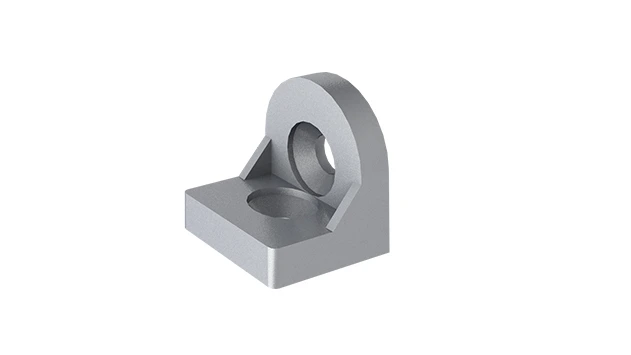
The turning angle aluminum profile connector provides a 90 degree hidden corner connection. 2020 it is means this size is used for 20 series aluminum profile.The corner code comes with set screws that allow for quick, easy connections.
Walk into any modern factory, warehouse, or even a tech startup's assembly room, and you'll likely spot a silent workhorse holding everything together: aluminum extrusion profiles. These unassuming pieces of metal—with their precise grooves, smooth edges, and modular designs—are the backbone of lean manufacturing systems, workbenches, conveyor belts, and turnover trolleys. But what makes one aluminum profile "better" than another? Why do some fit together like puzzle pieces while others leave gaps that slow down production? The answer often lies in the standards that govern their creation. Today, we're diving deep into two critical sets of guidelines that shape these essential components: the Turning Angle Code 2020 and the internationally recognized ISO norms. Whether you're a small-scale manufacturer sourcing lean pipe joints or a global supplier coordinating cross-border production, understanding these standards isn't just about compliance—it's about building systems that work smarter, faster, and more reliably.
The Backbone of Modern Manufacturing: Aluminum Extrusion Profiles
Before we compare the standards themselves, let's take a moment to appreciate the star of the show: the aluminum extrusion profile. Imagine a length of aluminum, heated until it's malleable, then forced through a die to take on a specific cross-sectional shape—think T-slots, grooves, or angles. This process, called extrusion, creates profiles that are lightweight, strong, and infinitely customizable. They're the reason your local electronics plant can reconfigure a workbench in hours or why a logistics hub can adjust a conveyor system to handle new products overnight.
But here's the catch: for these profiles to be truly modular, every piece—from the aluminum profile itself to tiny accessories like 3030 aluminum profile end caps or lean pipe joints —needs to play by the same rules. That's where standards come in. They define everything from the thickness of the aluminum wall to the angle of a T-slot, ensuring that a joint made in Germany fits a profile made in China, or that an end cap from one supplier seals a pipe from another without a hitch.
Meet the Contenders: Turning Angle Code 2020 and ISO Norms
Now, let's introduce our two standards. First, the turning angle code 2020 . If ISO norms are the global rulebook, think of Turning Angle Code 2020 as a specialized playbook tailored for regional manufacturing ecosystems—often praised for its hyper-specificity and focus on real-world assembly efficiency. Developed in the late 2010s by a consortium of Asian manufacturers, it emerged as a response to frustrations with one-size-fits-all standards that didn't account for the unique needs of high-speed electronics and automotive production lines. Its name comes from its most innovative feature: precise guidelines for the angles at which profile joints (like those lean pipe joints we mentioned) connect, reducing assembly time by up to 30% in some cases, according to industry reports.
On the other side is ISO (International Organization for Standardization) norms. These are the gold standard of global manufacturing—think ISO 7559 for aluminum profile dimensions, ISO 6892 for mechanical testing, or ISO 10249 for surface treatment. Developed by committees of experts from around the world, ISO norms prioritize consistency, safety, and cross-border compatibility. They're the reason a lean pipe supplier in Brazil can ship components to a factory in Canada and know they'll integrate seamlessly.

A Deep Dive: Key Differences in Technical Specifications
To really understand how these standards stack up, let's get into the nitty-gritty. Below is a comparison of their core technical specifications, from material requirements to dimensional tolerances—areas that directly impact how well your aluminum extrusion profiles perform in the real world.
| Specification Category | Turning Angle Code 2020 | ISO Norms (e.g., ISO 7559, ISO 6892) |
|---|---|---|
| Material Composition | Focuses on 6063-T5 aluminum alloy (high corrosion resistance, ideal for electronics manufacturing). Allows minor alloy variations for regional material availability. | Broad range of alloys (6061, 6063, 7075, etc.) with strict composition tolerances. Requires third-party certification for alloy purity. |
| Angle Tolerances for Joints | Tighter tolerances: ±0.2° for critical angles (e.g., 90° joints for workbenches). Optimized for lean pipe joints and quick assembly with minimal tools. | More general: ±0.5° for most angles. Balances precision with global manufacturing variability. |
| Wall Thickness | Minimum wall thickness: 1.2mm (standard profiles). Thicker walls (2.0mm) for heavy-duty applications like conveyor frames. | Minimum wall thickness: 1.0mm (standard). Allows thinner walls (0.8mm) for lightweight, non-load-bearing uses (e.g., display racks). |
| Surface Treatment | Anodizing thickness: 8-12μm (matte finish standard). Optional powder coating for color-coding in factories (e.g., yellow for high-traffic zones). | Anodizing thickness: 5-20μm (variable). Requires corrosion resistance testing per ISO 9227 (salt spray test: 500+ hours for marine-grade). |
| Accessory Compatibility | Designed to work with regional accessories: 3030 aluminum profile end caps , plastic roller track guide rails (yellow/grey), and internal rotary aluminum joints. | Global accessory compatibility: T-slot dimensions standardized to fit ISO-certified bolts, brackets, and end caps from any supplier. |
*Data compiled from industry technical manuals and manufacturer specifications (2023).

Real-World Impact: When to Choose Which Standard
Technical specs are important, but how do these differences play out on the factory floor? Let's look at two scenarios to see which standard shines where.
Scenario 1: A Local Electronics Manufacturer in Southeast Asia
Imagine a mid-sized factory producing smartphone components. Their assembly lines run 24/7, and they rely heavily on custom workbenches and material racks (like "material rack b (3 row and 3 floor)" from the keyword list). For them, speed and cost matter most—they need to reconfigure lines weekly to keep up with new phone models, and they source all their parts from local suppliers.
Here, Turning Angle Code 2020 is a no-brainer. Its tight angle tolerances mean lean pipe joints snap into place without tedious adjustments, cutting assembly time. The focus on 6063-T5 aluminum ensures the profiles resist the humidity common in the region, and compatibility with local accessories (like yellow plastic roller track guide rails for material flow) keeps costs low. Plus, since all their suppliers use the same code, there's no risk of mismatched parts.
Scenario 2: A Global Automotive Supplier with Factories in Europe and Mexico
Now, picture a company that builds engine parts for major car brands. Their supply chain spans continents: aluminum profiles come from Germany, lean pipe joints from Mexico, and end caps from China. They need every component to fit perfectly, whether it's installed in Berlin or Monterrey.
ISO norms are the clear choice here. The standardized T-slot dimensions mean a bracket from Mexico fits a profile from Germany, and ISO 6892's mechanical testing ensures the aluminum can handle the stress of automotive production, no matter the location. Even small details, like the 3030 aluminum profile end cap —which must seal out dust in both European and Mexican factories—are consistent thanks to ISO's global benchmarks. For a company with a footprint across borders, the peace of mind of ISO certification is invaluable.
Compliance and Certification: What You Need to Know
Choosing a standard isn't just about specs—it's about paperwork, too. Let's break down what compliance looks like for each.
Turning Angle Code 2020 Compliance
Compliance here is relatively straightforward. Most regional suppliers self-certify, using in-house testing to ensure their profiles meet angle tolerances and material specs. For critical applications (e.g., medical device manufacturing), third-party audits are available from local certification bodies. The upside? Faster time to market—no waiting for international certifications. The downside? If you ever expand globally, you may need to recertify parts to ISO standards, which can add costs.
ISO Compliance
ISO compliance is more rigorous. To stamp your products with the ISO mark, you'll need to pass audits by accredited bodies (like SGS or Bureau Veritas) that verify everything from alloy composition to angle tolerances. This process can take 3-6 months and costs more upfront, but it opens doors to global markets. Many large corporations (think Apple, Toyota) require ISO certification from their suppliers, so if you're targeting big clients, ISO isn't optional—it's a must.
The Future: Will These Standards Converge?
As manufacturing becomes more global, some wonder if Turning Angle Code 2020 and ISO norms will merge. The short answer: probably not entirely, but we're already seeing cross-pollination.
For example, ISO recently updated ISO 7559 to include tighter angle tolerances (±0.3°) for high-precision applications—borrowing a page from Turning Angle Code 2020's focus on assembly efficiency. Meanwhile, Turning Angle Code 2020 now allows for ISO-certified alloys in its latest revision, making it easier for regional suppliers to sell to global clients.
Another trend? The rise of "hybrid" standards. Some manufacturers now offer profiles that meet both Turning Angle Code 2020 (for local assembly speed) and ISO (for global compatibility). For example, a profile might have the tight angle tolerances of Turning Angle Code 2020 but use an ISO-certified 6061 alloy. It's the best of both worlds for companies with one foot in regional markets and one in global supply chains.
Final Thoughts: Choosing the Right Standard for Your Needs
At the end of the day, there's no "better" standard—only the right one for your situation. If you're a regional manufacturer with local suppliers and need to move fast, Turning Angle Code 2020 will serve you well, with its focus on quick assembly and compatibility with lean pipe joints and regional accessories. If you're scaling globally, working with multinational clients, or need to ensure consistency across continents, ISO norms are the safe bet, offering the global recognition and rigorous testing that come with international standards.
And remember: whichever standard you choose, the goal is the same: to build systems that are efficient, reliable, and adaptable. After all, the true measure of a good standard isn't in the specs on paper—it's in how well it helps you get the job done, whether you're assembling a workbench in a small factory or a conveyor system in a global hub.
So, the next time you're choosing aluminum extrusion profiles, take a moment to think about the standards behind them. They may not be the most glamorous part of manufacturing, but they're the invisible force that keeps our factories—and our world—running smoothly.