- Company Articles
- Industry articles
- Industry standards
- Comparing Load Limits: Roller Track Placon Mount Joints Across Industries

Comparing Load Limits: Roller Track Placon Mount Joints Across Industries
Related Product
Roller Track Placon Mount Joint
Roller track placon mount work as a connector for roller track and pipe or aluminum profile in rack syetem, it is a necessary parts in rack system which widely used in industrial plant and logistic,warehouse storage.
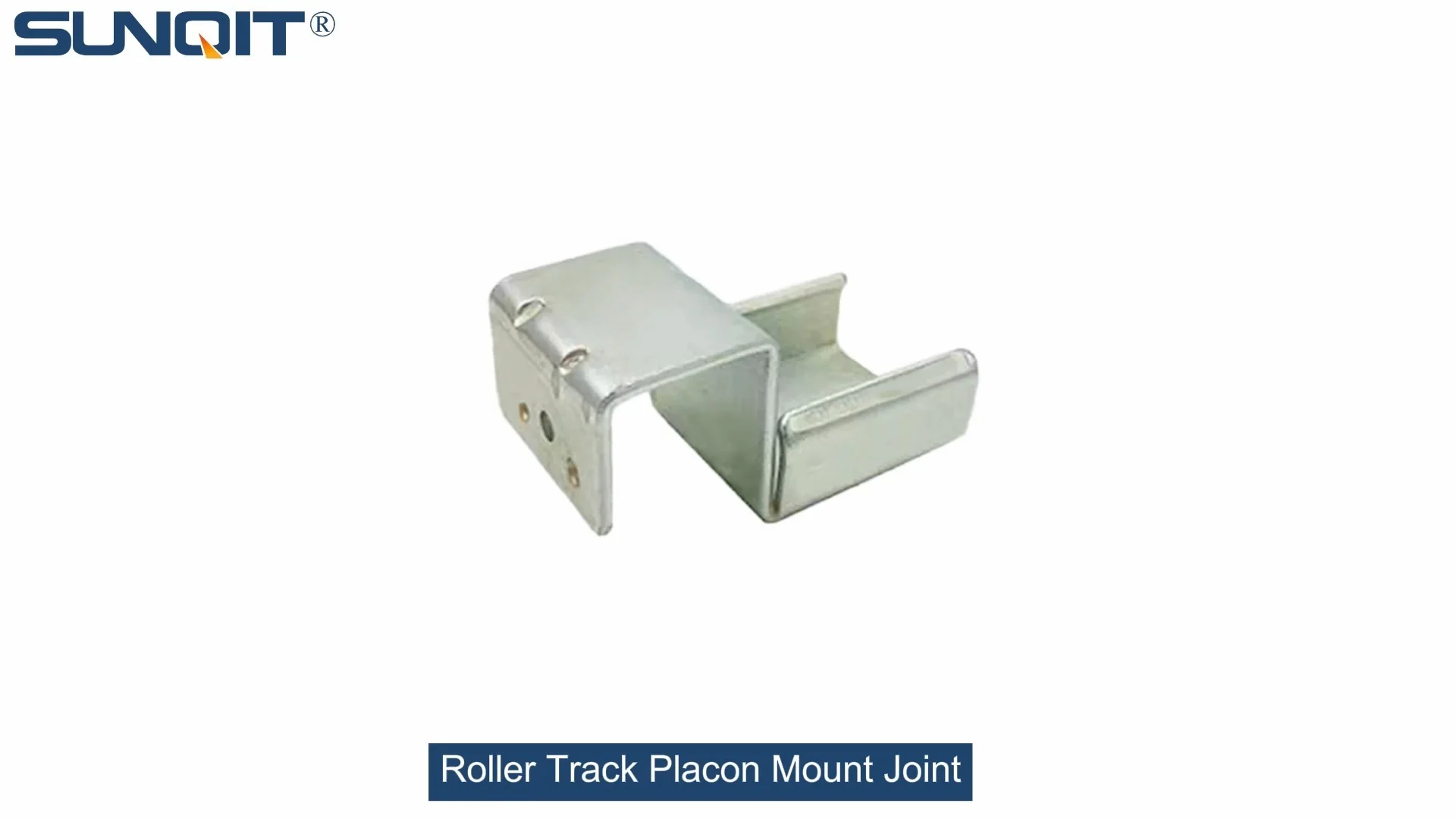
Behind every smooth-running production line, there's a silent hero: the roller track placon mount joint. These unassuming components might not grab headlines, but they're the backbone of efficiency, ensuring materials glide seamlessly from one station to the next. But here's the thing—not all joints are created equal. The load they can handle varies dramatically across industries, and getting that balance right? It can make or break a workflow. Let's dive into how different sectors rely on these joints, why their load limits matter, and what sets them apart.
First Things First: What Are Roller Track Placon Mount Joints?
Before we jump into comparisons, let's get clear on what we're talking about. Roller track placon mount joints are the connectors that fasten roller tracks to frames, workbenches, or conveyor systems. Think of them as the "glue" that holds the material handling setup together—literally. They come in various designs, but their core job is simple: support the weight of moving materials (whether it's car parts, medical devices, or electronics) while maintaining stability and alignment.
But here's where it gets tricky: a joint that works perfectly for lightweight circuit boards might crumble under the weight of a car door. That's why manufacturers like ours spend countless hours engineering joints with specific load limits, tailored to the unique demands of different industries. And it's not just about raw strength—factors like material, design, and even environmental conditions play a huge role in how these joints perform.
Industry Showdown: Load Limits in Action
Let's take a walk through four key industries and see how their roller track placon mount joints stack up. From heavy metal to delicate devices, each sector has its own "must-have" when it comes to load capacity.
1. Automotive Manufacturing: Heavy-Duty Heroes
Step into an automotive plant, and you'll immediately notice the scale. Car frames, engines, and transmission parts—these are not light. A typical car door alone can weigh 30-50 pounds, and when you're moving multiple doors per minute along a roller track, the joints holding that track need to be tough .
In automotive, roller track placon mount joints often handle loads of 200-500 lbs per linear foot . Why so high? Because it's not just static weight—these joints must also absorb sudden jolts when parts are loaded or unloaded, and withstand constant vibration from nearby machinery. That's why automotive-grade joints are usually made from high-strength steel or reinforced aluminum profile, with extra-wide bases and secure locking mechanisms to prevent shifting.
Fun fact: Many automotive plants use our lean solution approach here, combining heavy-duty joints with modular roller tracks. This way, if a joint wears out (which happens over time under such stress), it can be swapped out quickly without halting the entire line.
2. 3C Assembly: Precision Over Raw Power
Now, contrast that with 3C assembly (computers, communications, consumer electronics). Here, the focus shifts from brute strength to precision. Think smartphones, laptops, and circuit boards—these components are lightweight (often under 5 lbs each) but incredibly sensitive to misalignment. A tiny wobble in the roller track could scratch a screen or misplace a microchip, costing thousands in rework.
For 3C, load limits are lower—typically 20-50 lbs per linear foot —but the joints need to offer pinpoint stability. That's why we often use aluminum lean pipe and aluminum profile accessories here. Aluminum is lighter than steel, which reduces overall system weight, but it's still rigid enough to keep the track perfectly straight. Plus, aluminum's smooth surface minimizes friction, ensuring delicate parts glide without snagging.
Another key factor? ESD (Electrostatic Discharge) protection. Many 3C components are sensitive to static, so joints in these setups are often coated with anti-static materials, adding another layer of complexity to their design—all while keeping load limits in check.
3. Medical Device Manufacturing: Clean, Consistent, and Controlled
Medical device manufacturing walks a tightrope between precision and compliance. Devices like surgical tools, MRI components, and implant parts require ultra-clean environments and consistent movement. Loads here are moderate—usually 50-100 lbs per linear foot —but the joints must meet strict (sanitary) standards, often needing to withstand frequent washdowns with harsh chemicals.
Stainless steel is the material of choice here for placon mount joints. It resists corrosion from cleaning agents and doesn't harbor bacteria, which is non-negotiable for medical settings. We also design these joints with minimal crevices, where dirt or moisture could hide—because in healthcare, even a tiny flaw in the material handling system can compromise patient safety.
What's interesting is how medical manufacturers often prioritize lean tube systems with adjustable joints. As medical tech evolves, production lines need to adapt quickly (e.g., switching from manufacturing syringes to ventilator parts during a crisis). Adjustable joints let them reconfigure roller tracks on the fly, without sacrificing load stability.
4. Warehousing & Logistics: Dynamic Loads and Durability
Warehouses and distribution centers are all about movement—pallets, cartons, and packages zipping along conveyor systems 24/7. Here, the load isn't just heavy; it's dynamic . A pallet loaded with 500 lbs of goods might hit the roller track at speed, creating sudden impact forces that static load ratings don't always account for.
Warehouse roller track placon mount joints typically handle 100-300 lbs per linear foot , but with a focus on shock absorption. Many use reinforced plastic or steel-aluminum hybrids, which flex slightly under impact to prevent cracking. We also see a lot of roller track and accessories like shock-absorbing bumpers here, paired with joints that have extra-wide mounting plates to distribute weight evenly across the frame.
Another trend? Modularity. Warehouses often scale up or down seasonally (think holiday rushes), so joints need to be easy to add or remove. Our lean pipe wholesale options are popular here—businesses can stock up on extra joints and quickly expand their roller track systems when needed.

The Big Comparison: Load Limits, Materials, and Key Needs
To make it easier to see the differences, let's put it all in a table. This breakdown shows how load limits, materials, and priorities shift across industries:
| Industry | Typical Load Limit (per linear foot) | Common Materials | Top Priority | Example Use Case |
|---|---|---|---|---|
| Automotive | 200-500 lbs | High-strength steel, reinforced aluminum | Shock absorption, durability | Moving car doors and engine parts |
| 3C Assembly | 20-50 lbs | Aluminum profile, anti-static coated steel | Precision alignment, ESD protection | Conveying smartphone circuit boards |
| Medical Devices | 50-100 lbs | Stainless steel, corrosion-resistant aluminum | Sanitary design, adjustability | Handling surgical tool components |
| Warehousing & Logistics | 100-300 lbs | Steel-aluminum hybrids, reinforced plastic | Dynamic load handling, modularity | Pallet and carton transport |
Notice how there's no "one-size-fits-all" here? A joint that's perfect for automotive would be overkill (and expensive) for 3C assembly, while a 3C joint would fail miserably in a warehouse. That's why working with a supplier who understands these nuances is so critical.

What Else Affects Load Limits? Beyond the Basics
Load limits aren't just about the joint itself—they're also influenced by the system around them. Let's break down a few hidden factors that can make a big difference:
Material Matters: Aluminum vs. Steel vs. Plastic
We've touched on materials, but it's worth diving deeper. Steel is the heavyweight champion—great for high loads but heavy and prone to rust (unless coated). Aluminum profile is lighter and corrosion-resistant, ideal for medium loads and clean environments (like medical or 3C). Plastic is lightweight and cheap but only works for very light loads (think small electronic components).
For example, our aluminum lean pipe joints are popular in 3C and medical because they offer the best of both worlds: strength without the bulk. And when paired with aluminum pipe accessories, they create a system that's easy to adjust and clean.
Design: How Joints Distribute Weight
A joint's load limit isn't just about how strong its material is—it's about how it distributes weight. A joint with a narrow mounting plate might have the same material strength as one with a wide plate, but the narrow one will fail faster because the weight is concentrated on a smaller area. That's why automotive joints often have flared bases—they spread the load across the frame, reducing stress on any single point.
Environment: Heat, Cold, and Chemicals
Extreme temperatures can weaken materials. A steel joint that handles 500 lbs in a 70°F factory might only handle 400 lbs in a freezing warehouse, as cold makes steel more brittle. Similarly, medical joints need to resist harsh disinfectants that can corrode lesser materials over time. Always factor in the environment when choosing a joint!

Real-World Impact: When Load Limits Go Wrong
To drive home why this matters, let's look at two short case studies from our work:
The Automotive Near-Miss
A few years back, an automotive client came to us after a costly incident. They'd installed generic roller track joints (rated for 300 lbs/ft) on a line moving car engines (which weigh ~450 lbs each). Within a week, a joint failed, sending an engine crashing to the floor. The result? $10,000 in damaged parts, 8 hours of downtime, and a safety scare. We swapped in our heavy-duty steel joints (rated for 500 lbs/ft) with reinforced locking pins, and they haven't had an issue since.
The 3C Precision Problem
A 3C manufacturer once tried to cut costs by using steel joints (rated for 100 lbs/ft) on a line handling circuit boards (1-2 lbs each). The problem? Steel is heavier, so the roller track sagged slightly in the middle, causing boards to tilt and scratch. We replaced them with aluminum profile joints (rated for 40 lbs/ft), which were light enough to keep the track straight. Scratches dropped by 90%, and their rework costs plummeted.
How to Choose the Right Joint for Your Industry
Not sure where to start? Here's a quick checklist to guide you:
- Calculate your max load: Weigh your heaviest item, then add 20% for safety (remember dynamic loads!)
- Consider the environment: Will the joint be exposed to moisture, chemicals, or extreme temps?
- Think about adjustability: Do you need to reconfigure your line often? Lean solution systems with modular joints are key here.
- Don't skimp on quality: A cheap joint might save money upfront, but a failure could cost far more in downtime and repairs.
And when in doubt, reach out to a supplier who specializes in your industry. At our company, we've worked with hundreds of clients across automotive, 3C, medical, and logistics—we can help you test load limits, recommend materials, and even design a custom system if needed.
Final Thoughts: The Unsung Heroes of Efficiency
Roller track placon mount joints might not be the stars of the production line, but they're the unsung heroes that keep things moving. Whether you're building cars, assembling smartphones, or shipping packages, getting the right load limit is critical. It's not just about strength—it's about matching the joint to your industry's unique needs: precision for 3C, durability for automotive, cleanliness for medical, and flexibility for logistics.
At the end of the day, the best joint is the one that works for you —quietly, reliably, and without fanfare. And if you need help finding that perfect fit? We're here. After all, we've built our business on understanding the details that others overlook—because in manufacturing, the details are what make the difference.