- Company Articles
- Industry articles
- Industry standards
- Complete Guide to 3060 National Standard Profile A: Applications, Design & Best Practices

Complete Guide to 3060 National Standard Profile A: Applications, Design & Best Practices
Related Product
3060 National Standard Profile A
Workbench, production line, logistic rack, warehouse rack Industry: Manufacturer workshop, Automobile, Electronic, Assembling, logistic
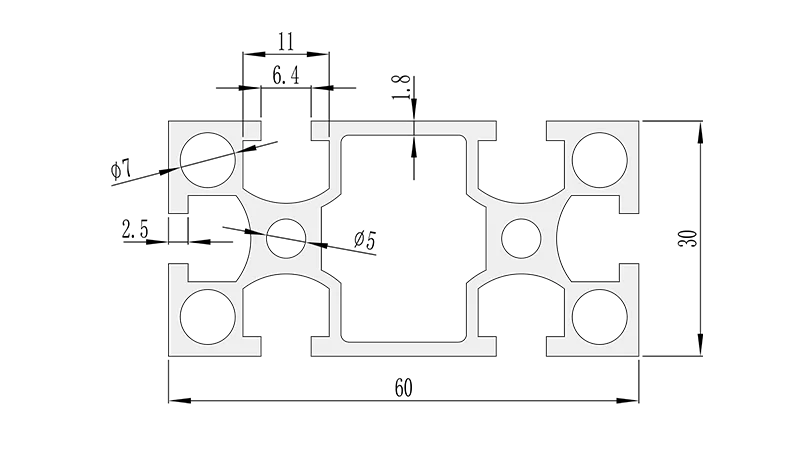
In the world of industrial manufacturing and lean system optimization, the right tools and components can mean the difference between a chaotic workflow and a seamlessly efficient operation. Among these foundational components, aluminum profiles stand out for their versatility, durability, and adaptability. Today, we're diving deep into one of the most widely used profiles in factories, workshops, and warehouses: the 3060 National Standard Profile A. Whether you're building a sturdy workbench, organizing materials with a multi-tiered rack, or designing a custom lean system, this guide will walk you through everything you need to know—from real-world applications to design tips and best practices that keep your operations running smoothly.
What is 3060 National Standard Profile A?
Before we jump into its uses, let's start with the basics. The 3060 National Standard Profile A is a type of aluminum extrusion profile defined by its cross-sectional dimensions: 30mm in width and 60mm in height. What makes it a "national standard" profile is its adherence to strict size and quality specifications, ensuring consistency across manufacturers and compatibility with a wide range of aluminum profile accessories.
Unlike generic aluminum bars, this profile features a T-slot design—longitudinal grooves along its length—that allows for easy attachment of brackets, panels, and other components without welding. This slot system is the secret to its flexibility; it lets you assemble, disassemble, and reconfigure structures in minutes, making it a favorite for lean system setups where adaptability is key.
Crafted from high-grade aluminum alloy, the 3060 Profile A strikes an ideal balance between strength and weight. It's lightweight enough for manual handling during assembly but robust enough to support heavy loads, from tools on a workbench to stacked materials on a rack. Plus, its anodized surface treatment resists corrosion and wear, ensuring longevity even in busy industrial environments.
Applications: Where 3060 Profile A Shines
The true power of the 3060 National Standard Profile A lies in its versatility. Let's explore some of the most common (and impactful) ways it's used in industrial settings.
Workbenches: The Heart of the Workshop
Walk into any manufacturing plant or repair shop, and you'll likely find workbenches built with aluminum profiles—and for good reason. The 3060 Profile A is a top choice here because it combines stability with customization. For example, the "Workbench E (single deck-without caster)" is a popular configuration that uses 3060 rails as the frame, paired with a solid top (often plywood or aluminum honeycomb panel) to create a sturdy surface for assembly, testing, or packaging.
What makes this setup so effective? The T-slots allow for easy addition of accessories like tool hangers, LED task lights, or even ESD (Electrostatic Discharge) mats—critical for electronics manufacturing. Workers can adjust the height by swapping out leg components, ensuring ergonomic comfort during long shifts. And if the workflow changes? Simply reconfigure the bench by adding shelves, drawers, or side extensions using compatible aluminum profile accessories.
Material Racks: Organizing for Efficiency
In warehouses and production lines, keeping materials organized and accessible is half the battle. This is where the 3060 Profile A truly excels, especially in configurations like the "Material Rack B (3 row and 3 floor)." This multi-tiered rack uses 3060 profiles as vertical supports and horizontal beams, creating three rows of three shelves each—perfect for storing everything from small components to bulky parts.
Unlike traditional steel racks, which are heavy and hard to modify, a 3060-based rack is lightweight enough to be moved (with casters, if needed) and can be adjusted on the fly. Need to accommodate taller items? Loosen the brackets, slide the shelves up, and re-tighten. The T-slot design also lets you add dividers, label holders, or even roller tracks (more on those later) to turn static storage into a dynamic material flow system. For lean system managers, this adaptability reduces waste by ensuring materials are always within arm's reach of the production line.
Lean System Frames: Building the Backbone of Efficiency
Lean manufacturing thrives on minimizing waste and maximizing flow—and the 3060 Profile A is a cornerstone of this philosophy. From conveyor supports to assembly line stations, this profile forms the "skeleton" of lean systems. For example, many factories use it to build frames for flow racks, where parts glide from storage to assembly via gravity-fed roller tracks. The 3060's rigidity ensures the frame stays stable even as parts move, while its lightweight nature keeps the overall system easy to reposition during layout changes.It's also a key component in custom workstations designed for specific tasks, like pick-and-pack stations or quality inspection areas. By combining 3060 profiles with accessories like adjustable shelves, tool boards, and LED lighting, teams can create workstations tailored to their exact needs—reducing unnecessary movement and cutting down on production time.
Design Considerations: Crafting a Profile That Works for You
Choosing the 3060 Profile A is just the first step; designing a structure that meets your needs requires careful planning. Here are the key factors to keep in mind.
| Design Factor | What to Consider | Tips for Success |
|---|---|---|
| Load Capacity | How much weight will the structure support? (e.g., tools on a workbench, boxes on a rack) | Check the profile's load ratings (typically 150-300kg per linear meter for 3060 A). For heavier loads, add cross-braces or use thicker-walled variants. |
| Accessory Compatibility | Which aluminum profile accessories do you need? (connectors, end caps, panels) | Stick to national standard accessories (e.g., 3060 aluminum angle yards) to ensure a snug fit. Avoid mixing brands unless verified compatible. |
| Assembly Method | Will the structure be permanent or temporary? Do you need to disassemble it later? | Use T-slot bolts and brackets for temporary setups; for permanence, add adhesive or weld (though welding voids some warranties). |
| Environmental Conditions | Is the area humid, dusty, or exposed to chemicals? | Opt for thicker anodization (10-15μm) for corrosion resistance. In dusty environments, add end caps to prevent debris buildup in T-slots. |
The Role of Aluminum Profile Accessories
No profile is complete without its accessories—and for the 3060 Profile A, the right add-ons can make or break your design. Here are a few must-know accessories:- End Caps: These plastic or aluminum caps fit snugly into the ends of the profile, preventing dust, moisture, and sharp edges. The 3060 aluminum profile end cap is a small detail that adds big value in terms of safety and maintenance.
- Connectors: From simple L-brackets to multi-angle joints, connectors hold the profile together. For 3060 Profile A, 90° aluminum profile connectors are the most common, but 45° and 135° options are available for angled structures.
- Panels and Shelves: Attach plywood, aluminum honeycomb panels, or acrylic sheets to the T-slots to create work surfaces or storage shelves. Use panel holders designed for 30mm-wide slots to ensure a secure fit.
Pro tip: Always test-fit a small section of your design before building the full structure. This catches compatibility issues early—saving you time and frustration later.
Best Practices: Getting the Most Out of Your 3060 Profile A
Even the best profile won't perform well if misused. Follow these best practices to ensure your structure is safe, efficient, and long-lasting.
Real-World Example: How a Auto Parts Factory Boosted Efficiency with 3060 Profile A
A mid-sized auto parts manufacturer was struggling with disorganized workstations and inefficient material storage. Their assembly line workers spent 15-20 minutes per shift searching for tools or moving parts from distant racks—wasting valuable time and slowing production.
The solution? They invested in 3060 National Standard Profile A to rebuild their workbenches and material storage. For workstations, they used "Workbench E (single deck-without caster)" frames with added tool hooks and LED lights, ensuring tools were always within reach. For materials, they installed "Material Rack B (3 row and 3 floor)" units along the assembly line, each stocked with parts needed for the day's production.
The results were striking: Tool-searching time dropped by 90%, and material handling errors decreased by 40%. Workers reported feeling less fatigued, and the factory saw a 12% increase in daily output within the first month. As the plant manager put it: "We didn't just buy aluminum profiles—we bought a way to make our team's jobs easier and our workflow smarter."
Installation Tips for Stability
A wobbly structure isn't just annoying—it's dangerous. To ensure stability:
- Anchor to the Floor: For tall racks or heavy workbenches, use floor flanges and bolts to secure the profile to the ground.
- Add Cross-Braces: Diagonal cross-braces (made from smaller profiles like 2020) prevent swaying, especially in high-traffic areas.
- Torque Fasteners Properly: Over-tightening can strip T-slots; under-tightening leads to looseness. Use a torque wrench set to 25-30 Nm for most accessories.
Maintenance: Keeping Your Profile in Top Shape
Aluminum profiles are low-maintenance, but a little care goes a long way:
- Clean Regularly: Wipe down T-slots with a dry cloth to remove dust; for grime, use a mild detergent and soft brush (avoid abrasive cleaners that scratch the anodized surface).
- Lubricate Moving Parts: If your structure includes sliding components (like adjustable shelves), apply a silicone-based lubricant to T-slots every 3-6 months.
- Inspect Joints: Check connectors monthly for looseness, especially in high-vibration areas like near machinery. Tighten as needed to prevent wear.
Safety First: Avoiding Common Pitfalls
Safety should always be a priority. Avoid these mistakes:
- Overloading: Never exceed the profile's load capacity. If in doubt, err on the side of caution—add extra supports or use a larger profile (like 4080) for heavy loads.
- Ignoring Sharp Edges: Uncapped profiles can have sharp corners. Always install end caps to prevent cuts, especially in areas with foot traffic.
- Using Damaged Profiles: Dents or bent sections weaken the profile. replace any damaged pieces immediately.
Why 3060 Profile A Belongs in Your Lean System
At the end of the day, the 3060 National Standard Profile A isn't just a piece of aluminum—it's a tool for building better, more efficient workplaces. Its ability to adapt to changing needs aligns perfectly with lean system principles: eliminating waste, improving flow, and empowering teams to work smarter.
Whether you're upgrading a single workbench or overhauling your entire facility, this profile offers a rare combination of affordability, durability, and flexibility. And when paired with the right aluminum profile accessories and best practices, it becomes a foundation for growth—helping your business stay competitive in a fast-paced industrial world.
So, the next time you're looking to optimize your workflow, ask yourself: Could a 3060 National Standard Profile A be the missing piece in your lean system puzzle? For thousands of factories and workshops around the world, the answer has been a resounding "yes."