- Company Articles
- Industry articles
- Industry standards
- Consumer Electronics Assembly: 4040E EU Standard Aluminum Profile in Workstation Design

Consumer Electronics Assembly: 4040E EU Standard Aluminum Profile in Workstation Design
Related Product
4040E EU Standard Aluminum Profile
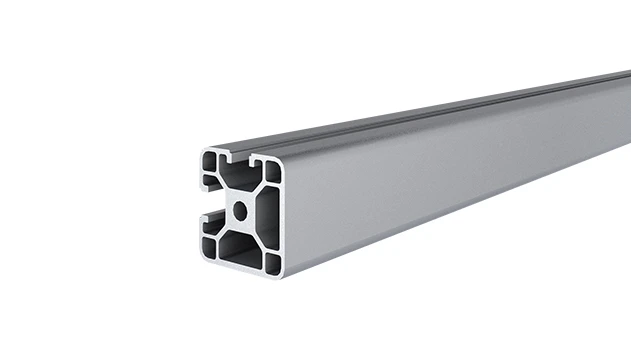
4040E is a 4.00x4.00 CM fractional 40 series square extrusion T-slot profile with two side open T-slots, two side with closed face, each side with 4.00cm face. The profile has align-a-grooves to assist in aligning connecting profiles.
Walk into any consumer electronics assembly plant, and you'll feel it immediately—the hum of precision, the urgency of deadlines, and the quiet pressure to keep up with a market that changes faster than a smartphone's software update. From sleek smartphones to compact wearables, the demand for smaller, smarter, and more feature-packed devices has never been higher. But here's the catch: the workstations that build these innovations often struggle to keep pace. Rigid, bolted-down tables, clunky material racks, and one-size-fits-all layouts can turn even the most skilled teams into victims of inefficiency. It's a familiar story: a new product model arrives, and suddenly, the assembly line grinds to a halt while workers dismantle and rebuild workstations. By the time they're done, the next design tweak is already on the horizon.
This is where the 4040E EU Standard Aluminum Profile steps in—not as just another piece of industrial hardware, but as a catalyst for change. In a world where flexibility isn't a luxury but a necessity, this unassuming aluminum extrusion is redefining what a workstation can be. Let's dive into how it's transforming consumer electronics assembly floors, one modular joint at a time.
What Makes the 4040E So Special? Let's Break It Down
First things first: you might be wondering, "What's in a number? 4040E sounds like a code, not a revolution." Fair question. The "4040" refers to the profile's cross-section—40mm by 40mm—a sweet spot that balances strength and versatility. The "E" denotes its compliance with EU standards, meaning it's engineered for consistency, safety, and compatibility with a vast ecosystem of accessories. But numbers aside, the real magic lies in what this profile enables.
Aluminum, as a material, is a dream for assembly environments. It's lightweight enough that a single worker can maneuver sections without heavy machinery, yet strong enough to support the tools, components, and even small equipment that populate electronics workstations. Unlike steel, it resists corrosion, which is crucial in clean assembly areas where dust and moisture control matter. And because it's an extrusion, each 4040E profile is uniform—no surprises in strength or fit, whether you're using a meter-long piece or a five-meter one.
But the 4040E doesn't work alone. Its true power comes from how it plays with others—specifically, aluminum profile accessories. Think of the profile as the backbone, and accessories like joints, brackets, and fasteners as the muscles and joints that let it move, bend, and adapt. Need a workstation that tilts for better ergonomics? There's a joint for that. Want to add a shelf above the assembly area? Brackets make it a snap. This modularity turns what was once a static piece of furniture into a living, breathing system that evolves with your needs.
From Parts to Process: How Roller Track and Accessories Boost Flow
Consumer electronics assembly isn't just about putting parts together—it's about moving those parts efficiently. A bottleneck in material flow can slow an entire line, and traditional workstations often treat material handling as an afterthought. Enter roller track: those simple, unassuming lines of wheels that let components glide from one station to the next. When paired with 4040E profiles, roller track becomes more than a conveyor belt; it becomes an integrated part of the workstation itself.
Imagine (oops, scratch that—let's describe ) a smartphone assembly line where circuit boards need to move from the soldering station to the testing station. With a traditional setup, an operator might carry a tray of boards, risking drops or delays. With a 4040E-based workstation, you can mount roller track directly to the profile's T-slots (those handy grooves along the edges) using specialized brackets. Suddenly, the boards slide smoothly, hands-free, from one operator to the next. The angle of the track? Adjustable, thanks to those aluminum profile accessories. Need it steeper for heavier components? Loosen a few fasteners, tilt, and retighten. Done.
And it's not just straight tracks. Curved roller track, connector pieces, and even swivel roller balls (like the 1-inch stainless steel variety) let you design flow paths that navigate around obstacles or feed into different workstations. This isn't just about speed—it's about reducing waste, a core principle of lean systems. When material moves seamlessly, you cut down on "motion waste" (operators walking to fetch parts) and "waiting waste" (stations idling for components). It's lean thinking made tangible, right there on the assembly floor.

Workstation Design: Ergonomics Meets Efficiency
Let's talk about the people behind the products. Assembly line workers spend hours at their stations, repeating precise movements. A poorly designed workstation can lead to fatigue, errors, and even injuries. The 4040E profile puts ergonomics front and center, because a comfortable operator is a productive operator.
Height adjustability is a prime example. Traditional workbenches are often fixed at a single height, forcing tall operators to hunch and shorter ones to stretch. With 4040E, you can build a workstation with adjustable legs using—you guessed it—aluminum profile accessories like height-adjustable feet or telescoping joints. An operator can tweak their station to fit their body, not the other way around. Add in accessories like monitor mounts (attached via T-slot brackets) or tool holders, and suddenly the workstation feels personalized, reducing strain and boosting focus.
But ergonomics isn't just about height. It's about layout, too. Maybe an operator needs their most-used tools within arm's reach on one side, and roller track for incoming components on the other. With 4040E, you can rearrange the accessories—move a tool rack, adjust the roller track angle—without rebuilding the entire workstation. It's customization at the speed of thought, not the speed of a construction crew.
Lean System Alignment: Because Waste Has No Place in Modern Assembly
Lean manufacturing isn't a buzzword—it's a mindset focused on eliminating waste, and nowhere is that more critical than in consumer electronics, where margins are tight and competition is fierce. The 4040E profile isn't just a tool for flexibility; it's a tool for lean system success.
Take "setup waste," for example. When a new product launches, traditional workstations might require days of disassembly and reconstruction. With 4040E, reconfiguration happens in hours, or even minutes. Need to add a new testing module? Unbolt the old accessories, attach new ones, and you're ready. That's less downtime, more production, and a direct hit to "waiting waste."
Then there's "inventory waste." Traditional workstations often require custom parts or specialized tools, leading to stockpiles of rarely used components. 4040E and its aluminum profile accessories, however, are standardized. A single type of joint or bracket can work across multiple workstation designs, reducing the need to stock dozens of unique parts. It's a small change that adds up to big savings in storage and procurement.
Even "defect waste" gets a nudge. When workstations are ergonomic and material flow is smooth, operators make fewer mistakes. Components arrive on time, tools are within reach, and the workspace feels organized—all factors that reduce errors and rework. It's lean in action, driven by a workstation that supports, rather than hinders, the human element.
Traditional vs. 4040E Workstations: The Numbers Speak
Still on the fence? Let's put it all together with a side-by-side comparison. The table below highlights how 4040E-based workstations stack up against traditional alternatives in key areas:
| Factor | Traditional Workstations | 4040E EU Standard Aluminum Profile Workstations |
|---|---|---|
| Reconfiguration Time | Days (requires disassembly/rebuilding) | Hours (modular accessory adjustment) |
| Ergonomic Customization | Limited (fixed height/layout) | High (adjustable height, angles, and add-ons) |
| Material Flow Integration | Afterthought (separate conveyors needed) | Integrated (roller track mounts directly to profile) |
| Long-Term Cost | Higher (frequent replacements/modifications) | Lower (durable, reusable across product lines) |
| Lean Principle Alignment | Minimal (rigid, waste-prone) | Strong (supports 5S, waste reduction, continuous improvement) |
Choosing Your Partner: The Role of a Reliable Supplier
You've got the vision: a flexible, lean, ergonomic assembly floor powered by 4040E profiles. Now, you need the right pieces to bring it to life. This is where choosing a reputable lean pipe supplier (or, more specifically, an aluminum profile supplier) becomes critical. Not all 4040E profiles are created equal, and the quality of accessories can make or break your workstation's performance.
Look for suppliers who prioritize consistency. EU standard compliance is a good start, but ask about quality control processes—how do they ensure each profile's dimensions are precise? T-slots that are slightly off can make accessories fit loosely, leading to wobbly workstations. Also, check their range of aluminum profile accessories. A supplier with a limited selection might leave you stuck when you need a specific joint or bracket for a custom design.
Technical support matters too. Even the most modular system can feel intimidating at first. A good supplier won't just sell you parts—they'll help you design your workstation, recommend accessories, and troubleshoot issues. Maybe you're unsure how to integrate roller track with your 4040E setup; a knowledgeable supplier can walk you through bracket options and installation tips, saving you time and frustration.
The Future of Assembly: Where Flexibility Drives Innovation
Consumer electronics will only get more complex, with shorter product lifecycles and higher customization demands. In this landscape, workstations can't be static relics—they need to be as agile as the teams using them. The 4040E EU Standard Aluminum Profile isn't just a solution for today's challenges; it's a foundation for tomorrow's innovations.
Whether you're assembling smartwatches, AR headsets, or the next big gadget, the message is clear: flexibility, efficiency, and ergonomics aren't optional. They're the pillars of a competitive assembly line. And with 4040E profiles, aluminum profile accessories, and integrated roller track, you're not just building workstations—you're building a system that grows with your ideas.
So, the next time you walk your assembly floor, take a look at those workstations. Are they holding you back, or propelling you forward? With 4040E, the answer can be the latter—one modular joint, one roller track, one ergonomic adjustment at a time.