- Company Articles
- Industry articles
- Industry News
- Corrugated Aluminum Pipe Innovation: Latest Trends in Manufacturing

Corrugated Aluminum Pipe Innovation: Latest Trends in Manufacturing
Related Product
Corrugated Aluminum Pipe
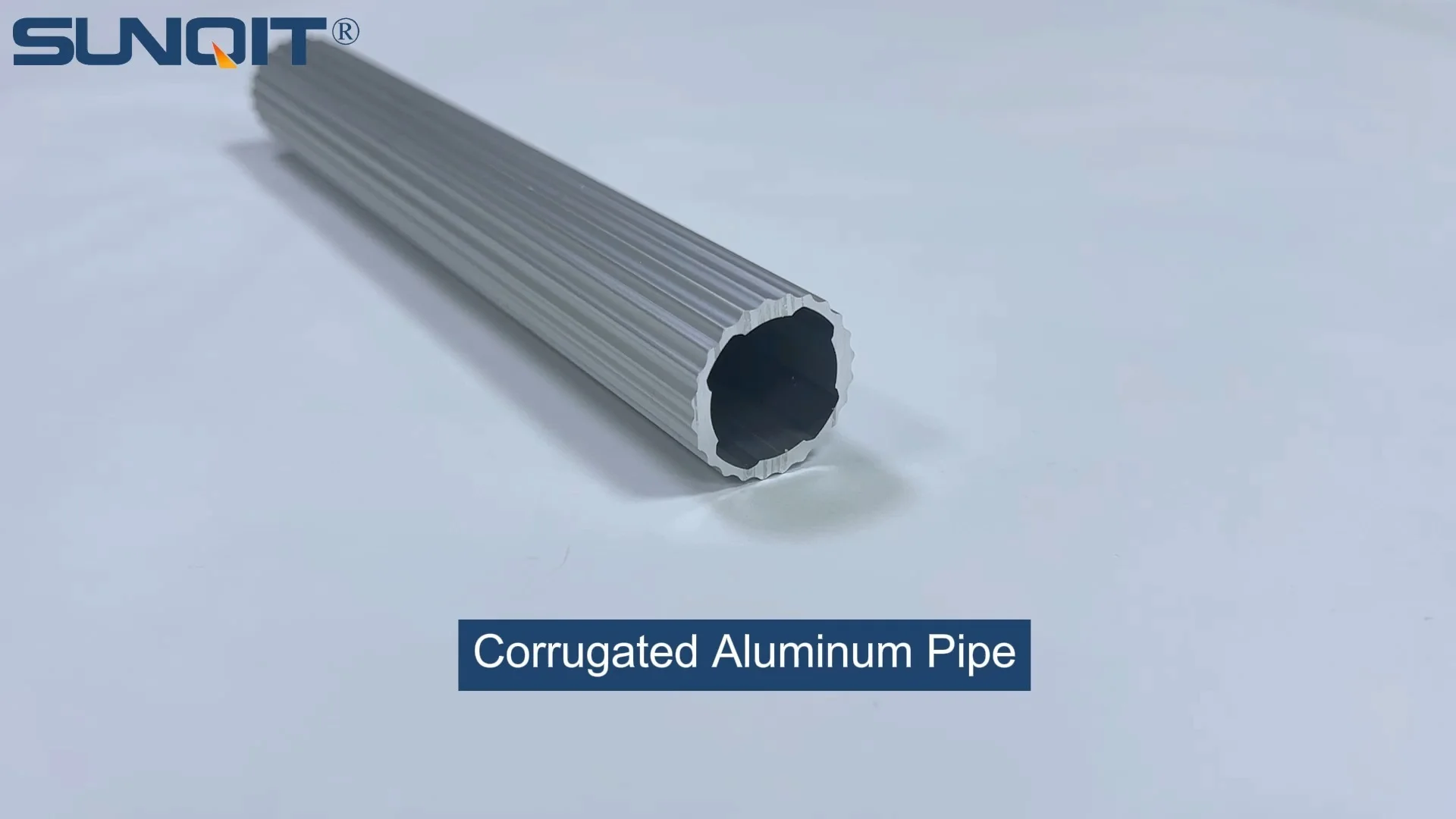
Product Description The slot side is 10mm which can work with a T sliding block for connection accessories Quick Detail Product name Corrugated Aluminum pipe model GLT28-T-3010A Material Science 6005-T6 thickness 1.7mm surface treatment anodic oxidat
In the fast-paced world of modern manufacturing, every component counts. From the smallest nut to the largest conveyor belt, the tools and materials we choose shape efficiency, sustainability, and ultimately, success. Among these, one material has been quietly revolutionizing workflows and redefining what's possible on the factory floor: corrugated aluminum pipe . More than just a hollow tube, it's a symbol of adaptability, blending strength with flexibility to meet the ever-changing demands of lean production, automation, and global supply chains. Let's dive into the innovations driving this material forward and the trends reshaping its role in manufacturing today.
What Are Corrugated Aluminum Pipes? A Closer Look at Structure and Material
At first glance, a corrugated aluminum pipe might look like any other metal tube—but its magic lies in the details. Unlike smooth-walled pipes, corrugated versions feature a series of ridges and grooves (the "corrugations") along their length. This design isn't just aesthetic; it's engineering genius. The waves distribute stress evenly, making the pipe far stronger than a smooth tube of the same weight. Think of it like a cardboard box: a flat sheet bends easily, but when folded into a corrugated pattern, it gains remarkable rigidity. For aluminum, this means a material that's lightweight yet tough enough to handle heavy loads, repeated use, and the wear and tear of factory environments.
Why aluminum, though? Steel is stronger, plastic is cheaper—so what sets aluminum apart? For starters, it's naturally corrosion-resistant . Unlike steel, which rusts without protective coatings, aluminum forms a thin oxide layer when exposed to air, shielding it from moisture and chemicals. This makes it ideal for factories where spills, humidity, or cleaning agents are common. Then there's weight: aluminum is about one-third the density of steel. For applications like conveyor systems, workbenches, or turnover trolleys, this translates to easier maneuverability, lower energy use (for motorized equipment), and reduced strain on workers who move these tools daily.
But perhaps aluminum's biggest advantage is its sustainability . It's 100% recyclable, and recycling it uses just 5% of the energy required to produce new aluminum. In an era where manufacturers are under increasing pressure to reduce their carbon footprint, this matters. Corrugated aluminum pipes aren't just tools for today—they're investments in a greener tomorrow.
Innovation in Corrugated Aluminum Pipe Design: Beyond the Basics
Enhanced Structural Integrity: More Than Just Ridges
Early corrugated pipes had simple, uniform waves, but modern designs are far more sophisticated. Engineers now tailor corrugation patterns to specific uses. For example, pipes used in conveyor systems might have shallower, tighter corrugations to reduce friction, allowing parts to glide smoothly. Those meant for heavy-duty material racks, on the other hand, feature deeper, wider ridges for maximum load-bearing capacity. Some manufacturers even use computer simulations to optimize wave shape, ensuring the pipe bends where needed (for flexibility) and stays rigid where it counts (for stability).
Another breakthrough is the integration of internal reinforcement . By adding thin aluminum ribs or honeycomb structures inside the pipe (without increasing weight), designers have boosted its compressive strength by up to 40%. This is a game-changer for applications like workbench frames, where the pipe must support tools, components, and even workers without warping over time.
Material Science Breakthroughs: Alloys for Every Need
Aluminum alone is strong, but when blended with other metals—magnesium, silicon, or copper—it becomes an aluminum extrusion profile with superpowers. Take 6061-T6 aluminum, for instance: a popular alloy in corrugated pipes, it's heat-treatable, offering a perfect balance of strength, weldability, and machinability. For factories dealing with extreme temperatures (like automotive paint shops or aerospace testing facilities), there's 5052 aluminum, which resists thermal expansion and maintains its shape even under heat stress.
Coatings are another area of innovation. While aluminum resists corrosion naturally, specialized coatings take it further. Anodized finishes add a hard, scratch-resistant layer, ideal for pipes used in high-traffic areas like assembly lines. For electronics manufacturers, ESD (electrostatic discharge) coatings prevent static buildup, protecting sensitive components from damage. Even color-coded coatings are making waves—yellow for high-visibility safety zones, grey for standard work areas—helping workers quickly identify pipe functions and maintain order on the floor.
Sustainability in Production: From Cradle to Cradle
Innovations in corrugated aluminum pipes aren't just about performance—they're about purpose. Today's manufacturers aren't just building pipes; they're building circular systems . Take, for example, the shift to "closed-loop" production. Many suppliers now use scrap aluminum from old pipes, machinery, and even beverage cans to create new corrugated pipes. This reduces reliance on bauxite (the ore used to make aluminum) and cuts down on landfill waste. Some companies have even started offering "take-back" programs, where old pipes are collected, recycled, and turned into new products—closing the loop on sustainability.
Energy efficiency is another focus. Extruding aluminum (the process of shaping it by forcing it through a die) is energy-intensive, but new technologies are changing that. induction heating, which targets heat directly at the metal rather than heating an entire furnace, reduces energy use by up to 30%. Meanwhile, water-based coolants and lubricants are replacing harsh chemicals, making production safer for workers and kinder to the environment. The result? A corrugated aluminum pipe that's not just strong and light, but also a responsible choice for brands looking to align with ESG (Environmental, Social, Governance) goals.

Key Trends Shaping the Corrugated Aluminum Pipe Market
Integration with Lean Systems: Building the Factories of the Future
Lean manufacturing isn't just a buzzword—it's a mindset, and corrugated aluminum pipes are its perfect partner. At the heart of lean is the elimination of waste: time, space, materials, and effort. Corrugated pipes excel here because they're modular . Unlike fixed steel structures, which are expensive to reconfigure, corrugated aluminum pipes can be assembled, disassembled, and rearranged in minutes using simple aluminum profile accessories like joints, brackets, and clamps. Need to reposition a workbench to accommodate a new assembly line? Swap out a few connectors. Want to add a shelf to a material rack? Snap on a new bracket. This flexibility means factories can adapt to changing production needs without tearing down walls or investing in entirely new equipment.
But it's not just about physical adaptability. Corrugated pipes also support lean principles like "5S" (Sort, Set in Order, Shine, Standardize, Sustain). Their lightweight nature makes them easy to clean and organize, while color-coded coatings (think red for tools, blue for raw materials) help workers quickly identify where things belong. Even the pipes themselves contribute to "visual management"—their distinct corrugated shape stands out, making it easier to spot misalignments or damage during inspections. For lean system suppliers, this is a win-win: corrugated aluminum pipes don't just fit into lean workflows—they enable them.
Automation and Smart Manufacturing: Pipes That "Talk"
The rise of Industry 4.0 has turned factories into interconnected ecosystems, and corrugated aluminum pipes are getting smarter too. Today's pipes aren't just passive carriers of materials; they're data points. Some manufacturers are embedding RFID tags or sensors directly into the corrugations, allowing pipes to track inventory, monitor temperature, or even alert maintenance teams when they're under stress. Imagine a conveyor system where the pipes themselves can "report" if a roller is jamming or if a section is overheating—preventing breakdowns before they happen.
Automation integration goes beyond sensors, too. Corrugated aluminum pipes are increasingly paired with robotics and AI-driven systems. For example, in automotive plants, lightweight corrugated pipe frames support collaborative robots ("cobots") that work alongside human workers. The pipes' rigidity keeps the robots stable, while their light weight ensures the cobots can move freely without excess energy use. In electronics manufacturing, corrugated pipe workbenches are designed to integrate with automated guided vehicles (AGVs), which glide along tracks made from—you guessed it—corrugated aluminum. It's a seamless dance of human and machine, made possible by a material that's strong enough to support technology yet flexible enough to adapt to it.
Customization for Diverse Industries: One Pipe, Endless Possibilities
Gone are the days of one-size-fits-all manufacturing. Today's industries demand materials tailored to their unique challenges—and corrugated aluminum pipes are rising to the occasion. Take aerospace, for example: here, every gram matters. Suppliers now offer ultra-thin-walled corrugated pipes (as thin as 0.8mm) that reduce weight without sacrificing strength, perfect for building lightweight tool racks and assembly jigs. In the food and beverage sector, hygiene is critical, so pipes are treated with antimicrobial coatings and smooth, easy-to-clean corrugations to prevent bacterial growth.
Electronics manufacturing is another area where customization shines. Many components (like semiconductors or circuit boards) are sensitive to static electricity, so ESD-safe corrugated pipes are now standard. These pipes are coated with conductive materials that dissipate static, protecting fragile parts during transport. Even the corrugation pattern is customized—smaller, tighter waves minimize friction, ensuring components glide smoothly without getting stuck. For medical device makers, where precision is non-negotiable, pipes are engineered with exacting tolerances, ensuring they fit seamlessly into cleanroom environments and comply with strict regulatory standards.
Applications Across Industries: Where Corrugated Aluminum Pipes Make a Difference
Automotive Manufacturing: Powering the Assembly Line
The automotive industry is a early adopter of corrugated aluminum pipes, and it's easy to see why. Car production is a ballet of moving parts—literally. From the moment raw materials arrive to the final inspection of a finished vehicle, components need to flow quickly, safely, and efficiently. Corrugated aluminum pipes are the backbone of this flow. They form the frames of workbenches where workers assemble engines, the rails of conveyor systems that carry doors and dashboards, and the shelves of material racks that store screws, bolts, and wiring harnesses.
One standout application is in "lean cells"—small, self-contained work areas where teams focus on specific tasks (like installing brakes or wiring a dashboard). Corrugated pipes are used to build the cell's structure, including tool holders, part bins, and even overhead racks for cables and hoses. Because the pipes are lightweight, workers can reconfigure the cell in minutes to accommodate a new model or production run. At a leading European automaker, switching from steel to corrugated aluminum pipes in lean cells reduced setup time by 40% and cut the weight of workbenches by 35%—making it easier for workers to adjust their stations and reducing the risk of strain injuries.
Electronics and Semiconductor Production: Precision in Every Wave
In the world of electronics, where components are smaller than a grain of rice, precision is everything. Corrugated aluminum pipes excel here, thanks to their ability to support delicate processes and protect sensitive parts. ESD-safe corrugated pipes are used in cleanrooms to build esd workstations and conveyor systems, ensuring static electricity doesn't damage microchips or circuit boards. The pipes' smooth, coated surfaces also resist dust and particles, critical for maintaining the ultra-clean environments required for semiconductor manufacturing.
Another key use is in "kitting" areas, where components are grouped into kits for assembly. Corrugated aluminum pipe racks with custom dividers keep tiny parts (like resistors, capacitors, and diodes) organized and easy to access. The racks are often paired with roller tracks (another aluminum profile accessory) that allow kits to slide smoothly from storage to the assembly line—reducing the time workers spend searching for parts. At a semiconductor plant in Taiwan, this setup cut "pick time" (the time to gather components) by 25%, freeing up workers to focus on more skilled tasks.
Aerospace and Aviation: Lightweight, High-Strength Solutions
Aerospace manufacturing is a realm of extremes: components must be strong enough to withstand the forces of flight but light enough to keep fuel costs down. Corrugated aluminum pipes hit this sweet spot. They're used to build tooling for aircraft assembly, like jigs that hold wings or fuselages in place during construction. The pipes' rigidity ensures the jigs maintain their shape, critical for aligning parts with millimeter precision. Their light weight, meanwhile, makes the jigs easier to move around the factory floor—no small feat when you're dealing with structures that can weigh thousands of pounds.
Beyond tooling, corrugated aluminum pipes are also finding their way into aircraft interiors. From overhead bin frames to seat tracks, their strength-to-weight ratio makes them ideal for reducing cabin weight (and thus fuel consumption). One aerospace supplier reports that switching to corrugated aluminum in seat tracks reduced the weight of a single aircraft by 150 pounds—translating to savings of over $100,000 in fuel costs per year, per plane.
The Role of Aluminum Profile Accessories in Maximizing Pipe Potential
A corrugated aluminum pipe is only as good as the accessories that bring it to life. Without the right joints, brackets, or connectors, even the most innovative pipe is just a piece of metal. That's where aluminum profile accessories come in—they're the unsung heroes that turn pipes into workbenches, conveyor systems, and material racks. Let's break down some of the most essential ones and how they enhance the pipe's versatility.
Joints and Connectors: These are the building blocks of modular systems. From 90-degree elbows to T-joints and swivel connectors, they allow pipes to be joined at any angle, creating everything from simple frames to complex structures. Many modern joints are designed for "tool-less" assembly—no wrenches or screws required. Just slide the pipe into the joint, twist, and lock. This makes reconfiguration a breeze, a must for lean manufacturing.
Roller Tracks and Casters: For moving materials, roller tracks (often made from aluminum or plastic) attach to corrugated pipes to create gravity-fed conveyor systems. Pair these with casters (wheels mounted on brackets), and suddenly a stationary workbench becomes a mobile cart, able to move parts from one station to another with ease. In warehouses, this combination is a game-changer—reducing the need for forklifts and cutting down on manual labor.
Clamps and Brackets: These accessories secure pipes to walls, floors, or other structures, adding stability to systems like overhead racks or vertical material storage. Some brackets even feature adjustable designs, allowing pipes to be raised or lowered to suit worker heights—a small detail that can make a big difference in ergonomics and worker comfort.
The beauty of these accessories is that they're designed to work together seamlessly. A single corrugated pipe can be paired with a T-joint, a roller track, and a caster to create a mobile material cart in minutes. No special training, no complicated tools—just simple, intuitive assembly. For manufacturers, this means faster setup, less downtime, and the freedom to adapt to new challenges on the fly.
Comparing Traditional Pipes vs. Corrugated Aluminum Pipes: A Practical Table
| Feature | Traditional Steel Pipes | Plastic Pipes | Corrugated Aluminum Pipes |
|---|---|---|---|
| Weight | Heavy (3x denser than aluminum) | Light, but less rigid | Lightweight (1/3 the weight of steel) |
| Strength | High strength, but prone to bending under stress | Low strength; deforms under heavy loads | High strength-to-weight ratio; corrugations resist bending |
| Corrosion Resistance | Poor (requires painting/coating) | Good, but can crack in extreme temperatures | Excellent (natural oxide layer prevents rust) |
| Sustainability | Recyclable, but energy-intensive to produce | Non-biodegradable; limited recycling options | 100% recyclable; low energy use in recycling |
| Customization | Limited (difficult to cut/shape on-site) | Moderate (easily cut, but limited strength options) | High (custom lengths, coatings, and corrugation patterns) |
| Cost (Lifetime Value) | Low upfront cost, but high maintenance (repainting, rust repair) | Low upfront cost, but short lifespan (needs frequent replacement) | Higher upfront cost, but low maintenance and long lifespan (5-10x longer than plastic) |
Partnering with the Right Suppliers: Ensuring Quality and Innovation
In the world of corrugated aluminum pipes, the supplier makes all the difference. A reliable supplier isn't just a vendor—they're a partner in innovation. They understand your industry's unique challenges, offer expert advice on pipe selection and accessories, and stand behind their products with warranties and support. So what should you look for when choosing a supplier?
First, experience matters . Look for suppliers with a track record in your industry. An automotive manufacturer needs a supplier who understands lean cells and conveyor systems, while a medical device maker needs one versed in cleanroom standards and ESD protection. Ask for case studies or references—seeing how they've solved problems for others can give you confidence they'll solve yours.
Second, innovation is key . The best suppliers don't just sell pipes—they invest in R&D to make them better. Do they offer new alloys, coatings, or accessories? Are they exploring sustainability initiatives like closed-loop recycling? A supplier that's ahead of the curve will help you stay ahead of your competitors.
Finally, support counts . Manufacturing doesn't stop at 5 PM, and neither should your supplier. Look for companies that offer fast turnaround times, on-site technical support, and flexible ordering (like small-batch production for prototyping). The last thing you need is a delay because your supplier can't deliver a custom part or answer a question.
The Future of Corrugated Aluminum Pipes: What's Next?
So, where does corrugated aluminum pipe innovation go from here? If current trends are any indication, the future is bright—and full of possibilities. Here are a few predictions:
3D-Printed Accessories: While 3D printing aluminum pipes is still in its infancy, we'll soon see 3D-printed accessories (like custom joints or brackets) become mainstream. This will allow for even more personalized designs, with parts tailored to specific applications—no minimum order required.
Smart Pipes 2.0: Sensors will get smaller, more powerful, and more affordable. Imagine pipes that can monitor their own structural health in real time, using AI to predict when they'll need maintenance. Or pipes that connect to the Internet of Things (IoT), sharing data with other factory systems to optimize workflows automatically.
Biodegradable Coatings: While aluminum itself is sustainable, the coatings used to enhance its properties (like ESD or antimicrobial coatings) could become even greener. Look for plant-based or biodegradable coatings that offer the same performance but break down naturally at the end of their lifespan.
Conclusion: Embracing the Wave of Innovation
Corrugated aluminum pipes are more than a manufacturing trend—they're a movement. They represent a shift toward smarter, more sustainable, and more human-centered production. Whether you're building a lean workbench in an automotive plant, a conveyor system in a semiconductor factory, or a lightweight frame for aerospace tooling, these pipes offer a blend of strength, flexibility, and sustainability that's hard to match.
As manufacturing continues to evolve, one thing is clear: the materials we choose will define our success. Corrugated aluminum pipes, with their innovative designs, customizable features, and commitment to sustainability, are poised to lead the way. So, the next time you walk through a factory, take a closer look at the pipes and frames around you. Chances are, you'll see the waves of corrugated aluminum—quietly working to build a better, more efficient future.