- Company Articles
- Industry articles
- Industry standards
- Corrugated Aluminum Pipe Manufacturing Standards: Industry Compliance Guide

Corrugated Aluminum Pipe Manufacturing Standards: Industry Compliance Guide
Related Product
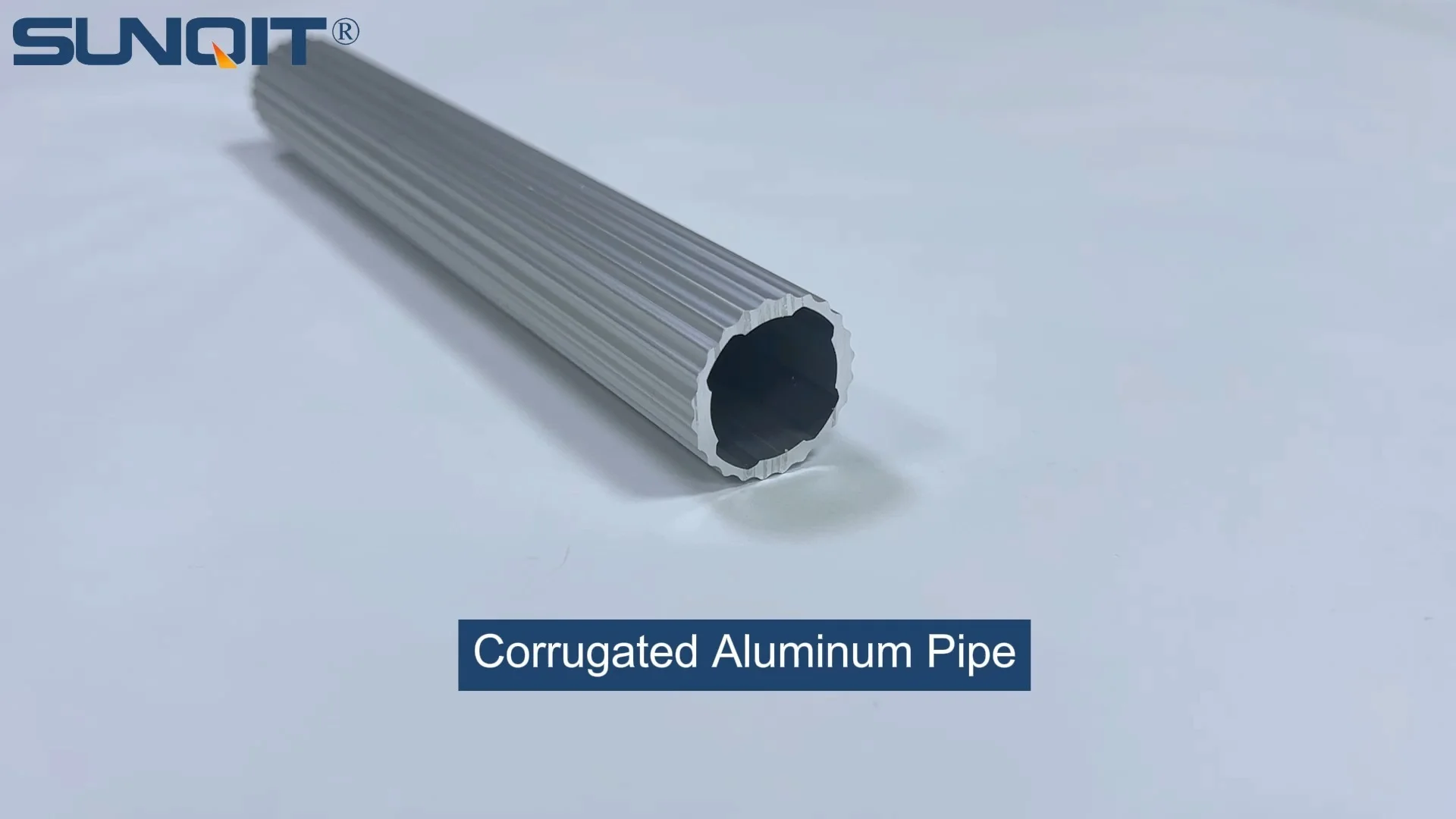
Corrugated Aluminum Pipe
Product Description The slot side is 10mm which can work with a T sliding block for connection accessories Quick Detail Product name Corrugated Aluminum pipe model GLT28-T-3010A Material Science 6005-T6 thickness 1.7mm surface treatment anodic oxidat
Introduction: The Critical Role of Corrugated Aluminum Pipes
In the modern industrial landscape, corrugated aluminum pipes have become indispensable components across countless sectors—from construction and automotive manufacturing to aerospace engineering and industrial logistics. Their unique combination of lightweight design, flexibility, and corrosion resistance makes them ideal for applications where durability and adaptability are non-negotiable. Imagine a commercial building's rainwater drainage system relying on these pipes to channel water away safely, or an automotive assembly line using them to route coolant through tight engine compartments. In each case, the performance of these pipes directly impacts safety, efficiency, and long-term reliability. But what ensures that a corrugated aluminum pipe performs as expected? The answer lies in rigorous manufacturing standards and unwavering industry compliance.
Manufacturing standards are the backbone of quality assurance, setting benchmarks for material composition, production processes, dimensional accuracy, and performance. For corrugated aluminum pipes, these standards are not just guidelines—they are critical safeguards that protect end-users, manufacturers, and the environment. A pipe that fails to meet standards could lead to catastrophic leaks, structural damage, or even safety hazards. This guide delves into the intricate world of corrugated aluminum pipe manufacturing standards, exploring how they shape every stage of production, from raw material selection to final testing. We'll also examine the key regulatory bodies, compliance challenges, and future trends that define this essential industry.
Materials: The Foundation of Quality
At the heart of every high-quality corrugated aluminum pipe is the choice of material. Aluminum, by nature, offers excellent strength-to-weight ratio and resistance to corrosion, but not all aluminum alloys are created equal. Manufacturers must select alloys that balance mechanical properties—like tensile strength and ductility—with formability, a critical factor for the corrugation process. The most commonly used alloys for corrugated pipes are 6061 and 6063, both part of the 6xxx series known for their weldability, extrudability, and moderate strength. 6061, often alloyed with magnesium and silicon, provides superior tensile strength, making it ideal for heavy-duty applications such as industrial fluid transport. 6063, on the other hand, offers better surface finish and extrudability, making it a favorite for architectural and decorative applications where aesthetics matter alongside performance.
The journey from raw aluminum to a finished corrugated pipe begins with aluminum extrusion profile —a process where heated aluminum billets are forced through a die to create continuous lengths of uniform cross-sectional shape. This extrusion step is foundational, as it determines the pipe's initial dimensions, wall thickness, and structural integrity. Standards such as ASTM B221 (Standard Specification for Aluminum and Aluminum-Alloy Extruded Bars, Rods, Wire, Profiles, and Tubes) strictly govern the extrusion process, setting limits on dimensional tolerances, surface defects, and mechanical properties. For example, ASTM B221 specifies that extruded profiles must have a maximum deviation of ±0.13mm for wall thickness in pipes under 50mm diameter, ensuring consistency across production batches.
Beyond the base alloy, the quality of auxiliary components cannot be overlooked. Aluminum profile accessories —such as connectors, brackets, and aluminum pipe clamps —play a vital role in assembling pipe systems. These accessories must meet their own set of standards to ensure compatibility and structural stability. A poorly designed clamp, for instance, could fail to secure a corrugated pipe, leading to misalignment or leaks. Standards like ISO 9001:2015, which focuses on quality management systems, require manufacturers to source accessories from certified suppliers and conduct regular audits to verify compliance.

Manufacturing Processes: From Extrusion to Corrugation
Extrusion: Shaping the Aluminum Pipe
The extrusion process is where the transformation of aluminum billets into functional pipes begins. It starts with heating the billet—typically to temperatures between 450°C and 500°C—to soften the metal without compromising its structural integrity. The heated billet is then placed in a hydraulic press, where it is forced through a precision-engineered die. The die's design dictates the pipe's outer diameter, inner diameter, and wall thickness, making die manufacturing a critical step in itself. Dies must be machined to micron-level accuracy to ensure that the extruded aluminum pipe meets dimensional standards. Even a minor imperfection in the die can lead to consistent defects in every pipe produced, from uneven wall thickness to surface blemishes.
Once extruded, the pipe undergoes a quenching process to lock in its mechanical properties. For 6061 and 6063 alloys, this involves rapid cooling with water or air, followed by artificial aging (heating at lower temperatures for extended periods) to enhance strength. Standards like EN 755-2 (Aluminum and aluminum alloys—Extruded profiles for general structural purposes) specify the exact cooling rates and aging times required to achieve target hardness and tensile strength values. For example, EN 755-2 mandates a minimum tensile strength of 110 MPa for 6063-T6 profiles, ensuring that the extruded pipe can withstand the stresses of corrugation and end-use.
Corrugation: Forming the Signature Wave Pattern
After extrusion, the smooth aluminum pipe is transformed into a corrugated one through a specialized forming process. Corrugation introduces a series of parallel ridges (corrugations) along the pipe's length, which enhance flexibility while maintaining structural rigidity. This wave pattern allows the pipe to bend without kinking—a critical feature for applications where installation space is limited, such as automotive underbodies or tight building cavities. The corrugation process can be performed using two primary methods: roll forming and hydroforming.
Roll forming involves passing the extruded pipe through a series of paired rollers, each set gradually shaping the metal into the desired corrugation profile. The rollers are precision-machined to ensure uniform wave height, pitch (distance between waves), and depth across the pipe's entire length. Hydroforming, by contrast, uses high-pressure fluid to expand the pipe against a die, creating corrugations with exceptional precision. Both methods require strict process control to avoid defects like cracked corrugations, uneven wall thinning, or inconsistent wave patterns. Standards such as ASTM F2324 (Standard Specification for Corrugated Aluminum Pipe for Culverts and Storm Drains) set clear limits on corrugation dimensional tolerance, specifying that wave height must not deviate by more than ±0.5mm from the design value.
Surface Treatment and Finishing
The final step in manufacturing is surface treatment, which enhances corrosion resistance and appearance. Common treatments include anodizing, powder coating, and chemical conversion coating. Anodizing creates a protective oxide layer on the aluminum surface, while powder coating adds a durable, colored finish. Chemical conversion coatings, such as chromate or zirconium treatments, improve paint adhesion and corrosion resistance. Each treatment must comply with industry standards—for example, MIL-A-8625 (Anodic Coatings for Aluminum and Aluminum Alloys) specifies the thickness and corrosion resistance requirements for anodized layers, ensuring long-term durability in harsh environments.
Key Compliance Standards and Regulatory Bodies
Compliance with manufacturing standards is not optional—it is a legal and ethical obligation for manufacturers. These standards are developed by international, regional, and national bodies, each focusing on specific aspects of pipe performance and safety. Understanding these standards is essential for manufacturers seeking to enter global markets and for buyers ensuring they receive quality products.
| Standard | Issuing Body | Focus Area | Key Requirements | Typical Application |
|---|---|---|---|---|
| ASTM B221 | ASTM International | Aluminum alloy extrusions | Chemical composition, tensile strength, dimensional tolerances | General structural pipes, automotive components |
| EN 755-2 | CEN (European Committee for Standardization) | Extruded profiles for structural use | Mechanical properties, bending performance, surface quality | Construction, industrial machinery |
| ISO 6892-1 | International Organization for Standardization (ISO) | Tensile testing of metals | Test methods for determining yield strength, elongation, and modulus | Quality control for all aluminum alloys |
| ASTM F2324 | ASTM International | Corrugated aluminum pipe for culverts/storm drains | Corrugation dimensions, hydraulic capacity, crush resistance | Civil engineering, drainage systems |
| MIL-DTL-62475 | U.S. Department of Defense | Corrugated aluminum tubing for aerospace | High-temperature performance, fatigue resistance, leak testing | Aerospace fluid systems |
Among these, ASTM International and ISO are perhaps the most influential global bodies. ASTM B221, for instance, is widely recognized as the benchmark for aluminum extrusions, covering everything from alloy composition to permissible defects. It specifies that 6061-T6 extrusions must have a minimum yield strength of 276 MPa and a minimum elongation of 8% (in 50mm), ensuring that the pipe can withstand the rigors of corrugation and installation. ISO 6892-1, meanwhile, outlines the procedures for tensile testing, ensuring that results are consistent across laboratories worldwide—critical for manufacturers operating in multiple countries.
Regional standards also play a significant role. In Europe, EN 755-2 is mandatory for structural aluminum profiles, including those used in corrugated pipes. It classifies profiles by their mechanical properties, with "Class A" profiles requiring higher strength and stricter dimensional tolerances than "Class B" profiles. For example, a Class A 6061-T6 profile must have a wall thickness tolerance of ±0.1mm, compared to ±0.2mm for Class B, reflecting the higher performance demands of structural applications.
Testing and Quality Control: Ensuring Compliance
Even with strict process controls, manufacturing variability can lead to non-compliant products. That's why comprehensive testing and quality control (QC) protocols are essential to verifying that every corrugated aluminum pipe meets standards. Testing begins with raw material inspection and continues through every stage of production, culminating in final product certification.
Raw Material Testing
Before extrusion, aluminum billets undergo rigorous testing to confirm their chemical composition and mechanical properties. Spectrometric analysis ensures that the alloy contains the correct proportions of magnesium, silicon, and other elements—for example, 6061 must contain 0.4-0.8% silicon and 0.8-1.2% magnesium, per ASTM B221. Tensile testing of billet samples verifies that the material meets minimum strength requirements before extrusion, preventing costly defects downstream.
In-Process Testing
During extrusion and corrugation, operators perform regular checks to monitor dimensional accuracy and process stability. Coordinate measuring machines (CMMs) are used to verify extruded pipe diameters and wall thickness, ensuring compliance with ASTM or EN tolerances. For corrugated pipes, laser scanning systems inspect wave height, pitch, and uniformity, flagging deviations as small as 0.05mm. These real-time checks allow manufacturers to adjust processes immediately—for example, recalibrating rollers if corrugation depth becomes inconsistent—minimizing waste and ensuring batch-to-batch consistency.
Final Product Testing
Once manufacturing is complete, finished pipes undergo a battery of tests to validate their performance. Non-destructive testing (NDT) methods, such as ultrasonic testing and eddy current inspection, detect internal and surface defects like cracks or inclusions without damaging the pipe. Pressure testing ensures that the pipe can withstand operating pressures without leaking—critical for fluid transport applications. For example, aerospace-grade corrugated pipes must pass a burst pressure test at 1.5 times their maximum operating pressure, per MIL-DTL-62475.
Mechanical testing includes bend testing, where the pipe is flexed to a specified radius to ensure it does not kink or crack, and crush testing, which measures resistance to radial compression. Corrosion resistance is evaluated using salt spray testing (ASTM B117), where pipes are exposed to a saltwater mist for 500+ hours to assess coating integrity and material durability. Pipes that pass all tests receive a compliance certificate, providing buyers with documented proof of quality.
Industry Applications and Compliance Nuances
Corrugated aluminum pipes serve diverse industries, each with unique compliance requirements. Understanding these nuances is key to ensuring that pipes meet the specific demands of their end-use environment.
Construction and Civil Engineering
In construction, corrugated aluminum pipes are used for storm drains, culverts, and underground utility lines. Here, compliance with ASTM F2324 is paramount, as it specifies hydraulic capacity (the volume of water the pipe can carry) and crush resistance (to withstand soil loads). For example, a 300mm diameter pipe used in a highway culvert must resist a minimum crush load of 50 kN/m, per ASTM F2324, to prevent collapse under traffic weight.
Automotive Manufacturing
Automotive applications, such as coolant and air intake systems, demand lightweight pipes with high fatigue resistance. Compliance with ISO 10243 (Automotive components—Pipes and hoses—General requirements) ensures that pipes can withstand vibration, temperature extremes (-40°C to 120°C), and chemical exposure from coolants and oils. Additionally, aluminum profile accessories like brackets and clamps must meet ISO 15552 (Pneumatic fluid power—Cylinders—Mounting accessories) to ensure secure attachment to vehicle frames, preventing pipe displacement during operation.
Aerospace and Defense
Aerospace is perhaps the most demanding sector, with corrugated aluminum pipes used in hydraulic and fuel systems. Here, compliance with military standards like MIL-DTL-62475 is mandatory, requiring pipes to meet stringent weight, strength, and temperature resistance criteria. For example, a pipe used in a commercial jet's hydraulic system must operate flawlessly at pressures up to 3000 psi and temperatures from -54°C to 121°C, with zero leakage. The use of aluminum extrusion profile with tight tolerances is critical here, as even minor dimensional variations can affect system performance in high-stress environments.
Challenges in Compliance and How to Overcome Them
Despite advances in manufacturing technology, compliance remains a complex challenge for corrugated aluminum pipe producers. One common issue is material inconsistency—even with strict billet testing, variations in alloy composition can lead to unpredictable extrusion behavior. To mitigate this, leading manufacturers partner with certified suppliers and implement statistical process control (SPC) to track material properties across batches, allowing them to adjust extrusion parameters proactively.
Another challenge is the cost of compliance, particularly for small to medium-sized manufacturers. Investing in advanced testing equipment like CMMs or laser scanners can be prohibitive, but the alternative—non-compliant products—carries far greater risks, including product recalls, legal liability, and reputational damage. Many manufacturers address this by outsourcing specialized testing to accredited laboratories, ensuring compliance without upfront capital expenditure.
Globalization adds another layer of complexity, as manufacturers must comply with multiple regional standards. A pipe sold in Europe must meet EN 755-2, while the same pipe sold in the U.S. must adhere to ASTM B221. To navigate this, companies often design products to meet the strictest standard applicable, ensuring compliance across markets. For example, designing a pipe to meet both EN 755-2 Class A and ASTM B221 tolerances allows it to be sold globally without redesign.
Future Trends: Innovations Shaping Compliance
The corrugated aluminum pipe industry is poised for significant innovation, driven by advances in materials science, manufacturing technology, and sustainability. One emerging trend is the use of recycled aluminum in billet production, aligning with global efforts to reduce carbon footprints. Standards are evolving to accommodate recycled alloys, with organizations like the Aluminum Association developing guidelines for recycled content labeling while maintaining performance requirements.
Another trend is the integration of artificial intelligence (AI) into quality control. Machine learning algorithms can analyze real-time production data—from extrusion press temperatures to corrugation roller speeds—to predict defects before they occur, reducing waste and improving compliance. For example, AI-powered vision systems can detect surface blemishes with greater accuracy than human inspectors, ensuring that only flawless pipes reach customers.
Finally, additive manufacturing (3D printing) is beginning to revolutionize die production for extrusion and corrugation. 3D-printed dies can be customized with complex internal cooling channels, reducing cycle times and improving extrusion consistency. While 3D printing is not yet used for pipe production itself, its impact on tooling is already enhancing compliance by enabling more precise and durable dies.
Conclusion: Compliance as a Competitive Advantage
In the world of corrugated aluminum pipe manufacturing, compliance with standards is more than a box-ticking exercise—it is a commitment to quality, safety, and customer trust. From the selection of aluminum extrusion profile to the final testing of finished pipes, every step is governed by standards that ensure performance and reliability. For manufacturers, adherence to these standards is not just a regulatory requirement but a competitive advantage, allowing them to access global markets, build brand reputation, and deliver products that customers can depend on.
As the industry evolves, new materials, technologies, and regulations will continue to shape manufacturing standards. By staying informed, investing in quality control, and embracing innovation, manufacturers can not only meet today's compliance requirements but also lead the way in defining tomorrow's standards. In the end, the goal is simple: to produce corrugated aluminum pipes that perform flawlessly, protect lives and assets, and drive progress across industries. And that, above all, is what compliance is all about.