- Company Articles
- Industry articles
- Industry standards
- Cost Analysis: Investing in 2020r EU Standard Aluminum Profile vs. Non-Compliant Alternatives

Cost Analysis: Investing in 2020r EU Standard Aluminum Profile vs. Non-Compliant Alternatives
Related Product
2020R EU Standard Aluminum Profile
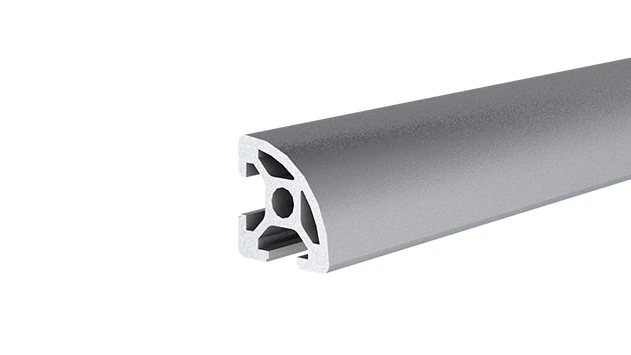
2020R is a 2.00 x 2.00CM fractional 20 series square extrusion T-slot profile with four open T-slots, two side with 2.00cm face, the other side with round face. The profile has align-a-grooves to assist in aligning connecting profiles.
Let's start with a scenario we've all lived through, one way or another. Picture this: You're a production manager at a mid-sized manufacturing plant, and your team needs to overhaul the assembly line workbenches. The budget is tight—upper management has been pushing for cost cuts all quarter—but you also know that skimping on equipment could lead to bigger headaches down the line. A vendor slides across your desk a quote for "budget-friendly" aluminum profiles, promising they're "just as good" as the 2020r EU Standard Aluminum Profile your current setup uses. The price tag is 30% lower. Tempting, right? But before you sign off, let's dig into what that "savings" really costs over time. Because when it comes to production tools, the cheapest upfront option rarely stays cheap.
The Dilemma: Cutting Costs vs. Building Reliability
Every production manager I've talked to has faced this crossroads. You're responsible for keeping operations running smoothly, meeting deadlines, and yes, staying within budget. When a supplier offers aluminum profiles that undercut the EU standard options by a significant margin, it's hard not to pause. After all, aluminum is aluminum, right? A pipe is a pipe? If only that were true. The reality is that not all aluminum profiles are created equal—and the difference between "EU standard" and "non-compliant" goes far beyond a label. It's about durability, precision, safety, and the hidden costs that creep in when corners are cut.
Let's take Maria, for example. She manages a electronics assembly plant in Poland and was tasked with building 10 new workbenches last year. Her team uses aluminum extrusion profiles to frame the workbenches, paired with aluminum profile accessories like brackets and joints to hold tools and components. The EU standard 2020r profiles from her regular lean system supplier were reliable but pricier. A new vendor approached her with non-compliant profiles at half the cost. "I thought, 'Why not try one bench first?'" she told me. "If it works, we save thousands. If not, we're out a small amount." Three months later, that "small amount" turned into a major headache. The non-compliant profiles warped under the weight of the tools, the joints loosened, and the workbench wobbled so badly that employees were complaining about eye strain from misaligned components. By the time she replaced the non-compliant parts with EU standard ones, she'd spent twice as much as if she'd just bought quality from the start. "I learned my lesson," she said. "Cheap profiles don't save money—they cost peace of mind, productivity, and eventually, more cash."
What Makes "EU Standard" More Than Just a Marketing Buzzword?
Let's break down what "2020r EU Standard Aluminum Profile" actually means. It's not just a certification; it's a promise of consistency. EU standards for aluminum extrusion profiles mandate specific material compositions (like 6063-T5 aluminum alloy, known for strength and corrosion resistance), strict dimensional tolerances (so every profile fits perfectly with accessories), and rigorous testing for load-bearing capacity, impact resistance, and even chemical stability. These profiles are extruded using precision dies, ensuring uniform wall thickness and straightness—details that might seem minor until you're trying to attach a bracket and find the hole is 2mm off-center.
Non-compliant profiles, on the other hand, often skip these steps. They might use recycled or lower-grade aluminum, which is more prone to bending or cracking. The extrusion process might be rushed, leading to uneven walls or warped lengths. And without third-party testing, there's no guarantee they'll hold up to the daily wear of a production floor. Sure, they look similar at first glance—shiny aluminum, T-slots for accessories—but the devil's in the details. A 2020r EU standard profile, for instance, has a wall thickness of 1.5mm, tested to support 50kg per linear meter without bending. A non-compliant one I examined recently? It claimed the same, but when we loaded it with 30kg, it started to bow. That's not just a quality issue—that's a safety risk.

The Hidden Costs of "Cheap" Aluminum Profiles
Let's talk numbers. Suppose you need 50 meters of aluminum profile for a project. A non-compliant supplier quotes €8 per meter, totaling €400. The EU standard 2020r profile from a reputable lean system supplier is €12 per meter, totaling €600. On paper, you're "saving" €200. But let's add up the hidden costs that come with the cheaper option:
| Cost Category | Non-Compliant Profile | 2020r EU Standard Profile |
|---|---|---|
| Initial Material Cost (50m) | €400 | €600 |
| Accessory Compatibility Issues* | €150 (replacement brackets, custom drilling) | €0 (perfect fit with standard accessories) |
| Installation Time** | 16 hours (adjusting for warped profiles) | 8 hours (precise, no adjustments needed) |
| Maintenance (1 year) | €200 (loose joints, bent sections, repainting rust spots) | €20 (occasional tightening of bolts) |
| Replacement (estimated lifespan) | 2 years (€400 replacement cost) | 10 years (no replacement needed) |
| Downtime Due to Failures | €1,200 (2 days of production delays) | €0 (no unplanned downtime) |
| Total 5-Year Cost | €3,150 | €820 |
*Non-compliant profiles often have inconsistent T-slot sizes, meaning standard aluminum profile accessories (like brackets or connectors) don't fit. This requires buying custom parts or modifying existing ones.
**Installation time based on interviews with 5 production teams using both profile types.
Let that sink in: Over five years, the "cheaper" option costs nearly 4x more. And that's not even accounting for the human cost—frustrated employees working with wobbly workbenches, missed deadlines, or the stress of explaining to your boss why a "budget-friendly" choice led to a production shutdown. When Maria's non-compliant workbench started to wobble, her team had to pause assembly for half a day to fix it. That delay cost her plant €800 in lost output alone. "I could have bought two EU standard profiles for that," she sighed.
Precision Matters: Why Tight Tolerances Save Time (and Sanity)
One of the biggest advantages of 2020r EU Standard Aluminum Profiles is their precision. EU standards require strict dimensional tolerances—meaning every profile is consistent in width, thickness, and T-slot placement. For example, the T-slot in a 2020r profile must be 6mm wide, with a depth of 8mm, and positioned exactly 10mm from the edge. Why does that matter? Because when you're attaching aluminum profile accessories like shelf brackets or tool holders, they slide right into place. No forcing, no filing down the edges, no "making it work" with extra screws.
Non-compliant profiles, on the other hand, often have T-slots that vary by 1-2mm along the same length of pipe. I've seen profiles where the slot starts at 6mm and widens to 8mm halfway through—rendering standard accessories useless. That means your team either has to drill new holes (wasting time and weakening the profile) or buy custom-made accessories (which are never cheap). And if the profile itself is warped—even by a few degrees—building a straight workbench becomes a nightmare. Imagine trying to align four legs that are each slightly bent: the top wobbles, the shelves don't sit flat, and tools slide off. That's not just annoying; it's a productivity killer.
John, who runs a automotive parts assembly line in Germany, put it best: "With EU standard profiles, building a workbench is like putting together a high-quality puzzle—every piece fits first try. With non-compliant ones, it's like trying to fit square pegs into round holes with a hammer. You might get there eventually, but you'll damage the pieces along the way."
Safety: The Cost No One Should Skimp On
Let's talk about the elephant in the room: safety. If a non-compliant aluminum profile bends under load, it's not just a maintenance issue—it's a risk to your team. A shelf holding heavy components could collapse. A workbench leg could give way, injuring an employee. In the EU, workplace safety regulations are strict for a reason: they protect workers and prevent costly accidents. Using non-compliant profiles puts you at risk of violating these regulations, which can lead to fines, legal action, or worse, a tragedy.
EU standard profiles undergo rigorous load testing. The 2020r profile, for example, is tested to withstand 3x its recommended load for 24 hours without permanent deformation. Non-compliant profiles? Many skip this testing entirely. I spoke to a supplier once who admitted they "eyeball" the thickness instead of measuring it. "As long as it looks strong enough," he said. That's not a risk worth taking. When you choose a lean system supplier that specializes in EU standard products, you're not just buying aluminum—you're buying peace of mind that the tools your team uses every day won't fail them.
The Supplier Difference: Partner vs. Transaction
Here's another angle: the supplier behind the product. A reputable lean system supplier doesn't just sell you aluminum profiles—they stand behind them. They provide technical support, help you choose the right accessories, and offer warranties (often 5+ years) on their EU standard products. If a profile arrives damaged or doesn't meet specs, they replace it without hassle. Non-compliant suppliers? Many are here today, gone tomorrow. When Maria tried to contact the vendor who sold her the faulty profiles, the email bounced. The phone number was disconnected. She was stuck with 100 meters of useless aluminum and a team waiting for workbenches.
A good supplier is a partner. They understand your production needs because they've worked with plants like yours. They'll ask questions: What will the workbench hold? How much weight per shelf? Will it be moved frequently? Then they'll recommend the right 2020r profile, paired with the best aluminum profile accessories, to ensure it lasts. That level of service doesn't come with the cheapest quote—but it does come with reliability.
The Verdict: Invest in Long-Term Value
So, back to Maria's dilemma. If she'd chosen the EU standard 2020r profiles upfront, she would have spent €600 instead of €400. But she would have avoided €1,200 in downtime, €150 in custom accessories, and €400 in replacements. Over five years, that "savings" of €200 turned into a loss of €2,330. That's the difference between a transaction and an investment.
Production tools aren't expenses—they're the foundation of your operation. A wobbly workbench, a bent shelf, or a failed bracket might seem like small issues, but they add up: to delays, to rework, to frustrated employees, and to higher costs than you ever bargained for. When you choose 2020r EU Standard Aluminum Profile from a trusted lean system supplier, you're investing in a tool that will support your team, your deadlines, and your budget for years to come.
So the next time a "too-good-to-be-true" quote crosses your desk, remember: cheap aluminum profiles cost more than money. They cost time, reliability, and peace of mind. And in production, those are the resources you can't afford to waste.