- Company Articles
- Industry articles
- Industry standards
- Cost-Benefit Analysis: 3060 National Standard Profile A vs Traditional Steel Profiles

Cost-Benefit Analysis: 3060 National Standard Profile A vs Traditional Steel Profiles
Related Product
3060 National Standard Profile A
Workbench, production line, logistic rack, warehouse rack Industry: Manufacturer workshop, Automobile, Electronic, Assembling, logistic
Choosing the right materials for your facility's infrastructure—whether it's workbenches, material racks, or production line frames—feels a bit like picking a foundation for your home. Get it right, and everything runs smoothly for years; get it wrong, and you're stuck with constant repairs, wasted time, and unexpected costs. Today, we're diving into a showdown that's top of mind for many operations managers: 3060 National Standard Profile A (a versatile aluminum extrusion) versus traditional steel profiles. We'll break down the numbers, the hassle, and the long-term payoff to help you decide which one truly delivers value.
First Things First: What Are We Actually Comparing?
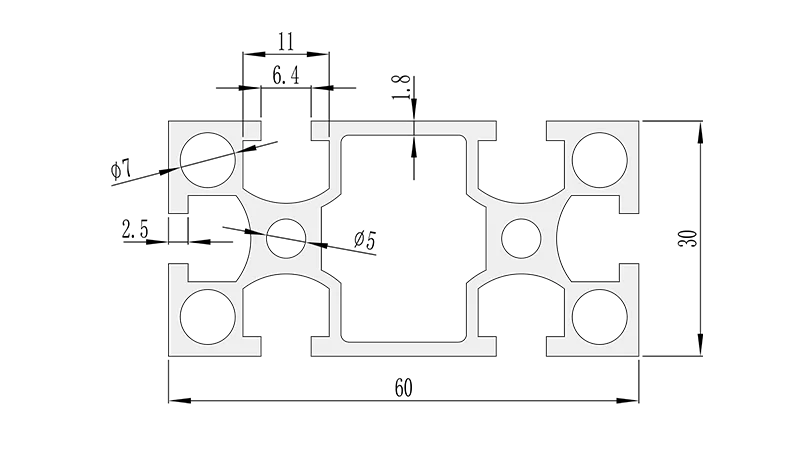
Let's start with the basics. 3060 National Standard Profile A is part of the aluminum profile family—think of it as a pre-engineered aluminum beam with a T-slot design, measuring roughly 30mm by 60mm. It's lightweight, corrosion-resistant, and designed to snap together with aluminum profile accessories like connectors, brackets, and end caps. It's the kind of material you'll see in modern factories, labs, and warehouses, where flexibility and durability matter.
Traditional steel profiles, on the other hand, are the old reliables: angle iron, square tubing, or C-channels made from carbon steel. They're heavy, rigid, and have been the backbone of industrial setups for decades. To put them together, you'll need welding, cutting, and painting—skills and tools that add time and labor to any project.
So, why pit these two against each other? Because both are used for similar jobs: building workstations, material racks, machine guards, and conveyor frames. The question is, which one gives you more bang for your buck over time?
Initial Cost: The "Sticker Shock" Myth
Let's cut to the chase: Steel often looks cheaper on paper. Walk into a hardware store, and a meter of steel angle iron might cost $10, while a meter of 3060 National Standard Profile A could run you $15–$20. At first glance, steel seems like the budget-friendly choice. But here's the catch: initial material cost is just one piece of the puzzle. Let's break it down like you're building a simple material rack—something many facilities need.
Suppose you need a 2-meter long rack with 3 shelves. For steel, you'll buy the raw steel tubes ($10/meter x 8 meters = $80), but then you need tools: a hacksaw or angle grinder to cut the steel ($50 rental if you don't own one), welding equipment ($100/day rental), welding wire, and paint ($30). Oh, and labor: even a skilled welder might take 3–4 hours to cut, weld, grind, and paint that rack. At $50/hour, that's $150–$200 in labor.
Now, the aluminum route: 3060 National Standard Profile A costs $18/meter x 8 meters = $144. Then you'll need aluminum profile accessories : 4 corner brackets ($5 each = $20), 12 shelf supports ($3 each = $36), and end caps ($2 each = $16). Total materials: $144 + $20 + $36 + $16 = $216. Labor? Since aluminum profiles bolt together with hex keys (no welding!), even someone with basic DIY skills can assemble that rack in 1 hour. At $25/hour (no need for a certified welder), that's $25. Total initial cost for aluminum: $216 + $25 = $241. Steel? $80 (materials) + $50 (tools) + $30 (supplies) + $200 (labor) = $360. Suddenly, aluminum isn't looking so pricey upfront.
The takeaway? Steel's lower material cost gets eaten up by tools, labor, and extra supplies. Aluminum's modular design—thanks to those handy aluminum profile accessories —cuts out most of the hassle (and cost) of assembly.
Durability: When "Tough" Doesn't Equal "Long-Lasting"
Steel has a reputation for being "tough," and it's not wrong—steel can handle heavy loads without bending. But toughness isn't the same as durability, especially in real-world factory conditions. Let's talk about corrosion, the silent budget killer.
Unless you spring for stainless steel (which costs 2–3x more), traditional steel profiles are prone to rust. Even a little moisture—from a leaky roof, condensation in a warehouse, or a spilled cleaning solution—can start eating away at steel in months. By year two, you'll notice orange spots; by year three, you're repainting. And repainting isn't just slapping on a coat of spray paint—it means sanding rust, applying primer, and repainting, which takes time and shuts down that section of your facility temporarily.
Aluminum, on the other hand, is naturally corrosion-resistant. When exposed to air, it forms a thin oxide layer that acts like armor, preventing rust. Most aluminum profile products (including 3060 National Standard Profile A) take it a step further with anodization—a process that thickens that oxide layer, making it even more resilient. I've seen aluminum racks in humid food processing plants that still look new after 10 years, while their steel counterparts needed replacement at year 5.
What about dents and dings? Steel is stiffer, so it's less likely to bend under impact, but if it does bend, fixing it means cutting out the damaged section and welding a new one. Aluminum is more malleable—it might dent if you drop a heavy tool on it, but replacing a section is easy: just unbolt the damaged profile, swap in a new one, and bolt it back. No welding, no repainting, no downtime.
Flexibility: The Hidden Cost of "Permanent"
Here's where aluminum truly shines, especially if your facility values adaptability (and in today's fast-changing market, who doesn't?). Traditional steel structures are permanent—once you weld that rack or workbench into place, moving or modifying it is a major project. Need to add a shelf? You'll need to cut steel, weld it on, and repaint. Want to reconfigure your production line to fit a new machine? You might as well tear down the old steel frame and start over.
Aluminum profiles, thanks to their T-slot design and modular aluminum profile accessories , are the opposite of permanent. They're like industrial Legos. Need to add a shelf to your 3060 National Standard Profile A workbench? Slide a bracket into the T-slot, tighten a screw, and you're done. Want to shorten a material rack to fit a new storage area? Loosen the bolts, cut the profile with a hacksaw (no special tools needed), and reattach the accessories. It's quick, easy, and doesn't require shutting down your line for hours.
This flexibility is a game-changer for lean system enthusiasts. Lean manufacturing thrives on eliminating waste—including the waste of rigid, unchangeable infrastructure. If you can reconfigure a workstation in 30 minutes instead of 3 days, you can adapt to new product lines, seasonal demand spikes, or process improvements without losing productivity. Steel, by its nature, fights that adaptability.
Long-Term ROI: Let's Crunch the 5-Year Numbers
To really understand value, we need to look beyond the first year. Let's model a 5-year scenario for a typical material rack (something most facilities use daily) and see how aluminum and steel stack up. We'll include initial costs, maintenance, and reconfiguration expenses.
| Cost Category | 3060 National Standard Profile A (Aluminum) | Traditional Steel Profile |
|---|---|---|
| Initial Materials & Labor | $241 (as calculated earlier) | $360 (as calculated earlier) |
| Annual Maintenance | $10 (occasional cleaning with soap and water) | $150 (repainting every 2 years: $300 total ÷ 5 years = $60/year; rust removal supplies: $90/year) |
| Reconfiguration Costs (2 reconfigs over 5 years) | $80 (new accessories + 1 hour labor per reconfig) | $600 (welding labor + new steel + painting per reconfig) |
| Total 5-Year Cost | $241 + ($10×5) + $80 = $371 | $360 + ($150×5) + $600 = $1,710 |
The numbers speak for themselves: over 5 years, the steel rack costs nearly 5x more than the aluminum one. Even if you never reconfigure the steel rack (unlikely in most facilities), steel still comes out ahead at $360 + $750 (maintenance) = $1,110—still 3x more than aluminum's $371. And remember, this is for a single rack. Multiply that by 10 racks, workbenches, or frames in your facility, and the savings add up to tens of thousands of dollars.
When Might Steel Still Make Sense?
We'd be remiss not to mention scenarios where steel could still be the better pick. If you're building something that needs to support extremely heavy loads (think 10,000+ pounds) and will never, ever need to be moved or modified, steel might be the way to go. But for 90% of industrial applications—workbenches, material racks, assembly line frames, or even lightweight conveyor supports—aluminum's flexibility, lower labor costs, and minimal maintenance make it the smarter long-term bet.
Final Verdict: Aluminum Profiles Deliver Value That Sticks
At the end of the day, 3060 National Standard Profile A and other aluminum profile systems aren't just about "buying aluminum"—they're about buying time, flexibility, and peace of mind. Yes, the upfront material cost is slightly higher than basic steel, but the savings in labor, maintenance, and reconfiguration quickly erase that gap. Add in the durability (no rust!) and the ability to adapt to your facility's changing needs (key for lean system success), and aluminum becomes the clear winner for most operations.
So, if you're tired of sinking money into steel's endless upkeep or losing productivity to rigid infrastructure, it might be time to give aluminum profiles a closer look. Your budget (and your future self) will thank you.