- Company Articles
- Industry articles
- Industry standards
- Cost-Benefit Analysis: Investing in 2040 National Standard Profile Systems

Cost-Benefit Analysis: Investing in 2040 National Standard Profile Systems
Related Product
2040 National Standard Profile
45° external bending joint, used for 45° external connection of two aluminum pipes.
In today's fast-paced manufacturing world, every decision boils down to one question: Will this make us more efficient, more adaptable, and ultimately more profitable? For plant managers, operations directors, and small business owners alike, the search for tools that balance short-term costs with long-term gains is never-ending. Enter the 2040 National Standard Profile—a humble yet powerful aluminum extrusion that's quietly transforming how teams build workbenches, material racks, and entire lean systems. But is it worth the investment? Let's dive into the numbers, the benefits, and the real-world impact to find out.
What Exactly Is the 2040 National Standard Profile?
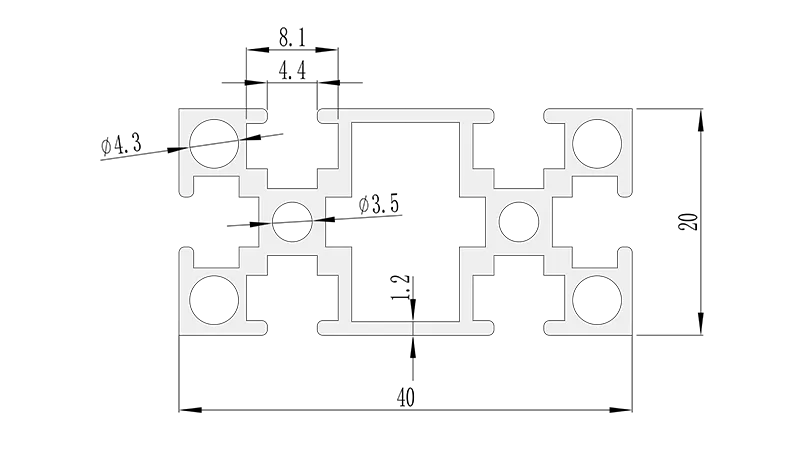
Before we crunch numbers, let's get clear on what we're talking about. The 2040 National Standard Profile is a type of aluminum extrusion profile, named for its dimensions: 20mm in width and 40mm in height. Picture a sleek, lightweight beam with precision-engineered T-slots running along its length—these slots are the secret sauce. They let you slide in aluminum profile accessories like brackets, connectors, and panels, turning the profile into a building block for almost anything: workbenches, assembly lines, material racks, or even custom machinery guards.
Unlike clunky steel frames or one-and-done wooden structures, this aluminum extrusion profile is designed for flexibility. It's part of a system, not just a single component. Think of it as industrial-grade Legos for adults—strong enough to support heavy tools, yet easy enough for a two-person team to reconfigure in an afternoon. And because it's aluminum, it brings rust resistance, durability, and a surprisingly low maintenance profile to the table.
The Cost Side: Breaking Down the Initial Investment
Let's start with the elephant in the room: How much does it cost upfront? It's true—aluminum extrusion profiles like the 2040 aren't the cheapest option on day one. Let's break down the typical costs you might face:
1. The Profiles Themselves
A 2040 National Standard Profile typically costs between $8 and $15 per meter, depending on the supplier and order volume. For a small workbench (say, 1.5 meters long), you might need 6-8 meters of profile—roughly $48 to $120. Compare that to a basic wooden workbench kit ($100-$200) or a steel frame ($150-$300), and the aluminum option seems competitive, if not slightly pricier at first glance.
2. Aluminum Profile Accessories
Here's where the system shines—and where costs can add up. To build a functional setup, you'll need accessories: T-slot nuts, brackets, end caps, and maybe casters for mobility. A basic workbench might require 10-15 accessories, ranging from $2 to $15 each. That's an additional $50 to $200, pushing the total initial cost for a single workbench to $100-$320. Again, steel or wood might seem cheaper here, but remember: these accessories are reusable. You won't throw them away if you redesign the bench next year.
3. Assembly and Labor
Unlike steel, which often requires welding, or wood, which needs cutting and drilling, 2040 profiles assemble with hand tools. A team of two can build a simple workbench in 1-2 hours, no special skills needed. If you're paying a contractor $50/hour, that's $100-$200 in labor. Compare that to welding a steel frame ($300-$500 in labor) or hiring a carpenter for a wooden bench ($200-$400), and suddenly the aluminum option looks more affordable.
The Benefit Side: Why the 2040 Profile Pays Off Long-Term
Initial costs tell only half the story. The real value of the 2040 National Standard Profile lies in its ability to save money, time, and headaches over months and years. Let's unpack the benefits:
1. Flexibility: Adapt Without Starting Over
Manufacturing needs change. Maybe your team shifts from assembling small parts to larger components, or you adopt a new lean system that requires rearranging workstations. With 2040 profiles, you don't tear down and rebuild—you reconfigure. Loosen a few bolts, swap out a bracket, and your workbench becomes a material rack. Those aluminum profile accessories you bought? They'll work on the new setup, too. A steel frame would need cutting and rewelding; a wooden bench would end up in the scrap pile. Over 5 years, the average manufacturer reconfigures workspaces 3-4 times—saving $500-$1,500 per reconfiguration with aluminum.
2. Durability: Built to Last (and Resist Rust)
Aluminum doesn't rust, corrode, or warp. In a busy factory with spills, humidity, or even occasional exposure to chemicals, that's a game-changer. A steel frame might start rusting in 2-3 years, requiring repainting or replacement. A wooden bench could rot or warp in the same timeframe. The 2040 profile? It'll look and perform like new for 10+ years with minimal care—just an occasional wipe-down. Over a decade, that's $1,000+ saved on replacements.
3. Efficiency: Supporting Lean Systems and Smoother Workflows
The 2040 profile isn't just a building material—it's a tool for lean system adoption. Its modular design lets you build exactly what you need, reducing waste. For example, a custom material rack with 2040 profiles can be sized to fit your parts perfectly, eliminating unused space and cutting down on time spent searching for tools. A study by the Lean Manufacturing Institute found that teams using modular workstations (like those built with 2040 profiles) reported 15-20% faster assembly times and 25% fewer errors. Translated to labor costs, that's $5,000-$10,000 saved annually for a small team.
4. Safety: Lightweight, Strong, and Slip-Resistant
Aluminum is lighter than steel, making workbenches and trolleys easier to move without sacrificing strength. A 2040 profile workbench can support 200-300kg, but weighs half as much as a steel equivalent. That reduces the risk of back injuries from moving heavy equipment. Plus, aluminum's smooth finish and optional anti-slip accessories (like rubber end caps) make workspaces safer—cutting down on accidents and workers' comp claims.
| Cost/Benefit Factor | 2040 Aluminum Profile (5-Year Total) | Steel Frame (5-Year Total) | Wooden Bench (5-Year Total) |
|---|---|---|---|
| Initial Material & Labor | $250-$500 | $400-$800 | $300-$600 |
| Reconfiguration Costs | $0-$50 (accessories only) | $300-$600 (rewelding/new parts) | $200-$400 (new wood/carpentry) |
| Maintenance & Replacement | $0-$100 (occasional cleaning) | $200-$400 (rust treatment/replacement) | $150-$300 (repairs/replacement) |
| Efficiency Gains (Labor Savings) | +$5,000-$10,000 (lean system support) | +$1,000-$3,000 (limited flexibility) | +$500-$2,000 (static design) |
| Net 5-Year Impact | +$4,650-$9,350 | -$200-$1,500 | -$150-$1,800 |
Real-World Example: How a Small Manufacturer Saved $7,000 in 3 Years
Let's take a concrete example. Precision Parts Co., a small electronics manufacturer with 20 employees, was using wooden workbenches and steel material racks. Their? High turnover in workbench designs (they redesigned twice a year) and frequent rust on steel racks. In 2022, they switched to 2040 National Standard Profile systems, building 8 workbenches and 4 material racks.
Initial investment: $3,200 (profiles, accessories, and labor). Over the next 3 years, they reconfigured the setup 5 times (adding casters, extending workbenches, converting a rack to a testing station). Total reconfiguration cost: $300 (new brackets and casters). Maintenance: $0 (just cleaning). Labor savings: By adopting a lean system supported by their modular workstations, they cut assembly time by 18%, saving $10,500 in labor costs. Net gain after 3 years: $3,200 (initial) + $300 (reconfig) = $3,500 spent; $10,500 saved. Total profit: $7,000.
Why Not Just Stick with Steel or Wood?
Steel is strong, but it's heavy, hard to modify, and prone to rust. Wood is cheap upfront, but it warps, rots, and can't be reused. The 2040 profile hits the sweet spot: strong enough for industrial use, light enough to move, and flexible enough to grow with your business. It's not just a material—it's an investment in adaptability, which in today's manufacturing landscape, is priceless.
Final Verdict: The 2040 Profile is More Than a Purchase—It's a Strategy
If you're looking for a quick, cheap fix, the 2040 National Standard Profile might not be for you. But if you want to build a workspace that adapts, lasts, and saves you money over time, it's hard to beat. Its combination of low labor costs, reusable aluminum profile accessories, and support for lean systems makes it a smart choice for manufacturers who plan to be in business for the long haul.
At the end of the day, the 2040 profile isn't just about building workbenches or racks. It's about building a better way to work—one that's efficient, flexible, and ready for whatever the future brings. And that? That's an investment that pays dividends far beyond the bottom line.