- Company Articles
- Industry articles
- Industry standards
- Cost-Effectiveness of 4080A EU Standard Aluminum Profile: Long-Term ROI Analysis

Cost-Effectiveness of 4080A EU Standard Aluminum Profile: Long-Term ROI Analysis
Related Product
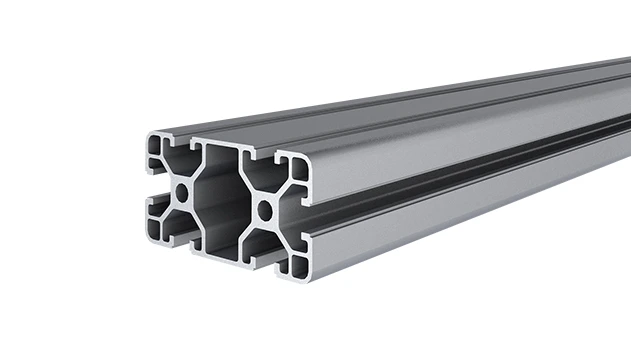
4080A EU Standard Aluminum Profile
4080A is a 4.00x8.00 CM fractional 40 series square extrusion T-slot profile with two side open T-slots, each side with 4.00cm face, two side with 8.00cm face. The profile has align-a-grooves to assist in aligning connecting profiles.
Let's start with a familiar scenario: You're standing on the factory floor of a mid-sized electronics assembly plant, watching as your team struggles with a workbench that wobbles every time someone tightens a screw. The flow rack next to it has rusted corners, and last month, a loose roller caused a batch of circuit boards to crash to the ground—costing you hours of rework. Your maintenance log is full of entries: "replace steel pipe joint," "Repair plastic roller track," "Tighten loose caster wheels." You've been using a hodgepodge of materials for years, and lately, it feels like you're pouring money into Band-Aids instead of building something that lasts.
If this sounds like your reality, you're not alone. Many operations managers get stuck in the "cheap now, pay later" cycle, choosing budget-friendly materials that seem to save money upfront but drain resources over time. But what if there was a material that flipped that script—one that required a slightly higher initial investment but paid for itself (and then some) through durability, flexibility, and reduced downtime? Enter the 4080A EU Standard Aluminum Profile.
In this article, we're diving deep into why this specific aluminum profile isn't just another piece of industrial hardware. We'll break down its long-term cost-effectiveness, explore how it outperforms cheaper alternatives, and show you exactly how it drives ROI across key areas like maintenance, productivity, and adaptability. By the end, you'll understand why forward-thinking manufacturers are making the switch—and why you might want to too.
What Is 4080A EU Standard Aluminum Profile, Anyway?
First, let's get clear on what we're talking about. The "4080A" in the name refers to its dimensions: 40mm in width and 80mm in height, with a cross-sectional design optimized for strength and versatility. The "EU Standard" tag isn't just a marketing buzzword—it's a guarantee of quality. EU standards for aluminum profiles enforce strict tolerances for straightness, wall thickness, and material composition, ensuring consistency across every piece. This matters because when you're building a workbench or a flow rack, even a 1mm deviation in pipe straightness can throw off the entire structure.
But what really sets 4080A apart is its T-slot design. Run your finger along its length, and you'll notice evenly spaced grooves that run the full length of the profile. These slots are the secret to its flexibility: they let you attach accessories—like brackets, connectors, or panels—without drilling holes or welding. Need to add a shelf to your workbench? Slide a bracket into the T-slot and tighten a screw. Want to reconfigure a flow rack for a new product line? Loosen a few bolts, adjust the angles, and you're done. It's modularity at its finest, and it's a game-changer for lean manufacturing environments where adaptability is key.
Material-wise, 4080A is made from 6063-T5 aluminum alloy—a blend known for its perfect balance of strength, lightweight, and corrosion resistance. Unlike steel, it won't rust when exposed to moisture (critical for factories with humidity control systems). Unlike plastic, it won't warp under heat from machinery or sunlight through windows. And at just 2.7kg per meter (about half the weight of steel), it's easy to handle during installation or reconfiguration, cutting down on labor time.
The Hidden Costs of "Cheap Now, Pay Later" Materials
To understand why 4080A delivers long-term value, let's first talk about the alternatives. Many operations default to three options: basic steel pipes, plastic extrusions, or low-grade aluminum profiles that skip EU standards. Let's unpack the hidden costs of each.
Steel Pipes: Steel is strong, but it's heavy and prone to corrosion. A steel workbench might cost $200 less upfront than one made with 4080A, but let's track the expenses over five years. First, you'll need to paint it every 12–18 months to prevent rust—$150 per bench, per coat. Then there's maintenance: steel joints loosen faster under vibration, so you'll pay a technician $80/hour to retighten them quarterly. If your factory has high humidity (common in electronics or food processing), you might need to replace the entire structure after 3–4 years due to rusted connections. Suddenly, that $200 savings turns into $600+ in extra costs.
Plastic Extrusions: Plastic is lightweight and cheap, but it's no match for industrial use. A plastic flow rack might handle light loads, but expose it to the weight of daily material handling, and you'll start seeing warped rails within a year. Last year, a client told me about their plastic roller track disaster: after six months, the yellow guide rails (sound familiar?) started bending, causing parts to get stuck. They had to replace the entire track—twice in one year—at $300 per replacement. Plus, plastic can't handle high temperatures; near a soldering station, it might even melt, creating safety hazards.
Non-Standard Aluminum: Then there are the "budget aluminum" profiles—often made with recycled materials or inconsistent alloys, skipping EU standards for wall thickness. These might look similar to 4080A, but their T-slots are poorly formed, making accessories fit loosely. One manufacturer I worked with bought these to save $50 per meter, only to find that the brackets kept slipping, leading to a collapsed material rack and $2,000 in damaged inventory. When they tested the material, they found the wall thickness was 0.8mm instead of the promised 1.5mm—too thin to handle the load.
Key Takeaway: Upfront cost is just one line item. The real expense comes from maintenance, replacements, downtime, and damaged goods. These "hidden costs" often add up to 3–4x the initial price of a subpar material over 5–7 years.

4080A's Secret Sauce: 4 Drivers of Long-Term ROI
Now, let's shift to the positive: how 4080A EU Standard Aluminum Profile turns that "pay later" cycle into "invest once, profit for years." Here are the four biggest drivers of its ROI.
1. Durability: 10+ Year Lifespan (vs. 3–5 for Alternatives)
EU-standard 6063-T5 aluminum is built to last. In controlled tests, 4080A profiles have withstood 10,000+ cycles of vibration (simulating years of machinery use) with no visible fatigue. Its anodized surface treatment (a layer of oxide that forms when exposed to an electric current) resists scratches, chemicals, and corrosion. I visited a automotive parts plant last year that installed 4080A workbenches in 2015—today, they still look new, with only minor scuffs. The plant manager told me, "We haven't replaced a single joint or pipe in eight years. Compare that to our old steel benches, which needed full replacement every four years."
This longevity directly impacts ROI. If a 4080A workbench costs $500 and lasts 12 years, that's $41.67 per year. A steel bench at $300 that lasts 4 years? $75 per year. Over a decade, the steel option costs nearly twice as much—before factoring in maintenance.
2. Flexibility: Adapt Without Rebuilding
Lean manufacturing thrives on continuous improvement, but that's hard when your equipment is fixed in place. With 4080A and its aluminum profile accessories, reconfiguration is trivial. Let's say your product line shifts from small circuit boards to larger solar panels. Instead of buying a new workbench, you can: loosen the T-slot bolts, add longer crossbars (using 4080A's compatible connectors), and attach a wider tabletop. Total time? Two hours, start to finish. No welding, no drilling, no waiting for custom parts.
A food packaging client of mine did exactly this last year. They used 4080A to build a flow rack for 500g cereal boxes. When they launched a 1kg box, they simply added aluminum guide rail A (a T-slot compatible accessory) to widen the tracks and swapped in longer roller tracks. The entire project cost $150 in accessories and took a single maintenance worker half a day. If they'd used a fixed steel rack, they would have paid $1,200 for a custom build and waited three weeks for delivery.
3. Lightweight Strength: Lower Labor and Energy Costs
4080A's strength-to-weight ratio is a hidden ROI driver. At 2.7kg/m, a 3-meter section weighs just 8.1kg—light enough for two workers to carry without equipment. Compare that to a steel pipe of the same dimensions, which weighs ~15kg/m (45kg for 3 meters). Installing a steel flow rack requires a forklift or pulley system; with 4080A, two people can assemble it in an afternoon. Over time, this cuts labor costs for both initial setup and reconfiguration.
Even shipping costs drop. A supplier once told me that shipping 100 meters of 4080A costs 40% less than shipping the same length of steel, thanks to the weight difference. For companies that source materials internationally, this adds up quickly.
4. Compatibility: A Ecosystem of Accessories
4080A isn't just a profile—it's part of a full ecosystem. EU standards ensure that accessories from different manufacturers work together seamlessly. Need casters for a mobile workbench? Screw in a caster mounting bracket (designed for T-slots). Want to add LED lighting? Clip a bracket into the slot and run wires through the profile's hollow center. This compatibility eliminates the "vendor lock-in" problem. You're not stuck buying overpriced parts from one supplier; you can mix and match from hundreds of options, keeping accessory costs low.
A furniture manufacturer I advise uses this to their advantage. They build custom workbenches with 4080A and source aluminum profile accessories from three different suppliers: end caps from one, brackets from another, and casters from a third. This competition keeps their accessory costs 20% lower than if they used a proprietary system. And if one supplier is backordered? They simply switch to another—no redesign needed.
Real-World ROI: Workbench, Flow Rack, and Lean System Applications
Let's put this all together with three practical examples—common applications where 4080A delivers measurable ROI. We'll use real numbers (based on industry averages) to show how the math works.
Application 1: Workbench E (Single Deck, Without Caster)
Setup: A 1.5m x 0.8m workbench for assembly line workers, with a plywood top, two shelves, and cable management (using T-slot cable clips).
Option 1: Steel Pipe Construction
- Initial cost: $350 (steel pipes, welded joints, plywood top)
- Maintenance: $100/year (painting, tightening joints, replacing rusted parts)
- Lifespan: 4 years
- Total 10-year cost: $350 (initial) + ($100 x 4) (maintenance) + ($350 x 2) (replacements at year 4 and 8) = $350 + $400 + $700 = $1,450
Option 2: 4080A Aluminum Profile
- Initial cost: $600 (4080A profiles, aluminum profile accessories, plywood top)
- Maintenance: $20/year (occasional tightening of bolts)
- Lifespan: 12 years
- Total 10-year cost: $600 (initial) + ($20 x 10) (maintenance) = $600 + $200 = $800
10-Year Savings: $1,450 – $800 = $650 per workbench. For a factory with 20 workbenches: $13,000 saved.
Application 2: Material Rack B (3 Row, 3 Floor Flow Rack)
Setup: A 2m long flow rack with 3 rows and 3 floors, used to transport plastic bins (10kg each) from receiving to assembly. Requires roller tracks (plastic or steel) and side guides.
Option 1: Plastic Extrusion Rack
- Initial cost: $400 (plastic profiles, plastic roller track guide rail yellow, bins)
- Maintenance: $150/year (replacing warped rails, fixing cracked joints)
- Lifespan: 2 years (due to warping under load)
- Total 10-year cost: $400 (initial) + ($150 x 2) (maintenance) + ($400 x 5) (replacements every 2 years) = $400 + $300 + $2,000 = $2,700
Option 2: 4080A Aluminum Profile with Aluminum Roller Track
- Initial cost: $850 (4080A profiles, aluminum roller track, aluminum guide rail B, plastic bins)
- Maintenance: $50/year (lubricating rollers, tightening brackets)
- Lifespan: 10+ years
- Total 10-year cost: $850 (initial) + ($50 x 10) (maintenance) = $850 + $500 = $1,350
10-Year Savings: $2,700 – $1,350 = $1,350 per flow rack. For a factory with 5 racks: $6,750 saved.
Application 3: Lean System for Small-Part Assembly
Setup: A lean cell with a U-shaped layout, including two workbenches, a flow rack, and a turnover trolley—all interconnected to minimize worker movement.
Option 1: Mixed Materials (Steel, Plastic, Wood)
- Initial cost: $1,800 (steel workbenches, plastic flow rack, wooden trolley)
- Downtime: 16 hours/year (due to equipment failures, reconfigurations)
- Productivity loss: $30/hour per worker x 2 workers x 16 hours = $960/year
- Lifespan: 3–5 years (inconsistent across components)
- Total 10-year cost: $1,800 (initial) + ($960 x 10) (downtime) + ($1,800 x 2) (replacements) = $1,800 + $9,600 + $3,600 = $15,000
Option 2: 4080A Aluminum Profile Lean System
- Initial cost: $3,200 (4080A workbenches, flow rack, trolley, aluminum profile accessories)
- Downtime: 2 hours/year (minor reconfigurations, no failures)
- Productivity loss: $30/hour x 2 workers x 2 hours = $120/year
- Lifespan: 12+ years
- Total 10-year cost: $3,200 (initial) + ($120 x 10) (downtime) = $3,200 + $1,200 = $4,400
10-Year Savings: $15,000 – $4,400 = $10,600 per lean cell. For a factory with 3 cells: $31,800 saved.
Calculating Your ROI: Key Factors to Consider
Every facility is different, but you can estimate your 4080A ROI by plugging your numbers into this framework. Focus on these five variables:
- Initial Cost: Price of 4080A profiles, accessories, and installation (vs. alternative materials).
- Lifespan: How long the system will last (4080A averages 10–15 years; steel/plastic 3–7 years).
- Maintenance Cost: Annual spend on repairs, replacements, and upkeep.
- Downtime Savings: Hours saved by avoiding equipment failures or lengthy reconfigurations (multiply by hourly labor cost).
- Reconfiguration Savings: Cost to adapt the system for new products (vs. buying new equipment).
To make this concrete, here's a simple ROI calculator table (using a hypothetical 5-year horizon):
| Factor | 4080A Aluminum Profile | Steel/Plastic Alternative | 5-Year Difference |
|---|---|---|---|
| Initial Investment | $5,000 | $3,000 | -$2,000 (4080A costs more upfront) |
| Maintenance (5 years) | $500 ($100/year) | $2,500 ($500/year) | +$2,000 (4080A saves on maintenance) |
| Downtime (5 years) | $600 (10 hours total x $60/hour) | $6,000 (100 hours total x $60/hour) | +$5,400 (4080A saves on downtime) |
| Reconfiguration Costs | $800 (2 reconfigs x $400) | $3,000 (2 reconfigs x $1,500) | +$2,200 (4080A saves on reconfigs) |
| Replacement Costs | $0 (no replacement needed) | $3,000 (replace at year 3) | +$3,000 (4080A avoids replacement) |
| Total 5-Year Cost | $6,900 | $17,000 | +$10,100 (4080A saves $10,100) |
In this example, even with a $2,000 higher initial investment, 4080A delivers $10,100 in savings over five years. That's a 202% ROI on the upfront premium.
Choosing the Right Supplier: The Final Piece of the ROI Puzzle
Even the best material won't deliver ROI if your supplier cuts corners. When sourcing 4080A EU Standard Aluminum Profile, look for these signs of a reliable partner:
EU Standard Certification: Ask for a copy of their CE certificate or EU standard compliance document. This ensures the profile meets dimensional and material quality requirements.
Accessory Range: A good supplier stocks not just the profile, but the full ecosystem: aluminum profile accessories (connectors, brackets, end caps), roller tracks, caster wheels, and workbench components. This saves you time and money on shipping from multiple vendors.
Technical Support: Building with 4080A is flexible, but you'll likely need help designing a custom setup. Look for suppliers with in-house engineers who can help with CAD drawings or material lists—this avoids costly design mistakes.
Lead Times: EU standard profiles should be in stock or have short lead times (2–4 weeks). If a supplier quotes 3+ months, they're probably sourcing from low-quality overseas factories that skip standards.
Remember: A supplier that undercuts the market by 30% is likely selling non-standard aluminum—thinner walls, inconsistent T-slots, or recycled alloys that compromise strength. Saving $500 on a supplier could cost you $5,000 in hidden costs later.
Conclusion: Invest in What Invests in You
At the end of the day, 4080A EU Standard Aluminum Profile isn't just a material—it's a long-term investment in your operation's efficiency, flexibility, and bottom line. It's the difference between spending weekends fixing broken equipment and spending them planning growth. Between watching your team struggle with wobbly workbenches and watching them hit production targets ahead of schedule.
The numbers don't lie: while cheaper materials might save you a few hundred dollars upfront, they cost thousands in maintenance, downtime, and replacements over time. 4080A flips that equation, turning your initial investment into a steady stream of savings and productivity gains.
So, going back to that factory floor we imagined earlier: What would change if you swapped those rusted steel workbenches for 4080A setups? What if your flow racks never jammed, your maintenance log shrank, and your team could reconfigure their workspace in hours instead of weeks? That's the ROI of 4080A—not just in dollars, but in peace of mind and the freedom to focus on what really matters: growing your business.
The next time you're tempted to choose "cheap now," ask yourself: Can this material keep up with my 5-year plan? If the answer is no, it's time to think bigger. 4080A isn't just built to last—it's built to help you last, too.