- Company Articles
- Industry articles
- Industry standards
- Cost-Saving with 3030 National Standard Profile A: Long-Term ROI in Manufacturing

Cost-Saving with 3030 National Standard Profile A: Long-Term ROI in Manufacturing
Related Product
3030 National Standard Profile A
Workbench, production line, logistic rack, warehouse rack Industry: Manufacturer workshop, Automobile, Electronic, Assembling, logistic
Let's face it—manufacturing isn't getting any cheaper. Raw material costs fluctuate, labor expenses rise, and the pressure to stay competitive means you can't just pass those costs along to customers. So, what's a manufacturer to do? The answer often lies in smarter investments, not just cheaper ones. And today, we're talking about one such investment that's quietly revolutionizing shop floors across industries: the 3030 National Standard Profile A. This unassuming aluminum extrusion might not look like much at first glance, but its ability to cut long-term costs while boosting efficiency makes it a game-changer for anyone focused on long-term ROI.
What Even Is 3030 National Standard Profile A?
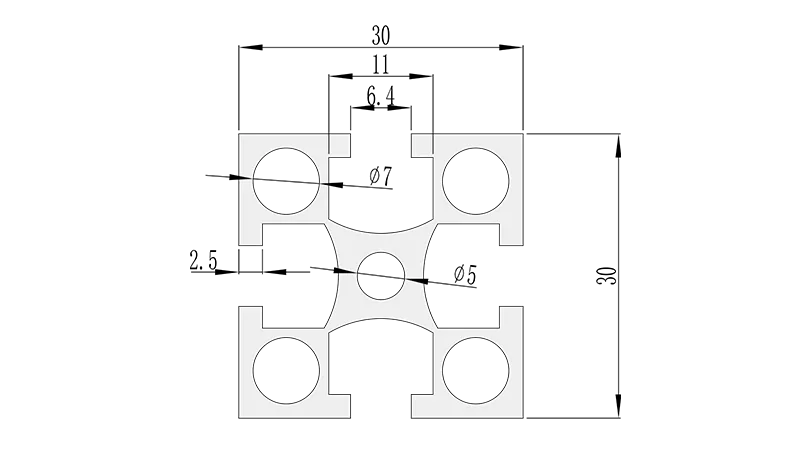
Before we dive into the cost-saving magic, let's make sure we're all on the same page. The 3030 National Standard Profile A is a type of aluminum extrusion—think of it as a pre-shaped aluminum bar with a specific cross-section designed for industrial use. The "3030" refers to its dimensions: 30mm in width and 30mm in height, making it a compact yet versatile option for building everything from workbenches to material racks. As a "national standard" profile, it follows strict size and tolerance guidelines, which means it's compatible with a wide range of aluminum profile accessories —no custom fabrication required.
Made from high-grade aluminum alloy, this profile balances strength and lightweight performance. Unlike heavy steel beams or flimsy plastic alternatives, it's resistant to corrosion (no rust, even in humid factory environments), easy to clean, and built to withstand the daily wear and tear of manufacturing operations. But what really sets it apart is how these features translate directly into dollars saved over time.
Key Features That Drive Cost Savings
Let's break down why the 3030 National Standard Profile A isn't just another piece of hardware—it's a cost-cutting tool in disguise:
1. Durability = Less Replacement, More Savings
Aluminum might not seem as "tough" as steel, but don't let that fool you. The 3030 profile's alloy composition gives it impressive structural integrity, with a tensile strength that rivals many mild steels. More importantly, it doesn't degrade over time. Steel rusts, wood warps, plastic cracks—but aluminum? It holds up. We're talking 10+ years of reliable use in most factory settings. That means you won't be replacing worn-out racks or workbenches every 2-3 years. Over a decade, that's a massive reduction in capital expenditure.
2. Modularity = Adapt Without Starting Over
Manufacturing needs change. A workbench that's perfect for assembling small electronics today might need to be reconfigured next year for larger components. With traditional fixed structures, that often means buying a whole new bench. Not with 3030 profiles. Thanks to its modular design and compatible aluminum profile accessories (think brackets, connectors, and fasteners), you can disassemble, rearrange, and rebuild the profile into something entirely new. Need to add a shelf to your material rack? Swap out a section. Want to extend a workbench? Just add another length of profile. No welding, no cutting, no expensive custom parts—just quick adjustments that save you from buying new equipment.
3. Lightweight = Lower Labor and Transport Costs
Aluminum is about 1/3 the weight of steel. That might not sound like a big deal until you're moving, installing, or reconfiguring equipment. A steel workbench might require two people and a forklift to relocate; a 3030 profile workbench? One person can move it with ease. Less labor time means lower hourly costs. Plus, lighter materials cost less to ship—whether you're ordering the profiles themselves or transporting finished racks and trolleys around your facility. Over time, those small savings on labor and shipping add up.
Real-World Applications: Where the Savings Hit Home
Enough theory—let's talk about how manufacturers are actually using 3030 National Standard Profile A to save money. Here are two common applications where the ROI shines:
Workbenches: The Backbone of the Shop Floor
Every factory needs workbenches, and they take a beating. From assembly to quality control, these surfaces see constant use. A typical wooden or steel workbench might last 3-5 years before showing signs of wear—scratches, warping, or rust. But a workbench built with 3030 National Standard Profile A? It stays level, resists dents, and won't corrode. Take the Workbench E (single deck-without caster) , a popular configuration using 3030 profiles. It's easy to assemble, customizable with accessories like tool rails or LED lights, and can be reconfigured if your workflow changes. Instead of replacing the entire bench when you need a new layout, you just adjust the profile sections—saving thousands over the bench's lifetime.
Material Racks: Organize Without Overspending
Material storage is another area where costs creep up. Traditional steel racks are expensive, heavy, and hard to modify. The Material Rack B (3 row and 3 floor) , built with 3030 National Standard Profile A, solves all three problems. It's lightweight enough to move with a pallet jack but strong enough to hold heavy components. The three rows and three floors maximize vertical space, reducing the need for additional racking. And if your storage needs change—say, you start stocking larger parts—you can adjust the shelf heights or add more levels using compatible accessories. No need to buy a new rack; just reconfigure the existing one.
Lean Systems Integration: Streamlining Workflows
Many manufacturers are adopting lean system principles to eliminate waste and boost efficiency. The 3030 profile fits right into this mindset. Its modularity allows you to design workflows that minimize movement—for example, building a U-shaped assembly line with 3030 profile workbenches and roller tracks that feed materials directly to workers. When you can adjust your setup to match lean goals without investing in new infrastructure, you're not just saving money—you're making your entire operation more profitable.
Long-Term ROI: The Numbers Speak for Themselves
Still skeptical? Let's crunch some numbers. Let's compare the 3030 National Standard Profile A to a traditional steel profile over a 5-year period for a simple application: a basic material rack.
| Cost Factor | 3030 National Standard Profile A | Traditional Steel Profile |
|---|---|---|
| Initial Material Cost | $350 (profile + accessories) | $300 (steel + welding supplies) |
| Installation Labor | $100 (1 person, 2 hours, no special tools) | $300 (2 people, 4 hours, welding required) |
| Annual Maintenance | $20 (occasional cleaning) | $150 (rust treatment, repainting) |
| Replacement Cost (5 years) | $0 (still in good condition) | $300 (rusted, needs replacement) |
| Reconfiguration Costs (if needed) | $50 (new accessories only) | $400 (new steel, welding, labor) |
| Total 5-Year Cost | $520 | $1,450 |
That's a savings of over $900 over five years for a single rack. Multiply that by dozens of racks, workbenches, and other structures in your facility, and the ROI becomes impossible to ignore. And remember—this is a conservative estimate. Many manufacturers report using 3030 profiles for 10+ years, which would push savings even higher.
Why Not Just Use Any Aluminum Profile?
You might be thinking, "Can't I get similar savings with a cheaper, non-standard aluminum profile?" Maybe—but probably not. Non-standard profiles often lack the strict tolerances of the 3030 National Standard Profile A, which means they might not work with off-the-shelf accessories. That forces you to buy custom parts, which are more expensive and take longer to source. Plus, "cheaper" profiles often use lower-grade aluminum, which dents or bends more easily, leading to earlier replacement. The 3030's national standard status ensures consistency, availability, and compatibility—all of which keep costs low over time.
And compared to steel? Steel might have a lower initial material cost, but as we saw in the table, the hidden costs (labor, maintenance, replacement) erase that advantage quickly. Add in the fact that aluminum is 100% recyclable (so you might even get a scrap value at the end of its life), and the choice becomes clear.
Conclusion: Invest in Savings That Last
At the end of the day, manufacturing success isn't just about making products—it's about making smart choices that keep costs down and profits up. The 3030 National Standard Profile A might seem like a small investment, but its impact is anything but. From durable, long-lasting structures to modular designs that adapt with your business, it's a tool that pays for itself many times over.
Whether you're building workbenches, material racks, or integrating it into your lean system , this profile delivers savings that add up year after year. So, if you're tired of throwing money at short-term fixes, consider the 3030 National Standard Profile A. Your bottom line (and your future self) will thank you.