- Company Articles
- Industry articles
- Industry standards
- Design Considerations for 4040F EU Standard Aluminum Profile Structures in Cleanrooms

Design Considerations for 4040F EU Standard Aluminum Profile Structures in Cleanrooms
Related Product
4040F EU Standard Aluminum Profile
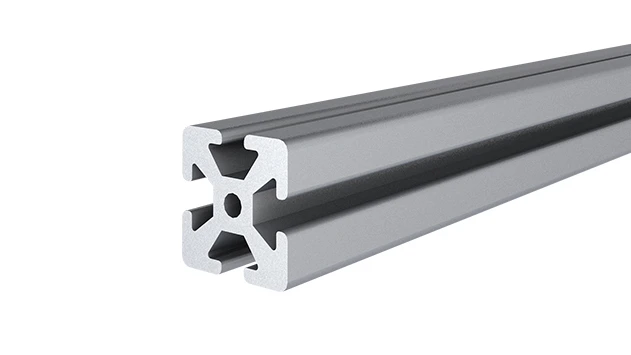
4040F is a 4.00x4.00 CM fractional 40 series square extrusion T-slot profile with four side open T-slots, each side with 4.00cm face. The profile has align-a-grooves to assist in aligning connecting profiles.
Balancing Precision, Cleanliness, and Functionality in Controlled Environments
Walk into any modern cleanroom—whether it's in semiconductor manufacturing, pharmaceutical production, or biotechnology research—and you'll notice something immediately: every detail matters. The air you breathe is filtered to remove microscopic particles, the surfaces shine under specialized lighting, and the equipment hums with a quiet reliability. But what often goes unnoticed, yet forms the backbone of these controlled environments, is the structural framework that holds everything together. From workbenches where delicate components are assembled to material racks that store sensitive reagents, the choice of materials and design here isn't just about durability—it's about maintaining the integrity of the entire operation.
This is where the 4040F EU standard aluminum extrusion profile comes into play. If you've ever worked in a cleanroom, you know the frustration of dealing with structures that corrode, collect dust, or fail to adapt to evolving workflows. Aluminum profiles, especially those meeting strict EU standards like the 4040F, have emerged as a game-changer, offering a unique blend of strength, modularity, and cleanliness. But designing with these profiles isn't as simple as picking a material off the shelf. It requires a deep understanding of cleanroom requirements, ergonomics, and the subtle ways structures interact with their environment.
In this article, we'll dive into the key design considerations for building with 4040F EU standard aluminum profiles in cleanrooms. We'll explore why this specific aluminum extrusion profile stands out, how aluminum profile accessories enhance its functionality, and why partnering with a trusted lean system supplier can make all the difference in bringing your design to life.
Why 4040F EU Standard Aluminum Extrusion Profile? A Quick Primer
Before we jump into design specifics, let's take a moment to appreciate what makes the 4040F profile a staple in cleanroom design. Aluminum extrusion profiles are created by forcing heated aluminum through a die, resulting in consistent, precise shapes—think of it like squeezing toothpaste through a tube, but with industrial-grade precision. The "4040F" designation refers to its dimensions (40mm x 40mm cross-section) and specific flange design, optimized for compatibility with standard accessories and ease of assembly.
Fun fact: The EU standard certification isn't just a label. It ensures the profile meets strict criteria for material purity, dimensional accuracy, and surface finish—critical in environments where even a tiny imperfection can compromise a batch of medical devices or a semiconductor wafer.
What sets aluminum extrusion profiles apart from other materials like steel or plastic? For starters, aluminum is naturally resistant to corrosion, a must in cleanrooms where frequent cleaning with harsh disinfectants is routine. Unlike steel, it doesn't rust, which means fewer particles shedding into the air. It's also lightweight, making installation and reconfiguration easier—no need for heavy machinery when your team needs to adjust a workbench layout. And perhaps most importantly, aluminum is non-magnetic and non-sparking, adding an extra layer of safety in environments with sensitive electronics or flammable materials.
But the 4040F profile takes this a step further. Its uniform T-slot design allows for seamless integration with aluminum profile accessories—brackets, connectors, panels, and even ESD (Electrostatic Discharge) components—turning a simple extrusion into a versatile building block. This modularity is a lifesaver in cleanrooms, where workflows evolve, and equipment needs change. Imagine needing to add a new shelf to a material rack or reposition a workbench to accommodate a new testing instrument—with the right accessories, these adjustments can happen in hours, not days.
Key Design Considerations: Building for Cleanroom Success
Designing with 4040F EU standard aluminum profiles in cleanrooms is a balancing act. You need structures that are strong enough to support heavy loads but lightweight enough to reconfigure; surfaces that resist contaminants but are gentle on sensitive components; and systems that comply with regulations but still feel intuitive to use. Let's break down the most critical factors to keep in mind.
1. Material Compatibility: Beyond the Profile Itself
Cleanrooms often expose structures to a range of chemicals—from isopropyl alcohol wipes to aggressive sanitizers like hydrogen peroxide. While the 4040F aluminum extrusion profile is inherently resistant to many chemicals, the aluminum profile accessories you pair with it might not be. For example, plastic end caps or rubber gaskets could degrade over time when exposed to certain solvents, leading to particle shedding or even structural failure.
This is where attention to detail matters. When selecting accessories—whether it's a bracket for a workbench or a connector for a roller track—opt for those made from compatible materials. Anodized aluminum accessories, for instance, offer an extra layer of chemical resistance, while stainless steel components can withstand repeated exposure to harsh cleaners. It's also wise to test material compatibility with your specific cleaning agents early in the design process—better to catch an issue in the lab than during a critical production run.
2. Structural Integrity: Strength Without Compromise
A workbench in a semiconductor cleanroom might hold a microscope, a soldering station, and a tray of delicate circuit boards—easily 50kg or more. A material rack storing vials of pharmaceutical compounds could bear even heavier loads. The 4040F profile, with its 40mm x 40mm cross-section and reinforced flanges, is engineered for strength, but its performance depends on how you design the structure.
Start by calculating the maximum load your structure will need to support—including dynamic loads (like someone leaning on a workbench) and static loads (like stored materials). Then, use aluminum profile accessories like corner brackets, gussets, and reinforced joints to distribute weight evenly. For example, a 90-degree aluminum profile connector with a gusset plate can significantly reduce stress at joint points, preventing bending or warping over time.
| Load Type | Example Scenario | Key Accessory to Enhance Strength |
|---|---|---|
| Static Vertical Load | Material rack storing 20kg boxes on 3 shelves | Reinforced corner brackets with gussets |
| Dynamic Horizontal Load | Workbench where operators lean forward during assembly | Cross-bracing with T-slot connectors |
| Impact Load | Turnover trolley bumping into a material rack | Shock-absorbing end caps and floor mounts |
Another often-overlooked factor is vibration. In cleanrooms with nearby machinery, even minor vibrations can disrupt precision work. The 4040F profile's rigidity helps here, but adding damping materials (like rubberized aluminum profile accessories) or isolating the structure from the floor can further minimize movement. Think of it as building a table that stays steady even when someone walks by—a small detail that makes a big difference for an operator trying to place a 0.1mm component.
3. Cleanliness: Designing Out Dust and Debris
In a Class 7 cleanroom, the air contains no more than 352,000 particles per cubic meter (for reference, outdoor air can have millions). Any structure that collects dust or sheds particles is a liability. Aluminum extrusion profiles have a smooth, non-porous surface that resists particle buildup, but design choices can either enhance or undermine this advantage.
Avoid sharp corners or crevices where dust might accumulate. The 4040F profile's rounded edges are a plus here, but when adding accessories, opt for designs with minimal gaps. For example, flush-mounted panels instead of overlapping ones, or sealed joints using rubber gaskets (compatible with cleaning agents, of course). Even something as simple as choosing the right end caps—those that snap tightly into the profile's ends—can prevent dust from collecting inside the hollow extrusion.
Surface finish matters too. The 4040F profile typically comes with a clear anodized finish, which not only improves corrosion resistance but also creates a smooth, easy-to-clean surface. Avoid painted profiles in cleanrooms; paint can chip or peel, releasing particles into the air. If color coding is necessary (e.g., to distinguish zones), look for anodized colors that meet EU standards for chemical and wear resistance.
4. ESD Control: Protecting Sensitive Electronics
For cleanrooms handling electronics—think semiconductors, circuit boards, or medical devices—electrostatic discharge (ESD) is a silent threat. A single static spark can damage a microchip worth thousands of dollars, or worse, render a medical device unsafe for use. Aluminum is a conductor, which can help dissipate static, but designing for ESD control requires intentionality.
Start with the basics: ensure all aluminum structures are grounded. This can be done by connecting the 4040F profile to a grounding system via specialized aluminum profile accessories like conductive brackets or grounding clips. For workbenches, consider adding ESD-safe work surfaces (compatible with the profile's T-slots) and anti-fatigue mats that dissipate static from operators' shoes.
Even the smallest accessories matter here. For example, caster wheels on mobile workstations should be ESD-rated to prevent static buildup as the cart moves. Similarly, material racks storing ESD-sensitive components should use conductive dividers or bins that integrate seamlessly with the 4040F profile's slots. The goal? Create a continuous path for static electricity to flow safely to the ground, protecting both your products and your team.
5. Modularity and Adaptability: Growing with Your Needs
Cleanroom workflows are rarely static. A pharmaceutical lab might shift from producing one drug to another, requiring new storage solutions. A semiconductor plant might scale up production, needing additional workbenches. This is where the modularity of 4040F aluminum extrusion profiles truly shines—but only if you design with adaptability in mind.
When planning your structure, ask: How might this need to change in 6 months? A year? Leave room for expansion by using aluminum profile accessories that allow for easy additions. For example, designing a material rack with extra T-slots along the sides means you can add shelves later without rebuilding the entire structure. Choosing adjustable feet (another handy accessory) lets you level the rack on uneven floors or raise it to accommodate taller items.
Modularity also simplifies maintenance. If a component fails—a damaged roller track on a conveyor, for instance—you can replace just that part instead of the entire structure. This not only reduces downtime but also cuts costs over the long term. I've seen cleanrooms where a single broken bracket on a steel rack led to a full replacement, whereas with aluminum profiles, the same issue was fixed in under an hour with a spare connector from the supply closet.

The Role of Aluminum Profile Accessories: Turning Profiles into Solutions
If the 4040F EU standard aluminum extrusion profile is the "bones" of your cleanroom structure, then aluminum profile accessories are the "muscles and joints"—the components that bring flexibility, functionality, and finesse to your design. Without the right accessories, even the best profile is just a length of metal. Let's explore some of the most critical accessories and how they enhance cleanroom structures.
Connectors: The Unsung Heroes of Modularity
Connectors are what turn individual 4040F profiles into complex structures. From simple 90-degree angle brackets to multi-axis joints that allow for adjustable angles, these accessories determine how easily you can assemble, disassemble, and reconfigure your setup. For cleanrooms, look for connectors with smooth, crevice-free designs to avoid particle traps. The 4040F profile's T-slot system works with a range of connector types, including drop-in bolts, sliding nuts, and quick-release clamps—each offering different levels of rigidity and adjustability.
One accessory I've found particularly useful in cleanrooms is the swivel joint , which allows sections of a workbench or material rack to rotate. Imagine a workbench where the tool tray can swing out of the way when not in use, or a material rack that tilts to bring stored items closer to eye level—these small adjustments reduce strain on operators and free up valuable space.
Panels and Work Surfaces: Adding Functionality
A bare 4040F frame isn't much use without surfaces to work on or enclose sensitive areas. Aluminum honeycomb panels, for example, are lightweight yet rigid, making them ideal for workbench tops or partition walls. They're also easy to clean and resistant to chemicals, a must for surfaces that see daily use. For ESD-sensitive environments, there are conductive panels that integrate with the profile's grounding system, ensuring static doesn't build up on work surfaces.
Another accessory gaining popularity is the transparent polycarbonate panel , which can be mounted to the 4040F frame to create barriers between cleanroom zones. These panels are shatter-resistant, easy to sanitize, and allow for visibility—important for both safety and collaboration between operators.
Roller Tracks and Casters: Moving Materials Safely
In busy cleanrooms, moving materials from point A to point B without disrupting the environment is a challenge. This is where roller tracks and casters come in. When mounted to 4040F profiles, roller tracks (often paired with plastic or aluminum guide rails) create gravity-fed conveyors for lightweight items like component trays or sample tubes. The key here is to choose roller tracks with smooth, low-friction wheels that don't generate particles as they move.
For heavier loads, mobile structures with casters are a must. But not just any casters—look for ones with non-marking, ESD-safe wheels and locking mechanisms to prevent unintended movement. When designing a turnover trolley with 4040F profiles, for example, using swivel casters with brake levers ensures operators can move the trolley smoothly and lock it securely in place during loading/unloading.
From Design to Reality: Partnering with a Lean System Supplier
Even the most well-thought-out design can fall flat if the execution is poor. This is why choosing the right lean system supplier is just as critical as the design itself. A reputable supplier doesn't just sell you profiles and accessories—they partner with you to understand your cleanroom's unique needs, offer technical expertise, and ensure compliance with industry standards.
What should you look for in a lean system supplier? Start with experience in cleanroom applications. Ask for case studies or references from clients in your industry—someone who's designed workbenches for pharmaceutical labs will understand your needs better than a supplier focused on automotive manufacturing. Look for suppliers who stock a wide range of 4040F EU standard aluminum extrusion profiles and aluminum profile accessories, ensuring you can get replacement parts quickly if needed.
Technical support is another red flag. Designing with 4040F profiles often involves complex load calculations or ESD integration—you need a supplier who can provide engineering assistance, not just a catalog. Some suppliers even offer 3D modeling services, letting you test your design virtually before any materials are cut. This can save weeks of rework and frustration down the line.
Pro tip: Don't underestimate the importance of delivery and lead times. In cleanroom operations, delays in structural components can hold up entire production lines. Ask potential suppliers about their inventory levels for 4040F profiles and common accessories, and whether they offer expedited shipping for urgent orders.
Finally, compliance matters. Your supplier should be able to provide certification documents for the 4040F EU standard aluminum extrusion profile, confirming it meets EU regulations for material purity and surface finish. For ESD components, look for suppliers who can provide test reports verifying electrostatic discharge performance. In regulated industries like pharmaceuticals, this documentation isn't just nice to have—it's legally required.
Case Study: A Workbench Designed for Semiconductor Assembly
To bring these concepts to life, let's walk through a real-world example: designing a workbench for semiconductor assembly using 4040F EU standard aluminum profiles and aluminum profile accessories.
The Challenge: A semiconductor manufacturer needed a workbench where operators would assemble microchips. Requirements included ESD protection, a clean, non-porous surface, adjustable height for ergonomics, and the ability to mount tools (microscopes, soldering irons) and storage trays.
The Design Solution: The base structure was built using 4040F profiles, chosen for their strength (to support the 80kg load of tools and components) and clean surface finish. Aluminum profile accessories included:
- Adjustable feet: Allowed leveling on uneven floors and height adjustment from 750mm to 900mm to suit operators of different heights.
- Conductive work surface: An aluminum honeycomb panel with an ESD-safe coating, grounded via a connector to the 4040F frame.
- Tool rail: A horizontal 4040F profile mounted above the work surface, fitted with sliding tool holders for soldering irons and tweezers.
- Storage bins: Attached to the side of the bench using T-slot brackets, with clear lids to contain small components and prevent dust buildup.
- Cable management clips: Integrated into the frame to route power cords and data cables, keeping the work surface clutter-free and reducing trip hazards.
The Outcome: The workbench not only met all ESD and cleanliness requirements but also reduced operator fatigue thanks to its adjustable height. The modular design meant the manufacturer could add a second tool rail six months later when new equipment was introduced, without replacing the entire bench. And because the supplier was a trusted lean system partner, they provided on-site assembly support, ensuring the bench was installed correctly and certified for use in the cleanroom.
Conclusion: Designing for the Future of Cleanrooms
Designing with 4040F EU standard aluminum extrusion profiles in cleanrooms is more than just a technical exercise—it's about creating environments where precision, safety, and efficiency coexist. From the choice of the profile itself to the selection of aluminum profile accessories and the partnership with a reliable lean system supplier, every decision shapes the daily experience of the people working in these controlled spaces.
As cleanroom technologies evolve—with tighter particle control standards, more complex workflows, and a growing focus on sustainability—aluminum profiles like the 4040F will only become more critical. Their modularity aligns with the need for flexible manufacturing, their cleanliness supports strict regulatory requirements, and their durability ensures long-term value. And when paired with the right accessories and expertise, they transform from simple building blocks into solutions that empower teams to do their best work.
So the next time you step into a cleanroom, take a closer look at the structures around you. Chances are, they're built with profiles like the 4040F—and behind that quiet, unassuming framework is a story of careful design, attention to detail, and a commitment to excellence. After all, in cleanrooms, the smallest details often make the biggest difference.