- Company Articles
- Industry articles
- Industry standards
- Design Standards of Aluminum Workbench C: Meeting Lean Manufacturing Needs

Design Standards of Aluminum Workbench C: Meeting Lean Manufacturing Needs
Related Product
Aluminum Workbench C
aluminum-tube-workbench-is-more-flexible-and-durable,-compared-with-traditional-pe/abs-coated-steel-tube.-it-is-easy-to-assemble,-anti-corrosion,-rust-protection,-and-recycle-use-after-disassemble.
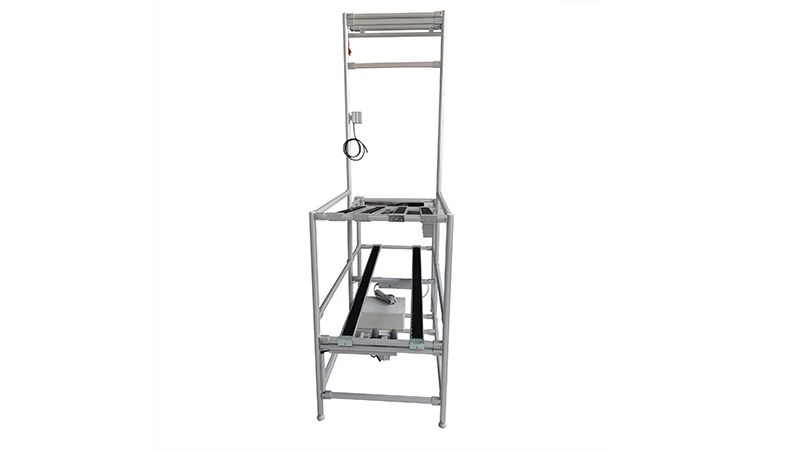
In the fast-paced world of manufacturing, where every second counts and waste is the enemy, the tools we use shape more than just daily operations—they shape the very efficiency of our workflows. Lean manufacturing, a philosophy built on minimizing waste while maximizing value, demands tools that don't just "work" but adapt , endure , and empower teams to do more with less. Enter the Aluminum Workbench C: a simple piece of equipment that, when designed to meet lean system standards, becomes a cornerstone of efficient production lines. Let's dive into what makes this workbench more than just a table—and how its design directly addresses the unique needs of lean manufacturing.
Understanding Lean System Requirements: Why Workbenches Matter
Before we dissect the design of Aluminum Workbench C, let's ground ourselves in the principles of lean manufacturing. At its core, lean is about eliminating "muda" (waste) in all forms: unnecessary movement, excess inventory, waiting time, defects, and more. A lean system thrives on continuous improvement, where every process is questioned, optimized, and refined. In this context, a workbench isn't just a surface to place tools—it's a hub where operators spend hours each day, where materials flow in and out, and where bottlenecks can either form or be dissolved.
For a workbench to truly support a lean system, it must check several boxes: it must be flexible to adapt to changing production needs, durable to withstand daily use without frequent replacement, ergonomic to reduce operator fatigue and errors, and integrated with other tools to keep workflows seamless. Aluminum Workbench C, when engineered to these standards, doesn't just meet these needs—it elevates them.
Core Design Principles of Aluminum Workbench C
1. Material Selection: Aluminum Extrusion Profile – The Backbone of Durability and Flexibility
The first decision in designing Aluminum Workbench C is the material, and aluminum extrusion profile emerges as the clear choice for lean environments. Unlike traditional steel (heavy, prone to rust) or wood (unstable, high maintenance), aluminum extrusion profile offers a unique blend of strength and versatility. Here's why:
- Lightweight yet strong : Aluminum extrusion profile is 30% lighter than steel but maintains comparable load-bearing capacity. This means the workbench is easy to reposition (critical for lean's "flow" principle) without sacrificing stability.
- Corrosion-resistant : Aluminum naturally forms a protective oxide layer, making it ideal for environments where spills, humidity, or chemicals are common—no rust, no degradation, and minimal maintenance.
- Precision-engineered : Extrusion manufacturing creates consistent, uniform profiles with T-slots (a signature feature of aluminum extrusion profile) that allow for quick attachment of accessories. No drilling, no welding—just snap-on components that adapt as needs change.
For example, a production line switching from assembling small electronics to larger components can add shelves or tool holders to Aluminum Workbench C in minutes using T-slot aluminum profile accessories—no downtime, no custom fabrication. That's lean flexibility in action.
2. Structural Integrity: Balancing Strength and Simplicity
A workbench's frame is its foundation, and Aluminum Workbench C's design prioritizes structural integrity without overcomplicating things. The frame is constructed using high-grade aluminum extrusion profile (typically 4040 or 3030 series, chosen for their balance of weight and rigidity), connected via internal rotary aluminum joints. These joints, unlike loose bolts or welds, ensure a tight, wobble-free connection that withstands repeated use.
Load capacity is another key consideration. Aluminum Workbench C is tested to support 200-300 kg evenly distributed—enough for tools, materials, and even heavy machinery components. The single-deck design (similar to Workbench E but optimized for lean workflows) avoids unnecessary layers, keeping the focus on what's needed now (lean's "just-in-time" inventory principle) rather than cluttering the space with unused storage.
3. Ergonomics: Designing for the Human Element
Lean manufacturing isn't just about machines and processes—it's about people. Fatigued operators make mistakes, slow down, and disengage, all of which introduce waste. Aluminum Workbench C addresses this with ergonomic design at its core:
Height adjustability : Standard models are set at 750mm (ideal for most standing operators), but optional height-adjustable legs allow customization for seated work or taller/shorter team members. This reduces strain on the back, shoulders, and wrists—common pain points in repetitive tasks.
Work surface layout : The single-deck top (often made of aluminum honeycomb panel for lightweight durability) is designed with a 15° tilt option for tasks requiring precision (e.g., electronics assembly). Edge guards prevent tools from rolling off, and cable management channels keep power cords and from tangling—a small detail that saves minutes of daily frustration.
4. Mobility: Caster Wheels for On-Demand Flexibility
In lean systems, stagnation is waste. A workbench that stays fixed in one spot might work for static production lines, but modern manufacturing demands agility. Aluminum Workbench C offers optional caster wheels (typically 4-inch swivel casters with brakes) that transform it from a stationary station to a mobile unit in seconds.
Imagine a scenario where a sudden rush order requires reconfiguring the production line. With caster wheels, Aluminum Workbench C can be rolled to a new position, locked in place, and operational within minutes. No need for forklifts, no downtime, no disruption to the flow. This mobility aligns perfectly with lean's "cellular manufacturing" approach, where workstations are arranged dynamically to minimize movement.
5. Adaptability: Aluminum Profile Accessories – Customization Without Compromise
The true magic of Aluminum Workbench C lies in its ability to evolve with your needs, thanks to aluminum profile accessories. These aren't just add-ons—they're integral to the workbench's lean design. From tool hooks and bin holders to monitor mounts and side shelves, aluminum profile accessories attach directly to the T-slots of the aluminum extrusion profile, no tools required.
For instance, a team assembling circuit boards might add a parts bin rack (using aluminum guide rail A and plastic roller track guide rails) to keep components organized and within arm's reach. A week later, when switching to testing, they can swap the bin rack for a monitor mount to display test procedures. This level of customization ensures the workbench never has "wasted space" or "missing features"—it's always tailored to the task at hand.

Detailed Design Standards: What Sets Aluminum Workbench C Apart
Now that we've covered the core principles, let's dive into the specific design standards that make Aluminum Workbench C a lean system standout. These aren't arbitrary choices—each dimension, component, and feature is intentional, rooted in real-world manufacturing needs.
Dimensions and Layout: Optimizing for Flow
Aluminum Workbench C typically measures 1200mm (length) x 600mm (width) x 750mm (height) as a standard model, though custom sizes are available. This dimensions strike a balance: wide enough to accommodate materials and tools without requiring operators to stretch, narrow enough to fit into tight production cells, and tall enough to keep work at waist level (reducing bending).
The single-deck top (Workbench E, a similar model, is also single-deck but without casters) is intentionally uncluttered. No built-in drawers that collect unused items, no fixed shelves that limit vertical space—just a flat, durable surface that serves as a blank canvas for aluminum profile accessories. This "less is more" approach aligns with lean's "minimize inventory" principle, encouraging teams to keep only what's needed on the bench.
Surface Treatment: Function Over Fuss
The workbench top deserves special attention, as it's the interface between operator and task. Aluminum Workbench C's top is typically finished with anodized aluminum or a powder coating, both of which offer:
- Scratch resistance : Daily use with tools, parts, and equipment won't leave permanent marks, keeping the surface smooth and functional.
- ESD compatibility (optional): For electronics manufacturing, an anti-static coating can be added to prevent electrostatic discharge from damaging sensitive components—a critical feature that aligns with lean's "reduce defects" goal.
- Easy cleaning : Spills wipe away with a damp cloth, reducing time spent on maintenance and ensuring a hygienic workspace.
Joint and Connection Systems: Stability Without Complexity
A workbench is only as strong as its joints, and Aluminum Workbench C uses internal rotary aluminum joints to connect its aluminum extrusion profile frame. These joints are designed for tool-free assembly and disassembly, allowing for quick repairs or reconfigurations. Unlike traditional bolted joints, which loosen over time, internal rotary joints lock into place with a simple twist, maintaining stability even under heavy loads.
For added support, the frame includes cross-bracing (using aluminum pipe clamps) at the corners, preventing lateral movement. This attention to detail ensures the workbench remains steady whether it's stationary or rolled across the factory floor on caster wheels.
Weight Capacity: Built for Real-World Use
Lean systems rely on predictability, and a workbench that sags or wobbles under load introduces uncertainty. Aluminum Workbench C is tested to support 250kg uniformly distributed across its top surface—more than enough for most manufacturing tasks, from assembling car parts to packing medical devices. The aluminum extrusion profile's hollow design contributes to this strength; by distributing weight evenly across the frame, it avoids stress points that could lead to failure.

Aluminum Workbench C vs. Traditional Workbenches: A Lean Comparison
To truly appreciate Aluminum Workbench C's value, let's compare it to two common alternatives: wooden workbenches and steel workbenches. The table below highlights how aluminum extrusion profile, mobility, and adaptability make Aluminum Workbench C the superior choice for lean systems.
| Feature | Aluminum Workbench C | Wooden Workbench | Steel Workbench |
|---|---|---|---|
| Material | Aluminum extrusion profile (lightweight, corrosion-resistant) | Solid wood (prone to warping, high maintenance) | Steel (heavy, rust-prone without coating) |
| Weight | ~45kg (easy to move with caster wheels) | ~60kg (difficult to reposition) | ~80kg (requires machinery to move) |
| Customization | Tool-free with aluminum profile accessories (T-slots) | Limited (requires drilling, permanent modifications) | Limited (welding or bolted additions only) |
| Durability | 10+ years (no rust, minimal wear) | 3-5 years (warping, scratches, water damage) | 7-10 years (prone to rust if coating chips) |
| Lean Compatibility | High (supports flow, flexibility, low waste) | Low (static, high maintenance, wasteful replacement) | Medium (durable but inflexible, heavy) |
The data speaks for itself: Aluminum Workbench C outperforms traditional options in the areas that matter most to lean systems. Its lightweight design with caster wheels supports flow, its aluminum extrusion profile and accessories enable on-the-fly customization, and its durability reduces waste from frequent replacements.

Real-World Applications: How Aluminum Workbench C Drives Lean Success
Let's look at a concrete example of Aluminum Workbench C in action. A mid-sized electronics manufacturer was struggling with bottlenecks in their circuit board assembly line. Their old steel workbenches were heavy and fixed in place, so operators had to walk 10-15 feet to retrieve parts from storage racks—a classic case of "unnecessary movement" waste. Additionally, the workbenches lacked organization, leading to tools being misplaced and assembly errors.
After switching to Aluminum Workbench C with caster wheels and aluminum profile accessories (including bin racks and tool holders), the results were striking: Operators reduced walking time by 40%, as workbenches could be positioned next to material storage. The T-slot aluminum extrusion profile allowed teams to add parts bins exactly where needed, cutting down on tool retrieval time by 25%. Within six months, the manufacturer reported a 15% increase in daily output and a 30% reduction in assembly errors—all from rethinking their workbench design.
Another example comes from automotive manufacturing, where a plant adopted Aluminum Workbench C for quality inspection stations. The optional ESD coating protected sensitive sensors, while the workbench's mobility allowed inspectors to move to the production line instead of waiting for parts to come to them. This "go to the work" approach reduced waiting time by 50%, aligning perfectly with lean's "optimize flow" principle.
Maintenance and Longevity: Keeping Lean for the Long Haul
A lean system doesn't just reduce waste in production—it reduces waste in all areas, including maintenance. Aluminum Workbench C is designed for minimal upkeep, ensuring it remains a cost-effective asset for years. Here's how:
- No rust, no rot : Aluminum's natural corrosion resistance means no need for painting or rust treatments—just occasional cleaning.
- Replaceable parts : If a caster wheel wears out or an aluminum profile accessory breaks, it can be swapped out in minutes without replacing the entire workbench.
- Tool-free adjustments : Tightening a loose joint or repositioning an accessory requires nothing more than a twist of the internal rotary aluminum joint—no special tools, no maintenance team required.
With proper care, Aluminum Workbench C can last 10+ years, far exceeding the lifespan of wooden workbenches (3-5 years) and matching steel workbenches (7-10 years) at a fraction of the weight and maintenance cost.
Conclusion: Aluminum Workbench C – More Than a Workbench, a Lean Partner
In the world of lean manufacturing, success lies in the details. A workbench that seems "good enough" can quietly erode efficiency through wasted movement, downtime, or operator fatigue. Aluminum Workbench C, designed with aluminum extrusion profile, mobility, and adaptability at its core, is more than just a surface—it's a strategic tool that aligns with lean principles from the ground up.
From its lightweight aluminum extrusion profile frame to its tool-free aluminum profile accessories, from optional caster wheels to ergonomic design, every aspect of Aluminum Workbench C is engineered to reduce waste and boost value. It's a testament to the idea that lean isn't just about big-picture processes—it's about the tools we use every day. And when those tools are designed with lean in mind, the results speak for themselves: happier operators, smoother workflows, and a bottom line that reflects the true power of efficiency.
So, the next time you walk through a production line, take a closer look at the workbenches. Are they holding your team back, or propelling them forward? With Aluminum Workbench C, the answer is clear: forward—one lean, efficient step at a time.