- Company Articles
- Industry articles
- Industry standards
- Differences Between 4040C EU Standard Aluminum Profile & 4545 Profiles: Project Fit Guide

Differences Between 4040C EU Standard Aluminum Profile & 4545 Profiles: Project Fit Guide
Related Product
4040C EU Standard Aluminum Profile
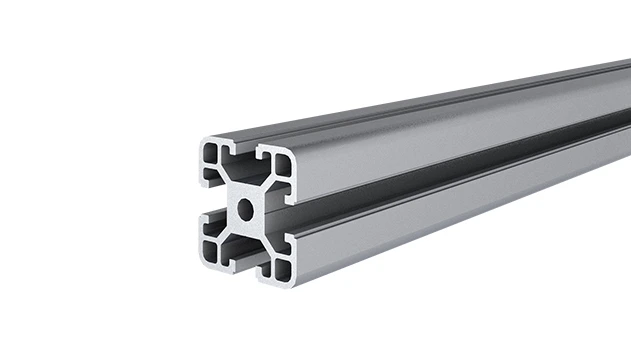
4040C is a 4.00x4.00 CM fractional 40 series square extrusion T-slot profile with four open T-slots, each side with 4.00cm face. The profile has align-a-grooves to assist in aligning connecting profiles.
Walk into any modern factory, workshop, or logistics center, and you'll likely spot aluminum profiles holding everything together—from workbenches where technicians assemble circuit boards to heavy-duty racks storing raw materials. These unassuming metal frames are the backbone of efficient operations, but choosing the right one? That's where the real craft comes in. Today, we're zeroing in on two heavyweights in the aluminum profile world: the 4040C EU Standard Aluminum Profile and the 4545 Profiles. They might sound similar, but pick the wrong one, and you could end up with wobbly workbenches, wasted budget, or even safety risks. Let's break down their differences, uses, and how to pick the perfect fit for your project.
First Things First: What Even Are These Profiles?
Before diving into comparisons, let's get clear on what we're talking about. Both 4040C and 4545 are types of aluminum extrusion profiles—long, hollow bars made by pushing molten aluminum through a die to create specific cross-sectional shapes. They're loved for being lightweight, strong, and infinitely customizable, thanks to T-slots that let you attach accessories like brackets, panels, and casters with ease. But their names give away the first big difference: size.
The "4040" in 4040C means it measures 40mm by 40mm in cross-section (think a square tube, 4cm on each side). The "C" likely refers to its specific T-slot design or compliance with EU manufacturing standards, which set strict rules for dimensions, material quality, and load-bearing capacity. On the flip side, 4545 profiles are larger—45mm by 45mm. That extra 5mm on each side might not sound like much, but in the world of structural support, it's a game-changer.
Meet the 4040C EU Standard Aluminum Profile: The Versatile Workhorse
If aluminum profiles had a "jack of all trades," it would be the 4040C. Designed to meet EU standards (think precision, consistency, and safety), this 40x40mm profile is a staple in small to medium-scale projects. Let's unpack why it's so popular.
Key Features of 4040C
Dimensions & Weight: At 40x40mm, it's compact enough to fit in tight spaces but sturdy enough for most everyday tasks. A typical 4040C profile weighs around 1.8-2.2 kg per meter (depending on wall thickness), making it easy to handle during installation—no need for heavy machinery just to move a few bars.
Material & Strength: Made from 6063-T5 aluminum alloy (the gold standard for extrusions), it balances strength and flexibility. It can handle static loads of 200-300 kg per meter (when properly supported) and dynamic loads (like items sliding on a rack) of 100-150 kg. That's more than enough for a workbench holding tools, a lightweight conveyor, or a shelf with boxes of electronics components.
T-Slots & Accessories: The real magic of 4040C lies in its T-slots—those grooves running along its length that let you snap in accessories without drilling. Common setups include 4040 aluminum profile end caps (to cover sharp edges), 90° aluminum profile connectors (for right-angle joints), and even caster wheels for mobile workbenches. Since it's EU-standard, accessories are widely available from suppliers, so you won't struggle to find replacement parts or add-ons later.
Where 4040C Shines
4040C is the go-to for projects where agility and cost-efficiency matter most. Think:
- Workbenches: From simple single-deck workbenches (like "Workbench E (single deck-without caster)") to modular setups with tool holders and LED lights, 4040C's light weight and easy assembly make it perfect for workstations that might need reconfiguring as tasks change.
- Light Racks & Trolleys: Small parts storage, turnover trolleys, or mobile carts for moving components between assembly lines—4040C paired with plastic roller track guide rails (yellow or grey, take your pick) keeps things rolling smoothly without overcomplicating the design.
- Lean Systems: In lean manufacturing, where minimizing waste and maximizing flexibility is key, 4040C's adaptability shines. It's easy to disassemble and rebuild, so you can tweak your setup as workflows evolve—no need to scrap the whole system when you need a new rack or shelf.

Now, the 4545 Profiles: The Heavy-Duty Contender
If 4040C is the agile point guard, 4545 profiles are the center—bigger, stronger, and built to handle the heavy lifting. At 45x45mm, they're not just slightly larger; their beefed-up cross-section translates to serious structural muscle.
Key Features of 4545 Profiles
Dimensions & Weight: The 45x45mm cross-section adds 25% more material than 4040C, so it's heavier—typically 2.5-3.0 kg per meter. That extra weight isn't a flaw; it's a feature, contributing to its superior stability.
Material & Strength: Also usually made from 6063-T5 aluminum, but with a thicker wall (often 2.5-3mm vs. 1.5-2mm for 4040C). This lets it handle static loads of 400-600 kg per meter and dynamic loads of 200-300 kg. Need to support a conveyor belt carrying engine parts? Or a rack stacked with metal sheets? 4545 won't bat an eye.
T-Slots & Accessories: 4545 profiles often have wider or deeper T-slots to accommodate larger bolts and heavier accessories. While they share some accessory compatibility with 4040C (like basic brackets), many parts are profile-specific—think beefier end caps, reinforced corner connectors, and heavy-duty roller track placon mounts for rail connections. This specialization means you get a more secure fit for heavy loads, but it also means accessory options might be slightly more limited (or pricier) than 4040C's ubiquitous parts.
Where 4545 Profiles Rule
4545 is all about heavy-duty, high-stakes applications where failure isn't an option. Common uses include:
- Heavy Material Racks: "Material Rack B (3 row and 3 floor)" is a classic example—storing metal parts, automotive components, or large boxes. 4545's load capacity ensures the rack won't bow or collapse under the weight.
- Industrial Conveyors: Roller conveyors or chain conveyors moving heavy items (like pallets or machinery parts) rely on 4545 for their frame. The larger profile minimizes vibration, keeping the conveyor stable even at high speeds.
- Machine Frames: Small to medium industrial machines (think packaging equipment or assembly robots) need a rigid base to prevent wobbling during operation. 4545 provides that stability, even when the machine is running at full power.
The Critical Differences: 4040C vs. 4545
Now that we know what each profile does, let's put them head-to-head. Here's how they stack up in the areas that matter most for your project:
| Factor | 4040C EU Standard | 4545 Profiles |
|---|---|---|
| Size (Cross-Section) | 40x40mm | 45x45mm |
| Weight (per meter) | 1.8-2.2 kg | 2.5-3.0 kg |
| Static Load Capacity (per meter) | 200-300 kg | 400-600 kg |
| Cost (per meter) | €8-€12 (varies by supplier) | €12-€18 (higher due to more material) |
| Accessory Availability | Widely available (EU standard = global suppliers) | Good, but more specialized (fewer generic options) |
| Best For | Light to medium loads, tight spaces, lean systems | Heavy loads, industrial machinery, large racks |
Space vs. Strength: The 4040C's smaller size is a win for workshops with limited floor space—you can fit more workbenches or racks in the same area. But if you need to support heavy items, 4545's 5mm extra width and thickness make it the safer bet. For example, a 4040C shelf might sag under a 400 kg load, while 4545 will stay rock-solid.
Budget: 4040C is generally 30-40% cheaper per meter than 4545. If your project doesn't need the extra strength, choosing 4040C can save you hundreds (or thousands) on materials. But don't skimp on strength to save a few euros—replacing a collapsed rack later will cost far more.
Accessory Compatibility: Since 4040C is EU-standard, most aluminum profile accessories (like T-slot rubber seal covers or aluminum profile fixings) work with it right out of the box. 4545, being larger, often requires its own line of accessories. Mixing profiles? Possible, but you'll need adapter brackets, which add complexity and cost.
How to Choose: 5 Questions to Ask Before Deciding
Still on the fence? Answer these five questions, and the choice will get clearer:
1. What's the Maximum Load Your Project Needs to Support?
If you're building a workbench for tools and small parts (under 150 kg total), 4040C is more than enough. If you're storing 50 kg boxes on a 3-tier rack (total load 450 kg), 4545 is non-negotiable. When in doubt, calculate the load per meter and compare it to the profile's capacity (check the supplier's specs—they'll list this!).
2. How Much Space Do You Have?
In a cramped electronics workshop, a 4545-based workbench might take up valuable floor space better used for other equipment. 4040C's slimmer profile lets you squeeze more workstations into the same area. But if space isn't an issue, 4545's sturdiness might be worth the extra room.
3. Is Mobility Important?
Need a mobile trolley or workbench? 4040C's lighter weight makes it easier to mount caster wheels and move around (even by hand). 4545-based setups are heavier—you'll need heavy-duty casters and maybe even a forklift to reposition them, which adds cost and hassle.
4. Will You Need to Expand Later?
If your project might grow (e.g., adding more shelves to a rack or extending a conveyor), 4040C's widespread availability makes it easier to source matching profiles and accessories later. 4545 is less common, so finding exact matches down the line could be trickier (especially if your original supplier stops carrying that specific 4545 model).
5. What's Your Accessory Wishlist?
Do you need specialized parts like swivel roller balls (for sliding items) or aluminum guide rails? Check if your supplier stocks those accessories for both profiles. For example, plastic roller track guide rails (yellow or grey) are widely available for 4040C, but 4545 might require custom-ordered rails, which take longer and cost more.
Real-World Examples: When to Pick Which
Let's look at two projects to see how these choices play out in the real world.
Example 1: Small Electronics Workshop Workbench
Project: A startup building smart home sensors needs 5 workbenches for assembling circuit boards. Each bench needs to hold a laptop, tools, and small components (total load ~80 kg per bench). They also want the benches to be mobile (to rearrange the workshop for team huddles) and easy to modify (adding shelves or tool hooks later).
Choice: 4040C EU Standard Aluminum Profile. Why? The load is well under 4040C's capacity, the lighter weight makes adding caster wheels simple, and EU-standard accessories (like nylon handles for pushing and 4040 end caps for safety) are easy to find. They even save money, using the extra budget to buy anti-fatigue mats for the floor.
Example 2: Automotive Parts Storage Rack
Project: A car repair shop needs a rack to store engine blocks (each ~150 kg) and transmission parts (each ~80 kg). The rack will have 3 rows and 3 floors ("Material Rack B"), with 2 engine blocks and 3 transmission parts per floor. Total load per floor: (2x150) + (3x80) = 540 kg. The rack needs to be stable, even when parts are loaded/unloaded roughly.
Choice: 4545 Profiles. 540 kg per floor 4040C's capacity, so 4545 is the only safe option. They pair it with heavy-duty aluminum profile connectors and stainless steel swivel roller balls (1 inch) for easy sliding of parts. Yes, it's pricier, but the shop avoids the risk of the rack collapsing and damaging expensive parts (or worse, injuring someone).
Final Thoughts: It's All About Your Project's "Why"
At the end of the day, there's no "better" profile—only the better profile for your project. 4040C EU Standard Aluminum Profile is the flexible, budget-friendly choice for light to medium loads and tight spaces. 4545 Profiles are the heavy lifters, built for strength and stability in industrial settings. To decide, start with your load needs, then factor in space, budget, and future plans.
And remember: When in doubt, talk to your supplier. A good aluminum profile supplier will ask about your project details and help you pick the right profile (and accessories!) to get the job done right the first time. After all, the best projects aren't just built—they're built with intention.