- Company Articles
- Industry articles
- Industry standards
- Digital Twin Integration: 2040 EU Standard Aluminum Profile in Virtual Factory Design

Digital Twin Integration: 2040 EU Standard Aluminum Profile in Virtual Factory Design
Related Product
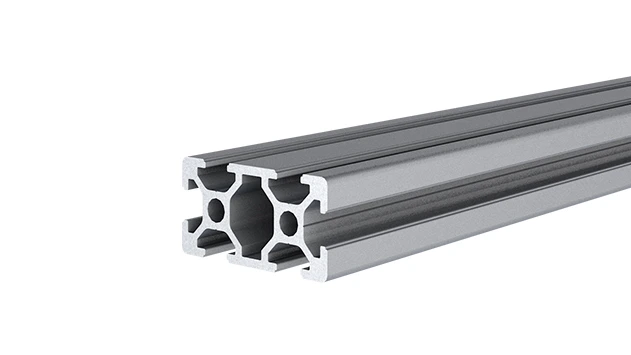
2040 EU Standard Aluminum Profile
2040 is a 2.00 x 4.00CM fractional 20 series square extrusion T-slot profile with four open T-slots, two side with 2.00cm face, the other side with 4.00cm face. The profile has align-a-grooves to assist in aligning connecting profiles.
The New Era of Manufacturing: Where Virtual Meets Physical
Walk into any modern manufacturing facility today, and you'll likely notice a quiet revolution unfolding. The clatter of physical prototypes and the frustration of last-minute design changes are fading, replaced by the hum of computers running complex simulations and engineers collaborating over 3D models. At the heart of this shift lies a powerful combination: digital twin technology and modular, adaptable materials like the 2040 EU standard aluminum profile. Together, they're redefining how factories are designed, built, and optimized—turning once-static production lines into dynamic, responsive ecosystems.
For decades, manufacturers relied on trial-and-error to perfect workflows. A new assembly line might require weeks of physical prototyping, costly material waste, and endless adjustments once installed. But today, digital twins—virtual replicas of physical systems—allow teams to test, tweak, and validate every detail before a single component is built. And when paired with versatile building blocks like the 2040 EU standard aluminum profile, this integration becomes even more transformative. These profiles, with their precision-engineered T-slots and compatibility with a wide range of aluminum profile accessories, serve as the backbone of flexible factory setups, making them ideal for virtual design.
What Are Digital Twins, and Why Do They Matter?
Think of a digital twin as a living, breathing copy of a physical system—whether it's a single machine, an assembly line, or an entire factory. It uses real-time data, 3D modeling, and advanced analytics to mirror the physical world, allowing engineers to monitor performance, predict issues, and simulate changes without disrupting operations. In manufacturing, this means no more guessing how a new workbench layout will affect workflow or whether a roller track system can handle increased production demands. With a digital twin, you can see it all—virtually.
The value of digital twins lies in their ability to bridge the gap between design and reality. Traditional CAD models capture static dimensions, but digital twins go further: they incorporate material properties, environmental factors, and even human interaction. For example, when designing a workstation using 2040 EU standard aluminum profiles, a digital twin can simulate how the profile bends under load, how heat from machinery affects its structural integrity, or how easily workers can access tools mounted on its T-slots. This level of detail doesn't just save time—it prevents costly mistakes.

The 2040 EU Standard Aluminum Profile: A Foundation for Flexibility
At first glance, the 2040 EU standard aluminum profile might seem like just another piece of metal. But its simplicity is deceptive. Measuring 20mm in width and 40mm in height, this extruded aluminum profile features a T-slot design that acts as a universal interface for aluminum profile accessories—brackets, end caps, hinges, and more. This means it can be assembled into almost anything: workbenches, material racks, roller tracks, or even custom machinery frames. Unlike rigid steel structures, it's lightweight yet strong, corrosion-resistant, and infinitely reconfigurable—perfect for today's fast-changing manufacturing needs.
What makes the 2040 profile stand out in virtual design is its standardization. As part of the EU standard, every dimension, slot size, and tolerance is consistent across suppliers. This uniformity is a boon for digital twin integration. Engineers don't have to guess whether a 2020 EU standard aluminum profile end cap will fit or if a 3030 aluminum profile connector will align with the T-slot. The digital twin can pull exact specifications from a library, ensuring the virtual model matches the physical product down to the millimeter. This precision is critical when simulating complex systems like roller tracks, where even a slight misalignment can disrupt material flow.
Consider a simple example: building a workbench. With 2040 profiles, you start with vertical supports, add horizontal beams using internal straight aluminum joints, and top it off with a plywood or aluminum honeycomb panel. In the digital twin, each of these steps is modeled: the software knows the profile's weight (around 0.8kg per meter), its load capacity (up to 200kg per linear meter for certain configurations), and how the joints distribute stress. If you add a heavy tool mount, the twin will flag if the profile is at risk of bending. If you later need to reconfigure the workbench to accommodate a new machine, you can drag-and-drop the virtual profiles and test the new layout in minutes—no wrenches required.
Bringing It All Together: Integrating 2040 Profiles into Virtual Factory Design
Integrating 2040 EU standard aluminum profiles into a digital twin isn't just about modeling the profiles themselves—it's about creating a holistic virtual environment that reflects how they interact with people, machines, and materials. Here's how the process typically unfolds:
Step 1: Building the Digital Library
First, manufacturers partner with suppliers to create a digital library of 2040 profiles and their accessories. This library includes 3D models, material properties (Young's modulus, thermal conductivity), and compatibility data. For example, a 4080 aluminum profile might have a different load rating than a 2040, and the twin needs to account for that. Suppliers often provide these libraries in formats like STEP or STL, ready to import into simulation software like Siemens NX or Autodesk Fusion 360.
Step 2: Designing the Virtual Layout
Next, engineers use the digital library to design the factory layout. Let's say a company wants to optimize its assembly line for a new product. They start by placing 2040 profile workbenches in the virtual space, then add roller tracks using 2040 profiles as supports. The roller track placon mount for aluminum profile flat connectors are selected from the library, ensuring the tracks align with the T-slots. As they design, the software checks for clashes—like a workbench blocking a roller track—or ergonomic issues, such as a shelf mounted too high for workers to reach.
Step 3: Simulating Material Flow and Workflow
Once the layout is set, the digital twin simulates how materials move through the factory. Roller tracks, equipped with swivel roller balls 1 inch in diameter, are tested for speed: will parts glide smoothly from the material rack to the workbench, or will friction cause bottlenecks? The twin can also model human workflows: how long does it take a worker to retrieve a part from a 3-row, 3-floor material rack B and return to the assembly station? By tweaking the position of the 2040 profile racks or adjusting the roller track angle, engineers can shave seconds off each cycle—adding up to hours of saved time per day.
Step 4: Validating and Iterating
The final step is validation. The digital twin runs "what-if" scenarios: What if production volume doubles? Can the 2040 profile roller tracks handle the increased load? What if a machine breaks down? How quickly can the line be reconfigured using spare profiles and parallel aluminum joint B connectors? By answering these questions virtually, manufacturers avoid costly downtime and ensure the physical setup will work on day one.
Real-World Impact: A Case Study in Lean System Optimization
The Challenge: A European automotive parts manufacturer needed to redesign its transmission assembly line to accommodate a new electric vehicle (EV) component. The existing line, built with fixed steel structures, was rigid and slow to reconfigure. The team estimated it would take 12 weeks to build and test physical prototypes, risking delays in the EV launch.
The Solution: They turned to 2040 EU standard aluminum profiles and digital twin technology. Working with a lean system supplier, they imported the 2040 profile library into their simulation software and designed a modular line. Key components included:
- Aluminum workbench K (single deck, no casters) for assembly stations, using 2040 profiles and aluminum honeycomb panels for lightweight durability.
- Material rack B (3 row, 3 floor) constructed with 2040 profiles and plastic roller track guide rails (yellow) to organize small parts.
- Roller tracks with 40 steel roller track yellow wheels, mounted on 2040 profile supports, to transport heavy transmission cases between stations.
The Results: The digital twin allowed the team to test 15 different layouts in just 2 weeks. They identified a bottleneck in the initial design—parts were piling up at the third workbench due to slow roller track speed—and adjusted the track angle and wheel material (switching to black ESD wheels for better grip). When the physical line was built, setup took 3 weeks instead of 12, and production efficiency increased by 22%. The line was later reconfigured for a second EV model in just 4 days by swapping out a few 2040 profile sections—something the old steel line could never do.
Traditional vs. Digital Twin-Enabled Design: A Clear Advantage
| Aspect | Traditional Design with Fixed Materials | Digital Twin with 2040 Aluminum Profiles |
|---|---|---|
| Design Time | 4–8 weeks (physical prototyping, multiple iterations) | 1–2 weeks (virtual testing, instant adjustments) |
| Prototyping Cost | High (steel cutting, welding, custom parts) | Low (no physical materials, digital library reuse) |
| Flexibility | Limited (reconfiguring requires cutting/welding) | High (profiles and joints allow tool-free adjustments) |
| Error Detection | Late (discovered during physical setup) | Early (simulations flag issues before build) |
| Worker Ergonomics | Guessed (based on 2D drawings) | Simulated (virtual humans test reach, posture, and movement) |
Overcoming Challenges: Making Digital Twin Integration Work
While the benefits are clear, integrating 2040 profiles into a digital twin isn't without hurdles. Here are common challenges and how to solve them:
Data Accuracy
A digital twin is only as good as its data. If the 2040 profile's load capacity is misrepresented, the virtual model might approve a layout that fails in real life. To avoid this, manufacturers should work closely with trusted suppliers who provide certified digital models. Many 2040 profile suppliers now offer 3D models validated through physical testing, ensuring the digital twin reflects real-world performance.
Skill Gaps
Not every engineer is familiar with both 3D simulation and lean manufacturing principles. Training is key. Companies can invest in workshops that teach teams how to use digital twin software and leverage 2040 profiles effectively. Some suppliers even offer on-site training, showing how to model roller tracks, joints, and accessories in the virtual environment.
Integration with Existing Systems
Factories rarely start from scratch. Integrating 2040 profiles and digital twins with legacy machinery can be tricky. The solution? Start small. Pilot the technology on a single workbench or roller track section, then scale up. Use IoT sensors on existing machines to feed real-time data into the twin, creating a hybrid model that combines old and new.
Looking Ahead: The Future of Digital Twins and Aluminum Profiles
The integration of 2040 EU standard aluminum profiles and digital twins is just the beginning. As technology advances, we can expect even more innovation:
AI-Driven Design
Artificial intelligence will soon take over routine design tasks. Imagine a digital twin that suggests the optimal workbench layout based on production goals, or automatically reconfigures roller tracks when demand spikes. AI could also predict when 2040 profile joints might loosen, scheduling preventive maintenance before a breakdown.
Smart Profiles with Embedded Sensors
Future aluminum profiles may include built-in IoT sensors that monitor temperature, vibration, or load in real time. These data points will feed directly into the digital twin, creating a closed-loop system: the twin detects a profile under stress, alerts operators, and suggests a reconfiguration—all without human intervention.
Advanced Simulation of Aluminum Profile Accessories
Accessories like swivel roller balls or plastic roller track guide rails will get their own detailed simulations. The digital twin will model how wear and tear affect roller performance over time, helping manufacturers plan replacements and avoid unexpected downtime.
Conclusion: Building the Factories of Tomorrow, Today
Digital twin integration isn't a distant dream—it's a practical tool reshaping manufacturing right now. And at the center of this revolution is the 2040 EU standard aluminum profile: a simple, versatile component that, when paired with virtual design, unlocks unprecedented efficiency, flexibility, and innovation. Whether you're building a small workshop or a sprawling production plant, the message is clear: virtual design with modular materials isn't just better—it's essential.
So, what's next? It's time to stop relying on guesswork and start building with confidence. Partner with a supplier who offers both high-quality 2040 profiles and robust digital libraries. Invest in training your team to use digital twin software. And remember: the factory of tomorrow isn't built with steel and sweat alone—it's built with data, aluminum, and the courage to reimagine what's possible.