- Company Articles
- Industry articles
- Industry standards
- Duplex Aluminum Pipe Joint Industry Standards You Need to Know

Duplex Aluminum Pipe Joint Industry Standards You Need to Know
Related Product
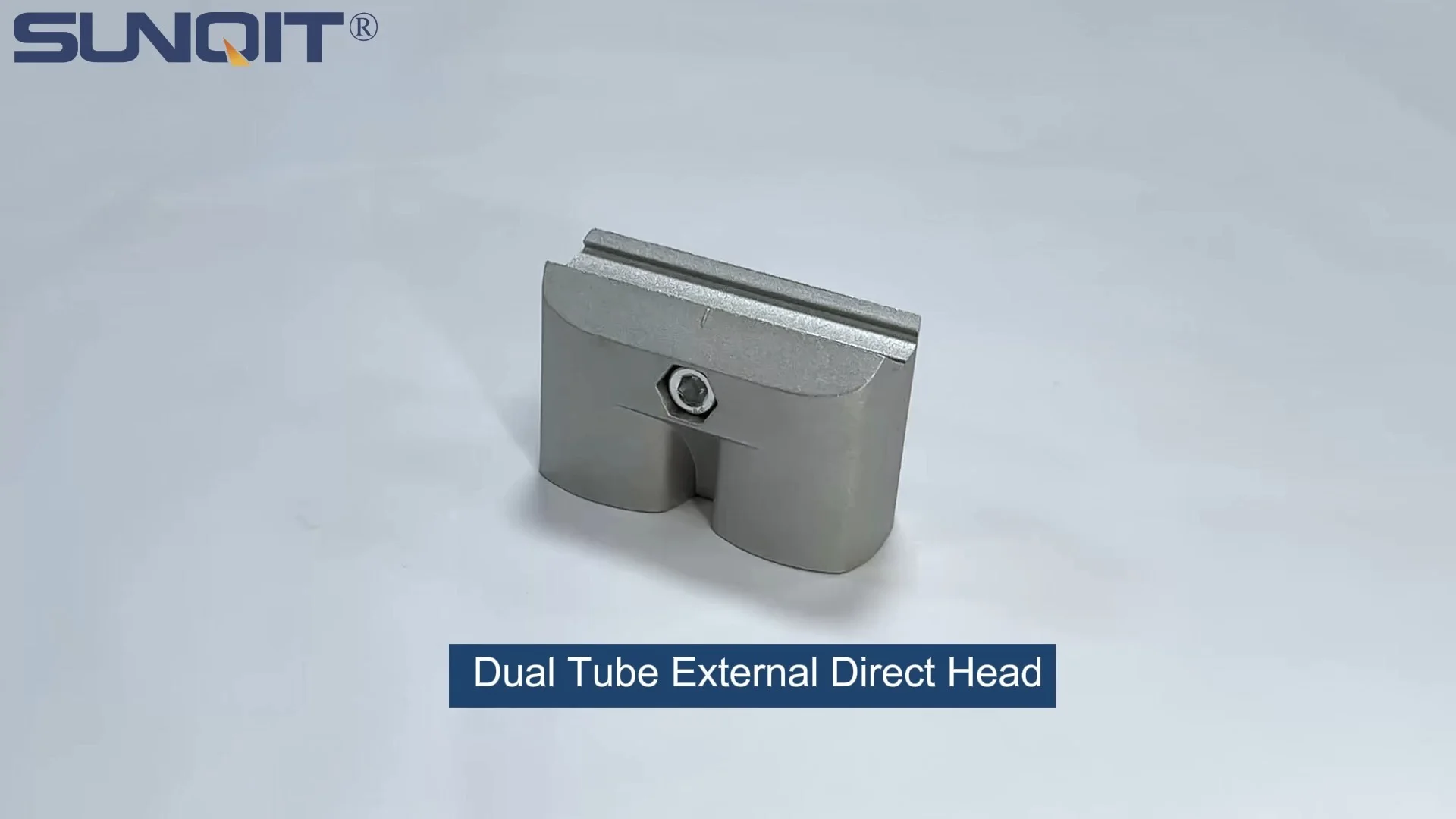
Duplex Aluminum Pipe Joint
Duplex Aluminum pipe joint used for one pcs 28pcs aluminum pipe and one pcs of 28mm duplex pipe connection in straight angle.
Walk into any modern manufacturing facility, and you'll see a symphony of movement: conveyor belts gliding, workbenches holding precise components, and material racks organized with military precision. Behind this harmony lies a network of unassuming yet critical components— duplex aluminum pipe joints . These small connectors are the backbone of modular systems, holding together aluminum lean pipes , workbenches, and conveyors. But what ensures these joints don't fail when production heats up? The answer lies in industry standards—guidelines that turn ordinary parts into reliable, consistent building blocks for efficiency.
In a world where production lines can't afford downtime, and safety is non-negotiable, understanding the standards governing duplex aluminum pipe joints isn't just a nicety—it's essential. Whether you're a plant manager sourcing components, a procurement specialist vetting suppliers, or an engineer designing a new workflow, knowing what makes a joint "up to code" can save you from costly mistakes, delays, and even accidents. This article dives deep into the industry standards that shape these unsung heroes of manufacturing, breaking down why they matter, what they cover, and how they impact your operations.
What Are Duplex Aluminum Pipe Joints, Anyway?
Before we jump into standards, let's clarify what duplex aluminum pipe joints are. Unlike single-piece connectors, duplex joints are designed with dual functionality: they connect two or more aluminum lean pipes at specific angles (often 90°, 45°, or 180°) while allowing for adjustability or rotation. Think of them as the "elbows" and "T-junctions" of the industrial world, but with a twist—they're built to handle the rigors of daily use in factories, warehouses, and assembly lines.
Made from high-grade aluminum alloys, these joints are prized for their lightweight strength. Aluminum, by nature, resists corrosion better than steel, making it ideal for environments where moisture or chemicals are present. When paired with aluminum pipe accessories like clamps, brackets, or casters, duplex joints form modular systems that can be reconfigured in hours, not days. Need to rearrange a workbench for a new product line? Swap out a few joints, and you're ready to go. This flexibility has made them a staple in lean manufacturing, where adaptability is key to reducing waste and boosting productivity.
Why Industry Standards Matter: More Than Just "Rules"
Imagine ordering 500 duplex joints from a supplier, only to find half of them don't fit your existing aluminum lean pipes . Or worse, a joint fails under load, causing a rack of components to collapse. These scenarios aren't just hypothetical—they're the result of cutting corners on standards. Industry standards exist to prevent exactly this: they set benchmarks for quality, safety, and compatibility, ensuring that parts from different suppliers work together seamlessly.
For manufacturers, standards translate to consistency. When every joint meets the same specs, production lines run smoother, maintenance costs drop, and workers can trust the equipment they use. For suppliers, adhering to standards builds credibility; a certification from a recognized body (like ISO or ASTM) signals to buyers that a product is reliable. And for end-users—you—standards mean peace of mind. You know the joint holding up your ESD workstation won't snap under pressure, or that the conveyor roller track connected by duplex joints won't jam because the fit is precise.

Key Industry Standards for Duplex Aluminum Pipe Joints
Industry standards for duplex aluminum pipe joints aren't one-size-fits-all. They cover everything from the alloy used in the joint to how it connects with aluminum pipe accessories . Below are the most critical standards you need to be aware of, broken down by category.
1. Dimensional Accuracy: The "Perfect Fit" Standard
At the heart of any good joint is precision. Even a 0.1mm difference in the diameter of a joint's inner bore can mean the difference between a snug fit and a loose connection. Standards like ISO 23269 (specific to aluminum structural components) and DIN 69051-1 (focused on modular systems) set strict tolerances for key dimensions:
- Pipe Diameter Compatibility: Most duplex joints are designed for pipes with outer diameters of 28mm, 30mm, or 40mm—the most common sizes for aluminum lean pipes . Standards specify that the joint's inner diameter must be within ±0.2mm of the pipe's outer diameter to ensure a tight, wobble-free fit.
- Angle Tolerance: For 90° joints, the angle between the two pipe sockets must be 90° ±1°, ensuring that structures like workbenches remain square. For adjustable joints, standards define the range of rotation (e.g., 0° to 180°) and the smoothness of movement.
- Wall Thickness: The joint's walls must be thick enough to handle load stress without bending. For example, ASTM B221 (a standard for aluminum extrusions) requires a minimum wall thickness of 1.5mm for joints rated to hold 50kg static load.
Why does this matter? A joint with a loose fit can cause a workbench to sway, leading to errors in assembly. A wall that's too thin might crack under repeated use, putting workers at risk. Dimensional standards eliminate guesswork, ensuring that when you order a "30mm 90° duplex joint," it behaves exactly as expected.
2. Material Quality: Not All Aluminum Is Created Equal
Aluminum is lightweight, but not all alloys are up to industrial tasks. Duplex joints are typically made from 6061-T6 aluminum—a heat-treated alloy known for its strength, corrosion resistance, and weldability. Standards like ISO 6361 (which classifies aluminum alloys) and EN 573-3 (specifying chemical composition) dictate what's in the metal:
- Alloy Composition: 6061-T6 must contain 95% aluminum, with small amounts of magnesium (0.8-1.2%), silicon (0.4-0.8%), and copper (0.15-0.4%). These additives boost strength without sacrificing ductility.
- Impurity Limits: Harmful elements like lead (max 0.15%) and cadmium (max 0.01%) are strictly limited to prevent brittleness or toxicity.
- Mechanical Properties: Tensile strength (the maximum stress a joint can handle before breaking) must be at least 290 MPa, and yield strength (the stress at which it deforms permanently) must be ≥240 MPa, per ASTM B221.
Suppliers who cut corners might use cheaper alloys like 1100 aluminum (pure aluminum), which is soft and prone to bending. A joint made from 1100 might work for a light-duty cart, but under the weight of a fully loaded material rack, it could fail. Standards ensure you're getting the right alloy for the job.
3. Load Capacity: How Much Weight Can They Really Handle?
A joint's job is to hold weight—whether it's a 20kg toolbox on a workbench or a 200kg pallet on a conveyor. Standards like ISO 898-1 (fastener load testing) and ASME B30.20 (below-the-hook lifting devices) define how manufacturers test and rate load capacity:
- Static Load: The maximum weight a joint can support without deforming, tested by applying gradual pressure (e.g., 500kg for 10 minutes) and measuring deflection. A joint should deflect no more than 0.5mm under rated load.
- Dynamic Load: The weight it can handle during movement (e.g., a trolley rolling over a joint). Dynamic testing involves repeated loading/unloading cycles (often 10,000 cycles) to simulate real-world use.
- Shear Strength: Resistance to forces that try to "slice" the joint apart (e.g., when a pipe is pulled sideways). Standards require shear strength of at least 160 MPa for industrial-grade joints.
Here's a real-world example: A supplier claims their duplex joint can handle 300kg static load. But if they skipped dynamic testing, that joint might crack after a month of daily use on a busy production line. Standards ensure ratings are honest and reliable.
4. Corrosion Resistance: Fighting the Elements
Factories are harsh environments. Humidity, oils, coolants, and even cleaning chemicals can eat away at metal over time. That's why corrosion resistance is a make-or-break standard for duplex aluminum pipe joints. The most common test is ASTM B117, which subjects joints to a salt spray chamber for 500+ hours. A passing joint should show no signs of red rust or pitting, and its load capacity should remain at ≥90% of the original rating post-test.
Most joints achieve this through anodization—a process that grows a protective oxide layer on the aluminum surface. Standards like MIL-A-8625 (military-spec anodizing) require this layer to be at least 10μm thick for Type II anodizing (clear finish) or 25μm for Type III (hard anodizing). Thicker layers mean better protection, which is why food processing plants (with high moisture) or automotive facilities (with oils) often opt for Type III.
5. Compatibility with Aluminum Pipe Accessories
A joint is only as useful as its ability to work with other parts. Aluminum pipe accessories like casters, clamps, and brackets must fit seamlessly to create a modular system. Standards like ISO 15552 (aluminum profiles for machine frames) ensure that holes, slots, and mounting points align across brands. For example:
- T-Slot Dimensions: Many aluminum pipes have T-slots for attaching accessories. Standards define slot width (e.g., 8mm, 10mm) and depth to ensure bolts and brackets from different suppliers fit.
- Thread Sizes: Joints often have threaded holes for bolts. ISO 261 specifies metric thread sizes (e.g., M8x1.25) to prevent mismatched fasteners.
- Caster Mounts: When a joint is used to attach casters to a trolley, standards like DIN 1624 specify the mounting plate dimensions, ensuring casters from Brand A fit joints from Brand B.
Imagine ordering a new set of locking casters, only to find their mounting holes don't line up with your duplex joints. Compatibility standards eliminate this frustration, making it easy to mix and match components from different suppliers.

A Closer Look: Comparing Major Standards (ISO vs. DIN vs. ASTM)
Not all standards are created equal. Regional and international bodies have their own guidelines, which can sometimes overlap or differ slightly. Below is a comparison of three major standards bodies and how they approach duplex aluminum pipe joints:
| Standard Body | Key Focus | Material Requirements | Load Testing | Corrosion Testing |
|---|---|---|---|---|
| ISO (International Organization for Standardization) | Global compatibility; modular systems | 6061-T6 alloy; ≤0.1% impurities | Static load: 500kg/10min; Dynamic: 10,000 cycles | Salt spray: 500 hours (no red rust) |
| DIN (Deutsches Institut für Normung, German Institute for Standardization) | Precision engineering; high-load applications | 6082-T6 alloy (higher strength than 6061); ≤0.05% impurities | Static load: 750kg/10min; Dynamic: 50,000 cycles | Salt spray: 1000 hours (no pitting) |
| ASTM (American Society for Testing and Materials) | Industrial durability; North American markets | 6061-T6 or 6063-T5 alloy; ≤0.15% impurities | Static load: 400kg/5min; Dynamic: 5,000 cycles | Salt spray: 300 hours (no significant corrosion) |
So, which standard should you follow? If you're sourcing globally, ISO is a safe bet for compatibility. If you're in Europe, DIN standards are often stricter (higher load testing, better corrosion resistance) and preferred for heavy-industry applications. In North America, ASTM is the go-to, though many suppliers now meet ISO standards to expand their markets.

Testing Protocols: How Suppliers Prove Compliance
Claiming compliance is easy—proving it is another story. Reputable suppliers invest in rigorous testing to back up their claims. Here's what you should ask for when vetting a supplier:
- Certificates of Compliance (CoC): A document from the supplier stating the product meets specific standards (e.g., "This batch of duplex joints complies with ISO 23269").
- Test Reports: Third-party lab results showing load testing, corrosion testing, and dimensional checks. Look for accredited labs like SGS or Intertek.
- Traceability: The ability to track a joint back to its raw materials (e.g., alloy certificates from the aluminum mill). This ensures no subpar materials snuck into production.
Beware of suppliers who only provide "in-house testing" results. Without third-party verification, there's no way to confirm their claims are accurate. A little due diligence here can save you from partnering with a supplier who cuts corners.
Common Challenges in Meeting Standards (and How to Overcome Them)
Meeting industry standards isn't always easy. Suppliers face hurdles like rising material costs, evolving regulations, and pressure to undercut competitors. Here's how the best suppliers navigate these challenges:
Cost vs. Quality
Aluminum prices fluctuate, and high-grade alloys (like 6061-T6) are pricier than generic aluminum. Some suppliers respond by using cheaper alloys or thinning walls to cut costs. To avoid this, look for suppliers who prioritize long-term partnerships over quick profits. They'll explain the tradeoffs (e.g., "Type III anodizing costs 10% more, but lasts 3x longer") and help you choose the right standard for your budget.
Regional Standard Differences
A supplier in Asia might be familiar with ISO standards but not DIN, leading to mismatched specs. The solution? Work with suppliers who have experience exporting to your region. They'll adjust their processes (e.g., thicker anodization for DIN) to meet local requirements.
Innovation vs. Tradition
New technologies like 3D-printed joints or composite materials are emerging, but standards haven't always caught up. Forward-thinking suppliers will collaborate with standard bodies (like ISO) to develop guidelines for these innovations, ensuring new products are safe and compatible.
The Bottom Line: Why Standards Mean Better Business
At the end of the day, industry standards aren't just about following rules—they're about building trust. When you use compliant duplex aluminum pipe joints, you're not just buying a part; you're investing in:
- Less Downtime: Joints that don't fail mean fewer production halts. A study by the Manufacturing Extension Partnership found that companies using standard-compliant components reduced unplanned downtime by 18%.
- Lower Maintenance Costs: Durable, corrosion-resistant joints need fewer replacements. Over five years, this can save tens of thousands in parts and labor.
- Happier Workers: A stable, reliable workspace reduces frustration and fatigue. Employees who trust their equipment are more productive and safer.
- Scalability: Modular systems built with standard parts are easy to expand. Need to add a new conveyor line? Just order more pipes and joints—they'll fit right in.
Looking Ahead: The Future of Duplex Aluminum Pipe Joint Standards
The manufacturing world is evolving, and so are the standards that govern it. Here are two trends to watch:
1. Smart Joints and IoT Integration
Imagine a duplex joint with a built-in sensor that alerts you when it's approaching its load limit. This isn't science fiction—companies are already testing IoT-enabled joints that monitor stress, temperature, and corrosion in real time. Future standards will likely include guidelines for sensor integration, ensuring data accuracy and compatibility with factory management systems.
2. Sustainability Standards
As eco-conscious manufacturing grows, standards will focus on recycled materials and energy-efficient production. Look for certifications like ISO 14001 (environmental management) alongside traditional quality standards. Suppliers who use recycled aluminum or renewable energy in production will have a competitive edge.
Final Thoughts: Your Checklist for Success
Duplex aluminum pipe joints may be small, but their impact on your operations is huge. To ensure you're getting the best, keep this checklist in mind:
- Ask for Certifications: ISO, DIN, or ASTM compliance? Third-party test reports?
- Check Material Specs: 6061-T6 alloy? Anodization thickness? Impurity levels?
- Verify Load Ratings: Static and dynamic load capacity? Shear strength?
- Test Compatibility: Do joints fit your existing aluminum pipe accessories (casters, brackets)?
- Vet the Supplier: Experience in your industry? Willingness to explain standards?
In the end, industry standards are more than just paperwork—they're a promise. A promise that the joint holding your production line together is built to last, designed to work, and tested to protect what matters most: your team, your products, and your bottom line. So the next time you walk past that workbench or conveyor, take a moment to appreciate the duplex aluminum pipe joints. They may be small, but they're the unsung heroes keeping your world moving—one standard at a time.